
AI-generated
Black bun — Scottish fruitcake in thin shortcrust pastry
Log in or create a free account to save recipes.
Source: https://recipheon.com/en/recipes/desserts/black-bun-scottish-fruitcake-in-thin-shortcrust-pastry
About this recipe
Black bun is a Scottish bake with a dense dried-fruit filling enclosed in a thin layer of shortcrust pastry. Raisins, small currants and candied orange give it a rich flavor, while cinnamon, ginger, cloves and a little pepper add a warm, spiced aroma. Ground almonds combine with the fruit to make a thick, moist mixture that needs packing firmly into the pan. This home version uses one small loaf pan, and the pastry is rolled between sheets of parchment, with every scrap put to use. Gentle baking and letting the loaf cool completely before slicing are the key steps. Thin slices show off the golden pastry and dark fruit filling; divide one loaf into fourteen small servings.
Ingredients
Pastry and sealing the edges
300 g cake flour, Polish type 450 — 200 g for the pastry and 100 g for the filling
100 g cold unsalted butter
50 g cold water — 45 g for the pastry and 5 g for sealing the edges
2 g salt
Fruit filling and finishing
250 g raisins
250 g currants, small dark raisins made from dried grapes
50 g full-fat ground blanched almonds
70 g dark soft basterd sugar
50 g ready-to-use candied orange peel, diced
50 g raw whole egg without the shell — 40 g for the filling and 10 g for brushing the top
80 g milk with 3.2% fat
2 g ground cinnamon
1 g ground ginger
0.3 g ground cloves, a small pinch
0.3 g ground black pepper, a small pinch
3 g baking powder
Steps
From the measured 300 g cake flour, set aside 100 g for the filling. Mix the remaining 200 g with the salt, add the cold cubed butter and rub it in with your fingertips to make fine crumbs. Pour in 45 g cold water and bring together briefly into a smooth dough without prolonged kneading. Keep the remaining 5 g water for sealing the edges. Do not add flour for dusting.
Flatten the dough, wrap it and refrigerate for 30 minutes. Prepare a loaf pan with internal dimensions of about 20 × 10 × 7 cm. Line the base and sides with parchment paper, leaving strips overhanging to lift the loaf out later. Do not grease the pan. Keep the dough cold until rolling.
In a large bowl, mix the reserved 100 g flour with the baking powder, cinnamon, ginger, cloves and pepper. Add the dark sugar, ground almonds, raisins, currants and candied orange peel. Separate any clumps of fruit thoroughly so the flour and spices coat them evenly. Currants are dried grapes.
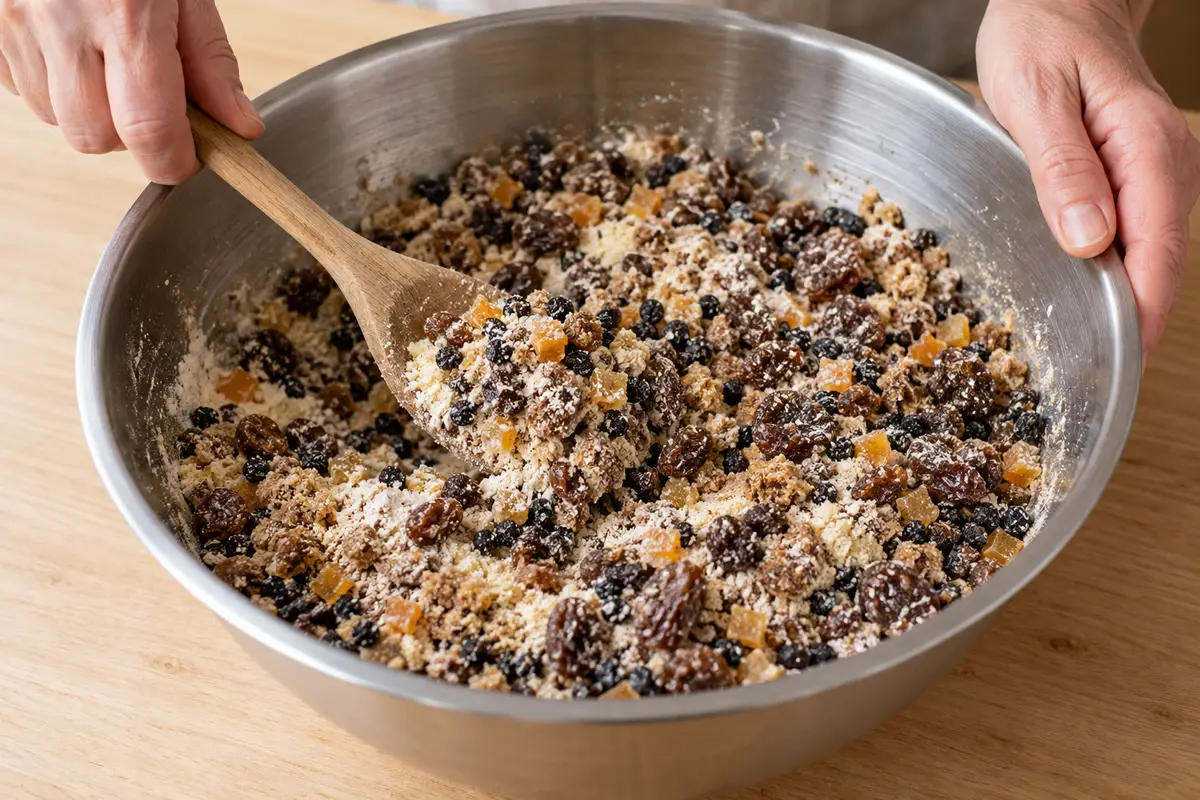
AI-generated Beat the 50 g whole egg to combine. Set aside 10 g in a small covered container and refrigerate while you continue preparing the loaf. Combine the remaining 40 g egg with the 80 g milk, pour into the fruit and mix thoroughly. The mixture should be thick and sticky, with a small amount of batter binding the fruit. Use all the measured milk and the egg allocated to the filling.
Preheat the oven to 160°C with top and bottom heat. Divide the chilled dough into about 270 g for the base and sides and 77 g for the lid. Roll the larger piece between sheets of parchment into a rectangle about 32 × 22 cm and about 3 mm thick. Use it to line the prepared pan to a height of about 6 cm. Join the folds and use every offcut to patch thinner areas, keeping the smaller portion refrigerated.
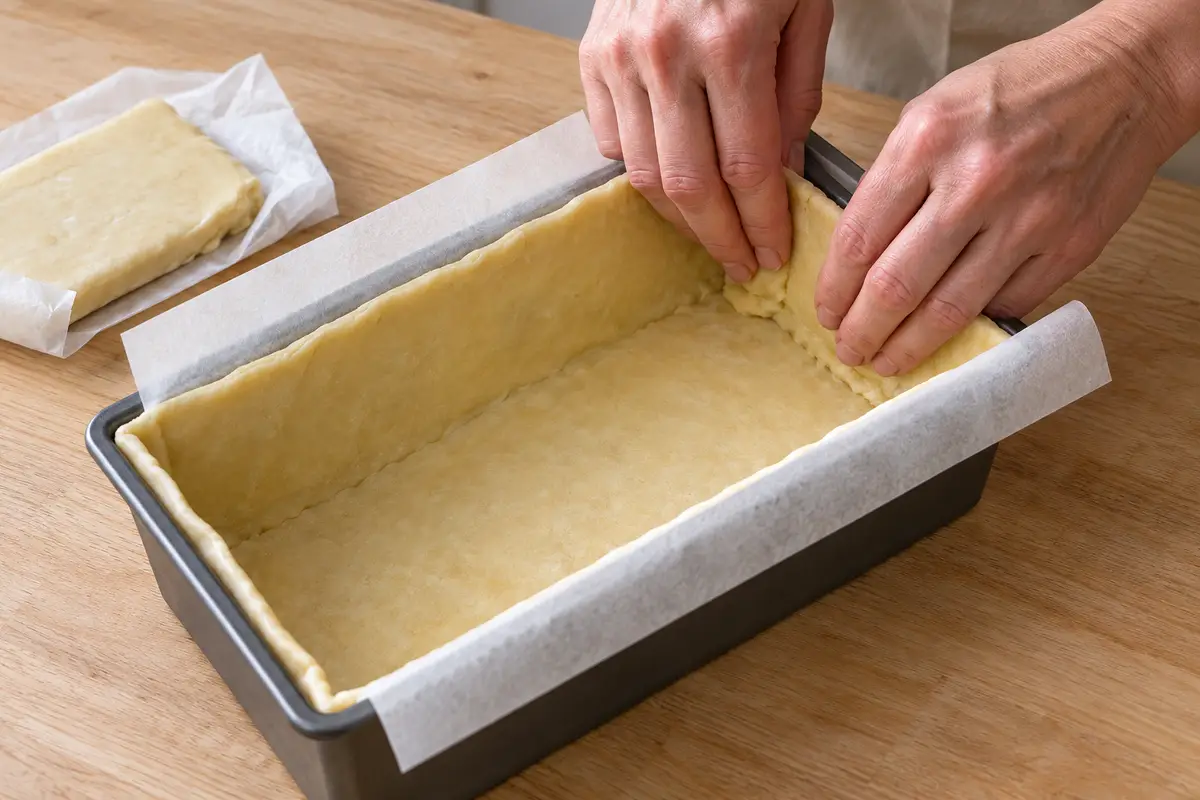
AI-generated Add the filling to the lined pan in portions, pressing it against the base and corners with the back of a spoon. Scrape all the mixture from the bowl. Level the top and check that no large gaps remain. The fruit should form a compact layer about 5–6 cm high; leave an edge of pastry for sealing firmly to the lid.
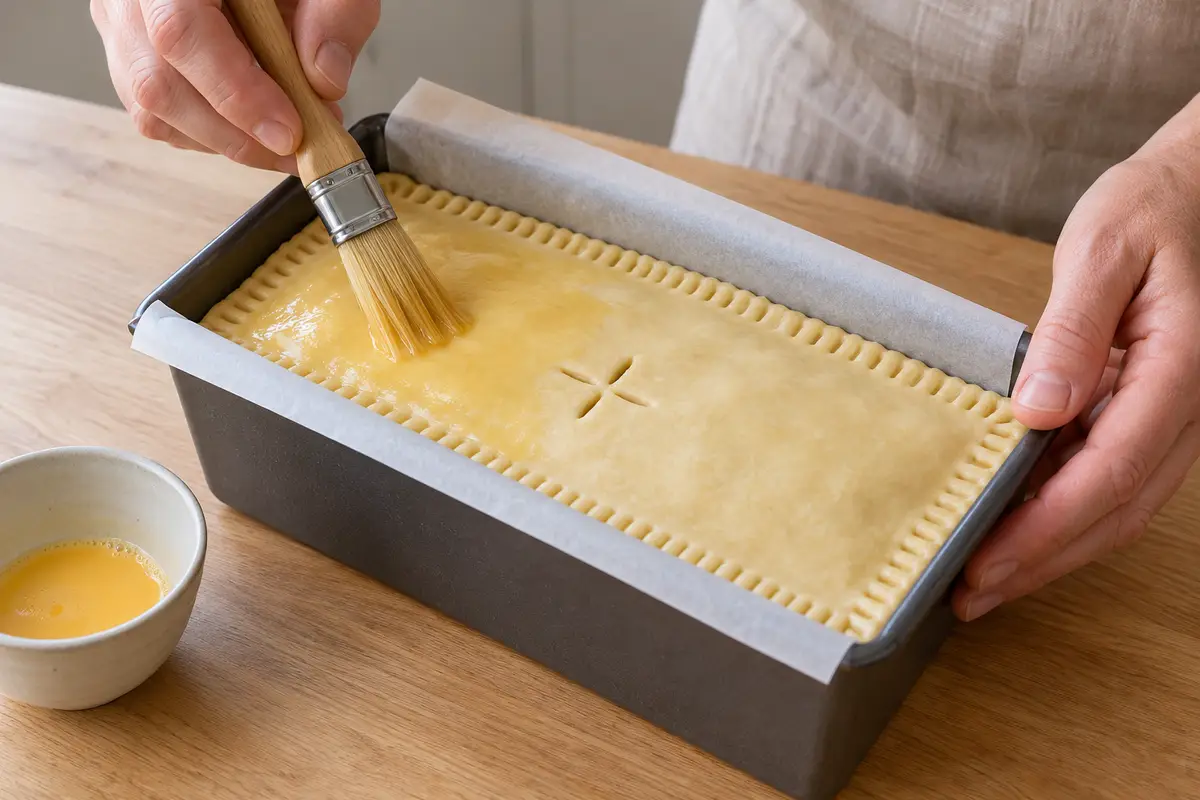
Roll the remaining 77 g dough between sheets of parchment into a rectangle about 20 × 10 cm. Moisten the edges of the pastry shell with the reserved 5 g water, put the lid in place and press the join firmly with a fork. Press any scraps into thinner areas without discarding anything. Make a small slit in the center to release steam and brush the entire top with the reserved 10 g egg.
AI-generated Place the pan on a rack below the center of the oven and bake for about 1 hour 45 minutes to 2 hours at 160°C. The pastry should be golden brown and the center firm. A skewer inserted into the filling may be sticky with fruit, but should not have raw flour batter on it. If the top browns too quickly, cover loosely with foil and finish baking.
Cool the loaf in its pan on a wire rack for about an hour, then carefully lift it out by the parchment and cool on the rack for about 3 more hours, until completely cold. Divide into 14 thin pieces; resting until the next day gives the most even slices. Once cool, wrap tightly and refrigerate for up to 4 days. Individual portions can be frozen.
Estimated nutrition

Rate this recipe
0 ratings
Comments