
AI-generated
Linzer Tart with Nut Pastry and Currant Preserves
Log in or create a free account to save recipes.
Source: https://recipheon.com/en/recipes/desserts/linzer-tart-with-nut-pastry-and-currant-preserves
About this recipe
Linzer tart combines crumbly pastry with ground hazelnuts, tart currant preserves and a browned pastry lattice. The nuts are part of the dough, giving both the base and the ropes on top a finely textured, buttery structure. Cinnamon and yellow lemon zest bring out the flavor of red currants. Choose thick preserves with fruit that hold the mark of a spoon; a runny filling is more likely to soften the base. Mix the dough briefly, chill it before shaping and again before baking so the lattice keeps its defined shape. Simply lay the ropes in two crossing directions, without weaving them. After baking, let the tart cool completely in the pan: hot, crumbly pastry breaks easily, and the preserves need time to thicken. Prepare a metal pan 24 cm in diameter; these quantities make 10 servings. Allow about 4 hours and 35 minutes, including chilling the dough and cooling the tart for two hours.
Ingredients
Nut pastry
250 g wheat cake flour, type 450
150 g finely ground raw hazelnuts, full-fat, with their natural brown skins, unsalted
185 g unsalted butter (82% fat): 180 g cold butter for the dough and 5 g for greasing the pan
120 g white powdered sugar
1 raw egg, size M, about 50 g edible weight without the shell
2 g finely grated yellow lemon zest, without the white pith
2 g ground cinnamon
1 g fine salt
Filling and topping
300 g ready-made thick red currant preserves with fruit
15 ml milk (3.2% fat) for brushing the lattice and rim
Steps
In a large bowl, mix the flour, ground hazelnuts, powdered sugar, cinnamon and salt. Add 180 g cold butter, cut into small cubes. Quickly rub it in with your fingertips until you have fine crumbs without large pieces of butter; do not warm the mixture by kneading it for a long time.
Add the whole egg and lemon zest, then briefly bring the ingredients together by hand until they form a cohesive, soft dough. Stop kneading once no loose flour remains; the dough should retain small flecks of nuts. Flatten into a thick disk, wrap in plastic wrap and refrigerate for about 45 minutes, until firm enough to shape.
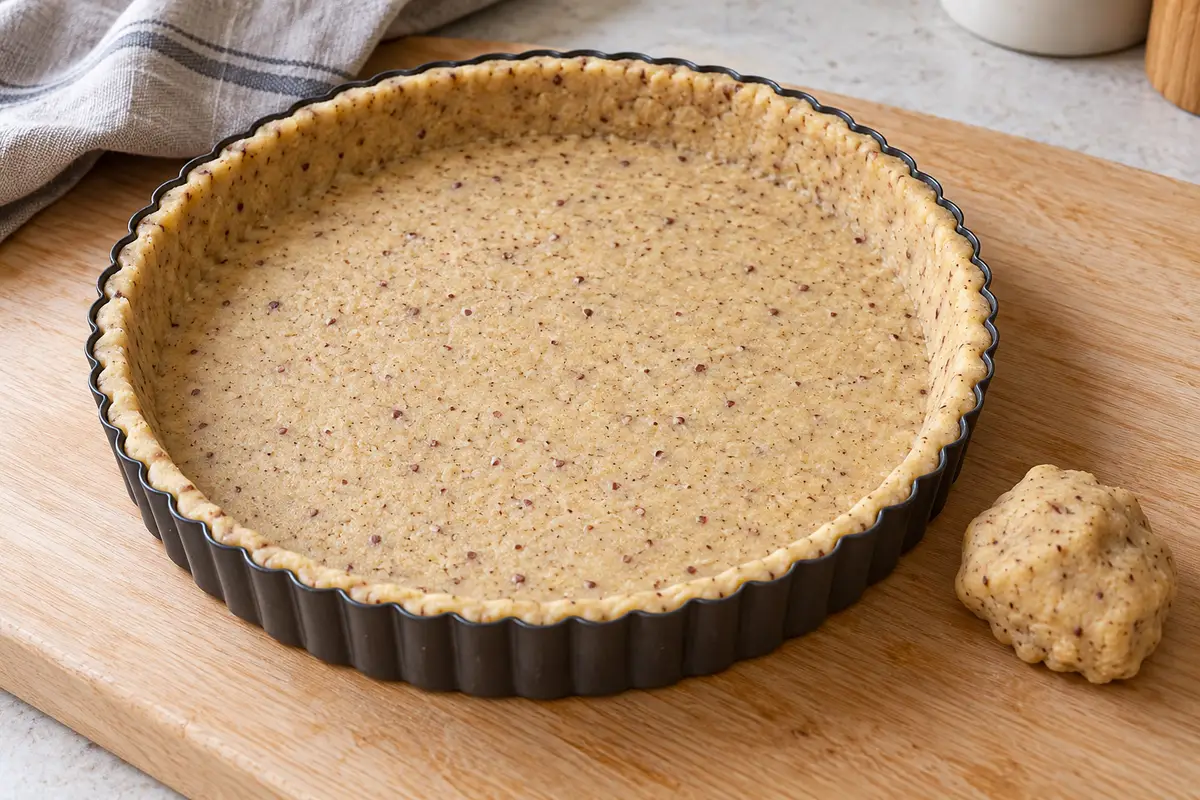
Prepare a metal tart pan with a removable bottom, 24 cm in diameter and about 3 cm deep. Lightly grease the bottom and sides with the remaining 5 g butter. Set aside one-third of the dough for the lattice and press the remaining two-thirds evenly into a base about 8 mm thick and a rim about 2 cm high. Press in small portions without dusting with flour; join the edges of the portions so no gaps remain.
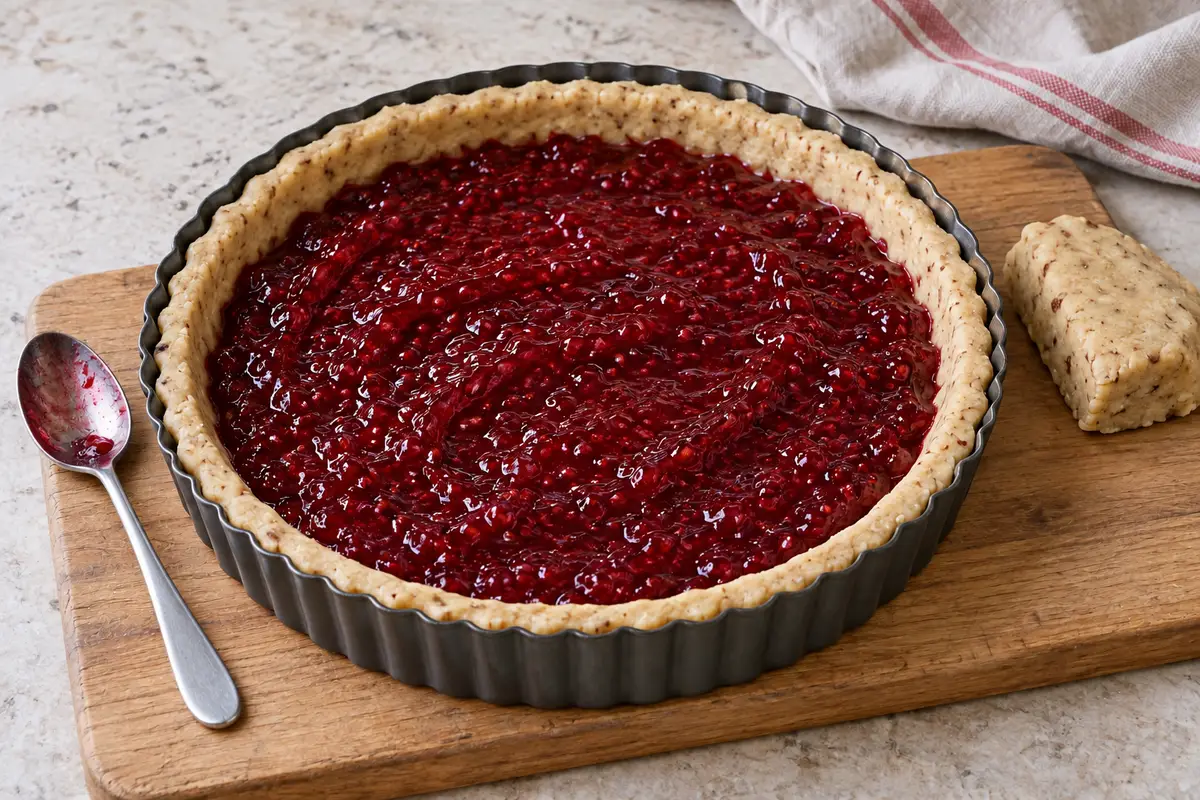
AI-generated Stir the preserves with a spoon to make them easier to spread, without heating or thinning them. Spread in an even layer over the raw base, leaving the pastry rim uncovered. The filling should be thick and hold the mark of a spoon.
AI-generated On parchment paper, roll the reserved dough into 10 ropes about 1 cm thick, with lengths to fit their positions on the tart. Lay five in one direction and the remaining five across them, leaving gaps where the preserves show through; there is no need to weave them. Gently join the ends to the rim and press any trimmings into its thinner spots. If the dough becomes too soft to transfer, chill the ropes for a few minutes. Lightly brush the lattice and rim with the measured milk, without flooding the filling.
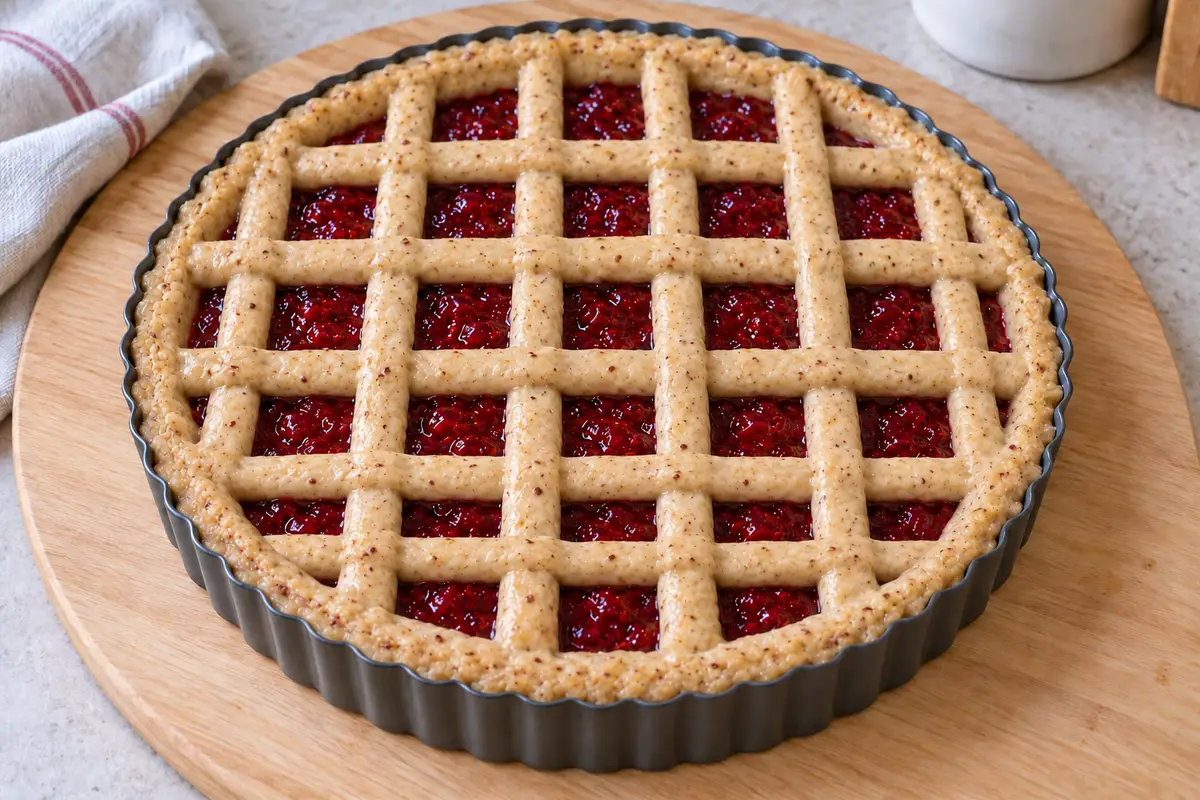
AI-generated Refrigerate the assembled tart for about 15 minutes, until the ropes and rim are cool and firm again. Meanwhile, preheat the oven to 180°C on the conventional (no-fan) setting. Position the oven rack slightly below the middle so the base has time to bake through.
Place the pan on a regular baking sheet and bake in the preheated oven for about 45–55 minutes. The lattice and rim should be clearly golden brown, and the pastry at the edge dry and firm; the preserves may bubble gently in the gaps. If the top browns too quickly, cover the tart loosely with aluminum foil for the final part of baking and finish baking it. Remove the pan and place on a cooling rack.
Leave the tart in its pan on the rack for about 2 hours, until the center and base have cooled completely; if they are still warm, wait longer. Only then carefully remove the outer ring and slide the tart off the pan base onto a flat plate, supporting it with a wide spatula. Cut into 10 equal wedges with a sharp knife and serve at room temperature. The cut side should show a crumbly nut pastry base, a firm layer of preserves and browned pastry ropes.
Estimated nutrition

Rate this recipe
0 ratings
Comments