
AI-generated
Portokalopita — Greek Orange Phyllo Cake with Syrup
Log in or create a free account to save recipes.
Source: https://recipheon.com/en/recipes/desserts/portokalopita-greek-orange-phyllo-cake-with-syrup
About this recipe
Portokalopita is a Greek orange cake made with torn phyllo and yogurt, generously soaked in citrus syrup. Dry the thin pieces of phyllo thoroughly before adding them to the batter in small batches, so every piece is moistened and no dense clumps form. Once baked, the cake has a golden top and a soft center with a delicate, uneven texture. Orange juice and finely grated zest give it a distinct citrus flavor. Pour completely cooled syrup over the hot cake and allow time for the liquid to soak in. Cut the portokalopita only after chilling, when you can lift neat, moist pieces out of the pan.
Ingredients
Cake and Orange Syrup
400 g thin refrigerated phyllo pastry, weighed before drying
250 g thick plain Greek-style yogurt with 10% fat
200 g raw eggs without shells, about 4 medium eggs
190 g sunflower oil: 180 g for the batter and 10 g for greasing the pan
450 g superfine white sugar: 150 g for the batter and 300 g for the syrup
350 ml freshly squeezed orange juice without seeds: 150 ml for the batter and 200 ml for the syrup
10 g finely grated orange zest, without the white pith
16 g baking powder
1 g fine salt
250 ml water for the syrup
Steps
Have about 4 large, juicy oranges ready for the listed amounts of juice and zest; the measured quantities determine the proportions. Wash and dry the fruit, then finely grate 10 g of just the orange zest before squeezing, without including the bitter white pith. Squeeze the juice, remove the seeds and measure 350 ml: set aside 200 ml for the syrup and 150 ml, along with all the grated zest, for the batter.
Pour 250 ml of water and 200 ml of juice into a saucepan, add 300 g of sugar and heat over medium heat, stirring until the sugar dissolves. Once the liquid comes to a boil, reduce the heat and cook without a lid for about 5 minutes; the syrup should remain runny and thicken only slightly. Remove the saucepan from the burner and pour the syrup into a wide heatproof dish. Let it cool completely to room temperature while you continue preparing the cake; do not use warm syrup for soaking.
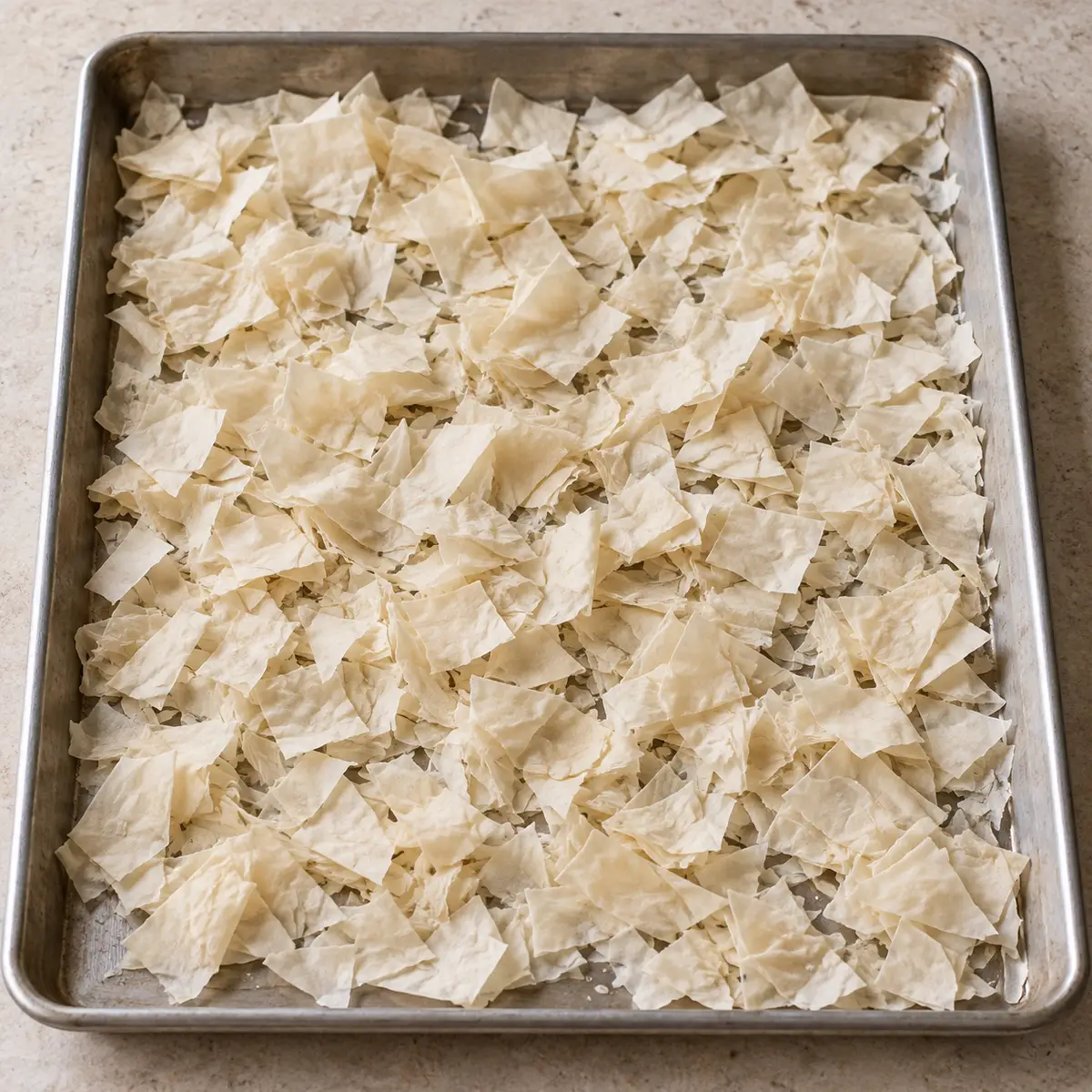
Preheat the oven to 120°C on the convection (fan) setting and prepare 2 large baking sheets measuring about 40 × 30 cm. Separate the phyllo sheets, tear each one individually into pieces about 2–3 cm across and spread them loosely over the baking sheets, separating any pieces stuck together; do not press them into dense piles. Dry the phyllo on both baking sheets at the same time for about 20–30 minutes, gently tossing the phyllo every 10 minutes and swapping the baking sheets halfway through. The pieces should be dry, brittle and easy to break between your fingers, with no soft or damp clumps; they should not brown deeply. Take the baking sheets out and let the phyllo cool for about 5 minutes while you prepare the pan and batter.
AI-generated Increase the oven temperature to 170°C and switch to the conventional (no-fan) setting. Grease a metal pan with inside dimensions of 20 × 30 cm and sides at least 5 cm high, using all 10 g of oil reserved for the pan. In a large bowl, whisk 200 g of eggs with the remaining 150 g of sugar and 1 g of salt for about 2–3 minutes, until combined and slightly foamy. Add 250 g of yogurt, the remaining 180 g of oil, 150 ml of juice and all 10 g of grated zest. Mix until smooth, then sift 16 g of baking powder over the bowl and mix briefly but thoroughly.
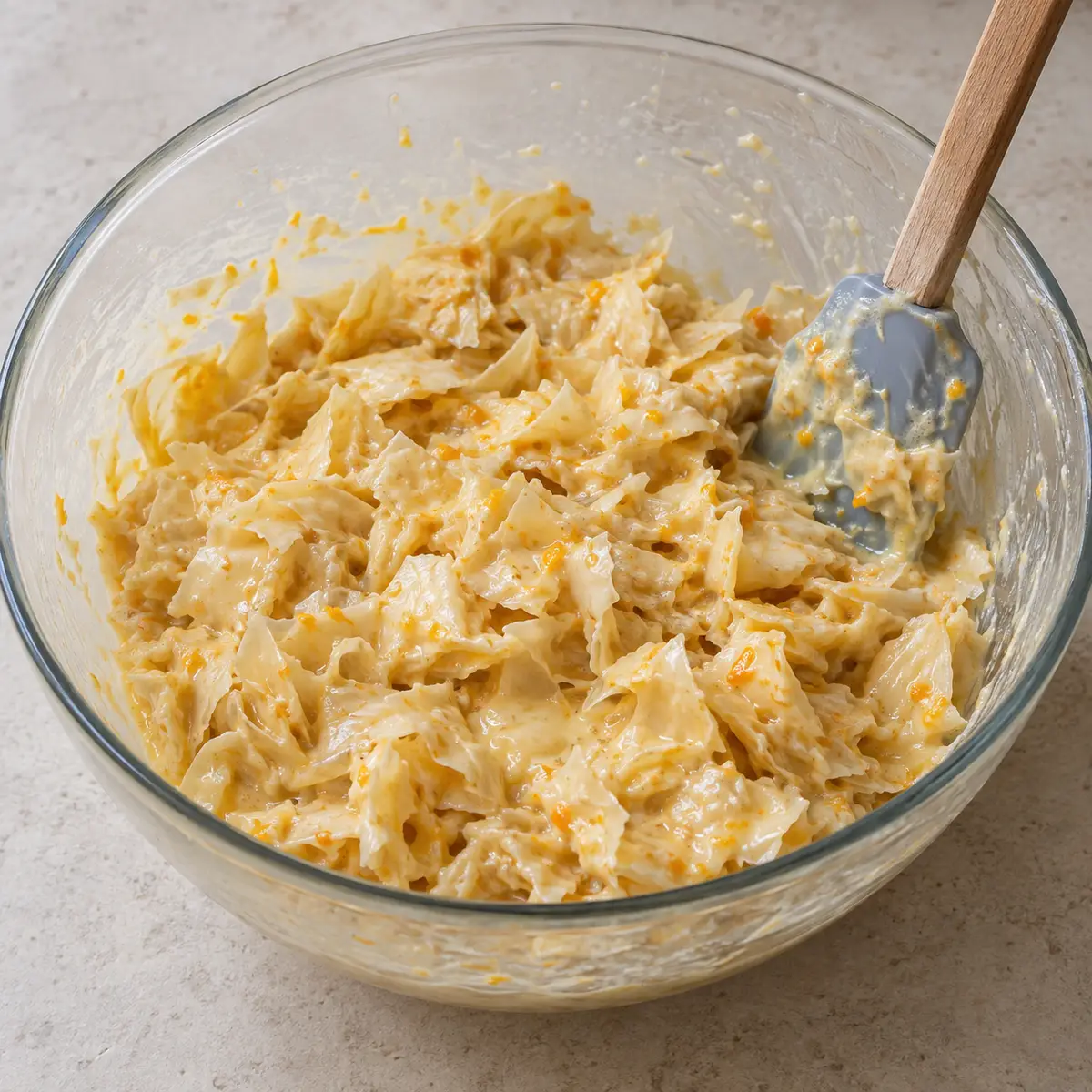
Roughly divide the cooled, dry phyllo into 4 portions and add them to the batter one at a time, gently folding up from the bottom with a spatula after each addition. Use forks to separate any pieces that stick together, and add the next portion only once the previous one is moistened. Use all the phyllo, including the small crumbs on the baking sheets; the batter should coat the pieces evenly, with no dry pockets or dense clumps. Do not mash the pieces into a paste.
AI-generated Transfer the batter to the greased pan and gently level the top without pressing it down firmly. Bake on the middle rack of the preheated oven for about 45–50 minutes, until the top is clearly golden and the center is set and no longer ripples when you gently move the pan. A skewer inserted into the center may have moist crumbs on it, but should not be coated with raw, liquid batter; if needed, bake in further 5-minute intervals and check again. If the top darkens too quickly, loosely cover it with aluminum foil after about 30 minutes of baking. Before taking the cake out, check that the syrup has cooled completely.
As soon as the cake comes out of the oven, set the metal pan on a wire rack and prick the top with a skewer about every 2–3 cm, reaching almost to the bottom. Pour the completely cooled syrup evenly over the hot cake, covering the whole surface and the edges, in 4 portions. Wait about 1 minute between additions so the previous portion starts soaking in instead of spilling over the edges. Use all the syrup; any small amount left on the surface at first will soak in as the cake rests.
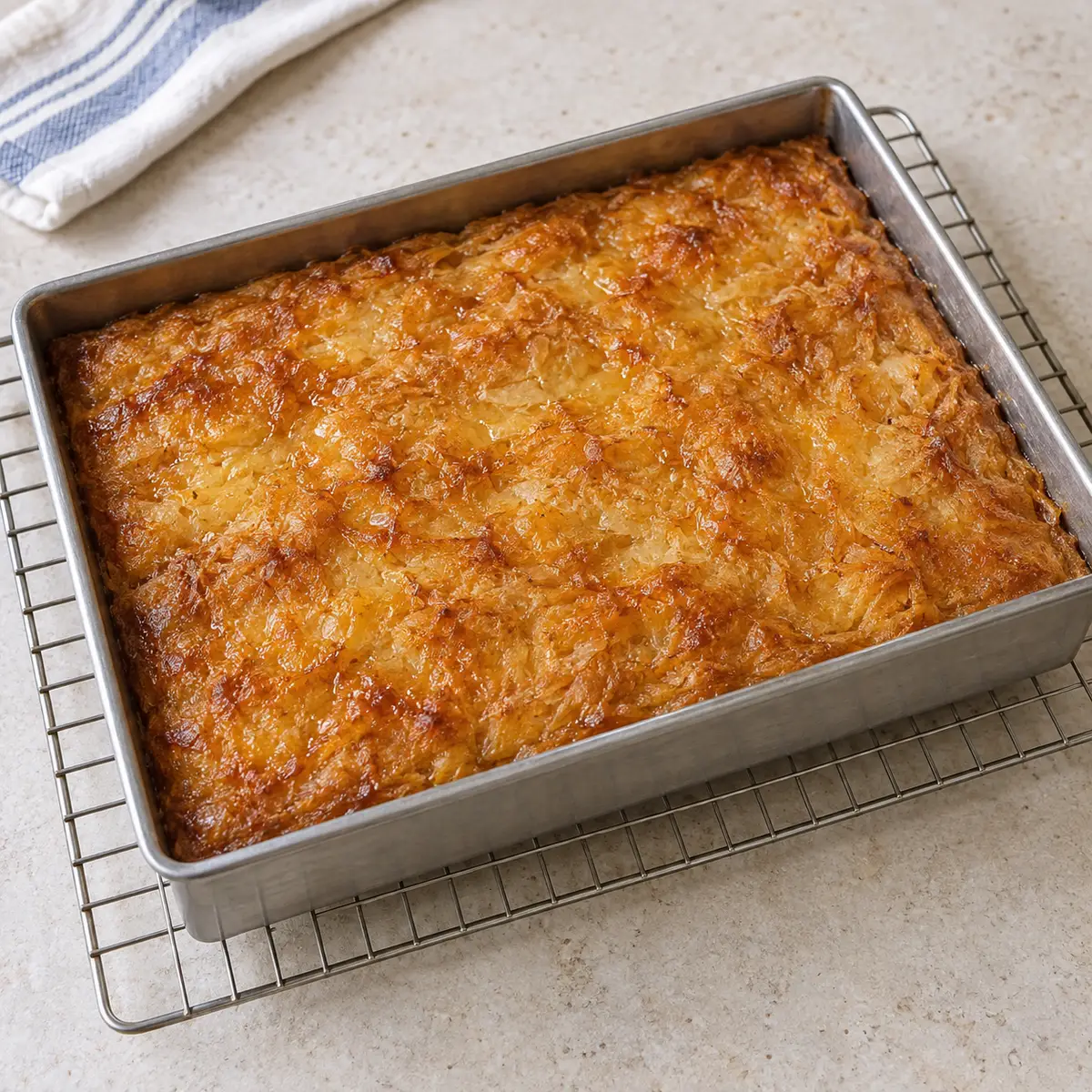
AI-generated Leave the cake in its pan on the wire rack for about 1 hour, until it has absorbed the syrup and is no longer hot. Then cover the pan and refrigerate for at least 2 hours, until the cake is chilled and the soaked center has set. Only then cut it into 12 rectangles in a 3 × 4 grid and lift the portions out with a spatula. Serve chilled, with a moist interior and a slightly glossy top.
Estimated nutrition

Rate this recipe
0 ratings
Comments