
AI-generated
Madeleines — French Sponge Cakes
Log in or create a free account to save recipes.
Source: https://recipheon.com/en/recipes/desserts/madeleines-french-sponge-cakes
About this recipe
Madeleines are buttery French sponge cakes with shell-shaped bases and characteristic domed tops. Lemon zest adds a delicate note to the batter, which rests in the refrigerator after mixing. Add the melted butter only after it has cooled, and mix in the flour briefly so the batter does not thicken unnecessarily. Cold batter and the chilled metal pan go into a well-preheated oven; the temperature difference helps a hump form, although its size also depends on the pan. One pan with twelve cavities requires two sequential batches and must be chilled again before the second. The baked madeleines have golden edges, springy centers and a fine crumb. The ingredients make twenty-four small cakes, four per serving.
Ingredients
Batter and pan preparation
2 raw whole chicken eggs, size M, about 100 g edible contents without shells, at room temperature
70 g fine white sugar
98 g dry wheat cake flour, divided: 90 g for the batter and 8 g for dusting the pan, 4 g per batch; discard the excess flour shaken out of the pan
3 g baking powder
88 g butter made from cow's milk (82% fat), divided: 80 g to melt for the batter and 8 g softened for greasing the pan, 4 g per batch; coating left in the pan after removing the cakes is not served
10 ml cow's milk (3.5% fat), at room temperature
2 g finely grated fresh yellow lemon zest, without the white pith
1 g fine salt
Steps
Have ready a metal madeleine pan with 12 shell-shaped cavities about 7 × 4 cm, about 1.5 cm deep and holding about 20 ml each, along with a bowl, whisk, spatula, pastry brush and cooling rack. Melt 80 g butter over low heat just until liquid and pour it into a small bowl. Let it cool while you prepare the eggs and dry ingredients: when added, it should still be liquid but only lukewarm, not hot. Reserve the remaining 8 g butter for greasing the pan twice.
Whisk 2 eggs, 70 g sugar and 1 g salt for about 2 minutes until the mixture lightens slightly; do not beat it into a very stiff foam. Add 10 ml milk and 2 g yellow lemon zest, then 90 g flour and 3 g baking powder sifted together, and mix briefly until no dry streaks remain. Gradually mix in all 80 g cooled liquid butter. The batter should be smooth and uniform, falling from the spatula in a broad ribbon, with no separated fat.
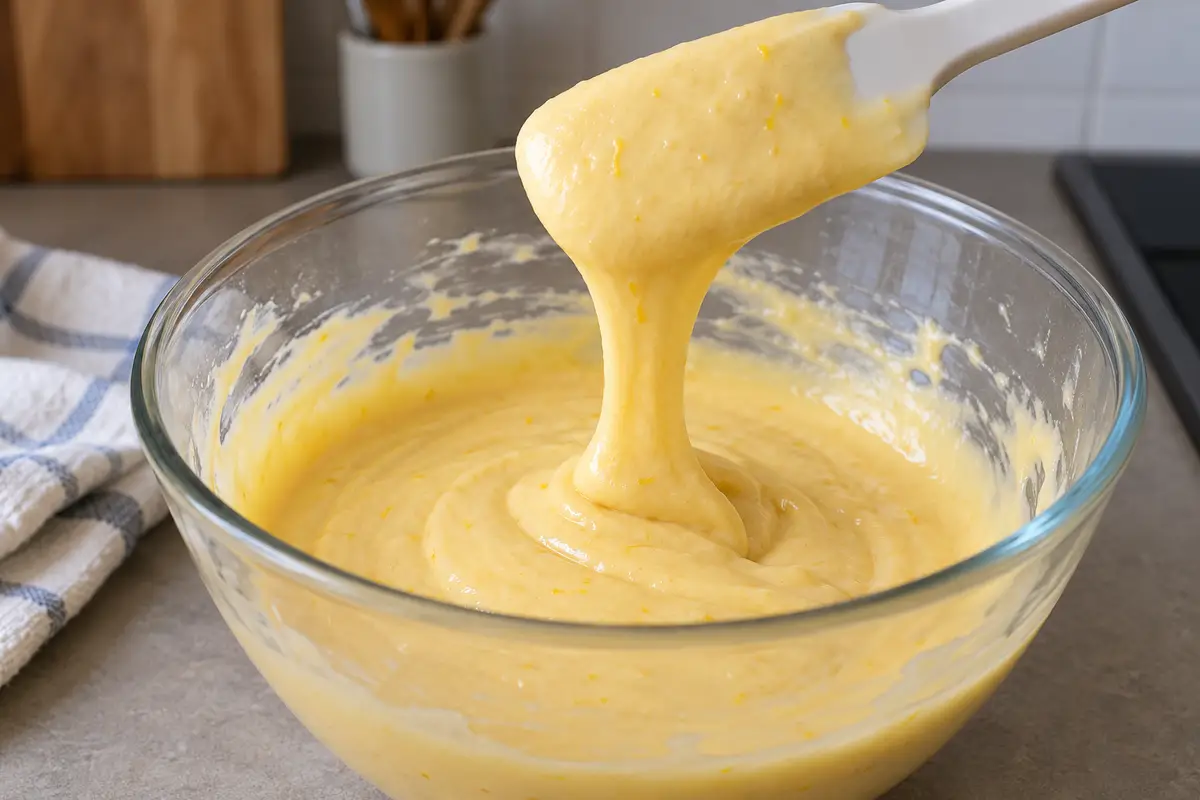
AI-generated Cover the bowl and refrigerate the batter for 2 hours. Toward the end of this rest, spread the first 4 g softened butter thinly over all 12 cavities, including the grooves. Dust with the first 4 g flour, turn the pan upside down and shake out and discard the loose excess; only a thin coating should remain. Refrigerate the pan for the final 20 minutes of the batter's rest, and meanwhile preheat the oven to 200°C on the conventional (no-fan) setting.
Take out the cold pan and divide all the chilled batter into two equal halves. Divide one half among the 12 cavities, about 15 g each, filling them roughly three-quarters full without spreading the batter right to the edges. Cover the other half and leave it in the refrigerator throughout baking and preparing the pan again. Do not add flour or liquid to the thickened cold batter, and do not overfill the cavities.
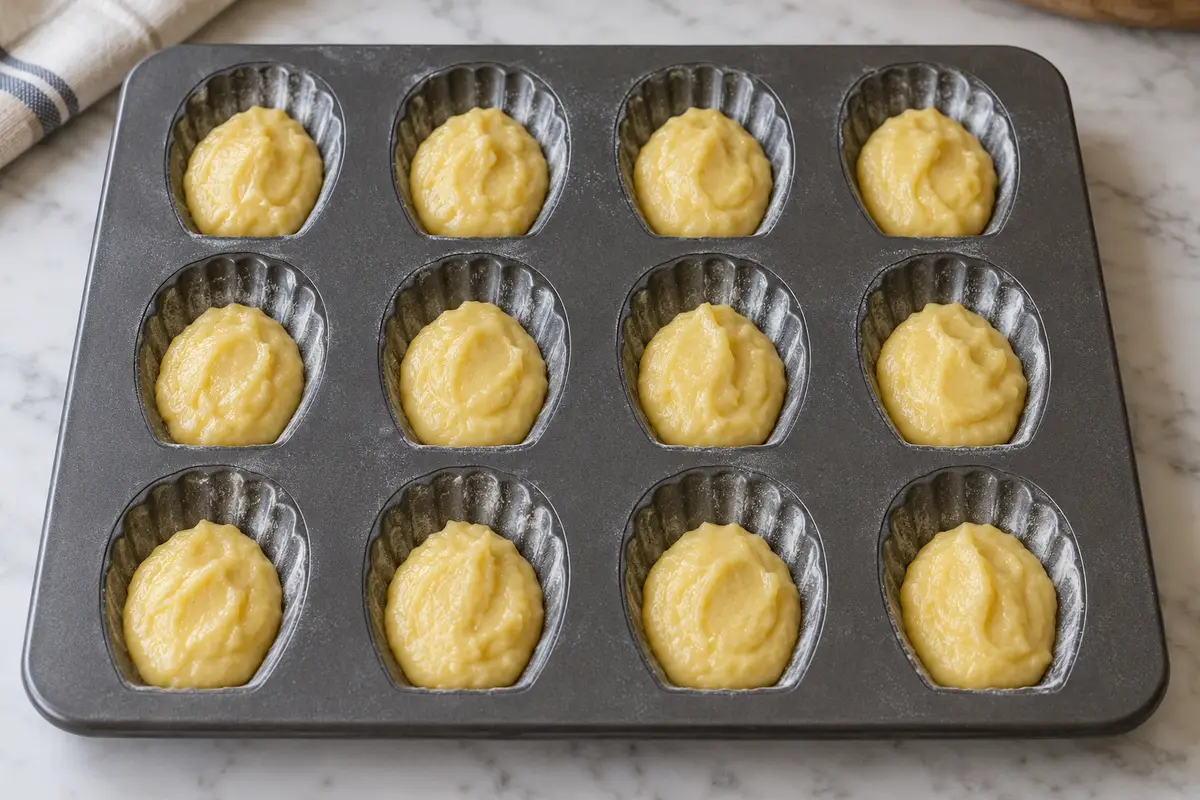
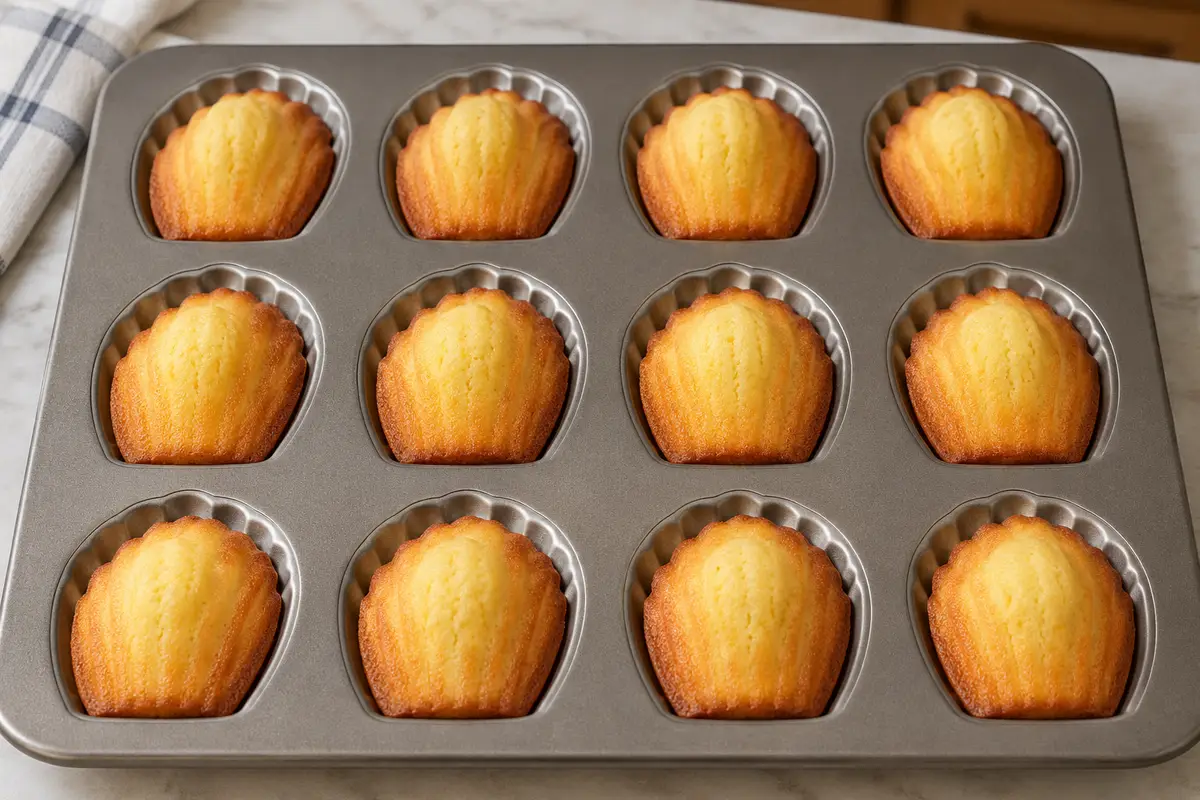
AI-generated Immediately put the pan on the middle rack of the preheated oven and bake for about 10–12 minutes at 200°C. The edges should be golden, the centers domed and springy to a light touch, and a toothpick inserted into the center of one madeleine should come out without wet batter. Do not open the oven for the first 8 minutes; if the center is still wet, bake briefly until it sets rather than removing the cakes based only on their color. After taking the pan out, leave it for 5 minutes before releasing the first 12 cakes.
AI-generated Gently remove the first cakes to a rack and leave the empty pan for about 15 minutes until completely cool. Brush away the dry coating residue with the pastry brush; do not add it to the cakes. Spread on the remaining 4 g softened butter, dust with the final 4 g flour and again shake out and discard the loose excess. Refrigerate the pan for 20 minutes before the second batch; the first madeleines cool during this time, and the remaining batter stays cold throughout.
Divide the remaining half of the batter among the 12 cold cavities as before, using it all and scraping the bowl with a spatula. Check that the oven is still at 200°C and bake for another 10–12 minutes, until the edges are just as golden and the centers springy and no longer wet. Wait 5 minutes with the cakes in the pan, remove them and cool on the rack for about 15 more minutes. The two sequential bakes make 24 small madeleines in total; coating left in the empty pan is not served.
Serve 24 madeleines, four for each of six servings. The cakes should have delicate shell-shaped grooves underneath, golden edges and soft centers with a fine crumb; the domed tops may vary slightly from cake to cake.
Estimated nutrition

Rate this recipe
0 ratings
Comments