
AI-generated
Financiers — Almond Cakes with Brown Butter
Log in or create a free account to save recipes.
Source: https://recipheon.com/en/recipes/desserts/financiers-almond-cakes-with-brown-butter
About this recipe
Financiers are small French almond cakes with the aroma of brown butter and toasted nuts. Beneath their thin, golden crust lies a moist, fine-textured center. They have a buttery almond flavor with a subtle caramel note from the browned butter. These rectangular cakes pair well with coffee or tea, and their edges are pleasantly crisp when served slightly warm.
Ingredients
Almond batter
130 g unsalted butter with 82% fat, for browning; weigh out 100 g finished brown butter, including its browned solids, for the batter
100 g finely ground blanched almonds, full-fat; not defatted almond flour
140 g powdered sugar
50 g wheat cake flour, type 450
150 g raw egg whites, from about 5 medium eggs, size M; weigh accurately; the yolks are not used
1 g fine salt
Preparing the pan
10 g softened unsalted butter with 82% fat for lightly greasing the pan; some may remain on the brush and in the cavities
Steps
Have ready one nonstick metal pan with 12 rectangular cavities, each about 8 × 4 cm, 2 cm deep, and about 60 ml in capacity. You will also need a small saucepan with a light-colored interior, a heatproof bowl, a scale, a kitchen thermometer, a sieve, a spatula, a pastry brush, and a wire rack. Weigh out 150 g egg whites only; the number of eggs is just a guide. Stir them with a fork for a few seconds, just to loosen them, without creating foam. Leave the whites on the counter while you prepare and cool the butter. Weigh the remaining ingredients; keep the 10 g softened butter for the pan separate from the 130 g for browning.
Cut up 130 g butter and put it in the saucepan with a light-colored base. Heat over medium heat for about 6–8 minutes, stirring and scraping the solids from the bottom. The butter will melt first, then foam vigorously as its water evaporates. As the foaming subsides, watch the bottom: the solids should turn evenly golden brown and the fat amber, with a distinct toasted-nut aroma. Remove the pan from the heat as soon as it reaches this stage. Do not wait for black specks or smoke; an acrid smell means the butter has burned and must not be used in this batter.
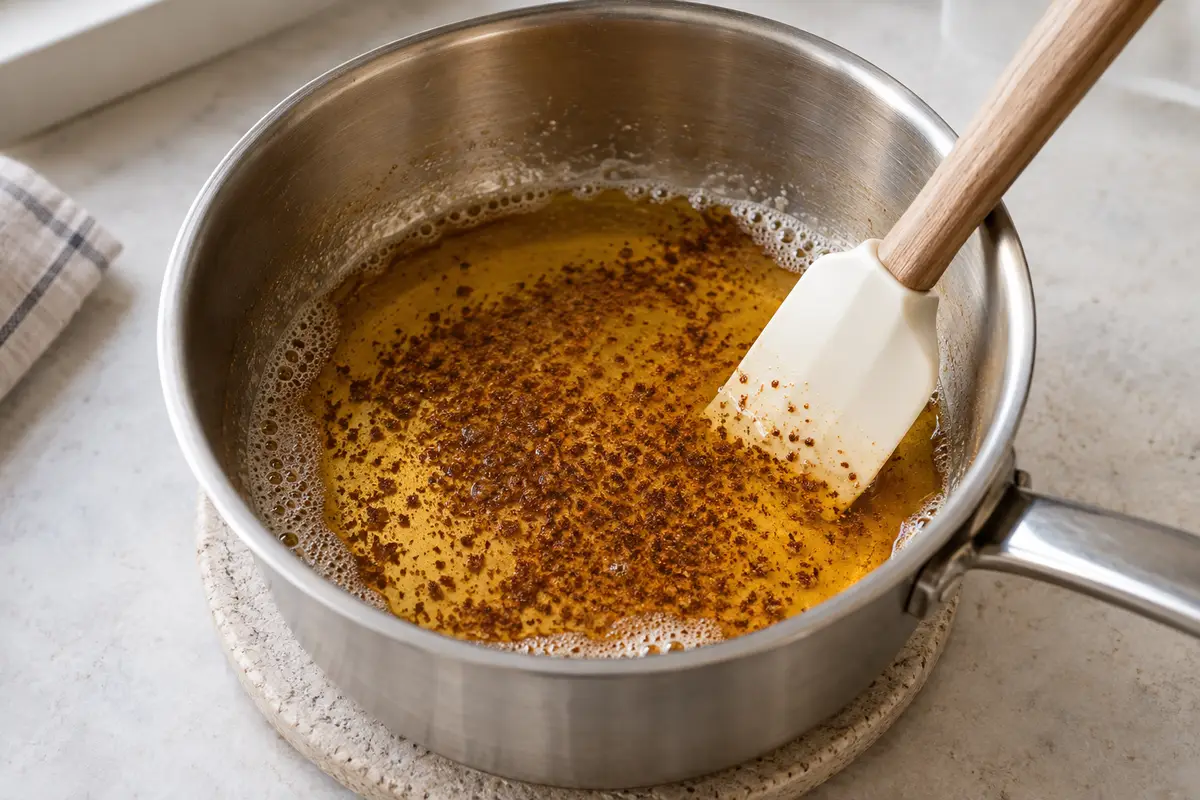
AI-generated Immediately pour the butter into a heatproof bowl, scraping all the browned solids from the saucepan; do not strain them out. Transferring it stops further browning against the hot pan base. Leave for about 20 minutes until the butter cools to 35–40°C while remaining liquid. Do not add hot butter to the egg whites. Stir to distribute the solids, then weigh 100 g of this butter, including the solids, into a separate container. The remainder is not used in the cakes. If the butter solidifies, warm it briefly over warm water just until liquid again.
Sift 140 g powdered sugar and 50 g flour into a bowl. Add 100 g ground almonds and 1 g salt and mix thoroughly, breaking up any almond clumps with a spatula. Pour in all 150 g egg whites and stir gently with the spatula just until the dry ingredients are moistened. Add 100 g liquid brown butter in 2 additions, stirring from the bottom until combined each time. Scrape the sides and bottom of the bowl. The finished batter should be evenly mixed, slightly glossy, finely textured from the almonds, and fall from the spatula in a thick ribbon; it must not contain pools of fat or whipped foam. Do not use a mixer, and do not aerate the batter.
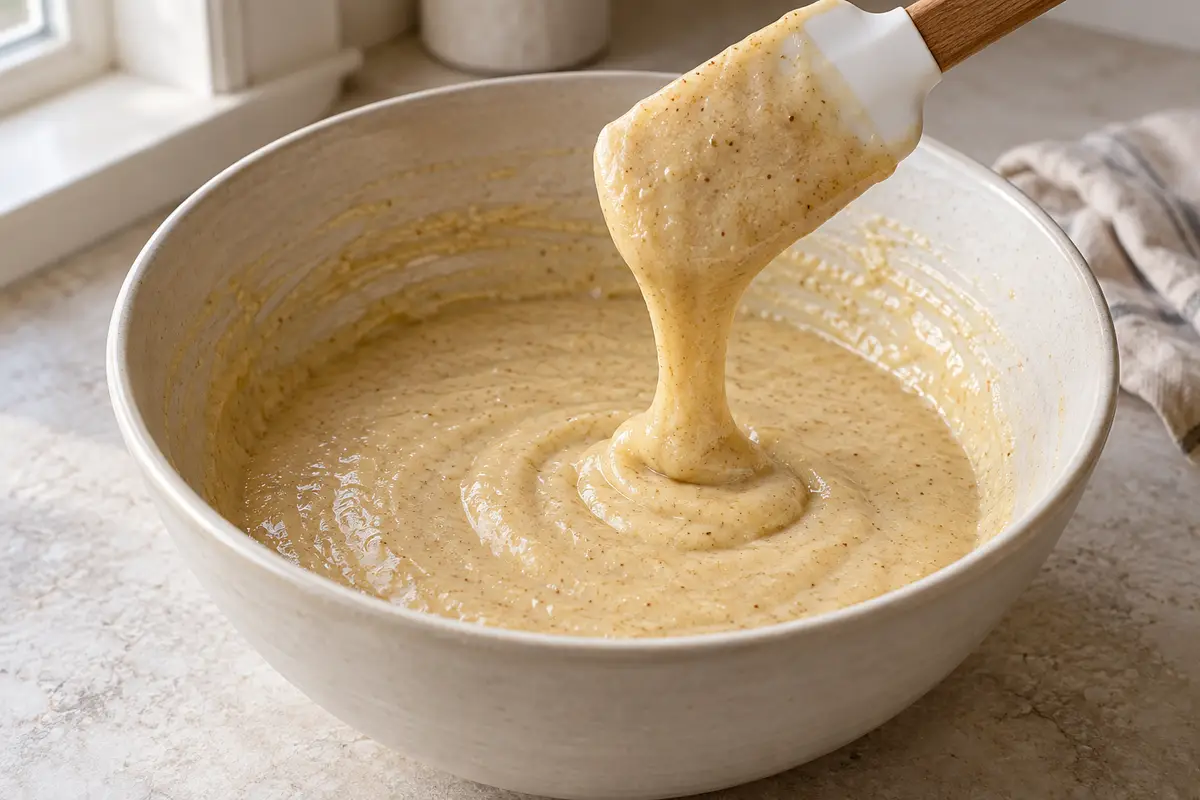
AI-generated Cover the bowl and refrigerate for 30 minutes. This rest is included in the recipe time; the batter will thicken slightly. Do not add milk or water to thin it. Toward the end of the chilling time, stir gently a few times with the spatula, without whipping. It should be thick but still suitable for spooning or piping.
During the final 20 minutes of the batter's rest, preheat the oven to 190°C with top and bottom heat, without convection, and a rack in the middle. Brush the bottom, sides, and corners of all 12 cavities with a very thin layer of the reserved 10 g softened butter. Do not leave lumps or pools. Use a metal pan with the specified dimensions; large muffin cavities would change the cakes' height and baking time. Keep the pan at room temperature until filling.
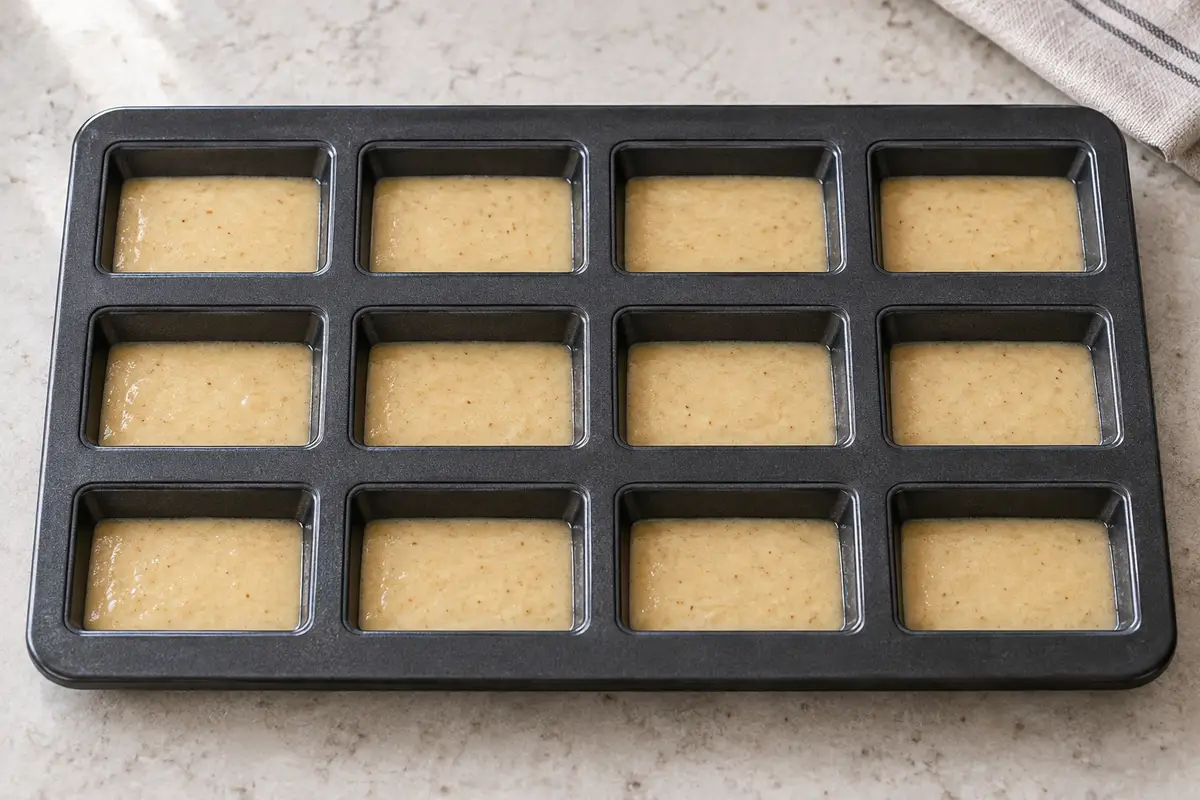
Divide all the batter among the 12 cavities, about 45 g in each. You can use two spoons or a piping bag without a tip. Scrape the remaining batter from the bowl with a spatula. Gently level the tops, working the batter into the corners; the layer should be about 1.3–1.5 cm deep and no more than three-quarters of the cavity's height. Tap the pan lightly on a folded kitchen towel to release large air bubbles. Leave the tops without any additions. Put the pan into the preheated oven immediately.
AI-generated Bake on the middle rack at 190°C for about 18–22 minutes. Start checking after 18 minutes: the edges should be distinctly golden brown, the tops golden and slightly domed, and the centers springy to a gentle touch. A skewer inserted into the center of one cake should come out without liquid batter; a few moist crumbs are right. If the center is still raw, continue baking in 2 minute intervals. Do not wait for the entire crumb to dry out; finished financiers stay moist inside. Remove the pan from the oven and set it on a wire rack.
Leave the cakes in the pan for 5 minutes. Then gently loosen the edges with a thin silicone spatula if needed and transfer the cakes to a wire rack. Cool for about 20 minutes more without covering, so steam does not soften the bottoms. They should have a thin, lightly crisp crust and a soft almond center with tiny brown-butter specks. Serve one cake per portion, cooled or barely warm. The contrast between the edges and centers is at its best on the day they are baked. Put them in a closed container only once completely cold.
Estimated nutrition

Rate this recipe
0 ratings
Comments