
AI-generated
Ensaïmada — a fluffy yeast spiral with delicate layers
Log in or create a free account to save recipes.
Source: https://recipheon.com/en/recipes/desserts/ensaimada-a-fluffy-yeast-spiral-with-delicate-layers
About this recipe
Mallorcan ensaïmada combines fluffy yeast dough with delicate layers separated by pork lard. This home version makes one large spiral without an extra filling. Strong Manitoba bread flour lets you knead the sweet dough thoroughly and stretch it into a very thin sheet. Soft plain lard is spread over the whole surface before the dough is rolled into a long rope. Thin rolling and slow rising create the layers; we do not use quick folds as for puff pastry. The spiral is shaped loosely, with gaps that gradually fill during the overnight rise. In the morning, bake only once it has clearly grown and become light and puffy. After baking, let the inside settle, then lightly dust the top with powdered sugar. All the dough and both ends go into eight servings. Start the previous evening, allowing time and space in a cool kitchen.
Ingredients
All the dough for one spiral
300 g strong Manitoba wheat bread flour, about 14–15% protein
100 g room-temperature water, weighed
50 g raw beaten whole egg without shell, weighed; about 1 egg, size M
60 g fine white sugar
4 g fresh baker's yeast
3 g fine salt
Lard for worktop and layers
5 g plain pork lard for very lightly greasing the worktop; residue on the worktop is not served
95 g plain pork lard to spread on the dough, soft but not melted; pure rendered fat without cracklings, salt or seasonings
Powdered sugar for the top
15 g powdered sugar made only from ground sugar, without starch, for light dusting; any unused amount is not served
Steps
Beat the egg and weigh exactly 50 g without shell; set any remainder aside outside this recipe. Separately weigh 5 g lard for the worktop and 95 g for the layers. The lard should be as soft as thick cream, with no liquid fat; work it with a spoon in a small bowl. Prepare a large clean surface for stretching the dough. Do not add dusting flour or another fat.
In a bowl, disperse 4 g fresh yeast in all 100 g weighed water. Mix in 50 g egg and 60 g sugar. Add 300 g flour and 3 g salt and bring together into a firm dough. Reserve all the lard for the worktop and layers; do not add it to the bowl now. The dough may seem stiff at first; do not add more water and do not change the weighed proportions.
Knead by hand for about 20 minutes, taking brief breaks if the dough tightens strongly, until smooth and springy and able to stretch into a thin piece without tearing immediately. Alternatively, use a stand mixer with a dough hook on low speed for about 10–12 minutes. Shape into a ball, cover tightly with an inverted bowl and leave for 30 minutes at room temperature. Do not add flour.
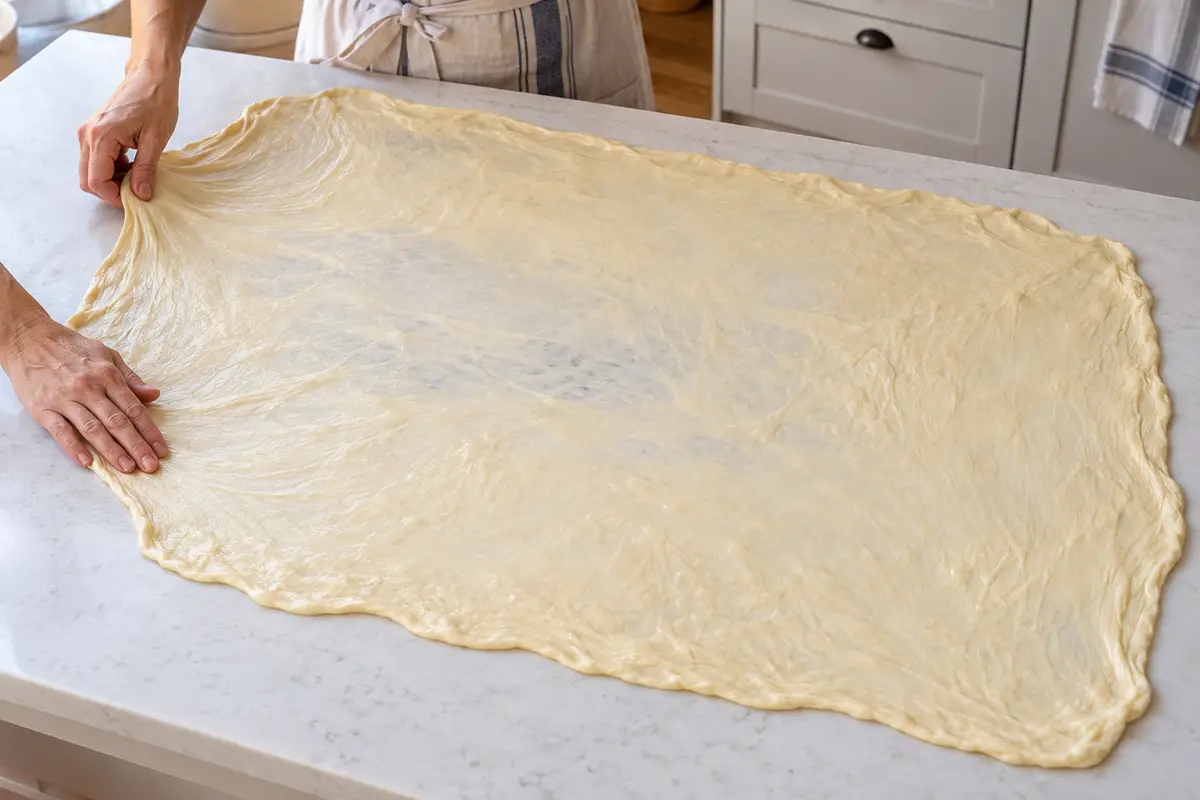
Spread the weighed 5 g lard very thinly on the worktop. Roll out all the dough, then stretch from the center toward the edges with your fingertips and the backs of your hands. Make a large sheet about 50 × 75 cm, thin enough to see the worktop through it in places. If it shrinks back, cover for 5 minutes and resume. Do not trim the thicker edge; gently stretch it like the center.
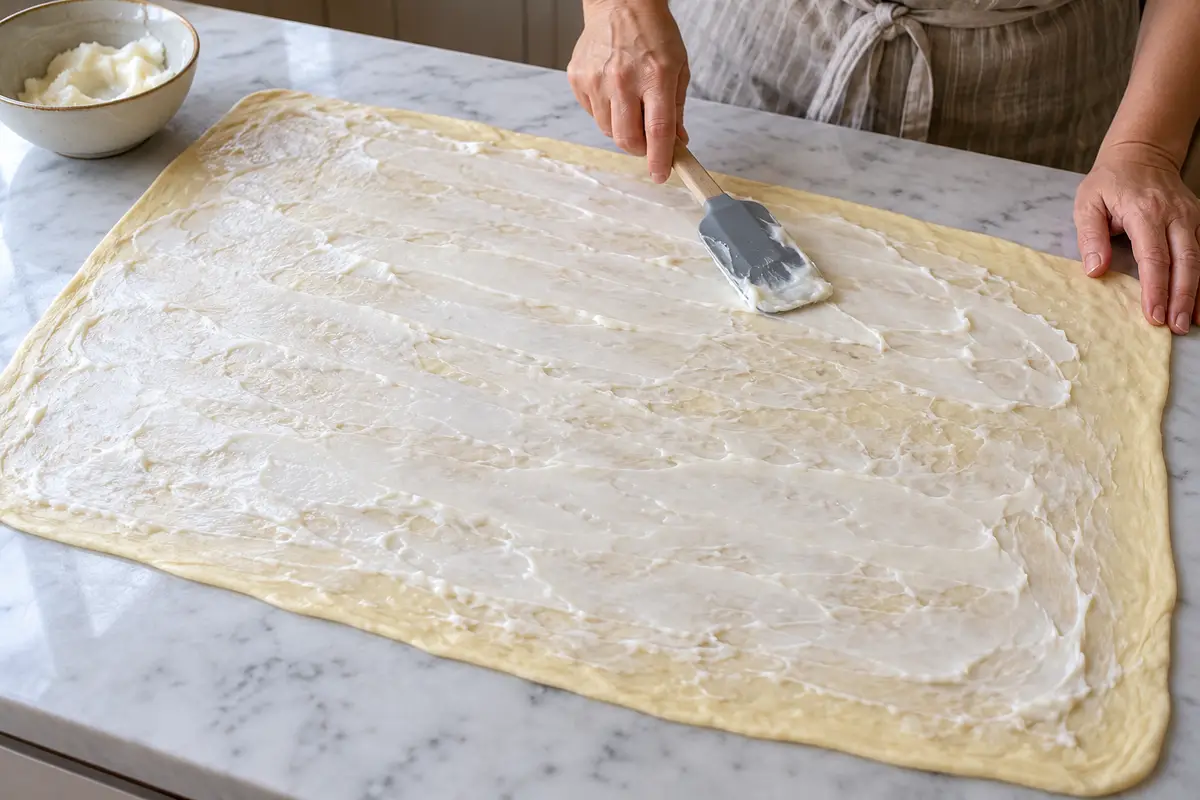
AI-generated Spread all 95 g soft lard over the sheet, thinly and as evenly as possible right to the edges, using your hands or a soft spatula. Do not tear the dough with a sharp edge and do not leave large lumps of fat. This layer separates the dough as it is rolled; do not add butter, oil, cream or another filling. The entire sheet remains part of one bake.
AI-generated Starting at a long side, roll the entire sheet into an even rope, gently lifting it from the worktop and making successive thin turns. Do not fold it into a flat envelope. Gently press the final edge onto the rope. Cover and leave for 15 minutes, then carefully lengthen to about 100 cm, working from the center toward the ends without twisting or tearing. Keep both ends.
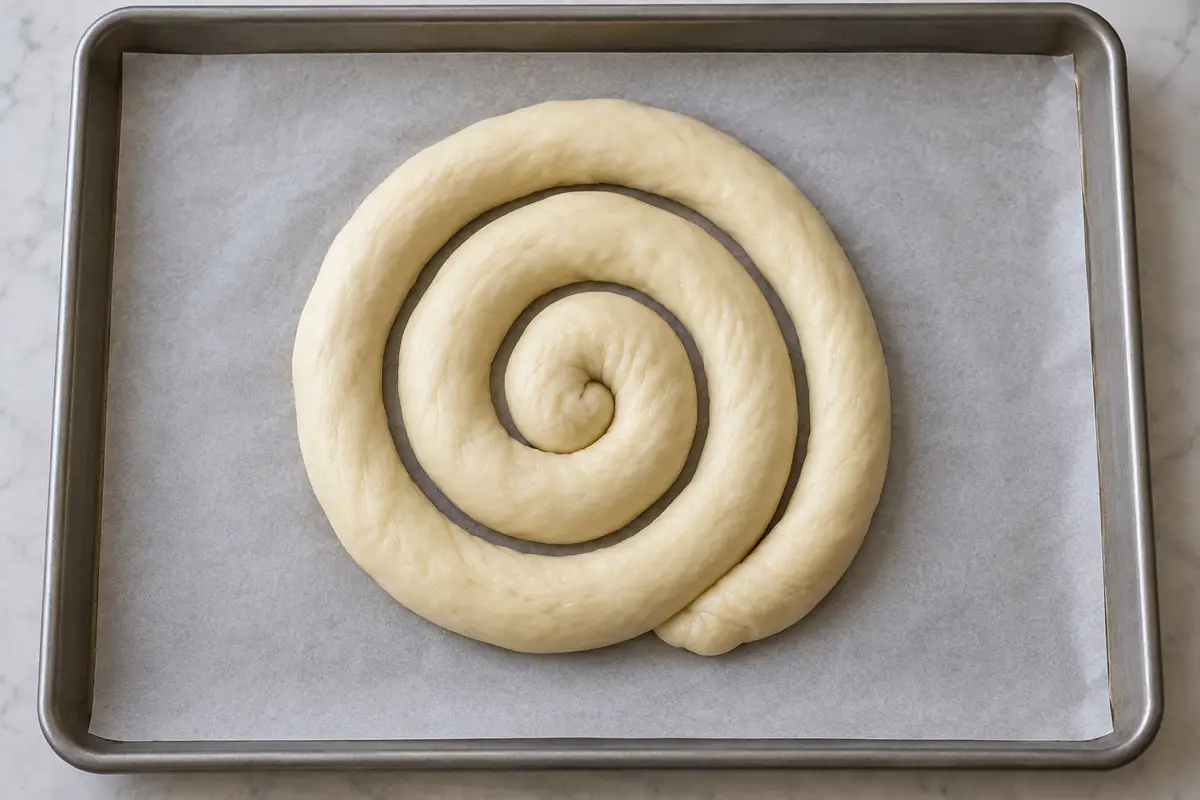
Line a baking sheet about 30 × 40 cm with parchment, without greasing. Arrange the rope loosely from the center outward into a spiral about 23–24 cm across, leaving gaps of about 1 cm between turns. Gently tuck the end under the outer turn. Do not squeeze the spiral and do not fill gaps with fat. After rising, it will occupy most of the sheet's width.
AI-generated Cover the spiral with a large deep container that does not touch the dough and leave about 8–12 hours in a cool kitchen, about 20–22°C. A cold oven that is switched off can provide shelter, without heating or the light on. In the morning the dough should be clearly puffy, almost doubled, with the gaps between turns largely filled. It will rise faster in a warmer room; do not leave an already risen spiral standing too long.
If the dough was in the oven, take it out with the entire cover before turning on the heat. Preheat to 180°C, conventional heat, with the rack slightly below the middle. Remove the cover only just before putting in the baking sheet. Do not prick and do not press the risen turns; do not brush the top with egg, milk or fat. Bake only a puffy, light spiral, not a tightly rolled raw rope.
Put in the sheet and bake at 180°C for about 25–30 minutes until the whole spiral is golden and the creases between turns no longer look raw. Near the end, carefully lift an edge with a spatula: the base should be baked through, without a wet strip. If the top browns too quickly, cover loosely with foil and finish baking. Do not dry the bake into a hard crust.
Leave on the baking sheet about 10 minutes, then carefully transfer to a rack and cool for at least another 20 minutes. Before serving, lightly dust with powdered sugar from the weighed 15 g; use only what is needed and leave any unused sugar outside the servings. Divide the entire spiral into 8 servings, including the center and outer ends. Serve without extra cream, sauce or garnish.
Ensaïmada tastes best on the day it is baked. Seal completely cooled remaining servings in a container and keep in a cool dry place until the next day. For longer storage, freeze tightly wrapped pieces rather than keeping them on the worktop for several days. Thaw covered and briefly warm before serving at 150°C for about 5–8 minutes. Do not add another unweighed portion of powdered sugar.
Estimated nutrition

Rate this recipe
0 ratings
Comments