
AI-generated
Kürtőskalács — yeast chimney cakes with a crisp sugar crust
Log in or create a free account to save recipes.
Source: https://recipheon.com/en/recipes/desserts/kurtoskalacs-yeast-chimney-cakes-with-a-crisp-sugar-crust
About this recipe
Kürtőskalács are yeast chimney cakes associated with Hungary and Transylvania: hollow inside and soft beneath a thin sugar crust. This home version makes four in an ordinary oven, in two batches on two metal molds with a stand. We do not need a fire or to turn dough over flames. The elastic dough is portioned, cut into strips and wound into spirals; gently rolling the mold joins the edges into one wall. Before baking, brush with butter and roll in white sugar. In the oven, the sugar partly melts and browns into a crisp coating; we do not promise the identical glassy shell produced over embers. Turning the molds on the stand helps the whole spiral bake evenly. Slide the cakes off while still warm, when the dough releases more easily from the metal. Serve without filling, toppings or extra sauce, first allowing the hot sugar crust to cool.
Ingredients
All the dough for four chimneys
250 g all-purpose wheat flour, type 550
110 g milk, 3.2% fat, weighed and lukewarm
50 g raw beaten whole egg without shell, weighed; about 1 egg, size M
30 g fine white sugar
8 g fresh baker's yeast
30 g butter, 82% fat, melted and cooled until lukewarm
3 g fine salt
Shaping and sugar crust
10 g all-purpose wheat flour, type 550, for light dusting; any unused amount stays outside the cakes
8 g butter, 82% fat, for lightly greasing molds, 4 g per batch; residue on the molds is not served
20 g butter, 82% fat, for brushing the dough before coating, 10 g per batch
100 g ordinary white sugar for coating, 50 g per batch; any unused sugar is not served
Steps
Prepare two metal chimney cake molds approved by their manufacturer for oven use, with a stable horizontal stand. The cylinder should be about 5 cm across with at least 14 cm of free space for dough. Set the stand on a parchment-lined metal baking sheet. Weigh the butter separately: 30 g for dough, 8 g for molds and 20 g for the surface. Do not improvise molds from random rolling pins or cans.
Disperse the yeast in all 110 g lukewarm milk. Add 30 g sugar and 50 g weighed egg; leave the rest of the egg outside the recipe. Mix in 250 g flour and the salt. Knead about 10–12 minutes, gradually adding 30 g lukewarm butter, until smooth, soft and springy. Do not add hot fat or extra milk. Reserve the dusting flour for shaping.
Gather into a ball and leave covered in the bowl about 45–60 minutes until roughly doubled. Choose a draft-free spot at normal room temperature, away from a hot radiator. The bowl does not need greasing. The dough should be puffy but still springy; do not wait for it to collapse. In a cool kitchen, follow its growth, not just the clock.
Divide all the dough into four equal portions of about 120 g. Cover two and refrigerate while preparing and baking the first batch, usually about 45–60 minutes. Use the other two for the first cakes. Preheat to 200°C, conventional heat, with the rack in the middle. The dough on the molds needs free space and must not touch the sheet or the other cake.
Using the weighed dusting flour sparingly, roll each of the two portions into a sheet about 10 × 25 cm and 4 mm thick. Cut lengthwise into five strips about 2 cm wide. Join successive short ends with about 1 cm overlaps, pressing firmly to make one long strip. Use uneven ends too; do not trim and do not discard edges.
Lightly brush both cool molds with 4 g butter in total. Wind the strip in a spiral with a slight overlap and no gaps over about 12–13 cm. Tuck the beginning and end under a neighboring turn and press down. Holding the handles, gently roll each mold on the worktop until strips join and the wall is even. Do not cover openings or handles with dough; the cake's center stays hollow.
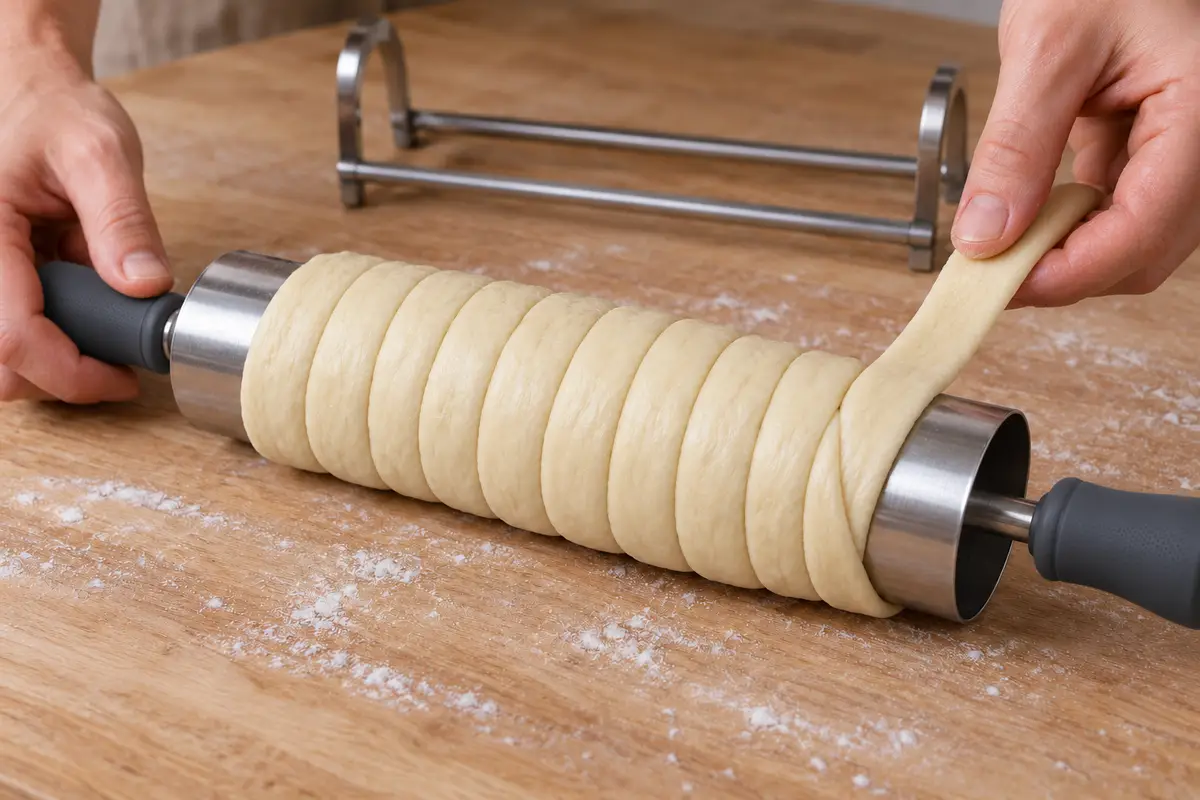
AI-generated Place both molds on their matching stand over the baking sheet. Cover loosely so the cover does not touch the dough and leave about 15–20 minutes. The surface should puff slightly while keeping an even joined spiral. Do not wait for it to double again. Meanwhile, melt 10 g butter for the first batch's surface and cool until lukewarm; measure 50 g sugar onto a wide plate too.
Remove the cover and thinly spread all 10 g lukewarm butter over both cakes. Turn the molds by their handles and roll the dough in the prepared 50 g sugar so crystals cover the whole outer wall. Press lightly without crushing the dough and return to the stand. Leave unused sugar outside the servings; do not pour it onto the baking sheet and do not add it to the next separately weighed portion.
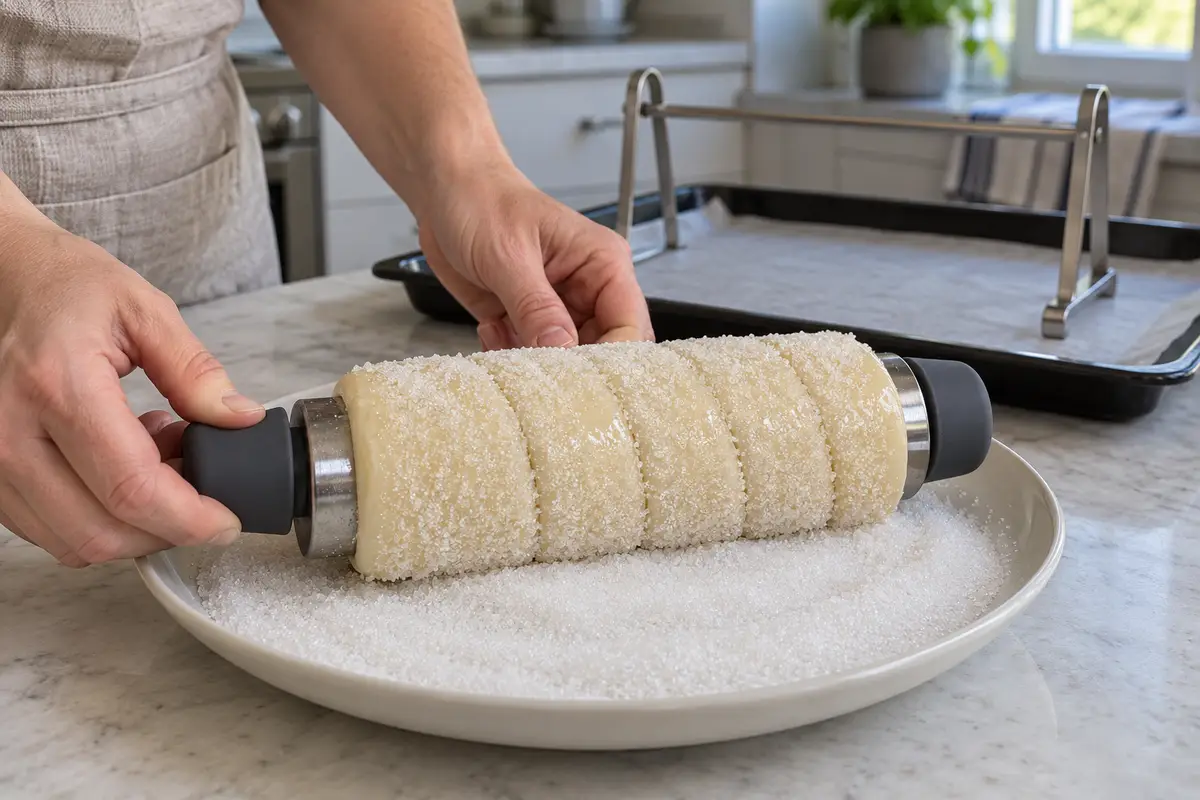
AI-generated Bake both cakes on the stand at 200°C for about 20–25 minutes. After about 7 and 14 minutes, carefully turn each mold one-third of a turn using dry oven mitts and handles according to the manufacturer's instructions. The dough should turn evenly golden and the sugar melt and brown in places. Do not let caramel turn black and bitter. Molds, stand and sugar are very hot.
Take out the baking sheet with oven mitts and wait about 2 minutes. Following the molds' instructions, remove the detachable handle and gently slide each cake onto a rack, protecting your hands with a clean folded kitchen towel. Do not touch hot sugar and do not grasp metal barehanded. Leave cakes to cool a little. Before greasing again, let molds and stand cool about 10 minutes; do not cool them with water.
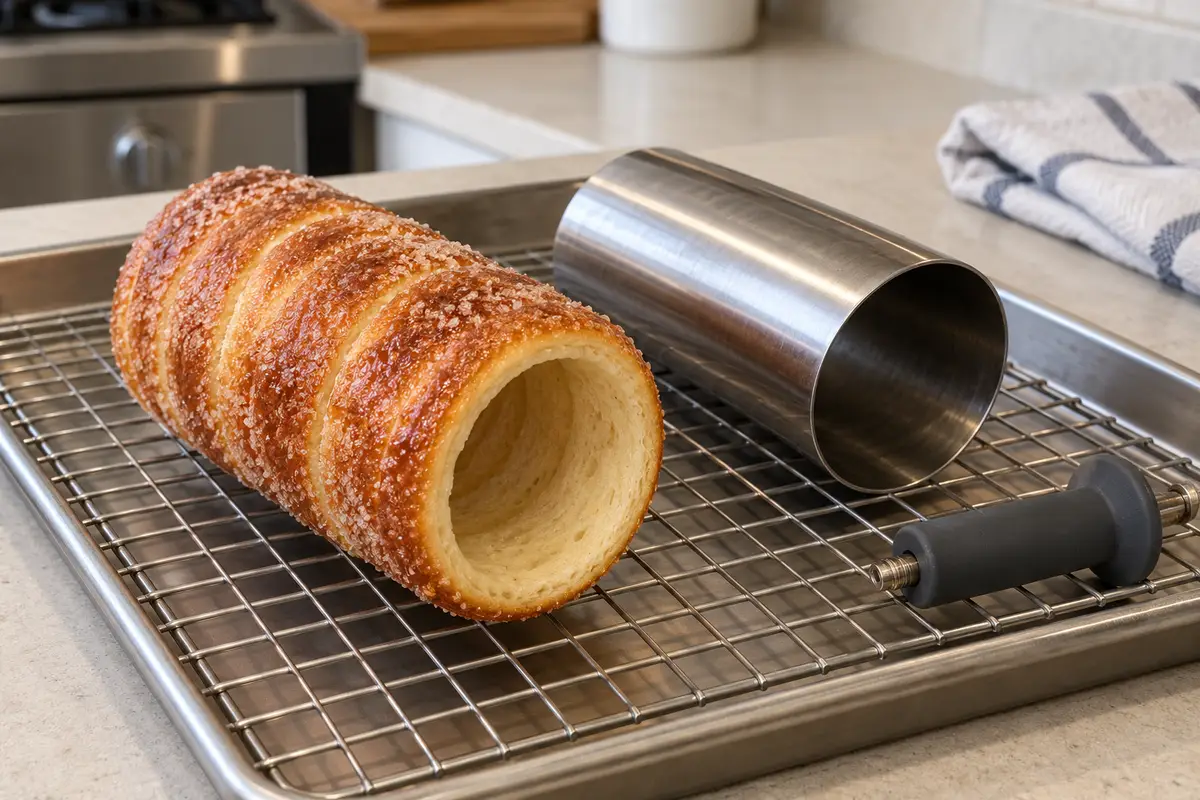
AI-generated Take the remaining two portions from the refrigerator. If they shrink back strongly, cover for 5–10 minutes, then repeat rolling, joining strips and winding. Use the remaining 4 g mold butter, 10 g surface butter and a separate 50 g sugar. Let the cakes rise 15–20 minutes, coat and bake as for the first batch, turning the molds. Slide off after a short rest. All the dough makes four cakes.
Serve after about 10 minutes of cooling, once the sugar crust is no longer hot enough to burn, tearing off successive turns. One cake is one serving; all ends are edible parts of the bake. Do not add filling or toppings. They are crispest on the baking day. Seal completely cooled leftovers in a container until the next day; before serving, briefly rewarm at 150°C for 4–5 minutes if desired, taking care with the sugar.
Estimated nutrition

Rate this recipe
0 ratings
Comments