
AI-generated
British Scones
Log in or create a free account to save recipes.
Source: https://recipheon.com/en/recipes/desserts/british-scones
About this recipe
These small British scones use baking powder and have a buttery flavor and tender, slightly crumbly centers. This plain version has no eggs or raisins. Rub cold butter into the flour, then add the milk and bring the dough together just until no dry patches remain. Keeping the dough thick and pressing the cutter straight down help the scones rise; twisting the cutter can seal the edges. Gather the scraps only once so further kneading does not toughen the crumb, and bake the last piece in a free-form shape. Brush only the tops with milk. The baked scones have golden surfaces, pale sides with natural cracks and soft, fully baked centers. All eight bake together on one baking sheet and are served after a brief cooling period.
Ingredients
Dough, dusting and brushing
260 g dry all-purpose flour (wheat) without added leavening agents, divided: 250 g for the dough and 10 g for dusting the work surface and cutter; discard excess dusting flour that does not become part of the dough
10 g baking powder
30 g fine white sugar
2 g fine salt
60 g cold butter made from cow's milk (82% fat)
165 ml cow's milk (3.5% fat), divided: 150 ml cold for the dough and 15 ml for brushing the tops; discard any unused brushing milk
Steps
Preheat the oven to 220°C on the conventional (no-fan) setting. Line a flat metal baking sheet at least 30 × 40 cm with parchment paper; have ready a bowl, spatula, round cutter 6 cm in diameter with a straight, sharp edge, pastry brush and cooling rack. Mix 250 g flour without added leavening agents with 10 g baking powder, 30 g sugar and 2 g salt, add 60 g cold cubed butter and briefly rub it in with your fingertips. The mixture should be loose, with fine butter crumbs; do not warm it in your hands for long, and do not rub it into a greasy paste.
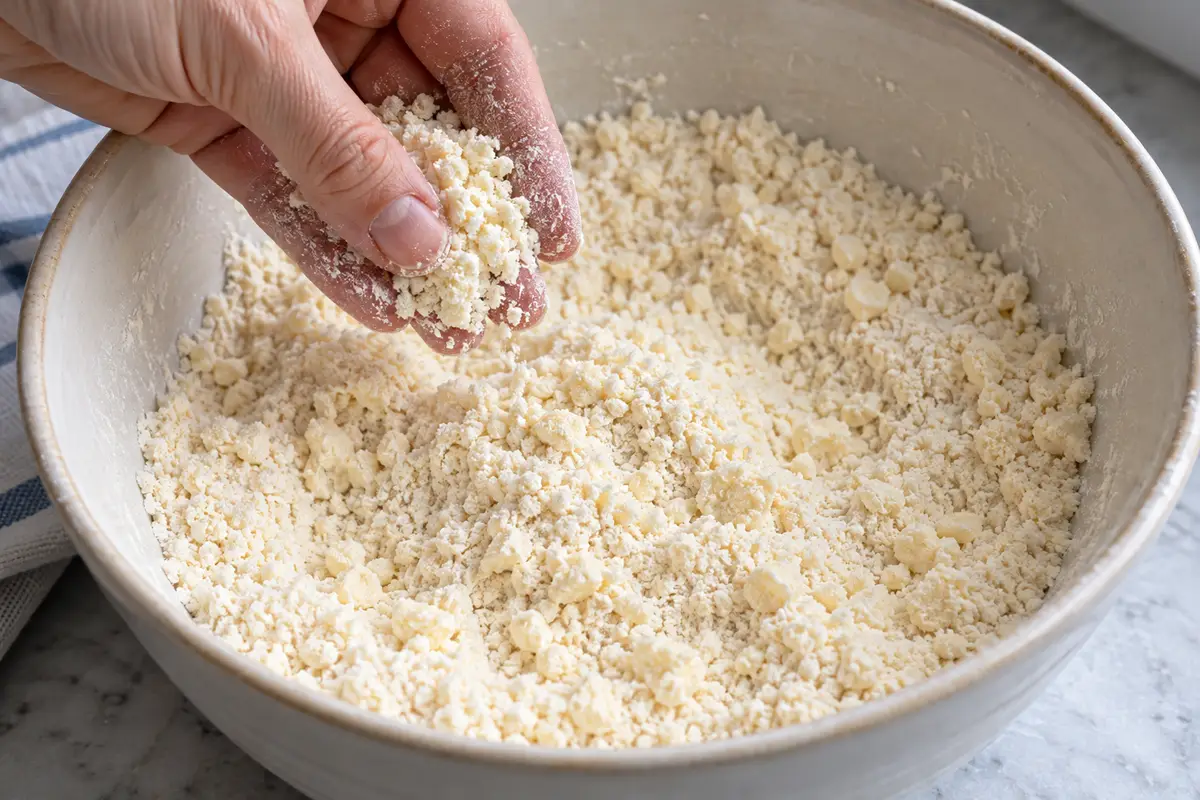
AI-generated Pour all 150 ml cold milk into the dry ingredients and mix briefly with a spatula, scraping up the flour from the bottom. Once moist clumps form, bring them together by hand into a soft dough that is not completely smooth, stopping as soon as no loose dry flour remains. Do not knead it like yeast dough, and do not add milk from the portion reserved for brushing. The dough should come together while staying cool and soft.
Lightly distribute the 10 g dusting flour over the work surface and cutter edge, using only as much as needed to prevent the dough from sticking. Gently pat all the dough into a rectangle about 18 × 12 cm and about 2.5 cm thick. Cut six closely spaced rounds in two rows of three, pressing the cutter straight down without twisting it. Gather the scraps and pat them out only once to the same thickness, cut a seventh round, then gently bring all remaining pieces together into an eighth, smaller scone with an irregular outline, keeping the same thickness. Transfer all eight to the baking sheet, leaving gaps of about 3 cm; discard loose flour that has not become part of the dough.
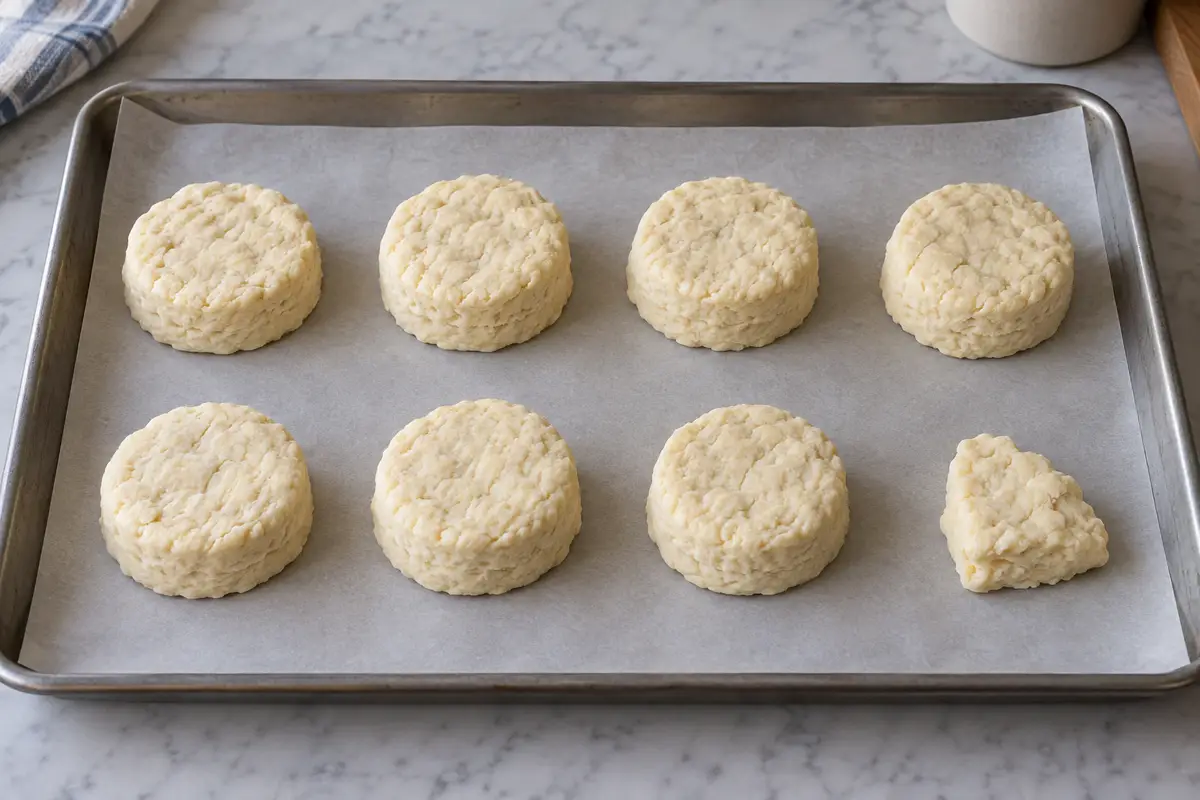
AI-generated Arrange the scones in two rows of four on the baking sheet, keeping the gaps between them. Pour 15 ml milk into a small dish and brush only the tops with a thin, even coating, without letting it run down the sides, which should be free to rise. Discard any unused brushing milk; do not add it to the dough, and do not replace it with extra fat. Start baking immediately.
Put the whole baking sheet on the middle rack of the preheated oven and bake at 220°C for about 12–15 minutes. The scones should rise noticeably, with golden tops and bottoms and pale, springy sides with a natural crack. A toothpick inserted into the center of one of the larger scones should come out without wet, sticky dough; if the center is still raw, bake briefly until it sets. The smaller irregular scone may finish sooner: check it after about 12 minutes and remove it if fully baked, leaving the larger ones to finish baking. All eight scones bake in one batch.
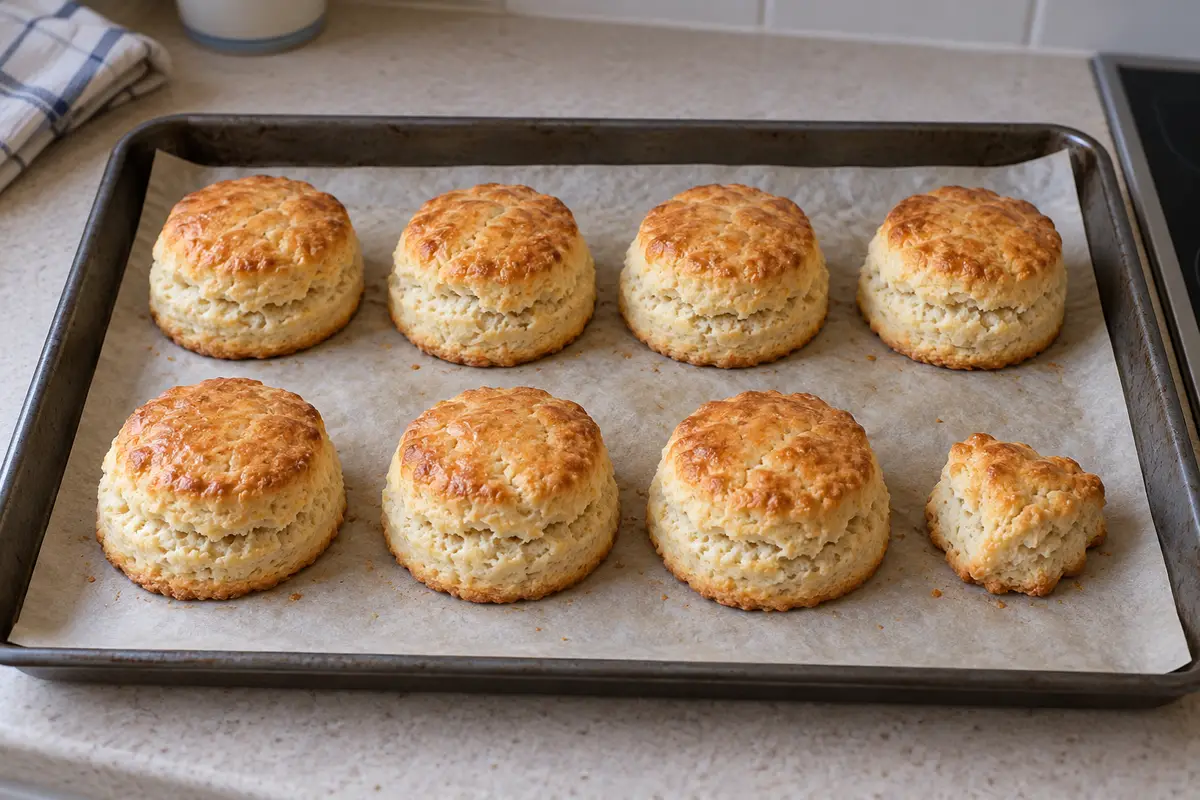
AI-generated Transfer all eight to a rack and leave them for about 10 minutes so steam can escape and the centers are no longer very hot. Do not stack them tightly, and do not seal hot scones in a container. The last piece may be smaller and less regular than the cut rounds; serve it with the others.
Serve the eight scones slightly warm, one per serving. When broken open, the crumb should be fully baked, soft and fine, not wet or gummy.
Estimated nutrition

Rate this recipe
0 ratings
Comments