
AI-generated
Crisp Polish Pastry Twists
Log in or create a free account to save recipes.
Source: https://recipheon.com/en/recipes/desserts/crisp-polish-pastry-twists
About this recipe
Pastry twists are light, crisp, and full of tiny blisters, with a thin dusting of powdered sugar gently sweetening their golden surface. First knead the dough made with egg yolks and sour cream, then fold it several times and beat it with a rolling pin. Rolled very thin, it becomes delicate, airy pastry. Resting makes the dough easier to roll without springing back, while minimal dusting helps avoid dry dough and cloudy oil. Thread the strips through a slit in the center and fry briefly in small batches until pale golden. Dust with powdered sugar only after cooling. The ingredients yield about one hundred to one hundred and twenty twists; the exact number depends on how thinly you roll the dough and the dimensions of the strips.
Ingredients
Dough, Frying, and Serving
270 g dry all-purpose flour without added raising agents, divided: 250 g for the dough and 20 g for light dusting; discard any loose, unused dusting flour
4 raw yolks from size M eggs, about 60 g edible contents without shells; the separated whites are not used in this recipe
100 g sour cream made from cow's milk (18% fat)
60 g powdered sugar, divided: 10 g for the dough and 50 g for dusting the entire batch to be served
2 g fine salt
1.5 l rapeseed oil for deep-frying; the remaining oil is not served, and the amount absorbed by the pastry twists is not measured
Steps
Set out a bowl, a rolling pin, a knife, two large trays, a heavy pot with a capacity of about 5 l and a diameter of 24 cm, a slotted spoon, a wire rack, and a sieve. Combine 250 g flour, four yolks, all 100 g sour cream, 10 g powdered sugar, and 2 g salt. Knead for about 5 minutes until the ingredients form a firm, smooth dough; gather every crumb into the main batch. Set the unused whites aside for another use, and keep the 20 g dusting flour separate.
Place the dough on a clean counter, flatten it, and beat it with the rolling pin, then fold in half, turn, and repeat. Continue for about 10 minutes, beating firmly but without tearing the dough. It should become elastic, and tiny bubbles may appear when you cut into it; do not add water or more flour.
Shape into a ball, place in the bowl, and cover tightly so the surface does not dry out. Leave at room temperature for about 30 minutes. After resting, the dough should stretch more easily and not spring back as much when rolled.
Divide the dough into four portions and keep three covered. Use only small amounts of the measured 20 g flour to lightly dust the counter, rolling pin, and trays. Roll the first portion into a sheet about 1 mm thick: the counter should show faintly through the dough, with no thick, opaque center remaining. Cut and shape each sheet immediately as described in the next step before rolling the next portion; do not add flour beyond the measured reserve.
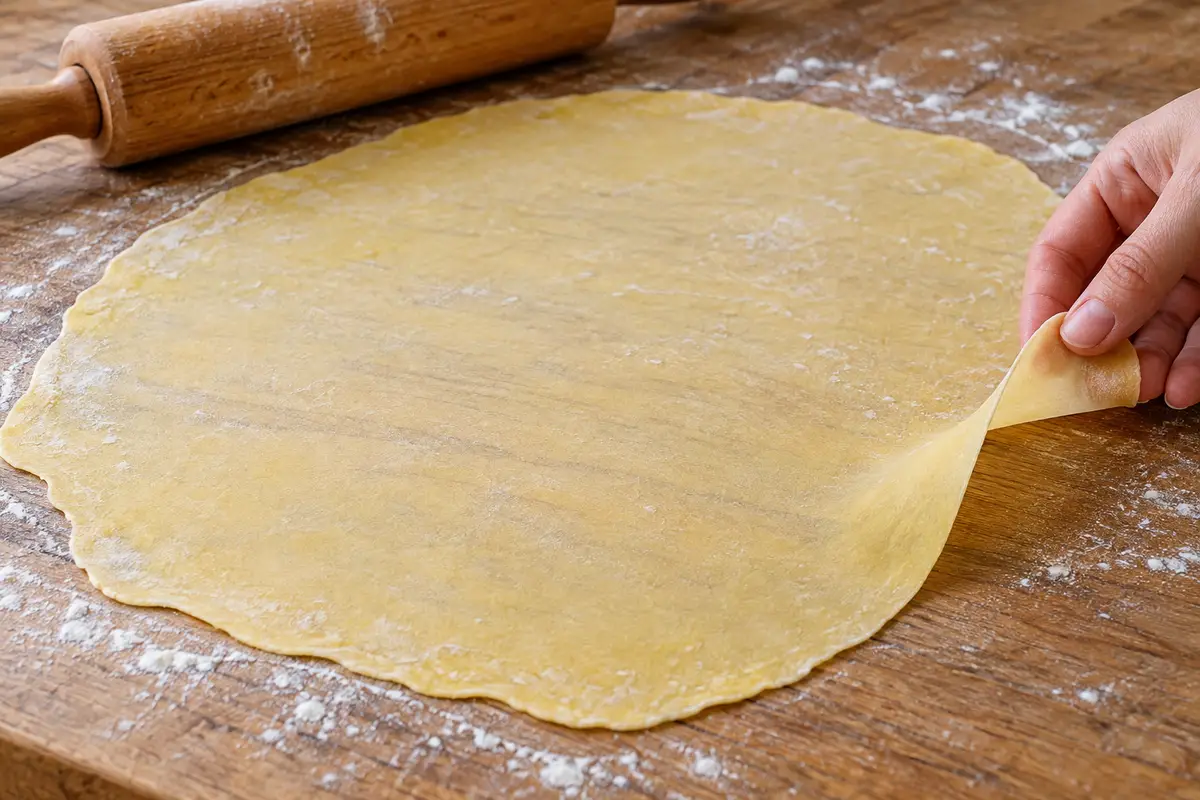
AI-generated Cut each sheet into strips about 3 cm wide and 10–12 cm long, with a slit about 3 cm long in the center that does not reach the ends. Pass one end through the slit and stretch gently to form a loose twist without pinching the center tightly. Arrange on lightly dusted trays and cover so they do not dry out. Gather the scraps, combine them once, and roll very thin as well; fry the final irregular pieces along with the twists. Use all the dough to make about 100–120 pieces, and discard the loose flour left on the counter and trays.
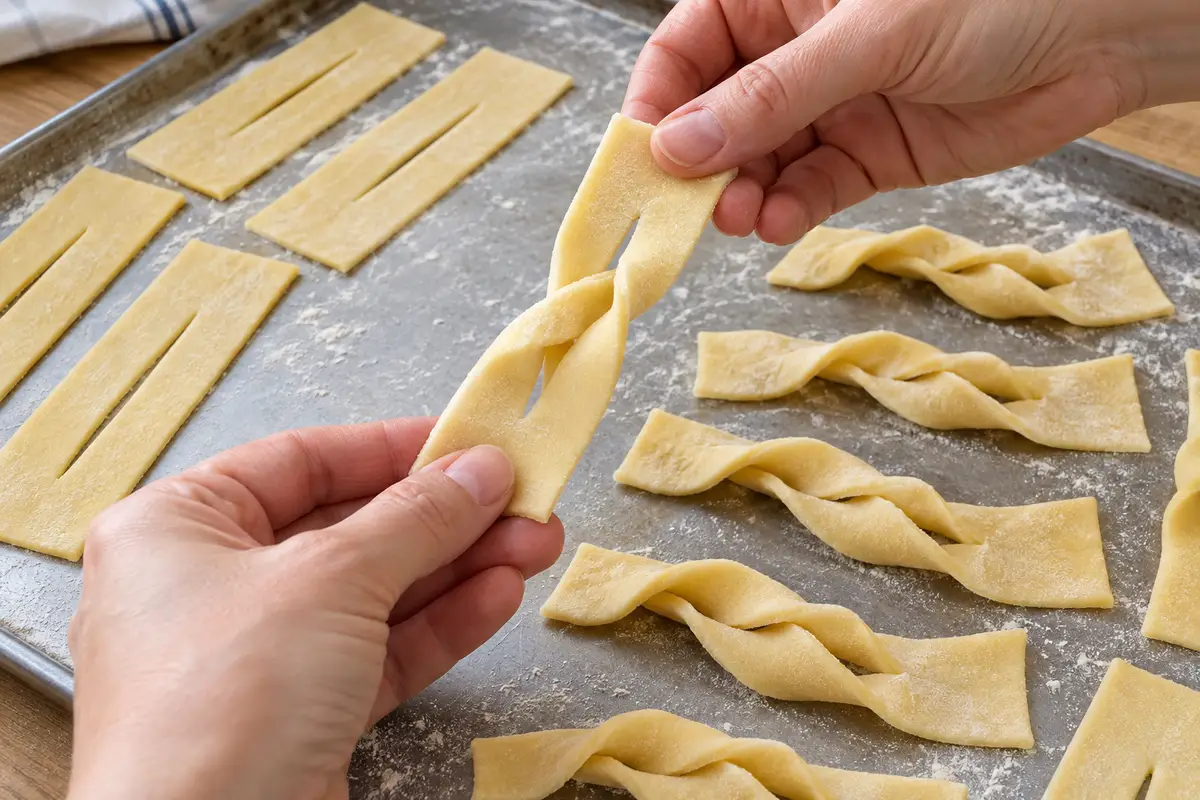
AI-generated Once shaping is complete, pour all 1.5 l oil into the dry pot; it will be about 3 cm deep, well below halfway up the pot. Heat over medium heat for about 10 minutes, to 170–180°C. A small irregular piece of the prepared dough should float and immediately sizzle gently without rapidly darkening; fry it and keep it to serve. If it browns quickly, lower the heat and wait before starting the next batch.
Carefully add eight pastry twists at a time without overlapping them; the last batch may be smaller. Fry for about 30–45 seconds on one side, turn, and fry the other side for about as long, for about 1–1.5 minutes total per batch, until pale golden with plenty of tiny blisters. Lift out with the slotted spoon, let the oil drip back into the pot, and transfer to the rack. Let the first twist cool briefly, then break it: the inside should be dry and crisp, without a gummy, raw strip; if needed, fry the broken pieces further too and extend the frying time for the remaining twists without scorching the surface. The whole batch requires about 13–15 rounds of frying, with about 30–60 seconds between them for the oil temperature to recover.
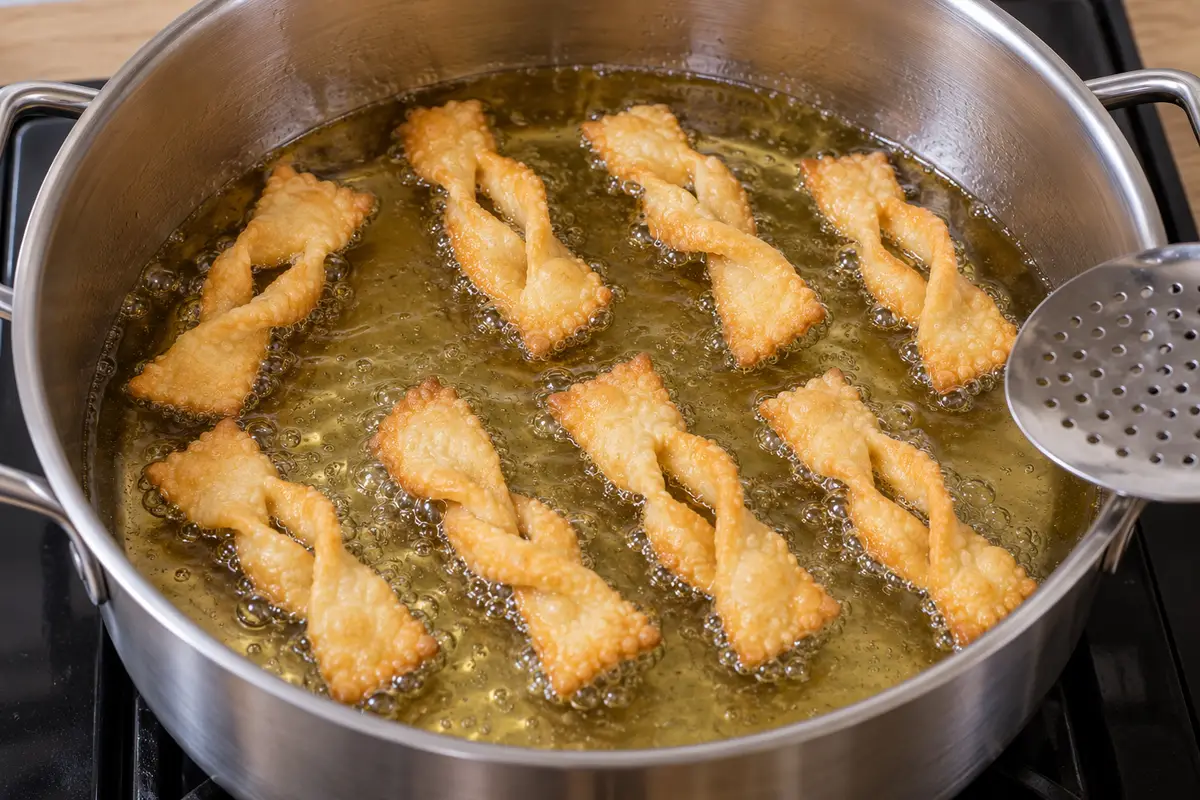
AI-generated Leave the twists on the rack, spread out without crowding or covering them, so they stay crisp. The last batch cools for about 15 minutes, while earlier batches cool during subsequent frying. Do not serve the remaining oil; once completely cool, dispose of it appropriately and do not pour it down the drain.
Transfer the cooled twists to the trays and sift all the remaining 50 g powdered sugar over the entire batch. Serve the irregular pieces too, along with the broken test twist if it has been fried completely. Divide into ten portions of about 10–12 pieces, including the sugar that has fallen onto the tray when serving.
Estimated nutrition

Rate this recipe
0 ratings
Comments