
AI-generated
Honey Layer Cake with Semolina Cream
Log in or create a free account to save recipes.
Source: https://recipheon.com/en/recipes/desserts/honey-layer-cake-with-semolina-cream
About this recipe
This honey layer cake has three thin honey pastry sheets, two layers of delicate semolina cream, and a chocolate glaze. The sheets are fairly hard after baking: only an overnight rest with the cream softens them enough to slice neatly. Cook the semolina in milk until thick, then let it cool before gradually beating it into fluffy butter. Both cream ingredients should be at a similar room temperature so the mixture stays smooth. Roll the dough directly on parchment paper without dusting it with flour, making the thin rectangles easier to move. A 20 × 30 cm pan yields twenty pieces. Plan to make the cake the day before serving; the semolina cools while you work on the pastry sheets.
Ingredients
Ingredients Used in Several Stages
350 g butter made from cow's milk (82% fat), divided: 100 g for the pastry sheets, 200 g softened butter at room temperature for the cream, and 50 g for the glaze
150 g superfine white sugar, divided: 50 g for the pastry sheets and 100 g for the cream
Honey Pastry Sheets
500 g dry all-purpose flour without added raising agents
150 g liquid honey
2 raw size M eggs, about 100 g edible contents without shells
5 g baking soda
2 g fine salt
Semolina Cream
600 ml cow's milk (3.2% fat)
70 g dry fine wheat semolina
Chocolate Glaze
100 g dark chocolate with about 60% cocoa, without filling or added alcohol
Steps
Pour 600 ml milk into a saucepan and add the 100 g sugar reserved for the cream. Heat over medium heat for about 5 minutes until the milk begins to boil, then lower the heat and pour in 70 g semolina in a thin stream, whisking constantly. Cook over low heat for 5–7 minutes, stirring frequently along the bottom, until the mixture is thick and smooth with no hard grains. Transfer to a wide bowl, cover with plastic wrap touching the surface, and leave for about 60–90 minutes until it reaches room temperature; meanwhile, prepare and bake the pastry sheets and leave the 200 g butter for the cream to soften.
In a small saucepan, heat 150 g honey, 100 g butter, and the remaining 50 g sugar over low heat for 3–5 minutes, stirring until the butter and sugar melt. Remove from the heat and leave for about 10 minutes until the mixture is only slightly warm; meanwhile, measure the flour, baking soda, and salt and prepare the parchment paper. Mix 500 g flour, 5 g baking soda, and 2 g salt in a bowl, add both eggs and the cooled honey mixture, and knead for 3–5 minutes until combined into a smooth, soft dough. Cover and refrigerate for about 30 minutes so the dough is less sticky and easier to roll.
Preheat a conventional oven (no fan) to 180°C. Divide the chilled dough into three equal portions and roll each between two sheets of parchment paper into a 20 × 30 cm rectangle about 4 mm thick. Straighten the edges by moving scraps to any gaps and rolling them again; use all of each portion this way. Remove the top sheet of paper and prick the surface with a fork, leaving the dough on the bottom sheet; you do not need extra flour for dusting.
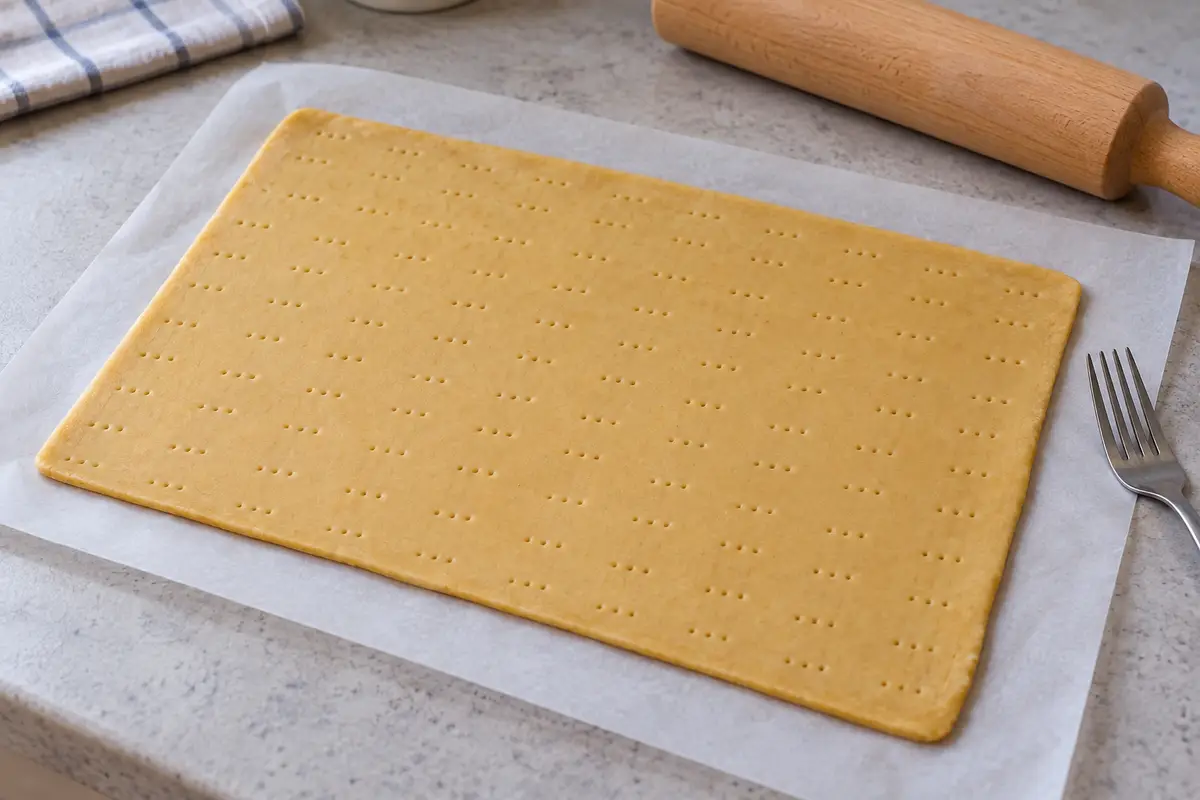
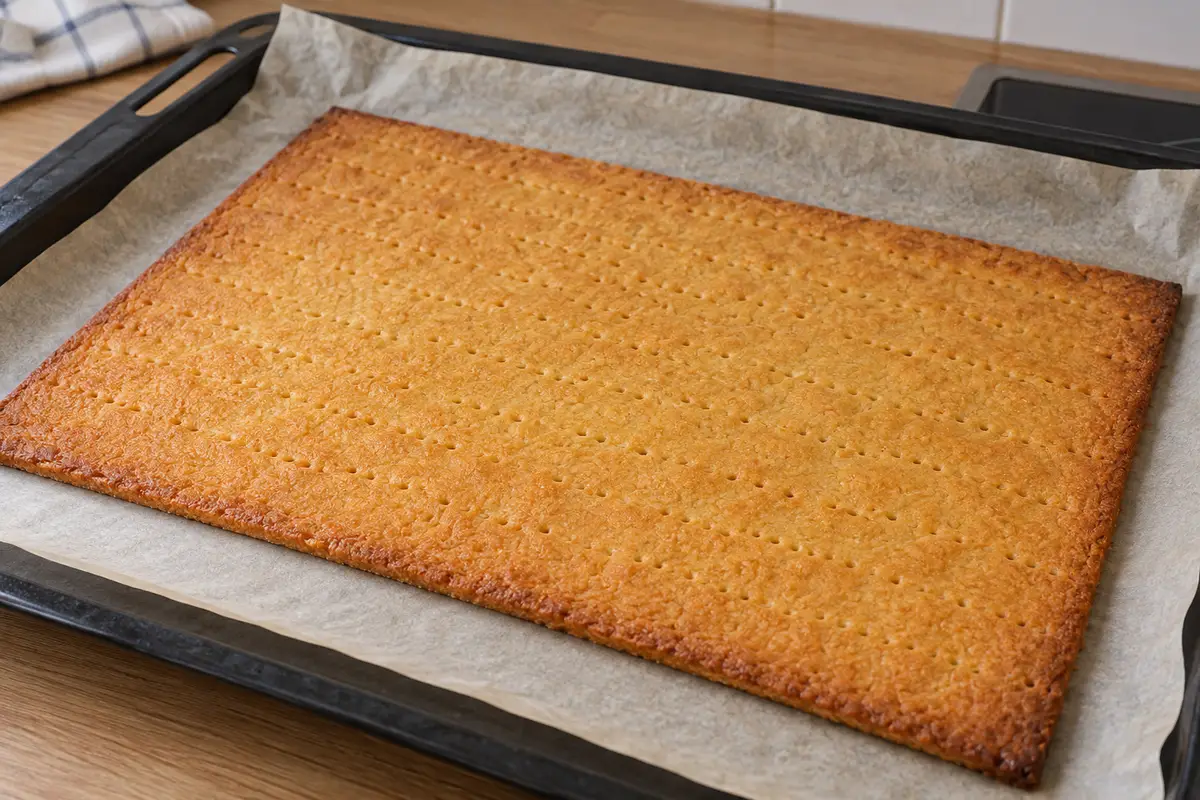
AI-generated Transfer the first pastry sheet with its paper to a flat baking sheet and bake on the middle rack for 10–12 minutes. Remove when the surface is evenly golden brown and the edges are slightly darker without scorching; bake the other two sheets one after the other in the same way. A hot pastry sheet is fragile, so slide it off the baking sheet with its paper onto a wire rack or flat work surface, and do not lift it by the edge. Leave to cool completely: the last sheet needs about 30 minutes, while the earlier ones cool during subsequent baking; they should be fairly hard once cool.
AI-generated Check that the cooked semolina has cooled completely and the 200 g butter for the cream is soft; both ingredients should be at a similar room temperature. Beat the butter with a mixer for 3–5 minutes until noticeably paler and fluffy. Add the cooled semolina one tablespoon at a time, beating on medium speed after each addition until you have used the whole mixture and the cream is smooth. Do not add warm semolina to the butter, as the cream may split.
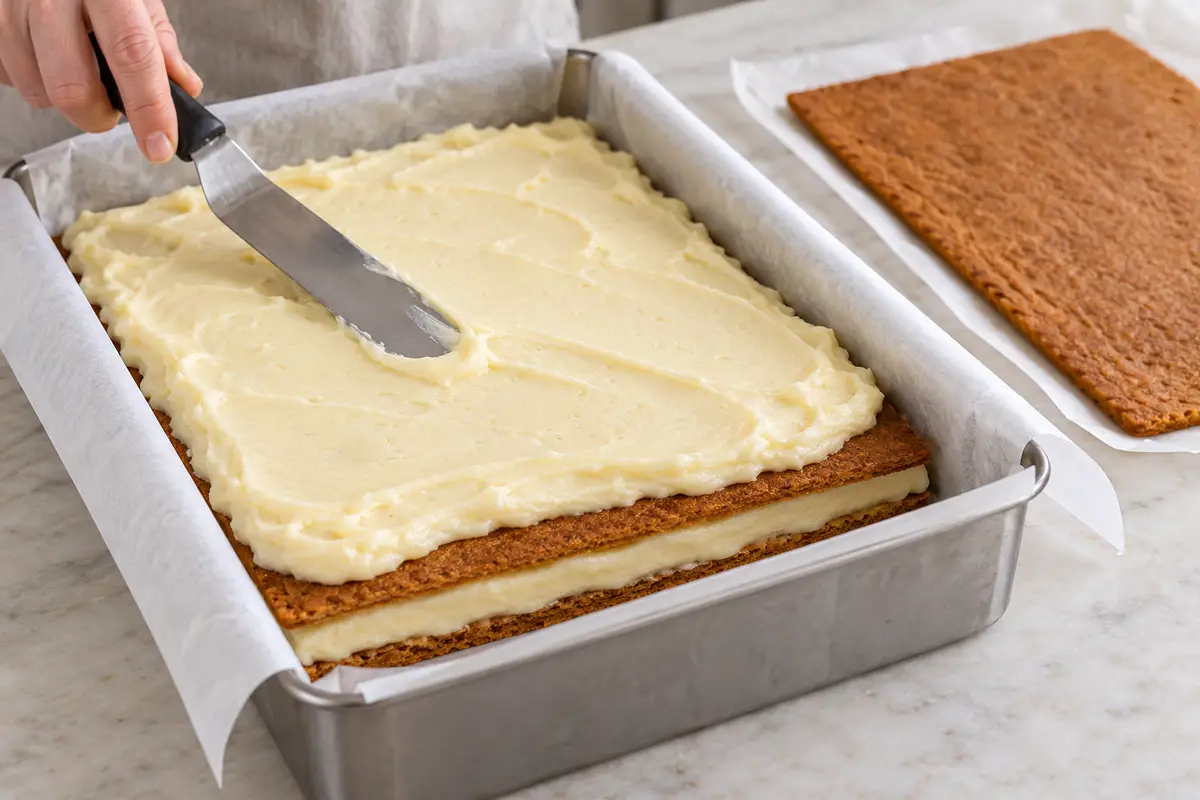
Line a pan with internal dimensions of 20 × 30 cm with parchment paper, leaving an overhang to lift the cake out later. Gently peel the baking paper off the cooled pastry sheets and place the first in the pan. Spread half the cream over it in an even layer, cover with the second sheet, and spread with the rest of the cream. Place the third sheet on top and press lightly with your open palm so it adheres to the cream without cracking; leave the top without cream.
AI-generated Break up 100 g dark chocolate and put it in a small saucepan with the remaining 50 g butter. Heat on the lowest setting for about 3–5 minutes, stirring constantly; remove the pan from the heat when most of the chocolate has melted and keep stirring until smooth. The glaze should be fluid and slightly warm, without boiling. Spread it evenly over the top pastry sheet.
Refrigerate the assembled cake for about 12 hours, preferably overnight: the pastry sheets need this time to absorb moisture from the cream and soften. After the first 20–30 minutes, once the glaze has set, cover the pan so the cover does not touch the top; this short stage is included in the twelve hours of chilling. After an overnight rest, the layers should hold together and the pastry should yield to the knife rather than breaking into hard pieces.
Take the cake out of the refrigerator about 20–30 minutes before serving so the cream is not hard, and lift it out of the pan using the overhanging paper. With a sharp knife, cut the rectangle into four rows and five columns to make twenty pieces about 5 × 6 cm. Apply gentle downward pressure as you cut instead of abruptly breaking the glaze, and wipe the blade between cuts.
Estimated nutrition

Rate this recipe
0 ratings
Comments