
AI-generated
Salzburger Nockerln — vanilla soufflé with three golden peaks
Log in or create a free account to save recipes.
Source: https://recipheon.com/en/recipes/desserts/salzburger-nockerln-vanilla-souffle-with-three-golden-peaks
About this recipe
Salzburger Nockerln is an Austrian dessert made from a fluffy egg mixture shaped into three tall peaks. Beneath the thin golden surface is a delicate vanilla center, while warm cream and butter remain at the bottom of the dish to serve with the soufflé portions. Glossy whipped egg whites give it lightness; gently fold in the yolks and a little cake flour. The foam should hold its peaks while staying smooth and flexible. Divide the entire mixture into three adjoining mounds and draw up their distinctive tips with a wide spatula. Have the oven and plates ready: the dessert must go straight into the oven after shaping and reach the table just as promptly. An oval ovenproof dish, mixer and a few simple ingredients are enough. A light dusting of powdered sugar emphasizes the three peaks, without extra decoration. This serves three people ready to enjoy the dessert as soon as it comes out of the oven.
Ingredients
All the vanilla soufflé mixture
180 g raw egg whites without shells or yolks, weighed, about 6 whites from medium eggs
54 g raw egg yolks without whites, weighed, about 3 yolks from medium eggs
60 g fine white sugar for the egg whites
8 g sugar with real Bourbon vanilla
30 g dry cake flour, wheat type 450
1 g fine salt
All the butter and cream base
20 g unsalted butter, 82% fat, whole and not clarified: 5 g for greasing the dish and 15 g for the cream
60 g liquid sweet cream, 36% fat, pasteurized and weighed, not sour cream
Light dusting before serving
12 g pure powdered sugar without starch for a light dusting; residue in the sieve and outside the dish is not served
Steps
Preheat the oven to 200°C, conventional heat, with a rack below the middle. Prepare an oval ovenproof dish with internal dimensions of about 26 × 18 cm, a height of at least 5 cm and a capacity of at least 1.2 L. Weigh the shell-free whites and yolks separately; set unused egg parts aside for another dish. The bowl and mixer attachments must be clean and free of grease.
From the full 20 g butter, weigh 5 g and grease the base and sides of the dry dish. Put the remaining 15 g on the bottom and pour in all 60 g cream. Leave the dish on the counter for now. Heat it only toward the end of whipping so the small amount of cream does not dry out while you prepare the mixture.
Immediately mix all 54 g yolks with 8 g vanilla sugar in a small bowl until no yolk streaks remain. Sift 30 g cake flour into another small bowl and place beside the egg whites. Have a wide spatula or pastry scraper and three plates ready, as you need to work promptly once the mixture is combined and after baking.
Whip 180 g egg whites with the salt until foamy. Gradually add all 60 g fine sugar and whip to a smooth glossy foam that holds peaks with slightly bending tips. This usually takes about 5–7 minutes. Toward the end, once the foam holds its peaks, put the prepared dish in the oven for 3–4 minutes and finish whipping, without making the foam dry.
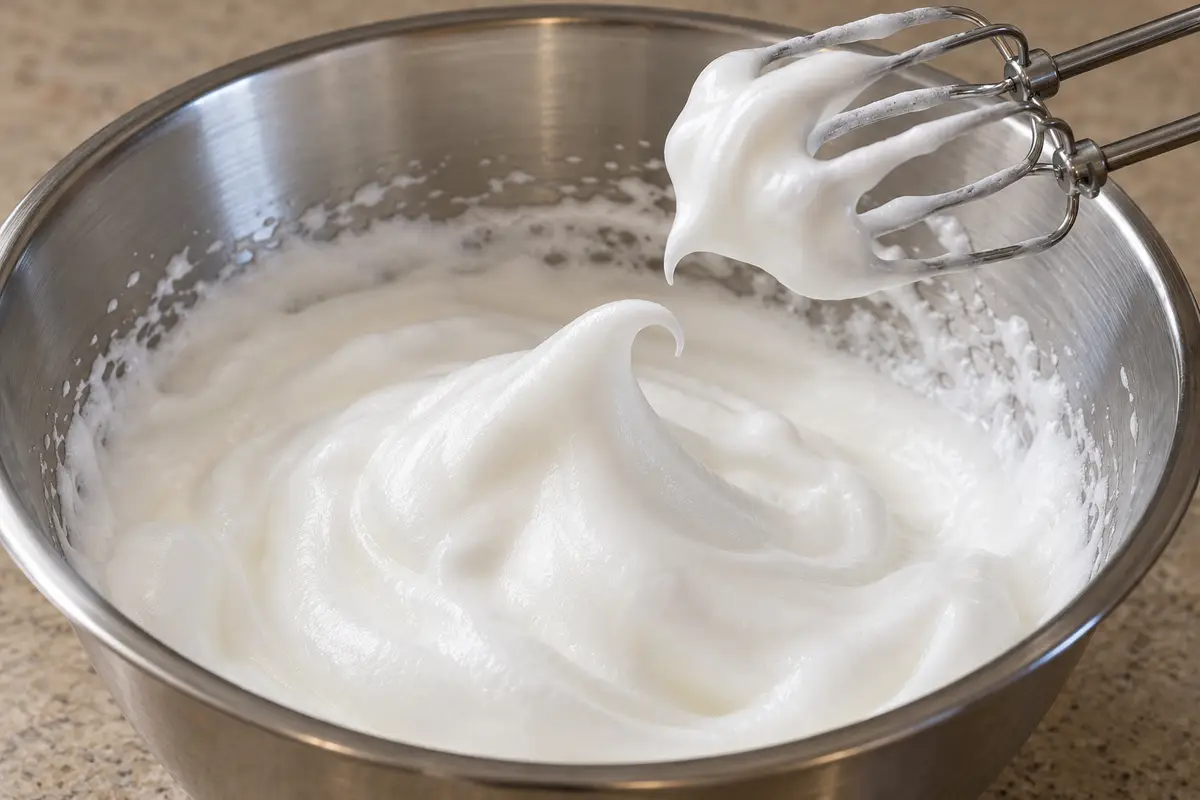
AI-generated Pour the vanilla yolks into the whipped whites and gently fold in with a wide spatula, lifting from the bottom. Add the sifted cake flour in two portions, briefly folding in the same way. Scrape down the sides of the bowl. Stop as soon as the dry streaks disappear; the mixture should stay airy and must not wait long before shaping.
Using oven mitts, take the heated dish out onto a stable heatproof trivet. The butter at the bottom should be melted and the cream warm and steaming. Gently tilt the dish to spread the liquid layer over the base, taking care with the hot edges. Leave all the butter and cream in the dish; do not pour anything away.
Transfer all the mixture to the warm dish in three adjoining mounds along its longer axis. Scrape in the mixture from the spatula and bowl too. Use a wide scraper or spatula to draw the sides of each mound upward, making three distinct pointed peaks. Do not flatten their tops; transfer the whole dish to the oven immediately.
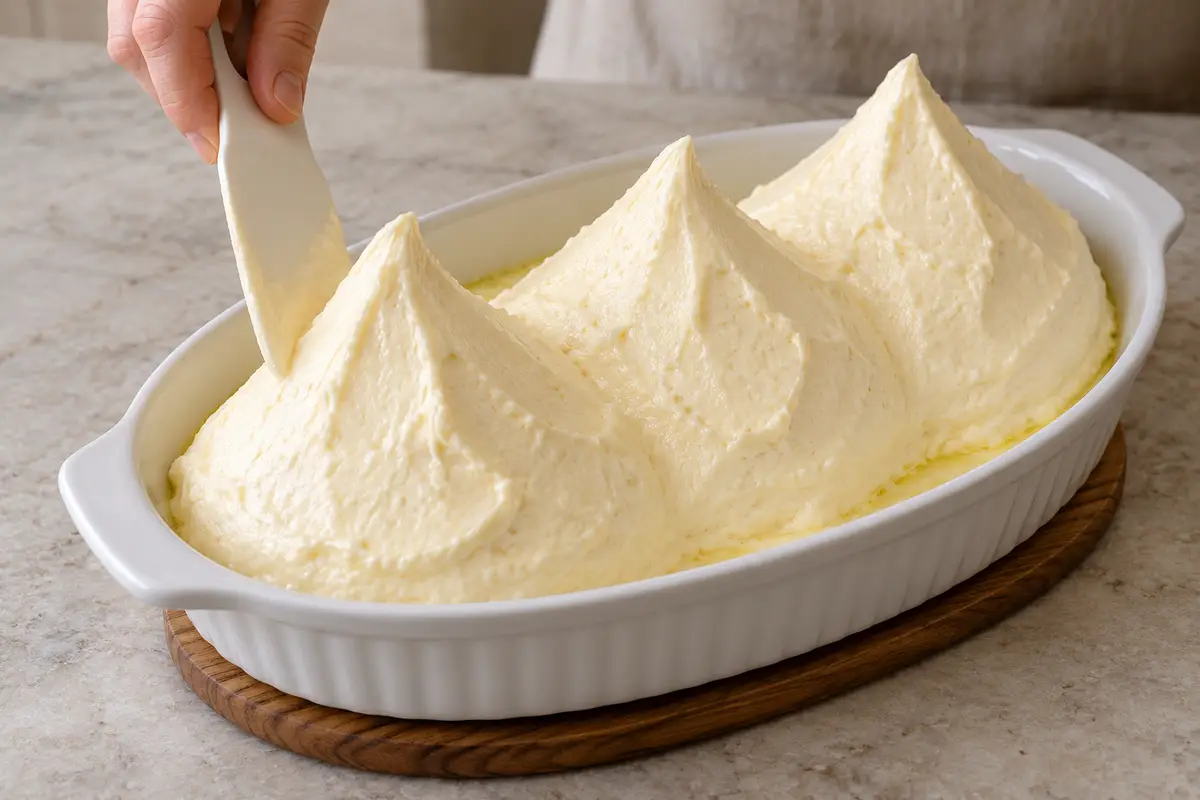
AI-generated Bake for about 12–16 minutes at 200°C, without opening the door for the first 12 minutes. The peaks should rise and turn golden, with the mixture between them gently set. The center should stay soft and airy, without runny raw egg mixture. Carefully place the dish on a trivet and serve immediately.
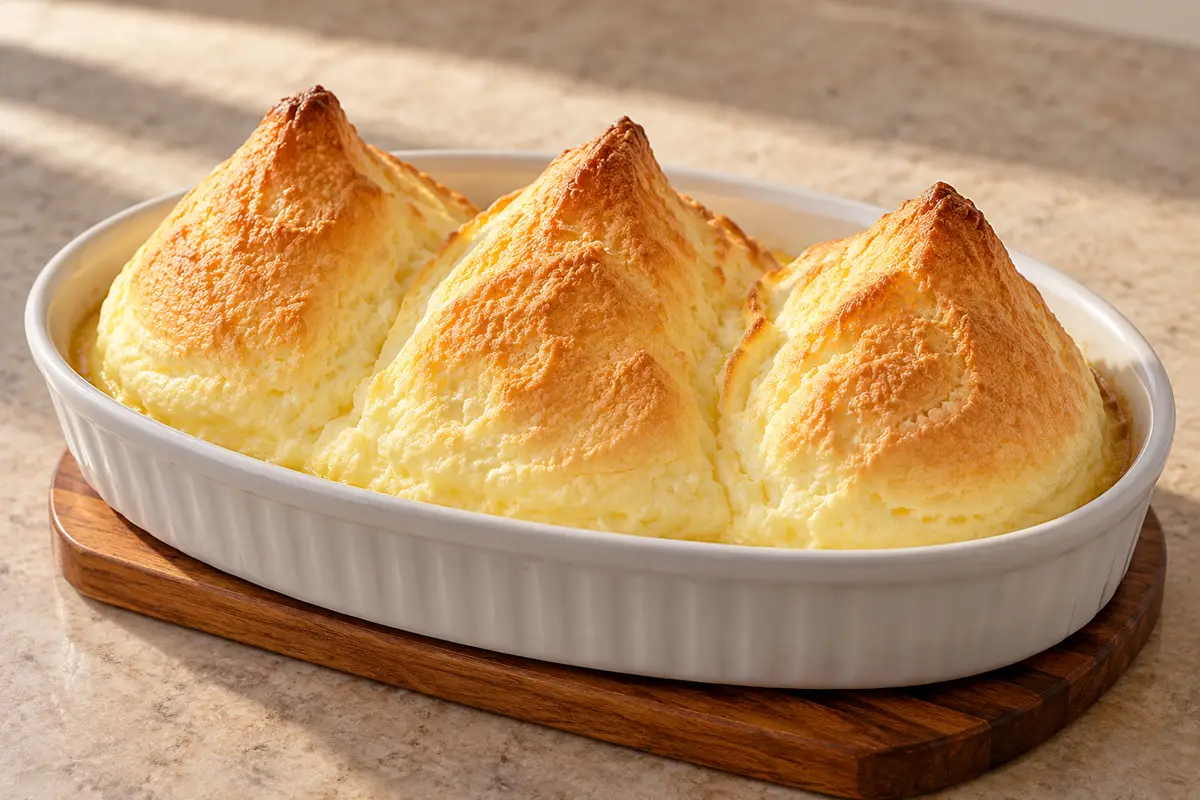
AI-generated Lightly dust the peaks with powdered sugar, leaving residue in the sieve and outside the dish. Divide into three servings: one peak and one-third of all the butter and cream layer from the bottom each. A serving weighs approximately 120 g. Serve at once, warning that the dish is hot; the soufflé naturally sinks as it cools, so do not postpone serving.
Estimated nutrition

Rate this recipe
0 ratings
Comments