
AI-generated
Cacio e pepe — pasta with pecorino and black pepper
Log in or create a free account to save recipes.
Source: https://recipheon.com/en/recipes/main-dishes/cacio-e-pepe-pasta-with-pecorino-and-black-pepper
About this recipe
Cacio e pepe is a Roman pasta dish in which Pecorino Romano and black pepper create a bold, creamy sauce. Finely grated sheep's milk cheese and starchy spaghetti cooking water form its base, without any cream, butter or olive oil. The pasta cooks in a small amount of water, while the pepper is heated briefly to release its aroma without burning. The key moment is combining them: add the cheese to the warm pasta off the heat, after letting it cool briefly. A large bowl at room temperature makes the sauce easier to control and helps keep the cheese from clumping. Add water gradually until the sauce is smooth and coats the strands. Serve the four portions immediately, while the cheese emulsion is still soft and glossy.
Ingredients
Pasta and cheese-pepper sauce
320 g dried durum wheat semolina spaghetti
160 g Pecorino Romano PDO, weighed without the hard rind
4 g black peppercorns
1.5 l water for cooking the pasta, some of which will be used in the sauce
6 g fine salt for the pasta water
Steps
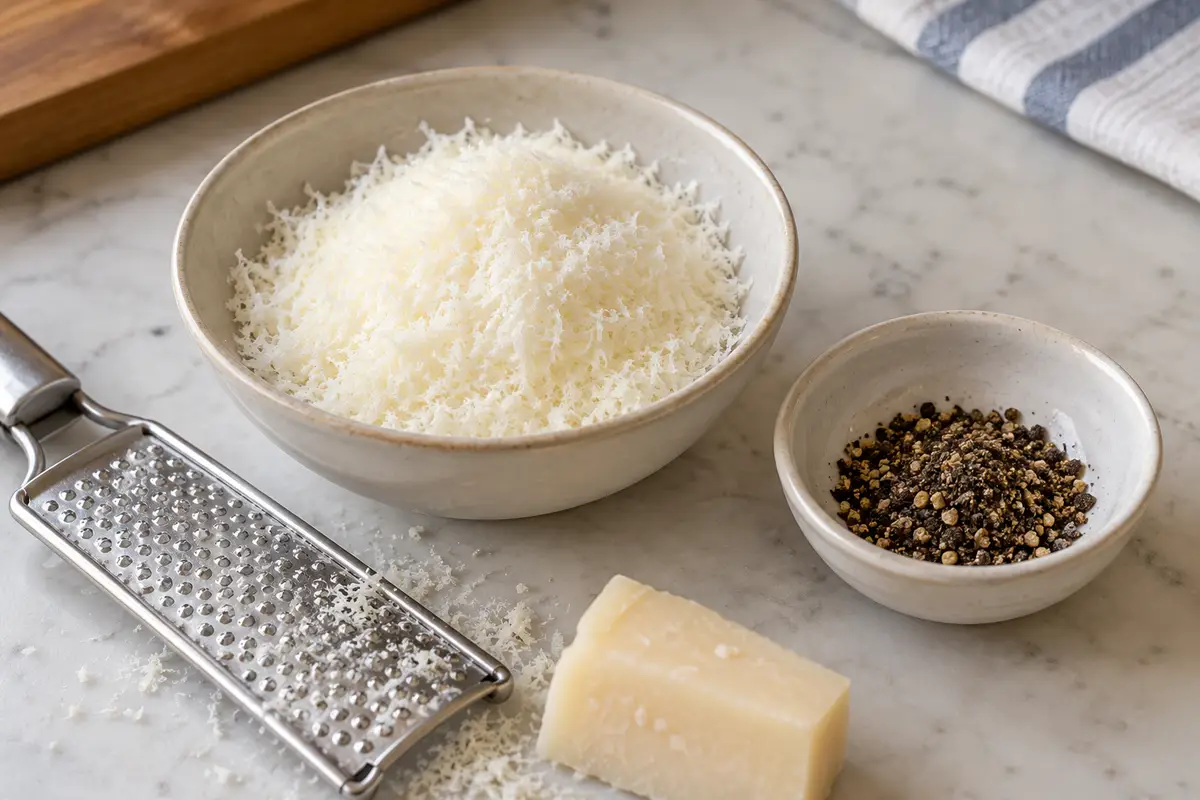
Grate the pecorino very finely using the fine holes of a grater, making light shreds that will combine easily with water. Do not use the hard rind. Crush the peppercorns in a mortar or with the flat side of a knife; set aside 1 g for serving and use the remaining 3 g in the skillet. Have ready a large bowl at room temperature, a small bowl for the cheese cream and pasta tongs.
AI-generated In a wide pot with a capacity of 3–4 l, bring 1.5 l water and 6 g salt to a boil. Add the spaghetti and, as the lower ends soften, gently submerge the full length of the strands. Stir frequently, especially at first, so they do not stick together. Plan to remove the pasta about 2 minutes before the al dente time on the package; it will finish cooking in the skillet. Do not add olive oil to the water.
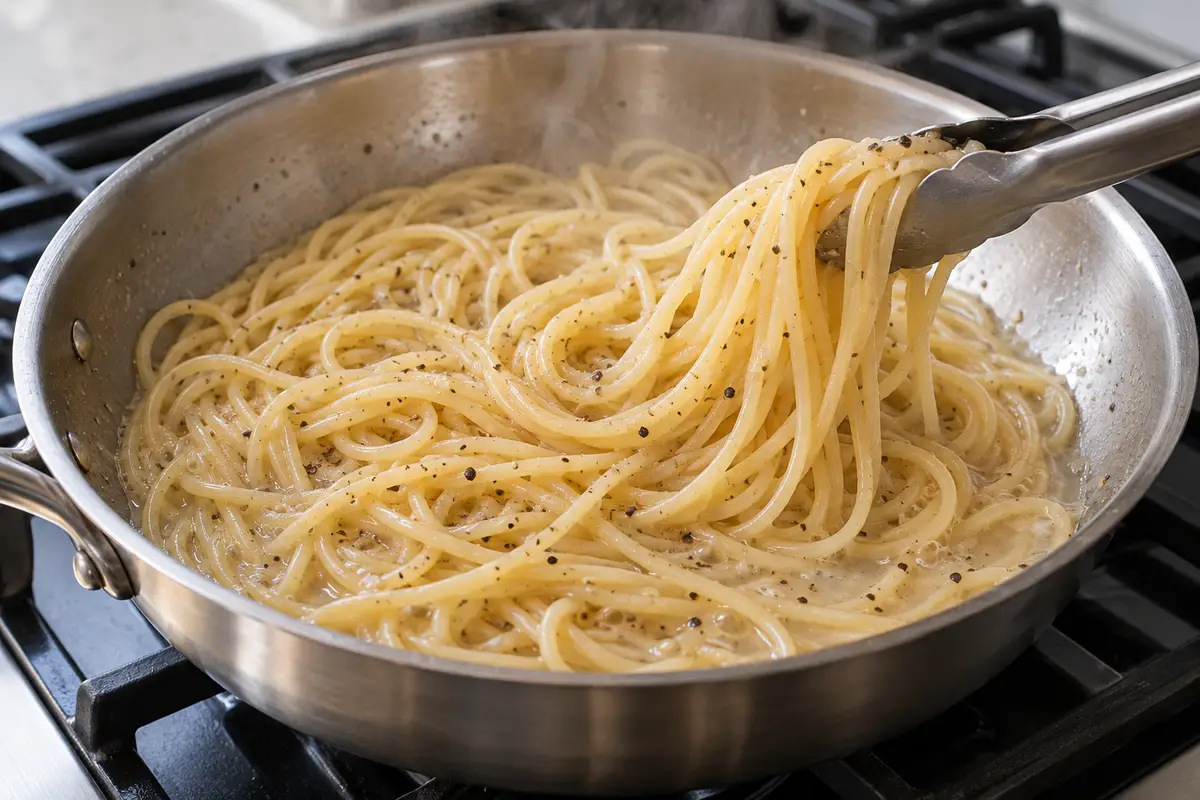
While the pasta cooks, put 3 g pepper in a dry skillet about 28 cm across. Heat over low heat for 30–45 seconds, shaking the skillet, just until fragrant. The pepper should not smoke or burn. Carefully add 60 ml starchy water taken from the pot after the spaghetti has cooked for a few minutes. Take the skillet off the heat until you transfer the pasta.
Before removing the spaghetti, reserve 250 ml water from the pot in a pitcher. Measure 60 ml of this into a small cup and let it cool for 3–4 minutes. Transfer the pasta with tongs to the pepper skillet, keeping the liquid at the bottom. Cook over medium heat for about 1–2 minutes, stirring, until the strands are al dente. If the skillet is drying out, add 1–2 tablespoons of water from the pitcher. A little liquid should remain on the bottom to combine with the cheese later.
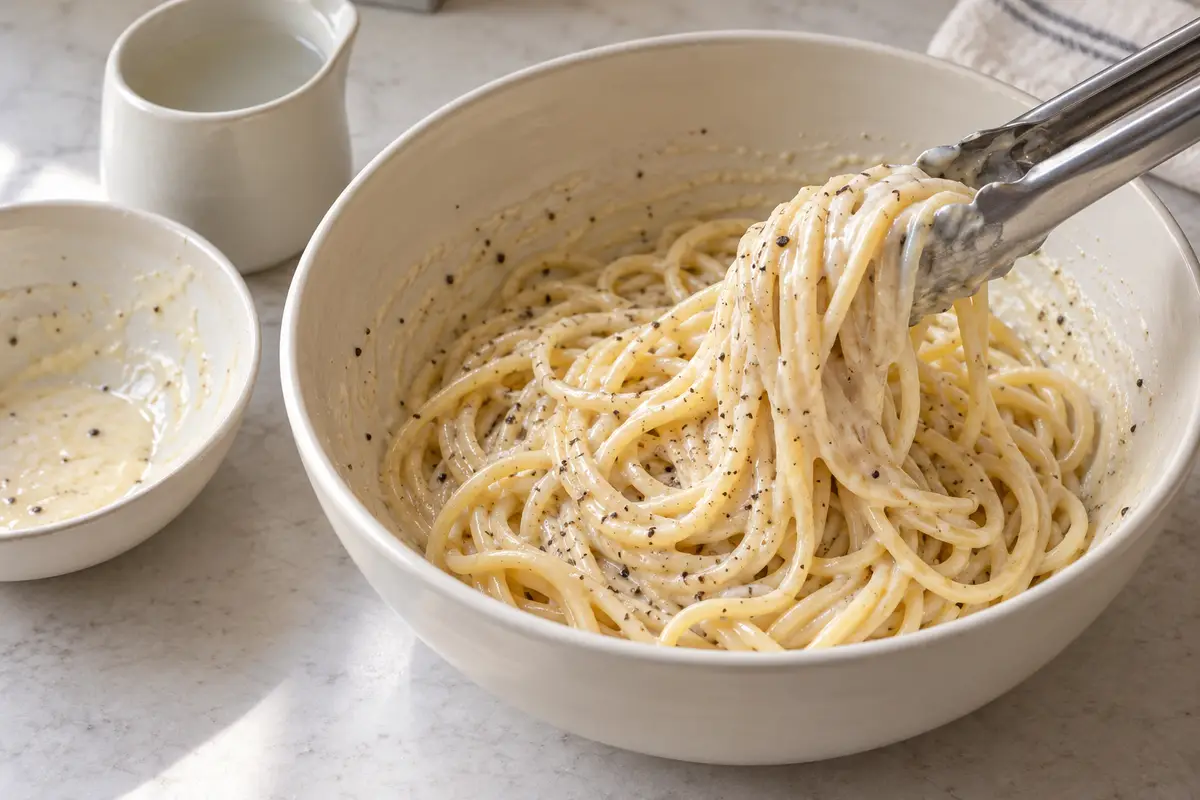
AI-generated Turn off the heat and transfer the spaghetti with all the liquid and pepper to the large bowl at room temperature. Toss for 1–2 minutes, until the pasta stops giving off heavy steam. In the separate small bowl, combine all 160 g grated pecorino with the measured, cooled 60 ml water, adding it gradually and stirring vigorously. It should form a thick, smooth cream. If it is very stiff, add another 1–2 teaspoons of cooled water from the pitcher. Do not pour boiling water over the cheese.
Add the cheese cream to the warm pasta, now no longer giving off heavy steam, in 2–3 additions. After each addition, stir vigorously and lift the strands with tongs. If needed, add cooled water from the pitcher a tablespoon at a time, until the sauce is smooth, fairly loose and coats the spaghetti thoroughly. You do not need to use all the reserved water. Do this entire stage in the bowl, without heating: intense heat encourages the cheese to clump. If the sauce thickens quickly, add a tablespoon of lukewarm water and toss again.
AI-generated Divide all the pasta and sauce between four plates and sprinkle with the reserved 1 g crushed pepper. Serve immediately, before the sauce thickens as it cools. Use all the cheese and pepper in the recipe; no extra cheese or fat is needed. Discard the remaining water in the pot and any unused water in the pitcher.
Estimated nutrition

Rate this recipe
0 ratings
Comments