
AI-generated
Christmas Eve sauerkraut with split peas
Log in or create a free account to save recipes.
Source: https://recipheon.com/en/recipes/main-dishes/christmas-eve-sauerkraut-with-split-peas
About this recipe
Christmas Eve sauerkraut with split peas combines the tang of fermented cabbage with mild, creamy yellow peas and the sweetness of gently sautéed onion. This simple Polish holiday dish is made with canola oil in this version, without meat or dairy. Cook the peas and cabbage separately: acidic juice should not reach the peas before they are completely soft. Partly mashing the cooked peas thickens the dish without flour or roux, leaving pleasant pieces of peas and visible cabbage strands. Bay leaf and allspice add a gentle aroma, while the onion brings a buttery sweetness even though only oil is used. These quantities make eight side servings for the holiday table. Serve after a brief rest, or prepare the day before, cool quickly and refrigerate. The flavors blend well when reheated, and the thick consistency is easy to adjust with a little water.
Ingredients
Peas cooked separately
250 g dried hulled yellow split peas, not whole unhulled peas
750 g water for cooking the peas, about 750 ml, plus a little extra boiling water if needed
2 g salt for the cooked peas, about 1/3 level teaspoon
Sauerkraut and onion
800 g naturally fermented white sauerkraut after briefly draining in a sieve, without rinsing or squeezing hard; usually about 900–1000 g product with juice is needed
250 g water for simmering the sauerkraut, about 250 ml
200 g peeled onion, about 2 medium onions
40 g canola oil for sautéing, weighed
2 dried bay leaves, to remove after cooking
4 allspice berries, to remove after cooking
0.5 g ground black pepper, about 1/4 teaspoon
Steps
Measure out the 250 g dried hulled yellow split peas. Pick over them, removing any small debris, and rinse thoroughly in a sieve under cool water. In this version, there is no need to soak them overnight. Do not substitute whole unhulled peas, which need different preparation and longer cooking. Prepare a separate heavy-bottomed pot holding at least 2 liters.
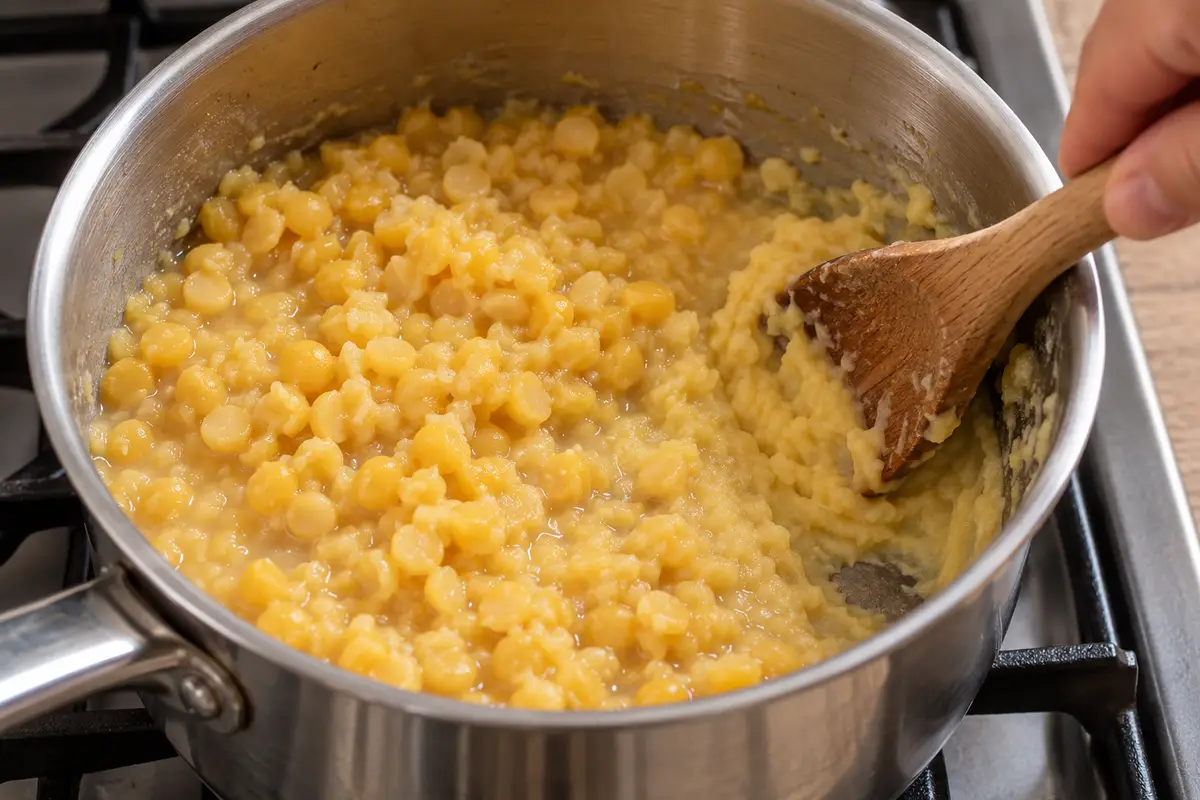
Put the peas in the pot, add the 750 g fresh water and bring to a boil. Reduce the heat, skim off excess foam and simmer with the lid ajar for about 45–60 minutes, until completely soft. Stir occasionally, more often near the end, and add a little boiling water only if the peas start sticking or liquid runs low. The halves should break apart easily under a spoon, without a hard center. Add the 2 g salt and mash roughly one-third of the peas against the pot's side. Keep all the peas and remaining thick liquid; do not drain anything.
AI-generated While the peas cook, briefly drain the sauerkraut in a sieve, without rinsing or squeezing hard. Weigh out 800 g prepared this way and cut long strands into shorter pieces. Transfer to a second pot and add the 250 g water, 2 bay leaves and 4 allspice berries. Simmer covered over low heat for about 40–50 minutes, stirring, until the cabbage is soft but retains its strands. If the bottom dries out, add a little water. Do not pour off the cooking liquid. Finally, remove the leaves and every allspice berry.
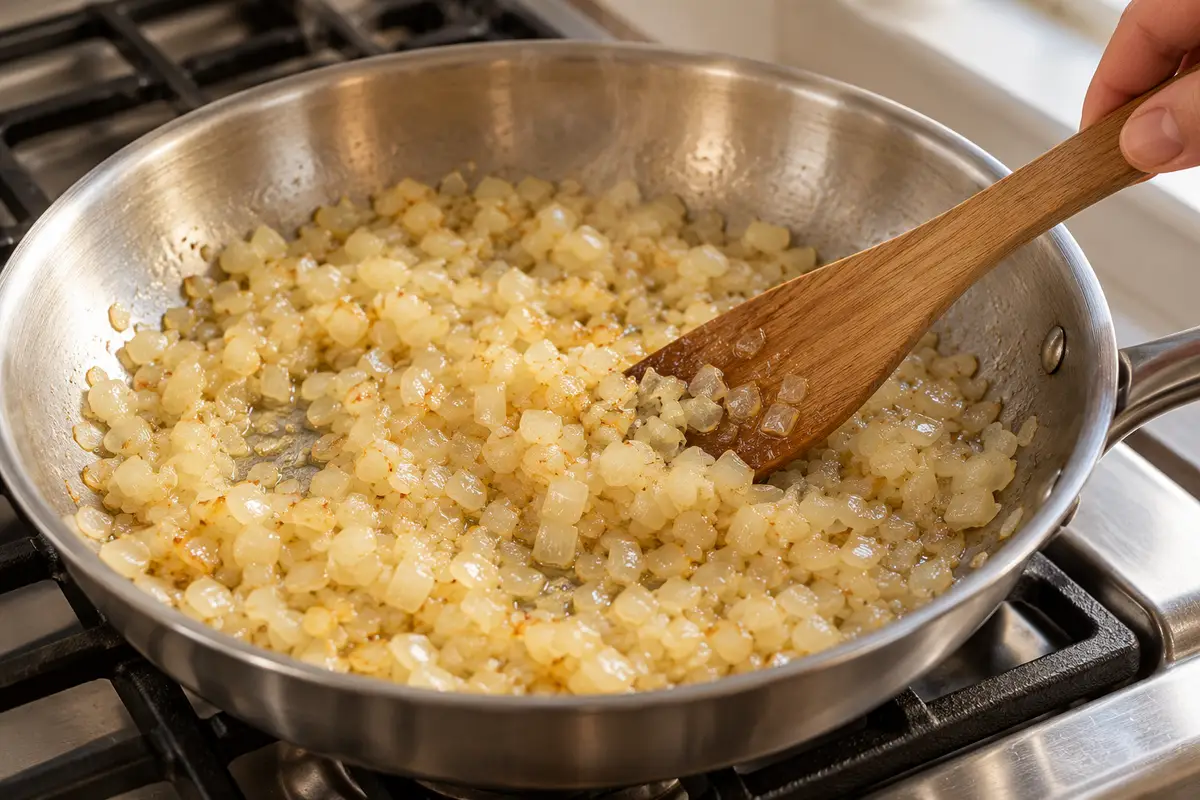
Peel the onions and weigh 200 g after removing skins and tough ends. Chop finely. Heat all the weighed 40 g canola oil in a frying pan, add the onion and sauté over medium-low heat for about 10–12 minutes, stirring often. The onion should soften and turn lightly golden, without dark or bitter scorched patches. Do not add butter, flour or sugar. Transfer all the onion and oil to the soft sauerkraut, scraping the pan with a spatula.
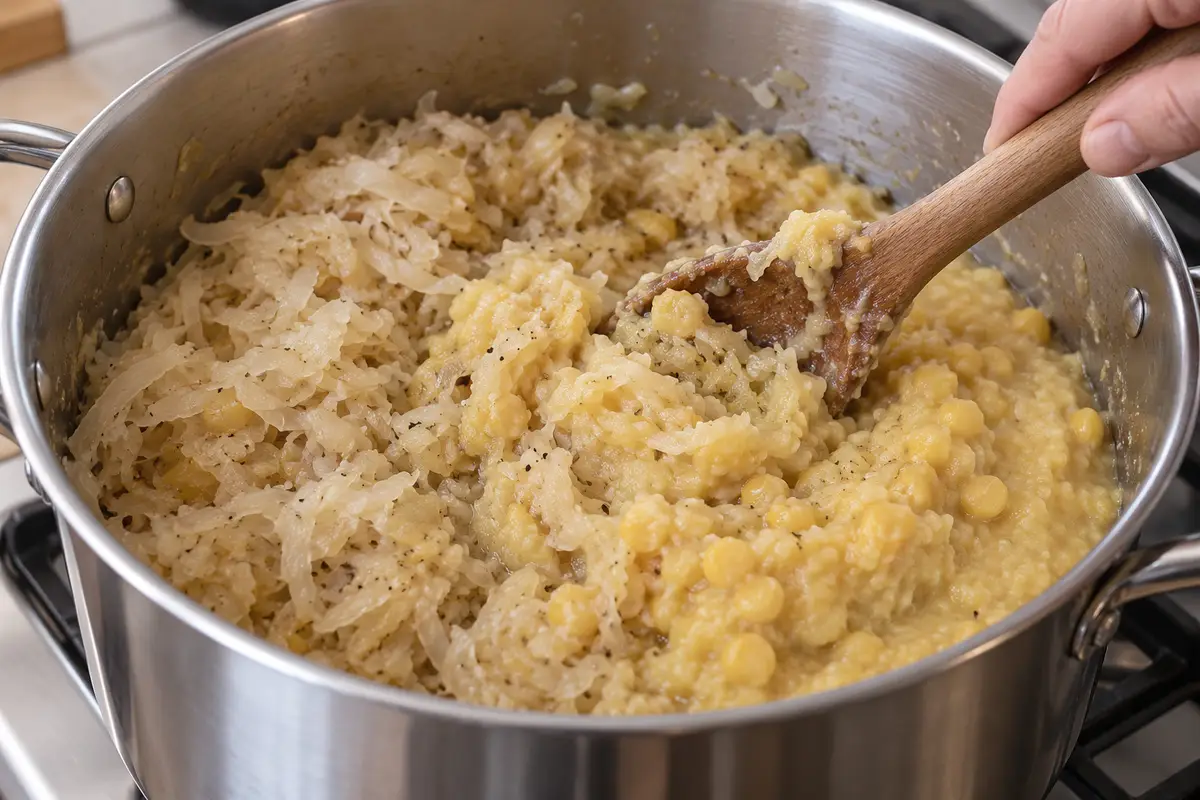
AI-generated Check that the peas no longer have hard centers; only then add them with all their retained liquid to the sauerkraut and onion. Add the 0.5 g black pepper and mix gently. Cook together over low heat for about 10–15 minutes, stirring often from the bottom. The dish should be thick and moist, with creamy peas coating the cabbage strands. If too loose, heat without a lid; if too firm, add hot water 1–2 tablespoons at a time. Do not thicken with flour and do not add the drained raw sauerkraut juice.
AI-generated Take the pot off the heat and leave covered for about 10–15 minutes. Divide the whole dish into eight side servings and serve warm, without extra toppings or decorations. If preparing the day before, transfer to shallow containers, cool briefly and refrigerate instead of leaving the pot on the counter overnight. Keep for up to 3 days. Reheat the amount needed over low heat with a little water, stirring until hot throughout. You can freeze portions for 2 months and thaw them in the refrigerator.
Estimated nutrition

Rate this recipe
0 ratings
Comments