
AI-generated
Confit de canard — duck legs with crisp skin
Log in or create a free account to save recipes.
Source: https://recipheon.com/en/recipes/main-dishes/confit-de-canard-duck-legs-with-crisp-skin
About this recipe
Confit de canard is made by slowly cooking duck legs in duck fat, then browning them for crisp skin. The brief preparation is spread over two days: first rub the meat with salt and leave it in the refrigerator overnight, then cook it slowly with garlic, thyme and bay leaves. During the confit stage, the fat should bubble only very gently and the legs should become so tender that a fork slips easily into the meat. Lifting them from the fat bath and finishing them separately on a rack dries and browns the skin. This version is served straight after cooking, without storing the meat under fat.
Ingredients
Duck and fat for confit
4 raw skin-on, bone-in duck legs, about 300 g each, about 1.2 kg in total before preparation
1.5 kg rendered duck fat for confit — 1.2 kg to start and up to 300 g in reserve; most of the fat bath is not served
18 g fine salt for rubbing; visible excess and released moisture will be removed after the overnight cure
1 g coarsely ground black pepper
16 g garlic, about 4 cloves, weighed after peeling; the cooked cloves are served with the duck
4 sprigs fresh thyme, about 4 g, to be removed after cooking the confit
2 dried bay leaves, about 0.4 g, to be removed after cooking the confit
Steps
Pat the duck legs dry and remove any remaining feathers, but do not cut away the skin covering the meat. Rub all over with the salt and pepper, place in a dish, cover and refrigerate for 12 hours. The next day, wipe off the released moisture and visible salt crystals with kitchen paper, then dry the skin thoroughly.
Preheat the oven to 120°C with top and bottom heat. In a saucepan, slowly melt 1.2 kg duck fat over a low heat for about 10 minutes, without letting it reach frying heat. Arrange the legs snugly, skin-side up, in a deep ovenproof pot with a lid, about 4 l in capacity and 22–24 cm across, tucking the lightly crushed garlic, thyme and bay leaves between them. Carefully pour over the warm fat; the meat and skin should be fully covered, so add melted reserve fat if needed, leaving several centimeters of space below the rim of the pot.
Cover the pot and place in the oven for 3–3.5 hours. The fat should be hot with only an occasional gentle bubble; if it boils vigorously, reduce the oven temperature to 110°C. Near the end, test the meat near the joint with a fork: it should enter with little resistance and the meat should come away from the bone easily, while the leg still holds its shape. If it is still tough, cook for about another 30 minutes and check again.
Using a wide spatula to support the meat underneath, carefully lift the legs out of the fat so they do not fall apart. Set them skin-side up on a metal rack over a baking tray and leave to drain while raising the oven temperature to 230°C with top and bottom heat; heating up will usually take about 15 minutes. Lift out the garlic cloves separately and reserve for serving, and remove the thyme and bay leaves. Leave most of the fat in the pot, without pouring it over the legs before the final roasting.
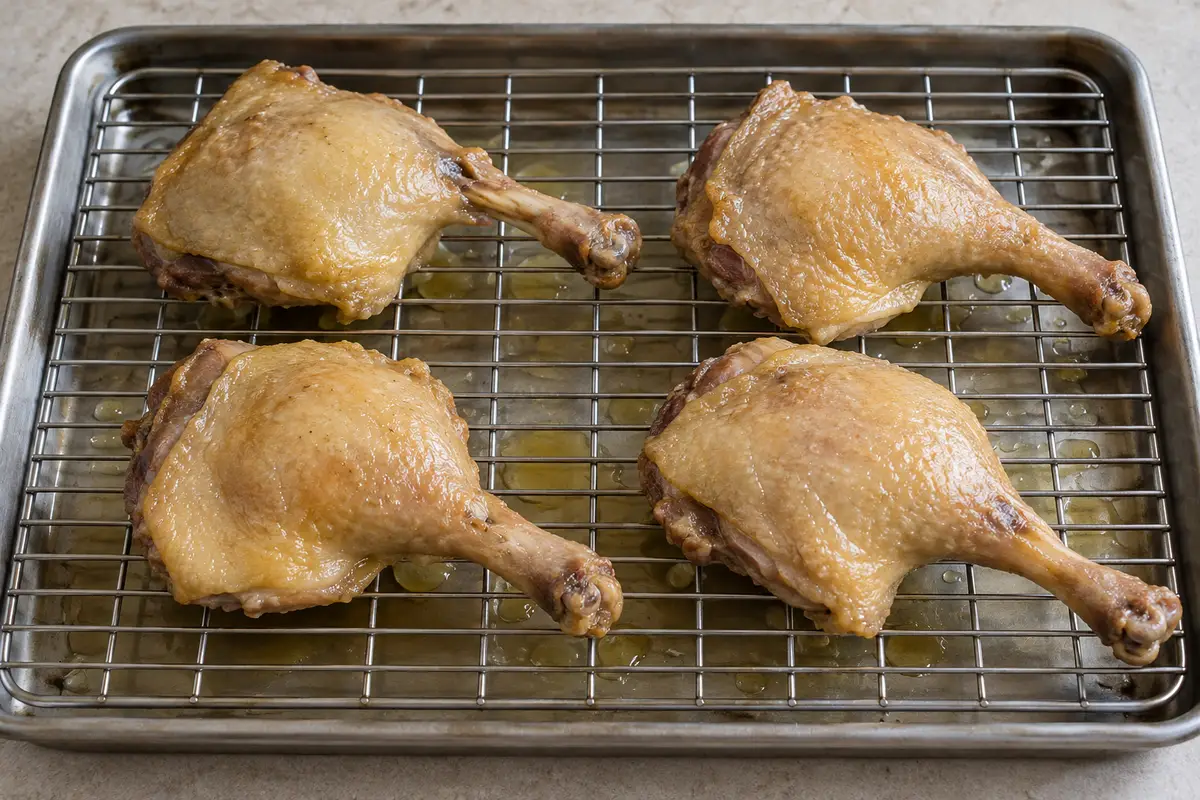
AI-generated Place the tray and rack on the middle shelf of the preheated oven and roast without covering for 15–20 minutes. The skin should be distinctly golden brown and crisp; if it darkens too quickly, move the tray down one shelf. The rendered fat needs to drip onto the tray, so do not place the legs directly in liquid and do not baste the skin with juices.
Serve one duck leg per portion with a soft garlic clove. The meat beneath the skin should be very tender, while the skin is dry and crisp. Serve straight away; the fat from the cooking bath and tray is not a sauce to pour over the finished portions.
Estimated nutrition

Rate this recipe
0 ratings
Comments