
AI-generated
Cordon Bleu — Crispy Veal with Ham and Gruyère
Log in or create a free account to save recipes.
Source: https://recipheon.com/en/recipes/main-dishes/cordon-bleu-crispy-veal-with-ham-and-gruyere
About this recipe
Cordon bleu encloses ham and melted Gruyère in thin veal surrounded by a golden, crisp breadcrumb coating. Wrapping the cheese in ham helps keep it inside the cutlet, but a wide, firmly pressed meat edge is just as important. Pound the cutlets evenly so the delicate veal can cook through before the breading gets too dark. Clarified butter gives the crust a buttery flavor and allows steady cooking over medium heat. Cook the four cutlets in two batches, keeping the first briefly on a rack in a warm oven so the undersides do not soften. Serve the cordon bleu right away, while the cheese is still flowing.
Ingredients
Meat and Filling
600 g raw veal from the leg, without bones or thick membranes, in 4 slices of about 150 g each and about 2 cm thick, for butterflying and pounding
100 g cooked pork ham, in 4 large, thin slices of about 25 g each
120 g Gruyère cheese, without the rind, in 4 pieces of 30 g each
4 g fine salt for the meat
1 g ground black pepper for the meat
Breading and Frying
60 g all-purpose flour for breading; discard any unused flour
2 medium eggs, about 100 g without shells, for breading; discard any unused egg
120 g fine, dry breadcrumbs for breading; discard any unused breadcrumbs
100 g clarified butter for frying, 50 g for each of the 2 batches; do not serve the fat left in the skillet
Steps
Pat the meat dry with paper towels. Cut horizontally into each slice from a long side, stopping about 1 cm short of the opposite edge, and open it like a book. Place between two sheets of plastic wrap and gently pound with the flat side of a meat mallet to about 3–4 mm thick and about 18 × 20 cm, without making holes. Remove the plastic wrap and distribute all 4 g of salt and 1 g of pepper evenly over both sides of all the cutlets.
Shape each weighed portion of Gruyère into a flat piece about 8 × 4 cm; if it consists of several thinner slices, stack them. Wrap each 30 g portion of cheese in 1 slice of ham, folding the edges over the filling. Place 1 packet on one half of each pounded cutlet, leaving at least 2 cm of bare meat along the edges that will meet when folded.
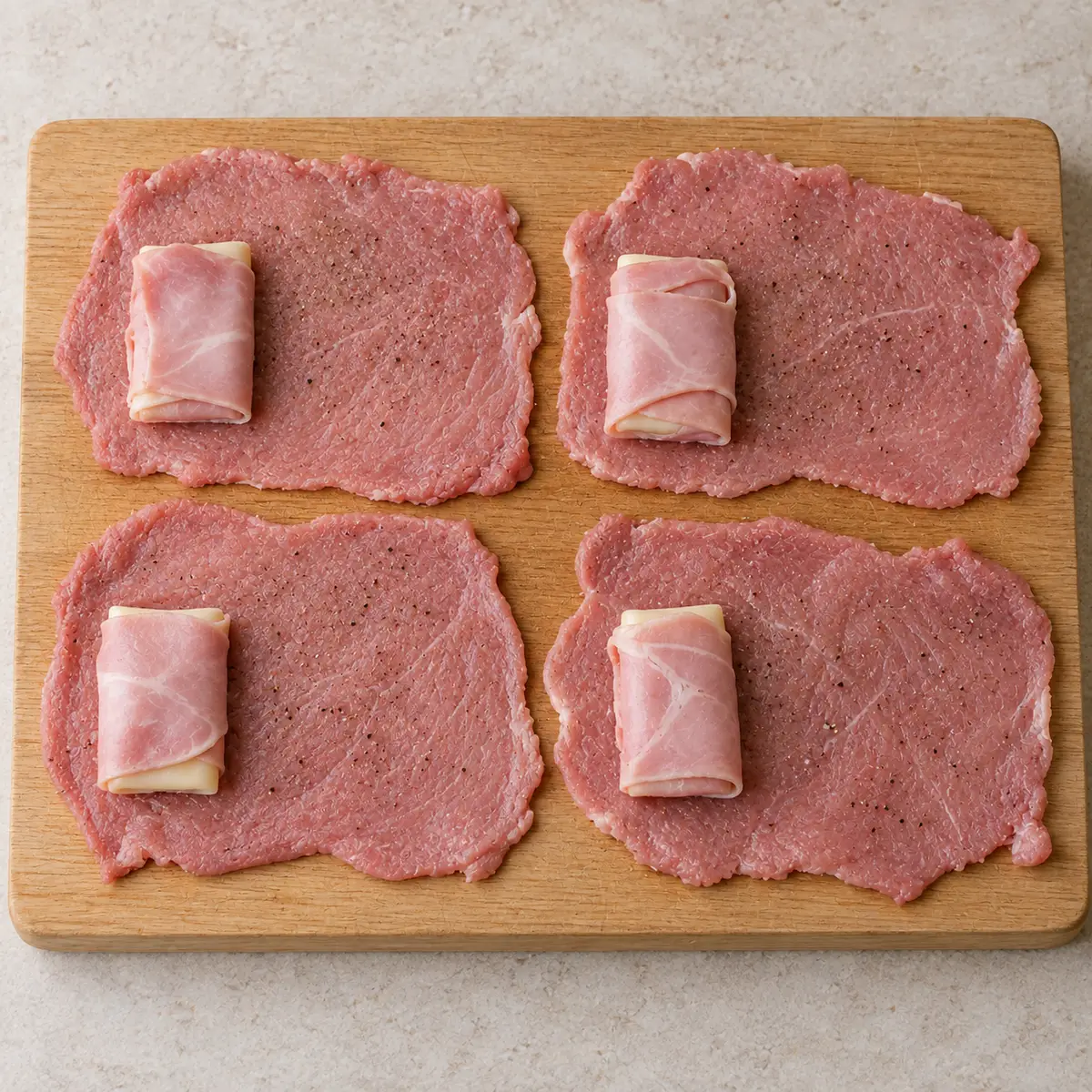
AI-generated Fold the other half of the meat over the filling, gently pushing air toward the edges. Press the free edges together firmly all the way around; the filled cutlets should measure about 18 × 10 cm, and the cheese and ham must not protrude beyond the meat. Put 60 g of flour and 120 g of breadcrumbs in two separate wide dishes, then thoroughly beat the 2 eggs in a third dish. Set a plate alongside for the breaded cutlets.
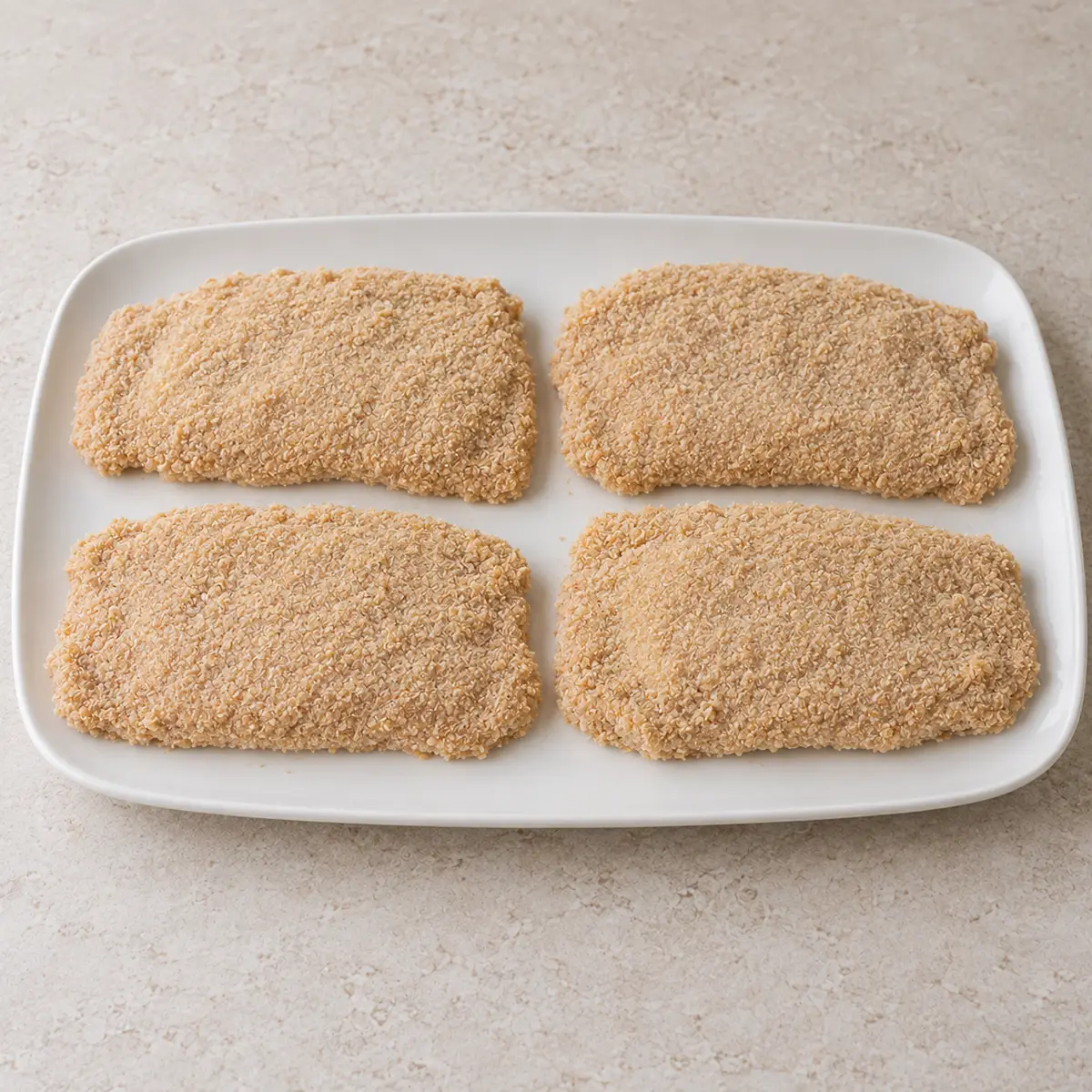
Lightly coat each cutlet in flour, shake off the excess, dip it in the eggs and let the excess drip back into the dish. Finally, coat in breadcrumbs, pressing them gently onto the sealed edges as well. Place the cutlets side by side, without stacking them; the breading should cover them evenly, without leaving any meat exposed. Discard the flour, eggs and breadcrumbs left in the breading dishes.
AI-generated Preheat a conventional oven (no fan) to 80°C and place a metal rack set over a baking sheet inside. Heat the first 50 g of clarified butter over medium heat in a large skillet about 32 cm across, with a flat base at least 28 cm across. After about 2–3 minutes, the butter should be melted and hot, but not smoking; the edge of a breaded cutlet dipped into it should immediately sizzle gently.
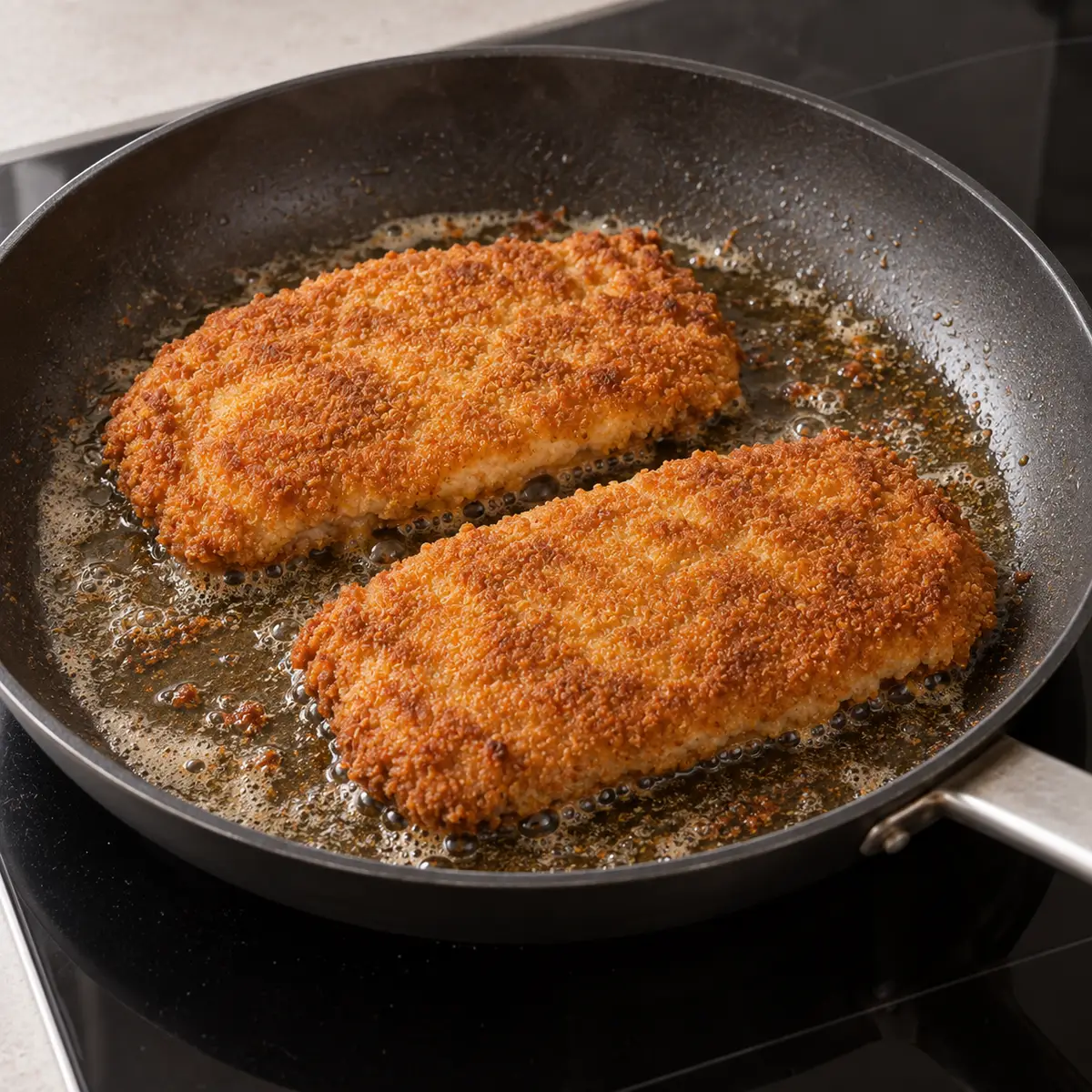
Place 2 cutlets side by side in the skillet, leaving space between them, and fry over medium heat for about 5–6 minutes on each side. Turn them carefully with a wide spatula, without piercing them with a fork; reduce the heat if the breading darkens before the meat cooks through. The crust should be evenly golden and crisp, and a small cut made with a clean knife in the thickest edge should reveal fully opaque meat, without raw pink areas, that is clearly hot and steaming inside; the cheese should be melted, without a cold center. If these signs are not yet present, continue frying over lower heat for 2–3 minutes and check again, then transfer the cooked cutlets to the oven rack only while you fry the second batch, about 15 minutes.
Briefly remove the skillet from the burner and carefully pour the remaining fat and loose, browned crumbs into a heatproof container; do not use it for serving. Add the remaining 50 g of clarified butter, heat over medium heat and fry the last 2 cutlets for about 5–6 minutes on each side. Check the thickest edge with a clean knife just as for the first batch: the veal must be opaque and hot, steaming inside, without raw pink areas, and the cheese melted. If needed, lower the heat, cook for another 2–3 minutes and check the meat again before removing the cutlets from the skillet.
AI-generated Briefly place the second batch on paper towels to absorb excess surface fat, and take the first batch out of the oven. Serve immediately, 1 cutlet per portion; you can cut it in half to reveal the ham and melted cheese. Let the fat left from the second batch cool, then discard it; do not pour it over the breading.
Estimated nutrition

Rate this recipe
0 ratings
Comments