
AI-generated
Cornish Pasties — Shortcrust Pies with Beef, Potatoes and Rutabaga
Log in or create a free account to save recipes.
Source: https://recipheon.com/en/recipes/main-dishes/cornish-pasties-shortcrust-pies-with-beef-potatoes-and-rutabaga
About this recipe
A Cornish pasty is a large baked shortcrust pie filled with beef, potatoes, rutabaga and onion. Its golden shell encloses a finely chopped filling that goes in raw and softens in its own juices during a long bake. Butter gives the pastry flavor, while lard makes it tender; stronger flour and a rest in the refrigerator make the dough easier to roll and seal. The distinctive crimp runs along the curved side of the half-moon shape. Choose yellow-fleshed rutabaga and potatoes that hold their shape, so tender pieces of vegetables are visible when you cut the pasty open. The recipe makes four large servings, baked at the same time on two baking sheets using convection heat. Let them rest briefly after baking so the hot juices stay in the filling.
Ingredients
Shortcrust Pastry and Egg Wash
420 g type 650 wheat flour with at least 11 g protein per 100 g: 400 g for the dough and 20 g for dusting
100 g cold butter (82% fat)
80 g cold pork lard with no cracklings
150 ml cold water: 140 ml for the dough and 10 ml for moistening the edges
13 g fine salt: 5 g for the dough and 8 g for the filling
50 g raw whole egg without the shell, about 1 medium egg, for brushing
Raw Filling
400 g raw beef skirt steak, weighed after removing thick membranes and tough tendons
360 g raw peeled potatoes, cooking type A or AB, with firm flesh
180 g raw peeled yellow-fleshed rutabaga
160 g peeled onion
3 g freshly ground black pepper
Steps
Put the 400 g flour for the dough and 5 g salt in a large bowl, reserving the remaining amounts for later steps. Add 100 g cold butter and 80 g cold lard, cut into small cubes. Rub in quickly with your fingertips for about 5 minutes, until the mixture forms loose, coarse crumbs with small flakes of fat; do not warm it in your hands until it becomes a paste.
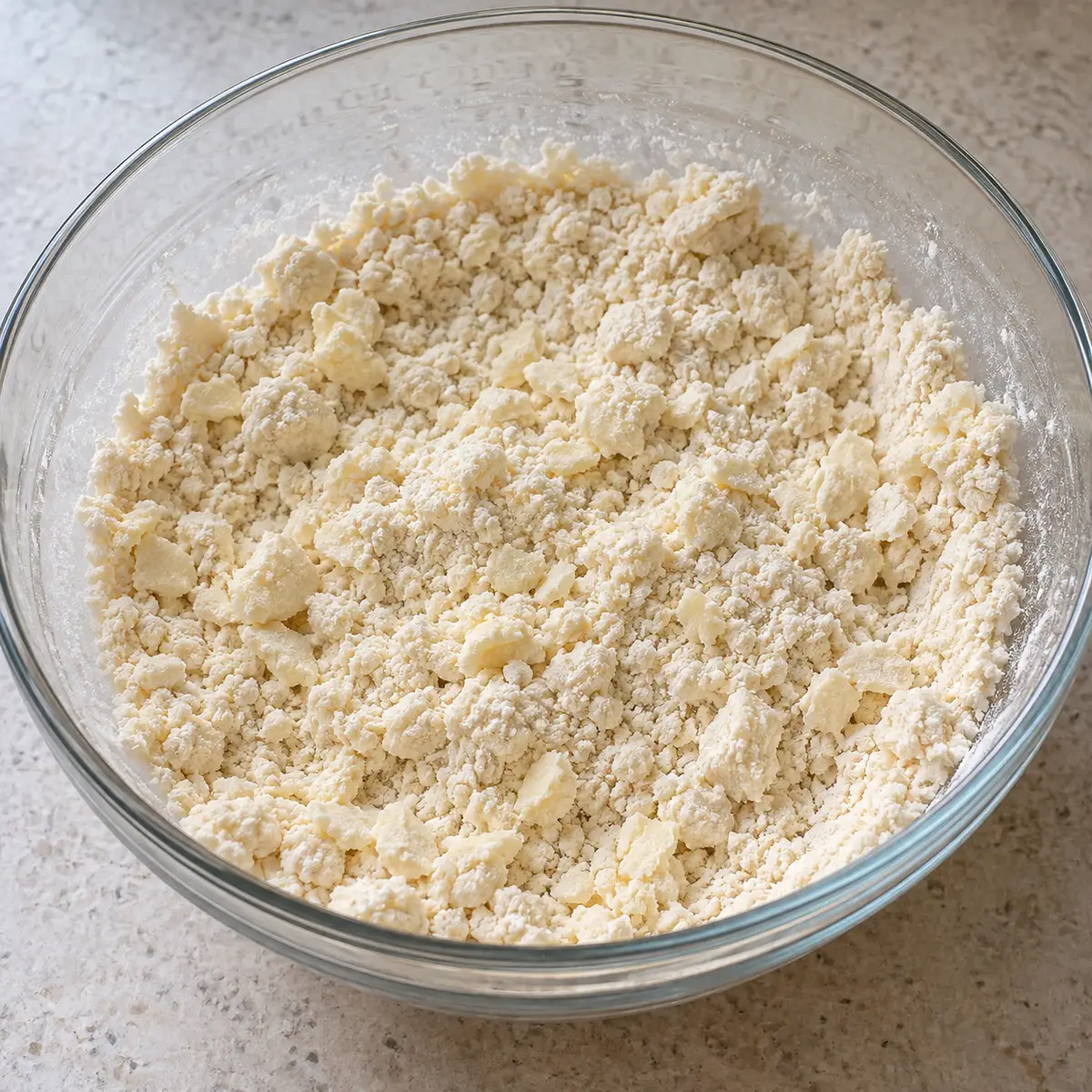
AI-generated Pour 140 ml cold water into the crumbs, stir with a fork and bring the ingredients together with your hand. Knead on an unfloured work surface for about 3–5 minutes, until the dough is firm, smooth and elastic enough to bend without cracking; do not add flour. Flatten into a thick disk, wrap tightly and refrigerate for 3 hours so it can rest and will be easy to roll out later.
Toward the end of the dough's chilling time, allow about 20 minutes to prepare the filling. Dice the potatoes and rutabaga into pieces about 5–7 mm across and finely chop the onion. First cut the trimmed beef across the grain into thin strips, then into pieces about 7–10 mm across. Put the meat and vegetables in a bowl, cover and refrigerate until shaping; all the filling ingredients remain raw.
Take the dough out of the refrigerator and leave for about 10 minutes so it softens slightly but stays cool. Preheat the oven to 170°C on the convection setting and line two baking sheets with parchment, each with a usable surface of at least 40 × 30 cm. Position the racks in the lower and upper parts of the oven, leaving one rack position free between them. Divide the dough into 4 equal pieces and flatten slightly; keep the pieces you are not yet working with covered.
Mix the raw meat and vegetables with the remaining 8 g salt and all 3 g pepper, then divide the filling into 4 equal portions. Using only the measured 20 g flour to dust the work surface, roll each piece of dough into a circle about 23 cm across and 3–4 mm thick, without trimming or discarding the edges. Place a portion of filling in a compact mound on one half of each circle, leaving a clean border about 3 cm wide. Leave the other half empty so you can fold it comfortably over the filling.
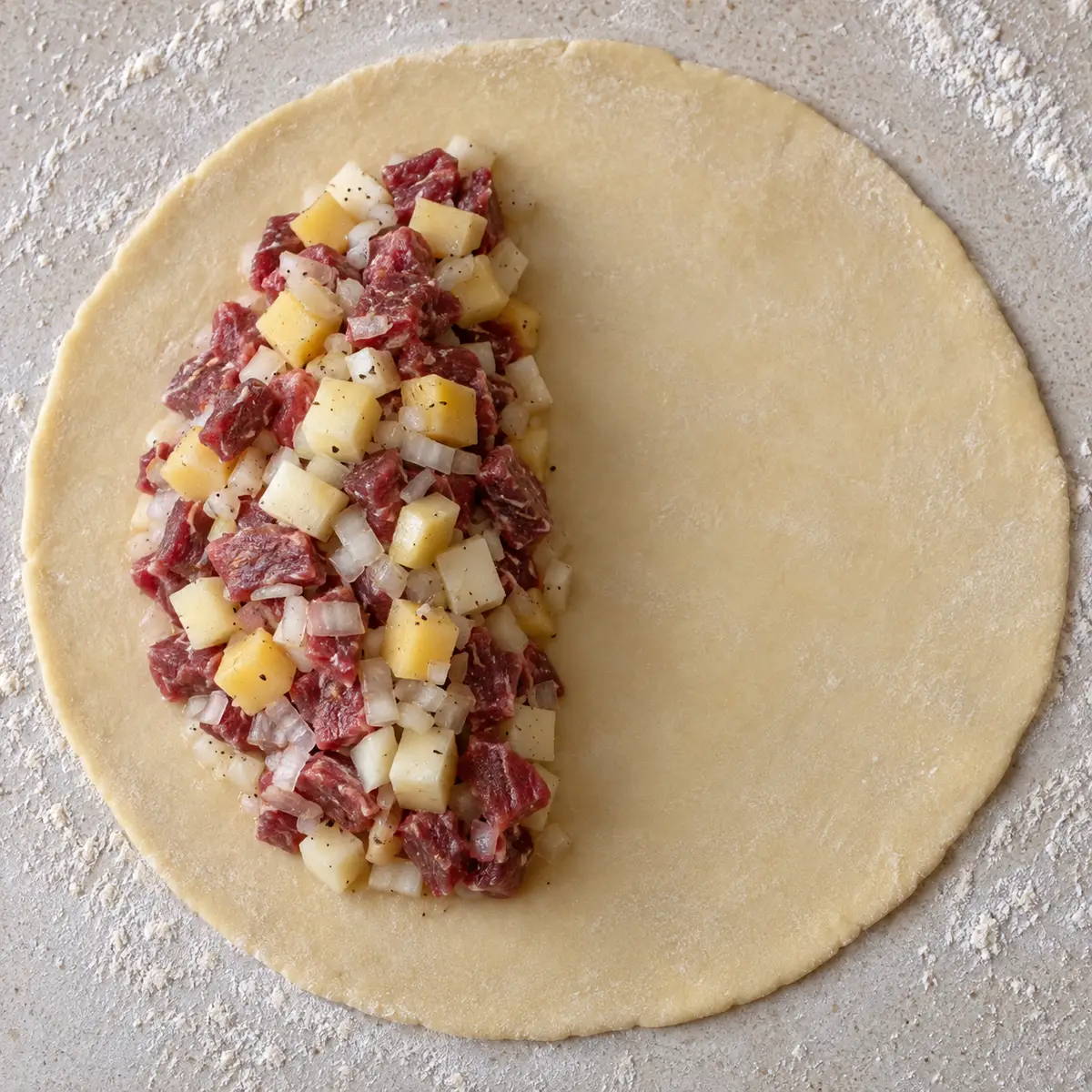
AI-generated Use all the remaining 10 ml water to lightly moisten the clean edges of the four circles. Fold the empty half of the dough over the filling, gently press out excess air and firmly press the curved edges together to seal the pasty. Starting at one end, use your thumb and index finger to fold the edge diagonally inward in short, overlapping folds. Tuck the end underneath and keep the entire crimp along the side of the pasty, not on top. Place 2 pasties on each baking sheet, at least 3 cm apart.
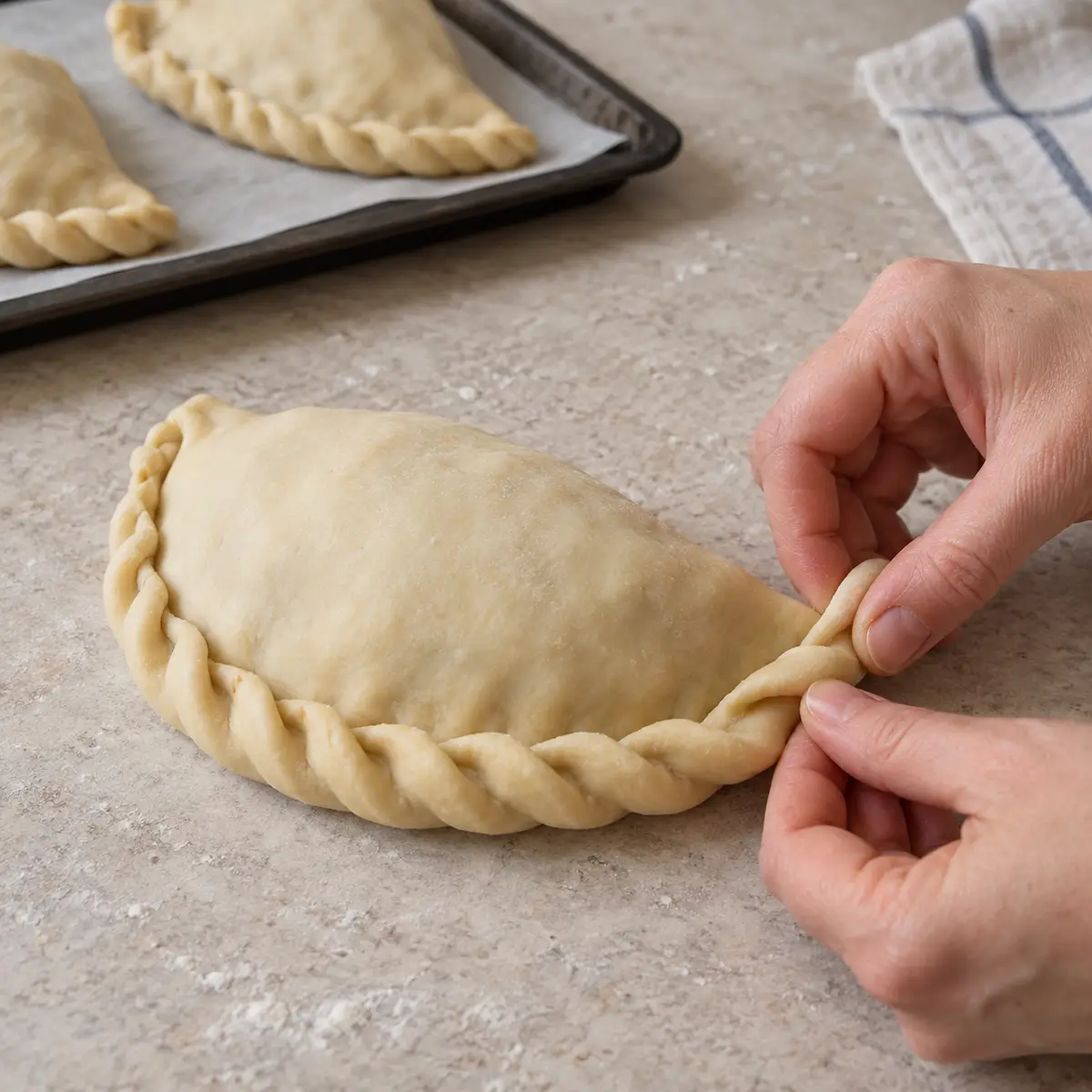
AI-generated Beat all 50 g egg with a fork until smooth. Brush a thin layer over the tops and crimps, wait about 5 minutes, then use the remaining egg to apply a second thin coat to all four pasties. Try not to leave puddles of egg on the parchment so they do not burn around the bases.
Put both baking sheets in the preheated oven and bake together at 170°C on the convection setting for about 65–75 minutes. After about 35 minutes, swap the sheets between racks and rotate each from front to back; if the pastry browns too quickly, cover loosely with aluminum foil. The finished pasties should be deep golden with dry, fully baked bases. Near the end, cut open the largest and check that the filling is hot and steaming, the potatoes and rutabaga yield easily to a fork, and the beef is tender with no raw center. If the vegetables are still firm, bake the whole batch for about 10 minutes longer, shielding the browned tops.
Transfer the baked pasties to a wire rack and leave for about 10 minutes so the filling cools slightly and the bases stay crisp. Serve one large pasty per portion, still warm, with a juicy filling and distinct pieces of beef and vegetables.
Estimated nutrition

Rate this recipe
1 rating
Comments