
AI-generated
Crispy Cabbage and Mushroom Crepe Rolls
Log in or create a free account to save recipes.
Source: https://recipheon.com/en/recipes/main-dishes/crispy-cabbage-and-mushroom-crepe-rolls
About this recipe
Crispy cabbage and mushroom crepe rolls combine thin crepes, a flavorful filling and golden breading. Dried porcini soak in the refrigerator for eight hours, and a filtered portion of the soaking water enhances the cabbage's flavor. Cook the filling until tender, evaporate the moisture thoroughly and cool it completely: filling that is too wet or warm weakens the crepes during rolling. Fold the sides inward to enclose the filling before breading and frying. The recipe makes ten large rolls, two for each of five servings; the batter's resting time and most of the filling's cooling time can overlap other preparation stages.
Ingredients
Cabbage and porcini filling
650 g sauerkraut, weight after firmly squeezing out the juice
40 g store-bought dried porcini (Boletus edulis), dry weight before soaking
200 g onion, weight after peeling
30 g butter (82% fat) for the onion; all the fat stays in the filling
1 g ground black pepper for the filling
Crepes, breading and shared ingredients
250 g all-purpose flour for thin crepes
500 ml milk (3.2% fat) for the crepe batter
4 whole eggs, size M, about 200 g without shells: 2 eggs for the batter and 2 eggs for the breading; discard leftover raw breading mixture
150 g dry breadcrumbs for breading; discard any unused crumbs that have touched the egg
180 ml refined canola oil: 20 ml for the batter, 10 ml for greasing the crepe skillet and 150 ml for frying the rolls; oil left in the skillet is not served
3 g fine salt for the crepe batter
1 l water: 600 ml for soaking the mushrooms, 200 ml for cooking the filling and 200 ml for the batter; also use 300 ml filtered soaking water for the filling, and discard the remainder with the sediment
Steps
In the evening, sort through 40 g store-bought dried porcini and put them in a container with a lid. Pour over 600 ml cold water, cover and soak for 8 hours in the refrigerator at no more than 4°C. The next day, have ready a pot with a capacity of at least 3 l and a lid, a wide skillet 28 cm in diameter, a nonstick skillet with a flat cooking surface 26 cm in diameter and a large shallow platter for cooling the filling. You will also need a paper coffee filter and a sieve to filter the soaking water.
Lift the mushrooms out of the water, finely chop them and keep all the pieces. Pour the soaking water through a sieve lined with a paper coffee filter, measure 300 ml clear liquid and discard the remaining liquid and sediment. Squeeze the cabbage firmly, then weigh 650 g and cut long strands into pieces about 1–2 cm long. Put the cabbage and mushrooms in the pot, add 300 ml filtered liquid and 200 ml fresh water, bring to a gentle boil over medium heat and cover. Cook over low heat for 45–60 minutes, stirring about every 15 minutes, until the cabbage and mushrooms are tender; do not drain the cooking liquid, since you will evaporate it with the filling. Meanwhile, prepare the batter and onion as described in the next two steps.
While the cabbage cooks, whisk 2 eggs, about 100 g without shells, with 500 ml milk, 200 ml water and 3 g salt in a bowl. Gradually add 250 g flour, whisking until smooth with no lumps, then stir in 20 ml oil. Cover and let rest for 20 minutes at room temperature; this rest takes place while the filling cooks. The batter should be pourable so it can cover the entire skillet base in a thin layer.
Finely dice the peeled onion. Melt all 30 g butter in the wide 28 cm skillet over medium-low heat, add 200 g onion and cook for 8–10 minutes, stirring often. The onion should soften, turn translucent and become only lightly golden; do not burn the butter. Take the skillet off the heat and set it aside until the cabbage and mushrooms are tender.
Transfer all the tender cabbage, mushrooms and remaining cooking liquid to the skillet with the onion and butter. Add 1 g pepper and cook uncovered over medium heat for about 20–30 minutes, stirring often and scraping the filling from the bottom; reduce the heat toward the end so you do not burn the cabbage. Stop when no free liquid remains, a trail drawn with a spatula does not fill with water and a spoonful of filling stays in a mound. All ingredients and flavors stay in the filling; only excess moisture is removed by evaporation.
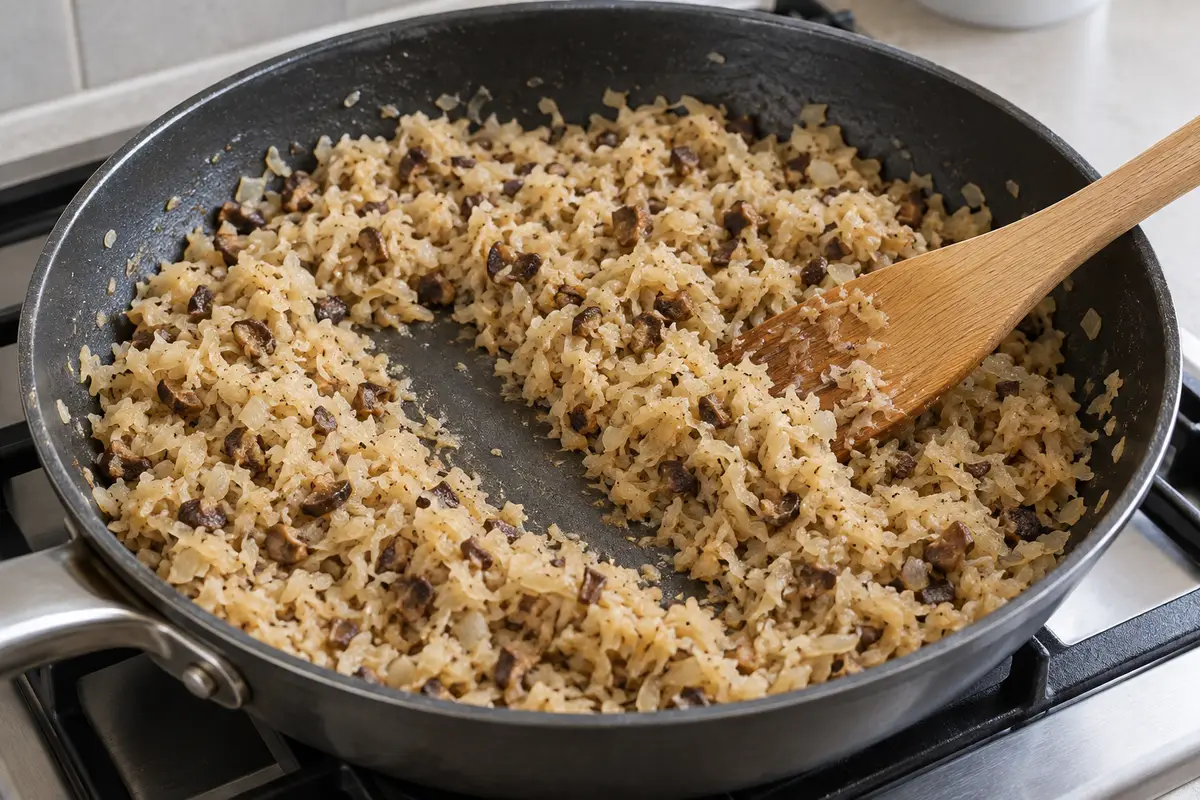
AI-generated Spread the filling on a large shallow platter in a layer no thicker than 2 cm and leave for about 30–40 minutes, stirring twice, until completely cool. Before rolling, it must no longer give off warmth or steam; warm filling softens the crepes and makes them harder to seal. Cook the crepes as described in the next step while the filling cools, and if it is still warm, wait until it cools completely. Most of the cooling overlaps cooking the crepes, and the extra wait is usually about 10–15 minutes.
Stir the rested batter, weigh it without the bowl and divide its weight by 10: each portion will be about 105–110 g. Heat the nonstick skillet with a flat cooking surface 26 cm in diameter for about 2 minutes over medium heat; use a total of 10 ml oil to lightly grease the base before each crepe. Pour in one measured portion and immediately swirl the skillet to cover the entire base. Cook for 60–90 seconds until the surface sets and the underside turns lightly golden; flip and cook for another 20–30 seconds, keeping the edges soft. Repeat with the remaining batter, using it all to make exactly 10 crepes. Allow about 25–30 minutes for this stage and stack the cooked crepes under an inverted plate to keep them flexible.
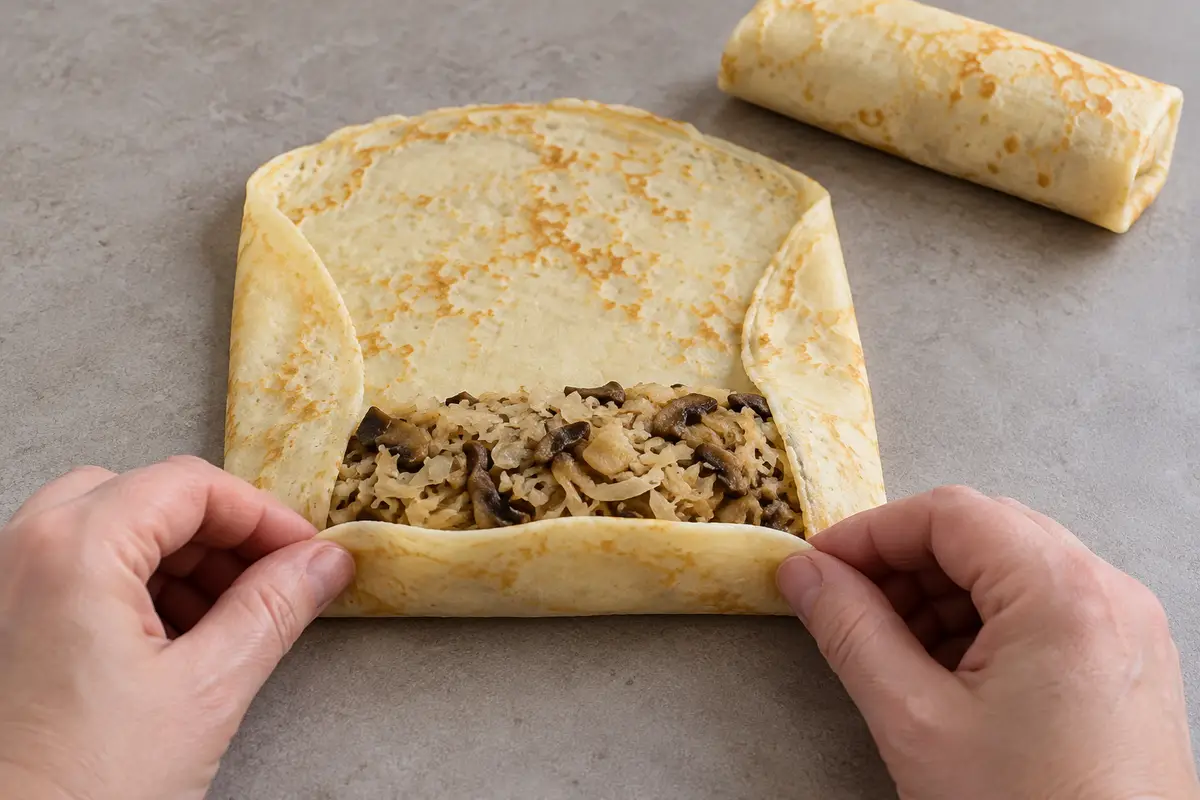
Divide the completely cooled filling into 10 equal portions, using it all. Arrange one portion in a short log about 12 cm long on the lower third of a crepe, leaving the sides clear. Fold both sides inward to cover the ends of the filling, then fold the bottom edge over the filling and roll into a compact, closed cylinder about 12–14 cm long. Do not squeeze so firmly that the crepe tears; set the prepared rolls seam-side down.
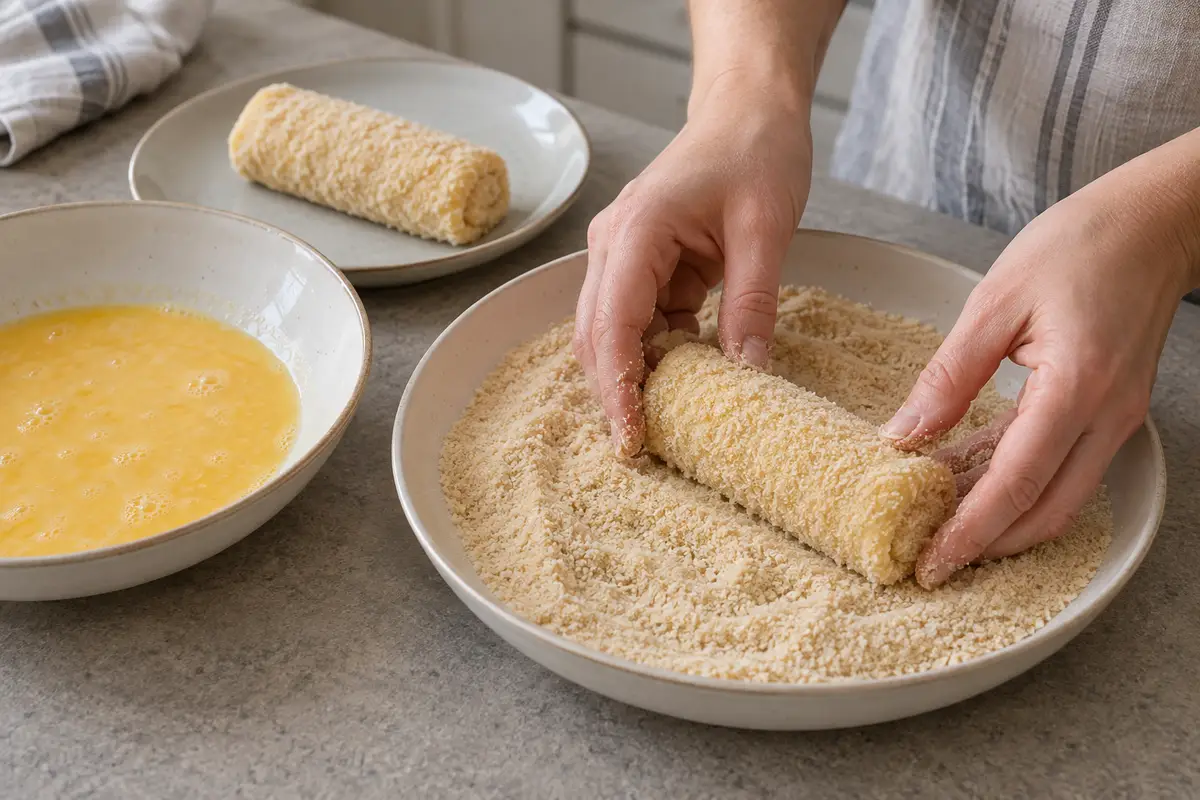
AI-generated Whisk the remaining 2 eggs, about 100 g without shells, in a wide shallow dish; put 150 g dry breadcrumbs in another dish. Dip each roll in egg on all sides, let the excess drip off and coat in breadcrumbs, including the closed ends. Press the breading lightly with your palm so it forms an even layer, then set the roll seam-side down. Once all 10 rolls are breaded, discard the leftover raw egg and any breadcrumbs that have touched it.
AI-generated Wash and thoroughly dry the 28 cm skillet, add 50 ml oil and heat for about 2 minutes over medium heat. Place 4 rolls seam-side down with space between them; the oil should sizzle gently around the breading without smoking. Fry for 8–10 minutes, turning every 2–3 minutes, until all sides are golden, the breading is crisp and the center is hot; reduce the heat if they darken too quickly. Transfer to a plate lined with paper towels, add 50 ml oil and fry the next 4 rolls, then add the final 50 ml and fry the remaining 2. You will use 150 ml oil in total across three batches. Do not serve the oil or loose crumbs left in the skillet with the rolls.
After draining briefly, divide the rolls into 5 servings of 2 large rolls per person. Serve immediately, while the filling is hot and the breading stays crisp; do not cover the cooked rolls, since steam softens the crust.
Estimated nutrition

Rate this recipe
0 ratings
Comments