
AI-generated
Culurgiones — Sardinian dumplings with potatoes, pecorino, and mint
Log in or create a free account to save recipes.
Source: https://recipheon.com/en/recipes/main-dishes/culurgiones-sardinian-dumplings-with-potatoes-pecorino-and-mint
About this recipe
Culurgiones are Sardinian dumplings with a delicate potato filling, sheep's milk pecorino, and fresh mint. Their hallmark is the spighitta braid, which resembles an ear of wheat. The semolina and all-purpose flour dough needs to rest so it can be rolled thinly and sealed without cracking. The filling should be cool and firm, and the edges of the dough circles clean. Alternately folding the dough takes a little patience but helps seal the filling inside. The dumplings are simmered gently, then served with a simple tomato sauce and a little pecorino. The recipe makes about 28–32 large dumplings, or four servings.
Ingredients
Egg-free dough
150 g dry durum wheat semolina, finely milled (semola rimacinata)
120 g type 00 or type 450 wheat flour — 100 g for the dough and up to 20 g for dusting
130 ml lukewarm water for the dough
Filling and cheese for serving
600 g raw starchy potatoes, weighed after peeling
140 g sheep's milk pecorino sardo semistagionato, weighed without the rind — 120 g for the filling and 20 g for serving
6 g fresh mint leaves, without tough stems
Sauce and remaining ingredients
500 g tomato passata with no added ingredients
8 g garlic, weighed after peeling — 4 g for the filling and 4 g for the sauce
40 ml olive oil — 10 ml for the dough, 15 ml for the filling, and 15 ml for the sauce
22 g fine salt — 2 g for the dough, up to 2 g for the sauce, and 18 g for the dumpling cooking water
0.5 g ground black pepper for the sauce
4.5 l water for cooking — 1.5 l for the potatoes and 3 l for the dumplings; almost all will be drained away
Steps
Cut the potatoes into large, similar-sized pieces and put them in a pot with 1.5 l cold unsalted water. Bring to a boil and simmer gently for about 20–25 minutes, until soft. Drain thoroughly, leave for a minute to steam dry, then pass through a potato ricer or mash carefully. Do not add milk or butter. Spread in a wide bowl to start cooling.
Combine the semolina, 100 g all-purpose flour, and 2 g salt. Add 130 ml lukewarm water and 10 ml olive oil. Knead for 8–10 minutes, until the dough is smooth and elastic, fairly firm but without dry crumbs. Cover tightly with a bowl or plastic wrap and leave for at least 30 minutes. The remaining flour is only for sparingly dusting while rolling.
Finely chop the garlic and mint leaves, and grate the cheese. In a small frying pan, warm 15 ml olive oil with 4 g garlic over low heat for about a minute, without browning. Add all the oil and garlic to the potatoes. When the mixture is only lukewarm, stir in the mint and 120 g cheese. Leave to cool completely, about 20–30 minutes; you can spread it in a thinner layer. The finished filling should be firm, without free liquid. Do not add extra salt to the filling: the pecorino provides its flavor.
In a wide saucepan, warm the remaining 15 ml olive oil with the remaining 4 g garlic over low heat for about a minute. Pour in the passata, add the pepper, and simmer gently for 15–20 minutes, stirring occasionally, until the sauce thickens slightly. Season with as much of the reserved 2 g salt as needed. The garlic and all the sauce stay in the dish; reheat the sauce before serving.
Divide the dough into four pieces; keep three covered. Roll the first to about 1.5 mm thick, using only a little flour for dusting. Cut out circles about 9 cm across. Put a small spoonful of filling, about 20–25 g, in the center of each, shaping it into a short log and leaving a clean rim. Do not flour the edges that will be sealed. Work with 2–3 circles at a time, filling and immediately sealing them as described in the next step so the edges do not dry out. Knead the scraps together straight away and keep them covered until rolling again; do not let them dry out.
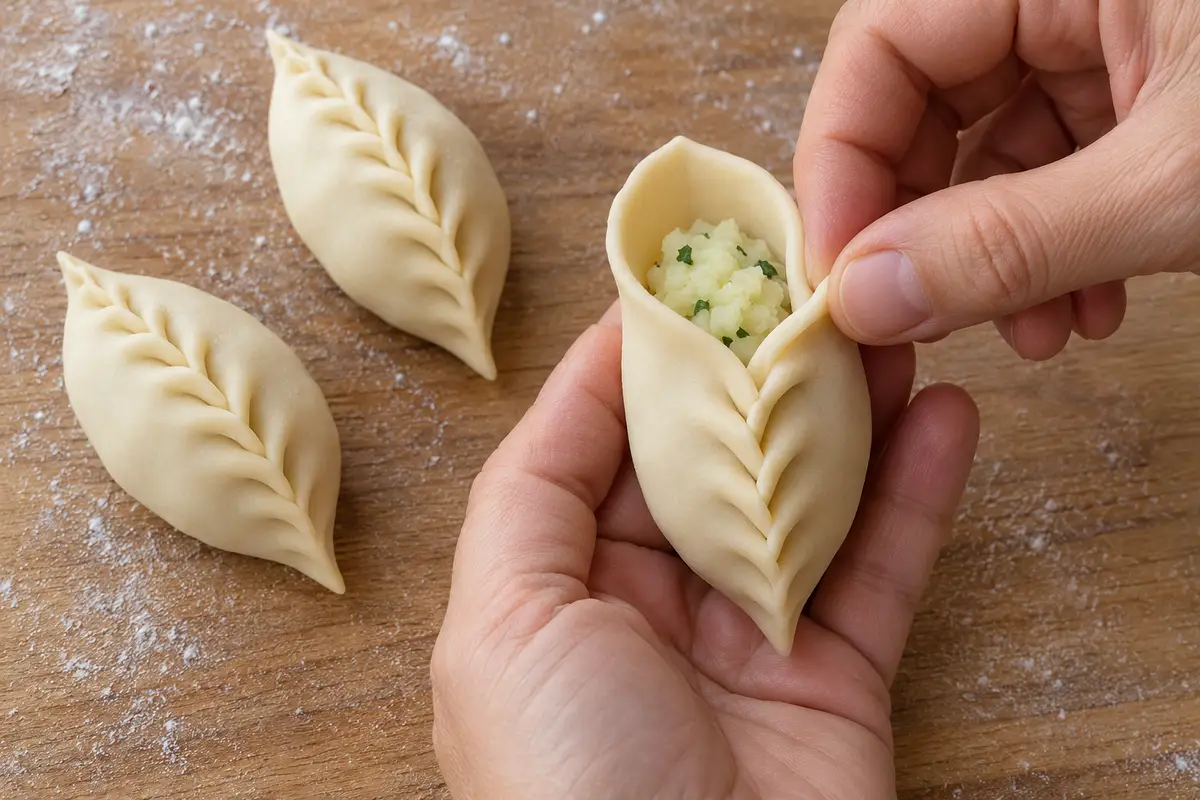
Place a filled circle in your slightly cupped hand. Join both edges at one end to make a small point. Take a small section of the right edge, fold it inward, and press against the left side. Then fold a small section of the left edge inward and press on the right. Repeat alternately along the filling: each fold should overlap the previous one slightly, like an ear of wheat. Gently push the air toward the still-open end, then pinch it firmly shut. Use all the dough and filling this way, including the rerolled scraps; you will have about 28–32 dumplings. Set them on a lightly floured tray without touching and cover loosely with a clean cloth.
AI-generated Bring 3 l water and 18 g salt to a boil in a wide pot, then lower the heat so the water only simmers gently. Cook the dumplings in two or three batches, without overcrowding, for about 5–6 minutes after lowering them into the water; floating alone is not enough. Near the end of the first batch, check one dumpling: the dough should be soft even at the braid, without a raw, floury layer. Cook for another minute if needed. Lift out with a slotted spoon, drain well, and gently place in the warm sauce, without shaking the pan. If the sauce has become too thick, loosen with 2–3 tablespoons of cooking water, up to about 50 ml; discard the rest of the cooking water. Divide all the sauce and dumplings into four portions, sprinkle with the remaining 20 g cheese, and serve.
Estimated nutrition

Rate this recipe
0 ratings
Comments