
AI-generated
Czech Braised Beef in Creamy Vegetable Sauce with Bread Dumplings
Log in or create a free account to save recipes.
Source: https://recipheon.com/en/recipes/main-dishes/czech-braised-beef-in-creamy-vegetable-sauce-with-bread-dumplings
About this recipe
This dish pairs tender braised beef with a velvety root vegetable sauce and fluffy dumplings studded with bread cubes. Browning the vegetables gives the sauce depth, while cream and a little sugar, vinegar and lemon juice create a mild sweet-and-sour flavor. Beef shoulder braised in one piece becomes tender while still holding together for slicing across the grain. The yeasted dumplings rise during the final part of the braise, so they can be served freshly cooked. Pricking them immediately releases steam and helps preserve their light interior, which soaks up the thick sauce. A small serving of cranberry preserves completes the dish.
Ingredients
Beef and vegetable sauce
800 g raw boneless beef shoulder, in one compact piece, weighed after trimming away thick outer membranes
60 g cold raw smoked bacon, not precooked, without rind, for larding the beef
180 g raw carrots, weighed after peeling
100 g raw parsley root, weighed after peeling
120 g raw celeriac, weighed after peeling
100 g onion, weighed after peeling
15 g refined canola oil for searing the beef
30 g unsalted butter, 82% fat, for the vegetables
4200 ml water: 600 ml for braising, 100 ml reserved for the braise or sauce and 3500 ml for boiling the dumplings; discard any unused reserved water and the dumpling cooking water
30 g fine salt: 5 g for the beef, 3 g for the sauce, 4 g for the dumpling dough and 18 g for the cooking water, which will be discarded
30 g white sugar: 25 g for the vegetables and 5 g for the dumpling dough
25 ml white wine vinegar with 6% acidity for the vegetables
2 dried bay leaves, to be removed before blending
6 whole allspice berries, to be removed before blending
8 whole black peppercorns, to be removed before blending
200 g liquid unsweetened whipping cream, 30% fat, for the sauce
15 ml lemon juice for the sauce
Homemade bread dumplings
310 g coarsely milled wheat flour, type 450 (krupczatka): 300 g for the dough and 10 g for dusting; discard any unused dusting flour
80 g stale white wheat bread roll without seeds, from the previous day, weighed with the crust
180 ml milk, 3.2% fat, for the dumpling dough
1 medium egg, size M, approximately 50 g without the shell, for the dumpling dough
4 g instant dry yeast for the dumpling dough
To serve
80 g ready-made cranberry preserves, 20 g per serving
Steps
Cut the carrots, parsley root, celeriac and onion into approximately 1 cm dice. Enclose the bay leaves, allspice and peppercorns in a spice bag designed for cooking or a large metal tea infuser so you can remove them all later. Cut the cold bacon into strips approximately 5–6 cm long and approximately 1 cm thick; use a thin knife to make narrow channels along the grain of the beef and insert all the bacon, distributing it evenly. Pat the beef dry with paper towels and rub with the measured 5 g salt; note the direction of the grain for slicing later.
Heat all 15 g oil over medium-high heat in a heavy pot approximately 22 cm in diameter with a capacity of at least 4 l. Add the beef and sear for approximately 8–10 minutes, turning with tongs, until browned on every side. Transfer to a plate; leave the fat and browned bits in the pot, but do not let them blacken.
Reduce the heat to medium and add all 30 g butter and all the chopped vegetables. Cook for approximately 10 minutes, stirring frequently, until softened and golden in places. Add 25 g sugar and stir for about 2 more minutes, then pour in all 25 ml vinegar and cook for approximately 1 minute, scraping the browned bits from the bottom. The vegetables should be lightly golden and glossy, with no burnt pieces.
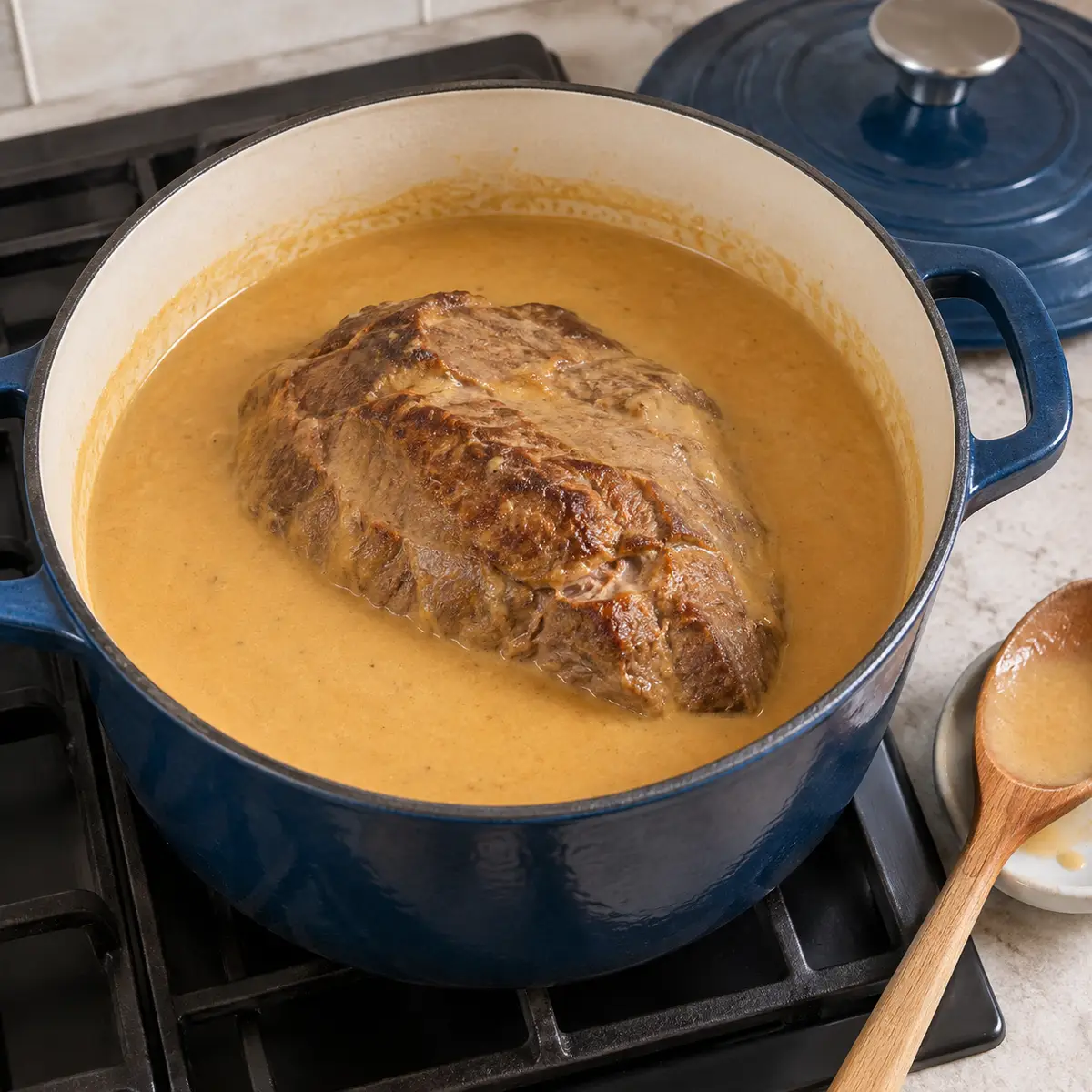
Return the beef along with the juices from the plate, then add the spice bundle, 3 g salt and 600 ml water; the liquid should reach roughly halfway up the beef. Bring to a gentle simmer, cover and braise over low heat for approximately 2.5–3 hours, turning the beef about every 45 minutes. The liquid should barely simmer; if the bottom starts to dry out, add water in 50 ml increments from the measured 100 ml reserve. Toward the end, a thin knife or fork should slide into the thickest part with almost no resistance; if the beef is still springy and tough, braise for approximately 20–30 minutes longer and check again.
After approximately 2 hours of braising, once the beef is noticeably softening, start the dumplings; if it is still very tough, continue braising before making the dough. Cut the bread roll into approximately 1 cm cubes and gently warm the milk until lukewarm, not hot. Combine 300 g coarsely milled flour, the yeast, the remaining 5 g sugar and 4 g salt in a bowl; add all the milk and the egg, knead for approximately 8 minutes to form a soft, cohesive dough, then gently work in all the bread cubes. Cover the bowl and leave in a warm place for approximately 45–60 minutes, until the dough has noticeably expanded to roughly twice its volume; meanwhile, finish braising the beef until tender and prepare the sauce.
Transfer the tender beef to a plate and cover, then remove the spice bundle and discard its entire contents. Take the pot off the heat, pour in all the cream and blend the vegetables with all the liquid using an immersion blender, keeping the head submerged, until the sauce is smooth. Add all 15 ml lemon juice and heat over low heat for approximately 5 minutes, stirring; the sauce should coat a spoon but still flow freely from it. If it is too thick, add the remaining reserved water in 25 ml increments and discard any unused water; return the beef and the juices from the plate to the sauce and keep covered over the lowest heat while finishing the dumplings, without letting it boil vigorously.
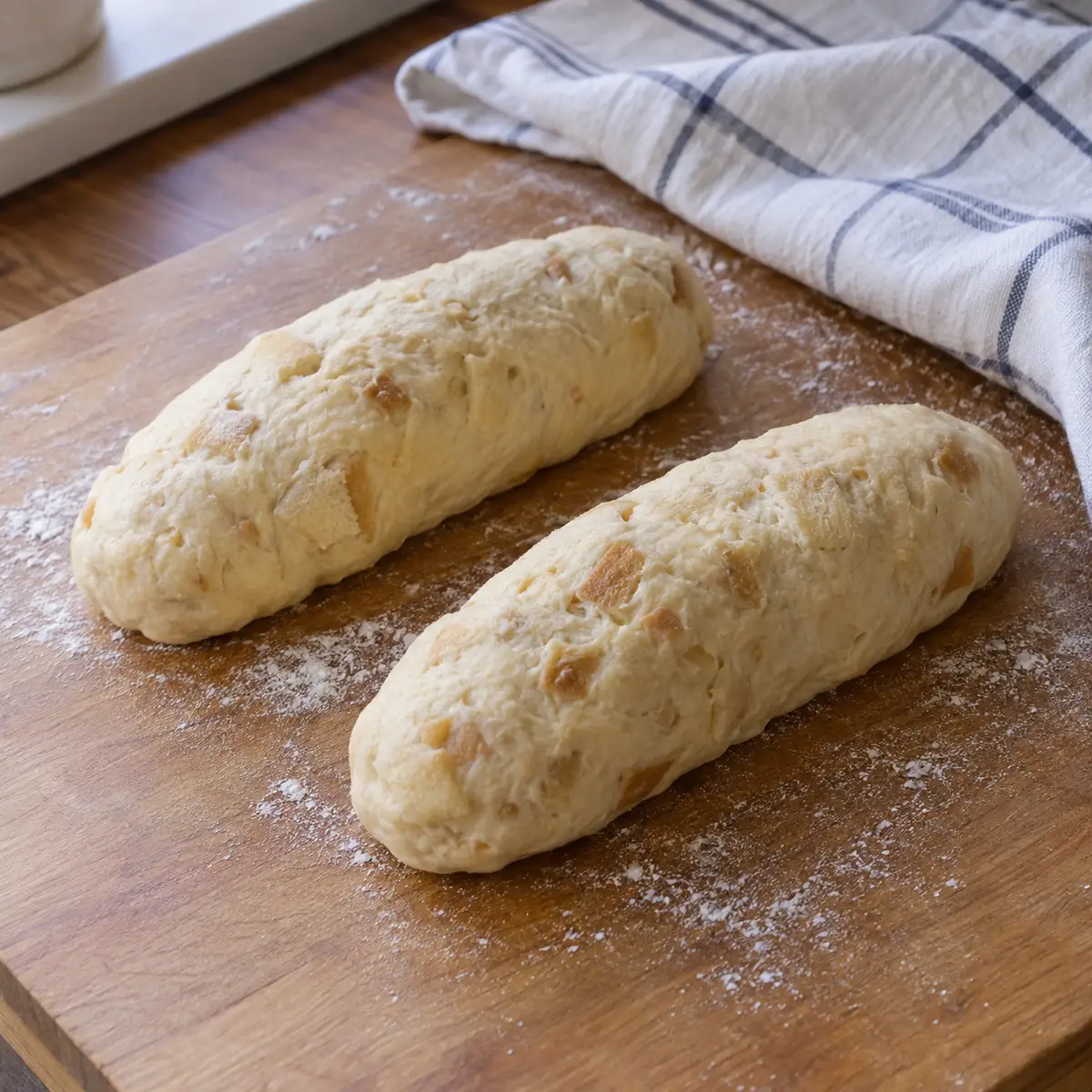
AI-generated Turn the risen dough onto a counter lightly dusted with flour from the 10 g allowance, gently deflate and divide into two equal pieces. Shape into smooth loaves approximately 17 cm long and 5–6 cm in diameter, using only as much of the measured dusting flour as needed; discard the rest. Place on a lightly floured part of the counter, cover with a kitchen towel and leave for approximately 15 minutes, until puffy again. Meanwhile, bring the measured 3500 ml water and the remaining 18 g salt to a boil in a wide pot approximately 28 cm in diameter with a capacity of at least 6 l.
AI-generated Carefully lower both loaves into the gently boiling water, leaving room between them to expand. Cover and cook over medium-low heat for approximately 22 minutes, timing from when the water returns to a gentle boil; after approximately 11 minutes, gently turn both loaves using two broad spoons. Do not let the water bubble vigorously, as this could damage the surface. The dumplings should have expanded noticeably and feel springy, and a wooden skewer inserted into the center should come out without wet dough; if needed, cook for approximately 3–5 minutes longer and check again.
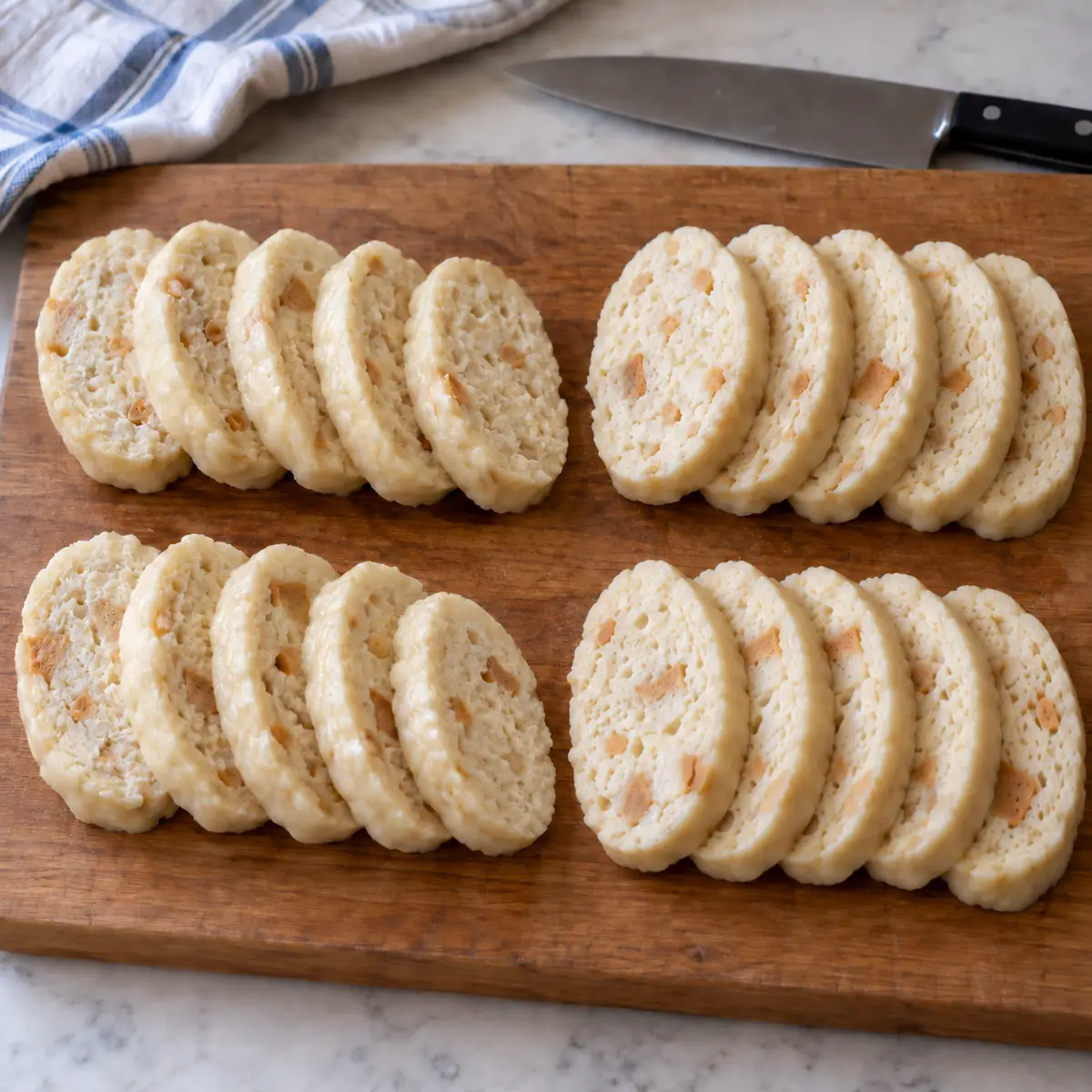
Lift out the dumplings using two slotted spoons, let them drain briefly and immediately prick each loaf in several places with a fork to release the steam; keep the water in the pot for now. Using taut cotton thread intended for food use or a very sharp knife, cut each loaf in half: the interior should be fluffy, with visible bread cubes and no sticky, raw band in the center. If the center is undercooked, return the affected halves to the gently boiling water for approximately 5 minutes, then lift out, prick again and make a fresh cut to check the interior; repeat if needed. Cut the cooked halves into approximately 20 slices in total, about 2 cm thick, without compressing the interior, then discard the cooking water. Cover the slices with a clean kitchen towel while slicing the beef.
AI-generated Lift the beef from the hot sauce onto a cutting board and use a sharp knife to slice across the grain into pieces approximately 1 cm thick. The beef should be tender and yield easily to the knife while still holding together for transferring whole slices. Pour the juices from the board into the sauce and stir briefly.
Divide all the beef and dumplings among 4 plates, allowing approximately 5 dumpling slices per serving. Spoon some hot sauce over the beef and divide the rest for serving at the table so all the prepared sauce is used. Add 20 g cranberry preserves to each portion and serve immediately, while the dumplings are fluffy and the beef and sauce are hot.
Estimated nutrition

Rate this recipe
1 rating
Comments