
AI-generated
Fabada asturiana — white beans with chorizo and morcilla
Log in or create a free account to save recipes.
Source: https://recipheon.com/en/recipes/main-dishes/fabada-asturiana-white-beans-with-chorizo-and-morcilla
About this recipe
Fabada asturiana is a thick stew of large white beans, chorizo, smoked morcilla and salted pork belly. Choose dried fabes and Asturian morcilla made with pork blood and onion, without rice. The beans should be creamy inside but retain their shape; the broth thickens during gentle cooking and resting. Gently rock the pot instead of stirring with a spoon so you do not break the beans. Soak the beans overnight and desalt the pork belly separately in the refrigerator. First boil the beans on their own, then add the meat and lower the heat. Allow about 16–17 hours, including 12 for soaking and a half-hour rest; older beans may need longer cooking. These quantities make 6 hearty servings.
Ingredients
Beans, compango and seasonings
500 g dried large white fabes beans (Faba Asturiana)
200 g Asturian pork chorizo, cured, dried and smoked, in an edible natural casing, for cooking
200 g Asturian morcilla made with pork blood, fat and onion, without rice, dried and smoked, in an edible natural casing; must be cooked before eating
200 g raw salted pork belly (panceta salada), without bones and without skin; weighed before desalting
0.1 g saffron threads
up to 3 g salt for final seasoning, only if needed
9000 ml water: 3000 ml for soaking the beans, 3000 ml for desalting the pork belly using two portions of water, and 3000 ml for cooking, including 2000 ml initially and up to 1000 ml for topping up; discard the soaking and desalting water and do not add unused cooking water
Steps
In the evening, sort through and rinse the beans. Cover with 3000 ml cold water in a large container and refrigerate for about 12 hours. Put the pork belly in a separate container, cover with 1500 ml cold water and also refrigerate for about 12 hours. Change the pork belly's water once during desalting, using the other 1500 ml. The next day, discard both soaking liquids and briefly rinse the beans and pork belly. Keep the pork belly in one piece.
Transfer the beans to a wide pot with a capacity of about 5 l and add 2000 ml fresh water. The beans should be covered with water; add some of the measured reserve if needed. Bring to a boil, then boil uncovered for at least 30 minutes from the time boiling starts, keeping the water visibly boiling. Skim foam from the surface. If the water level drops, add small amounts of the reserve, first heated to boiling. Keep the beans submerged; complete this initial stage before reducing the heat to a gentle simmer.
Add the drained pork belly and whole chorizo to the partially cooked beans. Remove string from the sausages, leaving their edible casings in place. Bring back to a boil, then lower the heat. Cover the pot with the lid slightly ajar and cook for about 1 hour, keeping the liquid gently but steadily bubbling. Gently rock the pot occasionally instead of stirring with a spoon. If the beans start to rise above the liquid, add a little hot water from the remaining reserve.
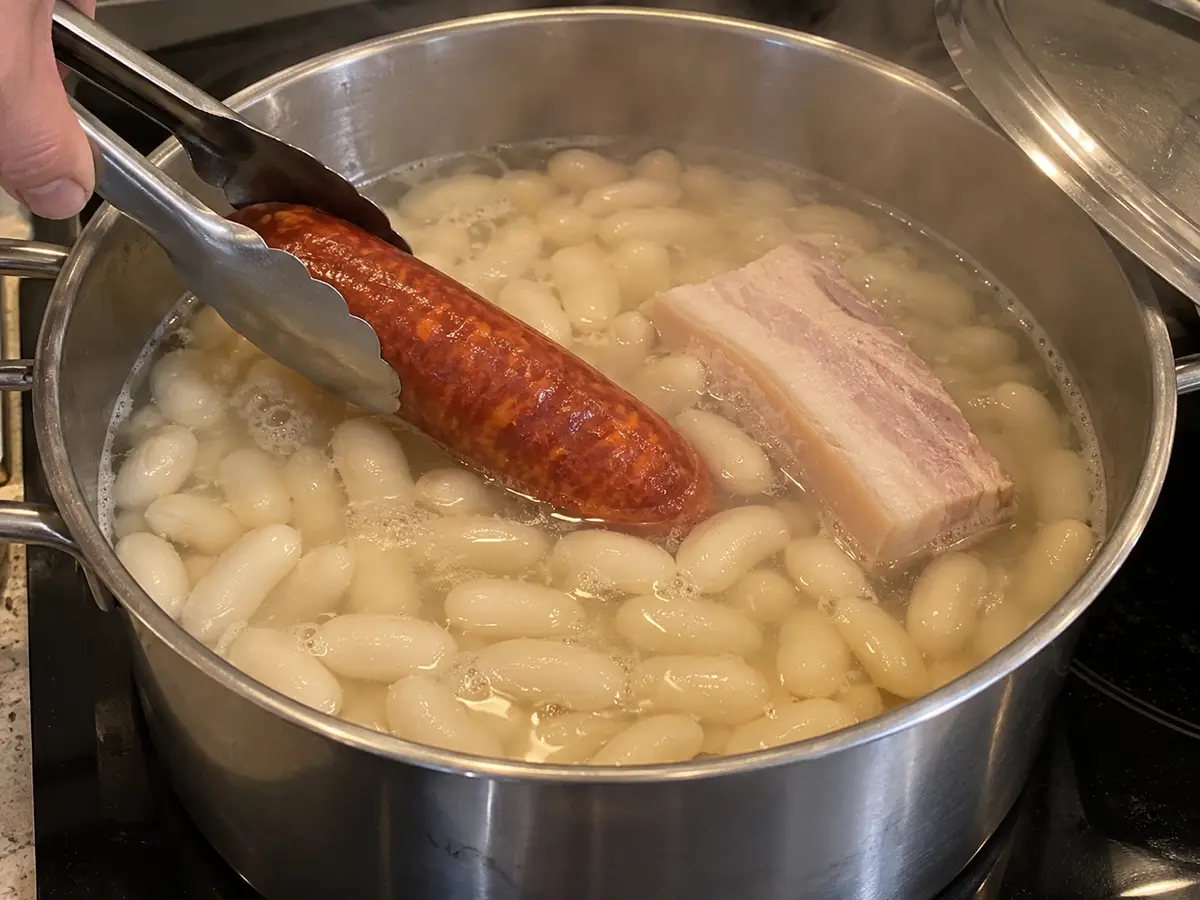
AI-generated Crumble the saffron threads between your fingers into a small bowl, add a few spoonfuls of hot broth from the pot and let steep for about 5 minutes. Nestle the whole morcillas among the beans without piercing their casings, and pour in the saffron with its broth. Continue cooking over low heat with the lid ajar for about 1–1.5 hours, until the morcilla is fully cooked, the pork belly tender and the beans creamy inside. A bean should yield easily to pressure, without a hard, chalky center. If the beans or pork belly are still firm, cook longer, keeping them submerged with small additions of the remaining hot water. Do not rush this stage with vigorous bubbling, which splits the beans and casings.
Once the beans and meat are tender, taste the broth. Only now add some or all of the measured salt, if needed: the sausages and pork belly release plenty during cooking. The broth should coat the beans but still be easy to ladle. If it is very thin, uncover the pot and cook gently for about 5–10 minutes more, rocking it carefully. Do not add all the remaining water just to use up the reserve.
Take the pot off the heat, cover and let rest for about 30 minutes; the broth will thicken a little more during this time. Carefully lift out the chorizo, morcilla and pork belly without breaking up the tender beans. Cut the sausages into thick slices and the pork belly into pieces, then divide among 6 servings. Serve with the beans and broth in deep plates.
Estimated nutrition
We couldn't estimate the nutrition for this recipe yet.

Rate this recipe
0 ratings
Comments