
AI-generated
Fränkisches Schäufele – Franconian pork shoulder with crisp crackling
Log in or create a free account to save recipes.
Source: https://recipheon.com/en/recipes/main-dishes/frankisches-schaufele-franconian-pork-shoulder-with-crisp-crackling
About this recipe
Fränkisches Schäufele is a Franconian bone-in pork shoulder roast with crisp crackling. Use a fresh, uncured piece with the flat shoulder-blade bone, which is worth ordering from a butcher. The meat roasts slowly with the skin facing up, then a separate hotter stage crisps the skin. This home version uses stock, without beer, and a smooth roasted vegetable gravy. Allow approximately 4.5 hours for 4 servings; tougher meat may need longer roasting.
Ingredients
Pork shoulder and seasoning
1 raw pork shoulder piece weighing approximately 1.8 kg, with the flat shoulder-blade bone and skin; uncured and unsmoked meat, bone-in weight
12 g salt to have on hand: 10 g for the meat and up to 2 g for final seasoning of the gravy
1 teaspoon ground black pepper
1.5 teaspoons whole caraway seeds, to crush lightly
Vegetables and gravy
200 g raw peeled onion, net weight
150 g raw peeled carrot, net weight
100 g raw peeled celeriac root, net weight
10 g raw peeled garlic, net weight
15 g pork lard
800 ml ready-to-use clear unsalted beef stock: 500 ml to start roasting and a single reserve of up to 300 ml for topping up and thinning the gravy
Steps
Preheat the oven to 160°C with top and bottom heat. Thoroughly pat the shoulder dry with paper towels, especially the skin. Set it securely on a board and use a sharp knife to score the skin in a fine crosshatch, cutting through the skin and a shallow layer of fat, but not the meat. If the butcher has already scored it, check the cuts and just dry the surface. Lightly crush the caraway seeds in a mortar or with the flat side of a knife.
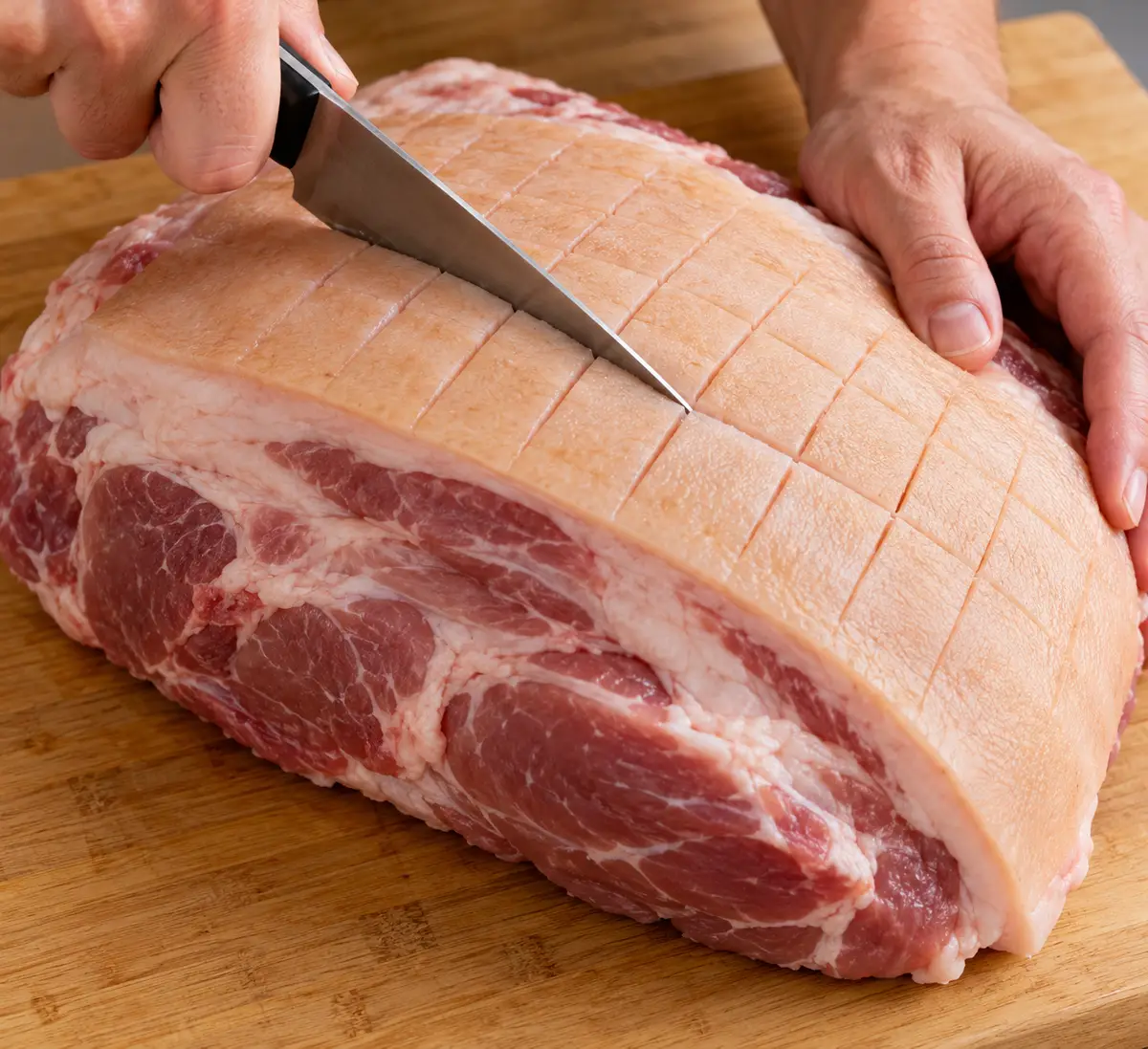
AI-generated From the 10 g salt allocated to the meat, rub 6 g into the skin, including between the cuts, and 4 g onto the fleshy sides. Season the sides with pepper and caraway as well; leave only salt on the skin. Cut the onion into quarters, the carrot and celeriac into pieces approximately 2–3 cm across, and roughly chop the garlic. Measure 500 ml stock and one reserve of up to 300 ml separately.
Heat the lard in a deep skillet over medium heat. Cook the onion, carrot and celeriac for 8–10 minutes, stirring, until golden in places. Add the garlic for the last minute. Pour in 500 ml hot stock and scrape up the residue from the bottom. Transfer everything, including the vegetables and fat, to a roasting dish only slightly larger than the meat. Set the shoulder on the vegetables with the bone facing down and the skin up, keeping the skin above the liquid. Do not brown the meat in the skillet.
Place the uncovered roasting dish on a lower oven rack and roast at 160°C for approximately 3–3.5 hours. The skin should face up throughout; do not baste it with liquid. If the bottom starts running low on liquid, add warmed stock in small amounts from the single reserve of up to 300 ml, always beside the meat. The meat should come away easily from the bone when pressed with a fork. If it still grips the bone firmly, continue roasting at the same temperature, keeping an eye on the liquid in the dish.
Once the meat is tender, transfer it to a wire rack set over a clean metal tray, still skin side up. Increase the oven temperature to 230°C with top and bottom heat. Once heated, place the meat on the middle level and roast for 10–15 minutes, until the skin is golden, blistered and crisp. Watch it, as it darkens quickly near the end; if it browns too quickly, move the rack lower. Do not add the fat dripping onto this tray to the gravy.
While the skin crisps, pour the liquid from the first roasting dish with all the vegetables into a saucepan. Spoon off the visible free layer of fat from the surface. Blend the warm liquid and all the vegetables into a smooth gravy without passing it through a sieve. If too thick, add a little warmed stock remaining from the same reserve of up to 300 ml; do not measure out a second reserve. Heat gently for 3–5 minutes. Taste and, if needed, add only the required amount of the remaining 2 g salt.
After the final roasting stage, leave the shoulder for 10 minutes without covering it so the skin does not soften. Separate the meat from the flat shoulder-blade bone; do not serve the bone or hard cartilage. Divide the meat and crisp skin into 4 servings. Serve the gravy alongside or pour it beneath the meat, leaving the skin dry. Serve immediately.
Estimated nutrition
We couldn't estimate the nutrition for this recipe yet.

Rate this recipe
0 ratings
Comments