
AI-generated
Gnocchi alla Sorrentina — Baked Dumplings with Tomatoes and Mozzarella
Log in or create a free account to save recipes.
Source: https://recipheon.com/en/recipes/main-dishes/gnocchi-alla-sorrentina-baked-dumplings-with-tomatoes-and-mozzarella
About this recipe
Gnocchi alla sorrentina are soft potato dumplings baked in tomato sauce with stretchy mozzarella and basil. In this version, we make the gnocchi from scratch using older, starchy potatoes cooked in their skins. Letting steam escape from the potato flesh means it needs less flour, keeping the dumplings tender rather than heavy and rubbery. We adjust the flour to the potatoes' moisture content and test-cook one dumpling before shaping the whole batch. The sauce should thicken slightly and the mozzarella should drain well, so they coat the baked gnocchi without leaving a watery puddle. Serve after a short rest, while the cheese still stretches and the fresh basil retains its aroma.
Ingredients
Homemade Gnocchi
800 g raw, older starchy potatoes, weighed with their skins on, of similar size, about 5–6 cm; all the peeled flesh goes into the dough after cooking, and the skins are discarded
230–270 g all-purpose flour: 200–240 g for the dough, depending on the potatoes' moisture content, and 30 g for dusting the work surface and trays; discard unused flour
1 medium egg (size M), about 50 g without the shell, for the dough
5050 ml water: 2 l for cooking the potatoes, 3 l for cooking the gnocchi and 50 ml for the sauce; discard the water used to cook the potatoes and dumplings
25 g fine salt: 2 g for the dough, 3 g for the sauce and 20 g for the gnocchi cooking water
Tomato Sauce
600 g tomato passata without added herbs or vegetables
25 g extra-virgin olive oil for the sauce
4 g peeled garlic for the sauce
10 g fresh basil leaves: 6 g for the sauce and 4 g for serving
Cheeses for Baking
250 g fresh cow's milk mozzarella (fior di latte), weighed after draining and patting dry, without brine: 150 g to mix in and 100 g for the top
40 g Parmigiano Reggiano without the rind, to be finely grated: 20 g to mix in and 20 g for the top
Steps
Wash the potatoes thoroughly and place them whole, with their skins on, in a pot with a capacity of about 4 l. Add the measured 2 l of cold water, bring to a boil, then simmer gently for about 25–35 minutes from when the water boils, until a thin knife slides easily into the very center. Prepare the cheese and sauce while they cook; do not peel and do not cut the potatoes before cooking, so the flesh does not absorb water.
Remove the mozzarella from its brine, cut into cubes about 1 cm across and leave in a sieve over a bowl in the refrigerator for about 25–30 minutes while the potatoes cook; discard the liquid, gently pat the cheese dry with paper towels and weigh out 250 g. In a saucepan with a capacity of about 2 l, heat all the olive oil over medium-low heat, add the finely chopped garlic and stir for about 1 minute without browning it. Add all the passata, 50 ml water and 3 g salt, then simmer without a lid over low heat for about 20–25 minutes, stirring occasionally, until the sauce thickens slightly and coats a spoon. Remove from the heat, add the 6 g of torn basil and cover.
Drain the tender potatoes, discarding all the water, and peel them while still warm, holding them with a clean kitchen towel. Discard the skins and pass all the flesh through a potato ricer onto a wide tray; do not use a blender, which would make the mixture gluey. Spread in a thin layer and leave for about 10–15 minutes, until the potatoes stop steaming and are lukewarm with a dry surface. Toward the end of this time, start preheating a conventional oven (no fan) to 220°C and bring 3 l of fresh water to a boil in a pot with a capacity of at least 5 l.
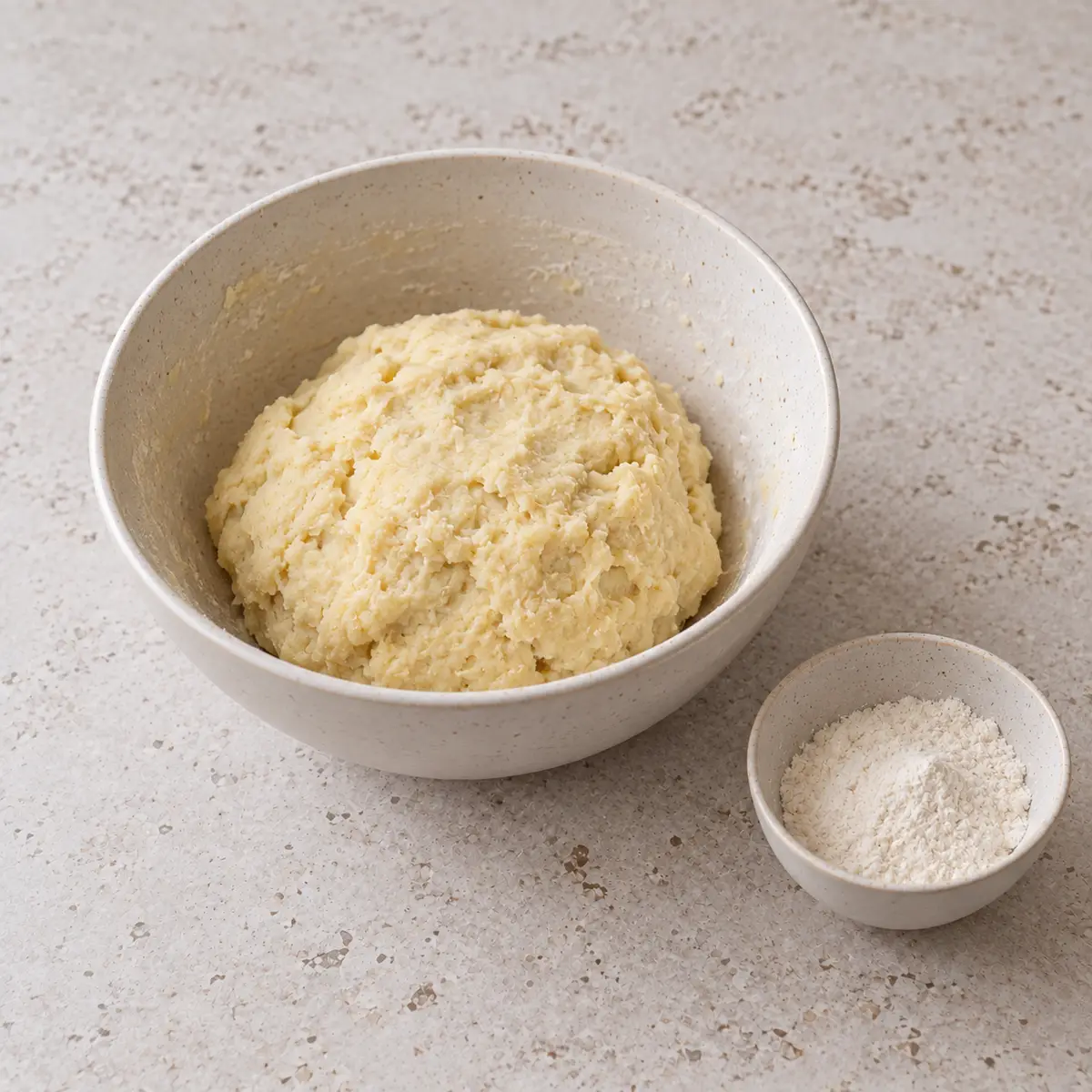
Transfer the lukewarm potatoes to a bowl and add 200 g flour, the whole egg beaten with a fork and 2 g salt. Mix by hand for about 1–2 minutes, just until you have a uniform, soft dough that comes together and is at most slightly sticky. Do not knead it for long and do not add all the remaining flour at once; add more only if the cooking test shows it is needed. Keep the measured 30 g of flour for dusting separate.
AI-generated Add 20 g salt to the boiling 3 l of water and reduce the heat so the water is only gently boiling. Pinch off a piece of dough, shape a dumpling about 2 cm across and drop it into the pot: after it floats, cook for about 1 more minute, lift out with a slotted spoon and cut it open. It should keep its shape and have a soft, uniform center without raw, floury dough; if it falls apart in the water, add flour to the remaining dough in 10 g increments and repeat the test, without exceeding a total of 240 g flour in the dough. Spread 3 tablespoons of the prepared sauce over the bottom of a baking dish about 20 × 30 cm and at least 5 cm deep, and place the cooked test dumplings there; keep the water covered over the lowest heat while you shape the gnocchi.
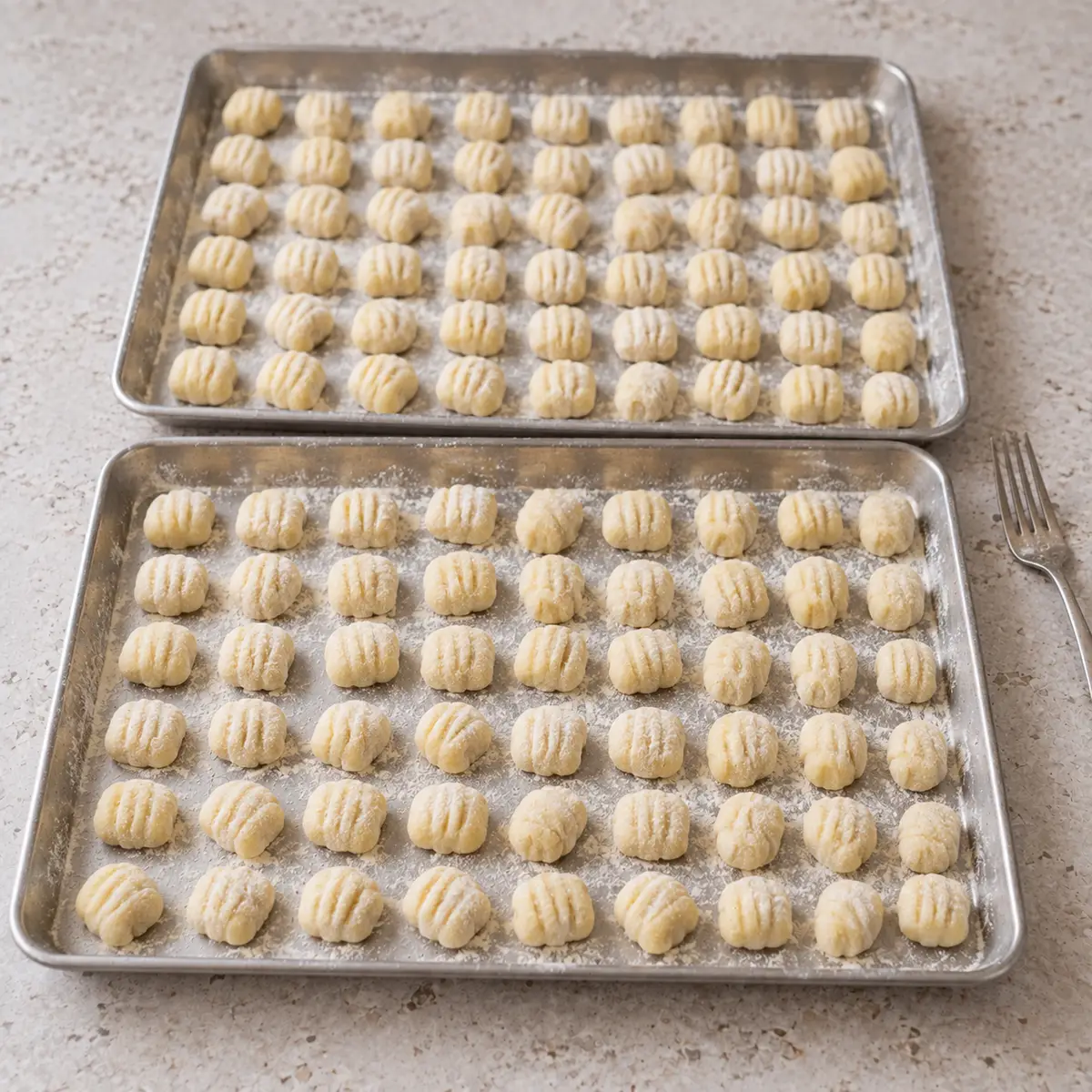
Lightly dust the work surface and 2 large trays with some of the measured dusting flour. Divide the dough into 8 pieces, roll each into a rope about 2 cm thick and cut into pieces about 2 cm long; this will make about 100–120 gnocchi, depending on the size of the pieces. Gently roll each one over the back of a fork to make shallow ridges, then place on the trays in a single layer with small gaps. Work efficiently and do not knead the dough again for long; discard unused flour from the work surface and trays after transferring the dumplings to the cooking water.
AI-generated Pour the remaining sauce into a large bowl and bring the water back to a gentle boil. Cook the shaped gnocchi in 4 similar-sized batches, about one quarter of all the dumplings at a time: gently stir the water with a spoon so they do not stick to the bottom, and allow about 1 minute after they float. Each batch will usually take about 3–4 minutes; lift out the dumplings with a slotted spoon, allowing the water to drain thoroughly, and immediately coat them gently in the sauce in the bowl. Do not rinse the gnocchi and do not pour cooking water into the sauce; discard the remaining water after cooking the last batch.
Add 150 g of the drained mozzarella and 20 g of finely grated Parmigiano Reggiano to the gnocchi in the sauce, and mix briefly and gently. Transfer everything to the prepared dish with the test dumplings, scraping in all the sauce from the bowl, and level without pressing down. Spread the remaining 100 g mozzarella over the top and sprinkle with the remaining 20 g Parmigiano Reggiano.
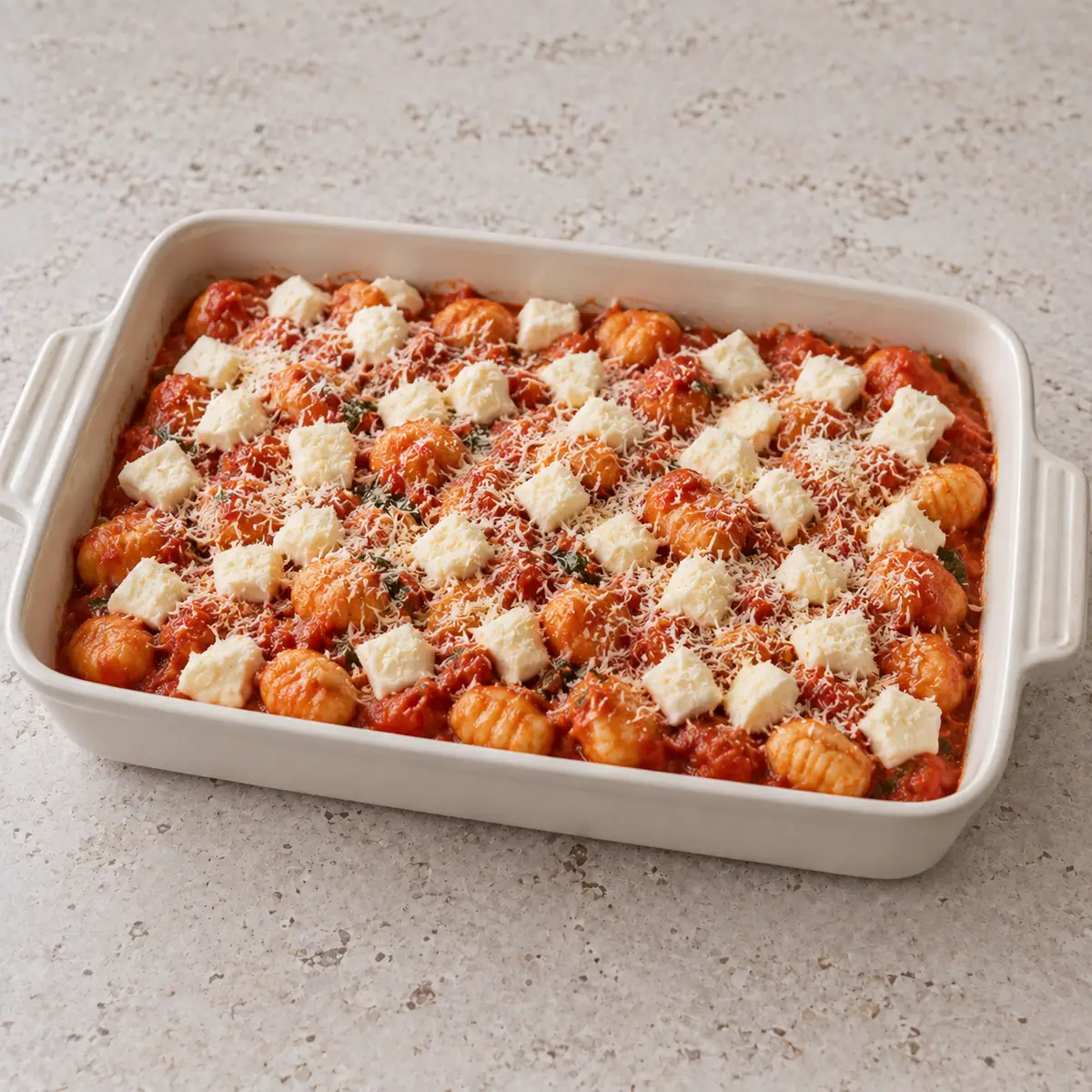
AI-generated Place the dish on the middle rack of the preheated oven and bake without a cover at 220°C on the conventional setting for about 15–20 minutes. The cheese should melt and turn lightly golden in places, and the sauce should bubble visibly around the edges. Remove the dish when it reaches this stage; do not continue baking until the entire surface dries out.
Leave the dish on a heatproof trivet for about 5 minutes without covering it. Tear and scatter the remaining 4 g of fresh basil over the top, then divide into 4 portions, scooping up the gnocchi with the sauce and stretchy cheese. Serve warm after the short rest.
Estimated nutrition

Rate this recipe
0 ratings
Comments