
AI-generated
Homemade Spinach and Ricotta Ravioli with Sage Butter
Log in or create a free account to save recipes.
Source: https://recipheon.com/en/recipes/main-dishes/homemade-spinach-and-ricotta-ravioli-with-sage-butter
About this recipe
Homemade spinach and ricotta ravioli are thin egg-pasta pockets served with brown butter and sage. The delicate dough surrounds a creamy green-and-white filling of ricotta, spinach and grated cheese, seasoned with a little nutmeg. Thoroughly draining the filling, rolling the dough very thin and pressing out air when sealing the edges are the key steps. Use the dough's resting time to prepare the filling; a rolling pin can replace a pasta machine. Brown the butter only until it is light brown and smells nutty, then remove it from the heat so it does not turn bitter. The recipe makes about 32 large ravioli, eight for each of four servings, and takes about two hours, including shaping and cooking in batches.
Ingredients
Dough, filling and sage butter
330 g type 00 wheat flour: 300 g for the dough and 30 g for dusting the work surface and trays; shake excess flour off the ravioli
150 g eggs, size M, without shells, about 3 eggs, for the dough
300 g full-fat ricotta for the filling, weighed before draining; discard the drained liquid
400 g fresh spinach leaves for the filling, raw weight of washed and trimmed leaves; squeeze out the liquid after wilting
40 g finely grated Parmigiano Reggiano for the filling
80 g unsalted butter (82% fat) for the sauce
10 fresh sage leaves, about 3 g, washed and thoroughly dried, for the sauce
43 g fine salt: 3 g for the filling and 40 g for the cooking water, which will be discarded
¼ tsp freshly ground black pepper for the filling
⅛ tsp ground nutmeg for the filling
4 l water for cooking the ravioli and 20 ml for moistening the edges; reserve 120 ml from the pot for the sauce and discard the rest
Steps
Place the ricotta in a fine-mesh sieve set over a bowl and refrigerate for at least 30 minutes while preparing and resting the dough. The cheese should thicken and leave no puddle when transferred to a plate; discard the liquid collected in the bowl. Prepare a rolling pin or pasta machine, a knife or pastry wheel, two trays and a wide skillet about 28 cm in diameter.
Mound 300 g flour on the work surface, make a wide well in the center and pour in 150 g beaten eggs. Gradually draw the flour into the center with a fork, then bring the ingredients together with your hands and knead for 10–12 minutes, until the dough is firm, smooth and elastic, without dry crumbs. It may feel rough at first: keep kneading rather than adding water or more flour. Reserve the remaining 30 g flour solely for light dusting when rolling and shaping.
Wrap the dough tightly in plastic wrap or cover with an inverted bowl and leave at room temperature for 30 minutes. Prepare the spinach and filling during this time; the rested dough should stretch more easily without shrinking back.
Place half the spinach in a dry skillet, cover and heat over medium heat for 4–5 minutes, stirring once or twice; the leaves should wilt completely in their own moisture. Transfer to a large plate and prepare the other half the same way. Spread the spinach in a thin layer and leave for about 10 minutes, until no longer hot, then squeeze very firmly with your hands or in a clean kitchen towel and finely chop. Discard the squeezed-out liquid: a dry filling reduces softening of the dough and splitting of the ravioli.
Mix the drained ricotta with all the cooled spinach, 40 g grated cheese, 3 g salt, the pepper and nutmeg. The filling should be firm, with no free liquid, and hold a small mound on a spoon. Divide it into four equal portions in the bowl, one for each quarter of the dough, and keep refrigerated until shaping.
Divide the dough into four equal portions, then divide each into two; work with one pair and keep the remaining dough covered. With a rolling pin or pasta machine, roll both pieces into strips about 8 cm wide and about 64 cm long, 0.8–1 mm thick: the sheets should be slightly translucent but have no holes. Use only a light dusting of the reserved 30 g flour underneath the dough, keeping some for the trays, and cover the finished strips so they do not dry out. Arrange eight equal portions of one-quarter of the filling, about 13–15 g each, along one strip, spaced 8 cm apart, starting 4 cm from a short edge and leaving clear dough around the filling.
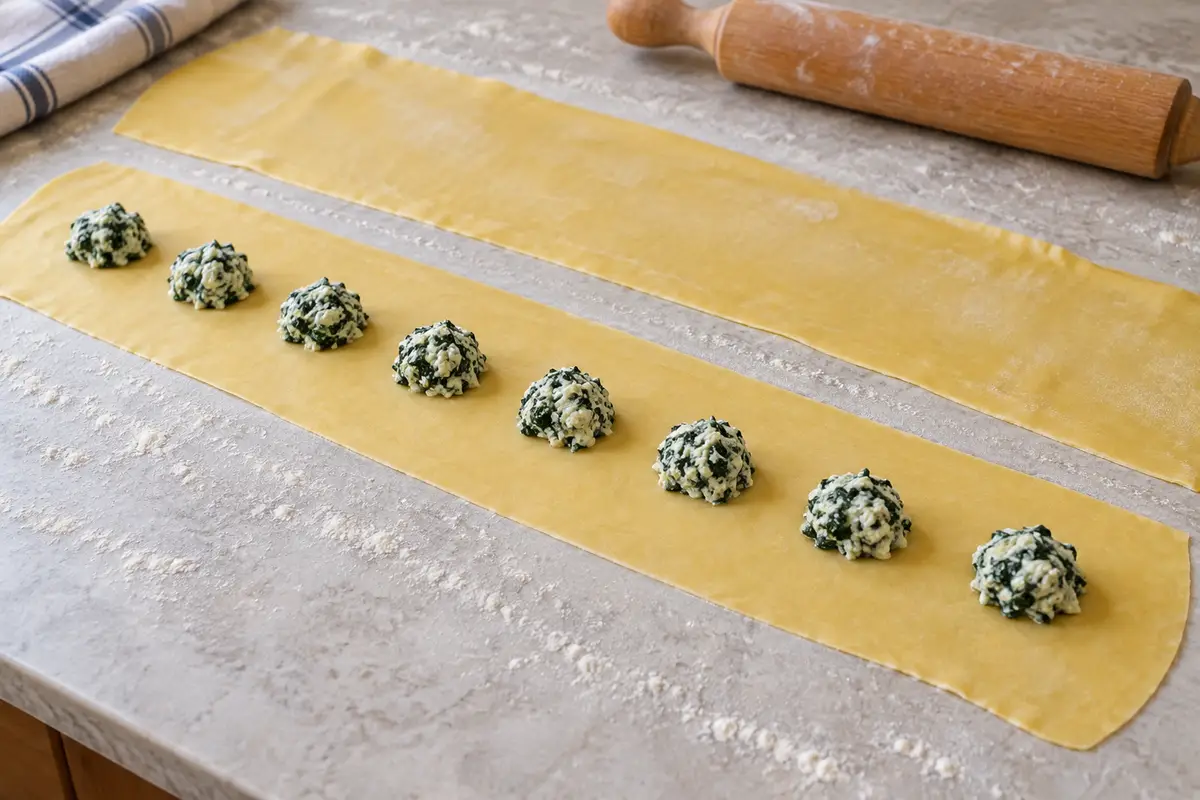
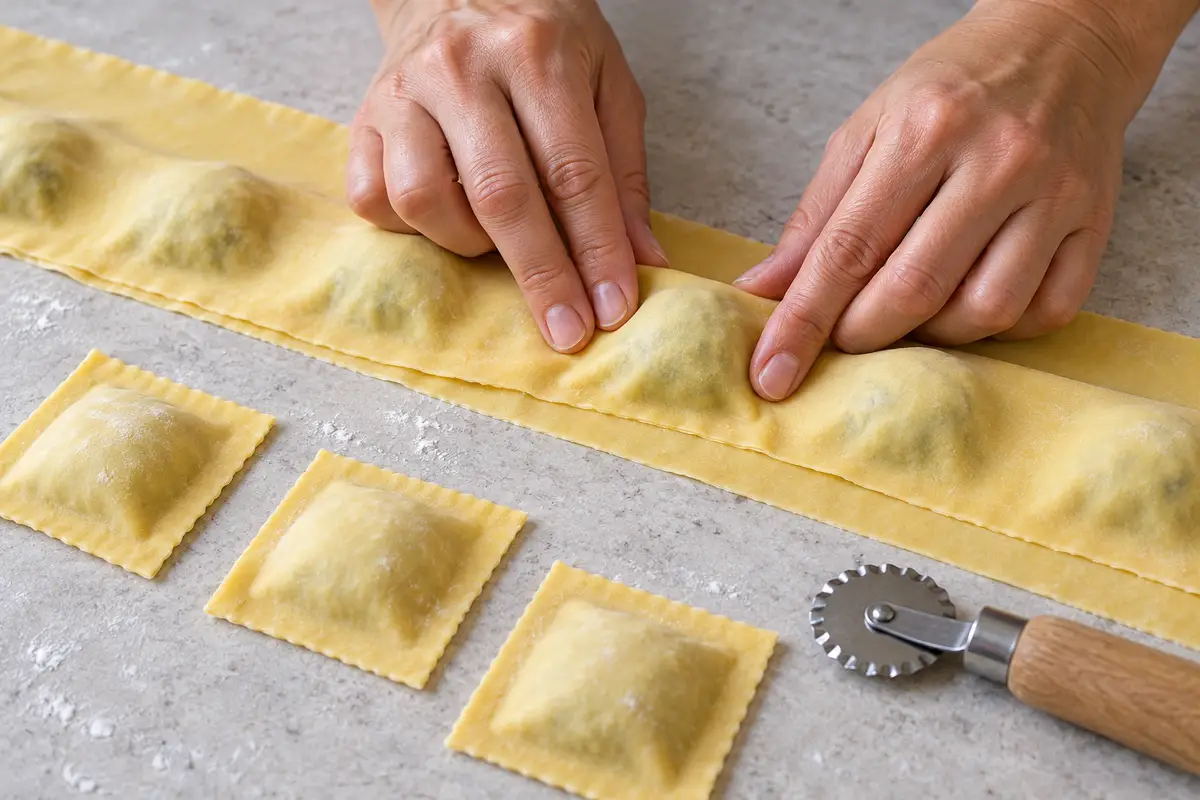
AI-generated Clean any loose flour off the edges of the bottom sheet and lightly moisten them with a brush, using the reserved 20 ml water. Cover with the second strip, pressing the dough first close around each mound of filling and then along the outside edges: push the air out and leave a tightly sealed margin without filling. Cut into squares about 8 cm on each side, firmly press the seams and arrange the ravioli in a single layer on trays lightly dusted with flour from the same 30 g reserve; cover with a lightweight kitchen towel so they do not dry out. Shape the remaining portions the same way; knead the scraps together, cover for 5 minutes and roll out thinly again, using all the dough and filling to make about 32 ravioli.
AI-generated Toward the end of shaping, pour 4 l water into a wide pot with a capacity of at least 6 l, cover and bring to a boil over high heat; this usually takes about 10–15 minutes. Add the remaining 40 g salt. Prepare the sage butter while the water heats, then reduce the heat for cooking the ravioli so the water boils gently.
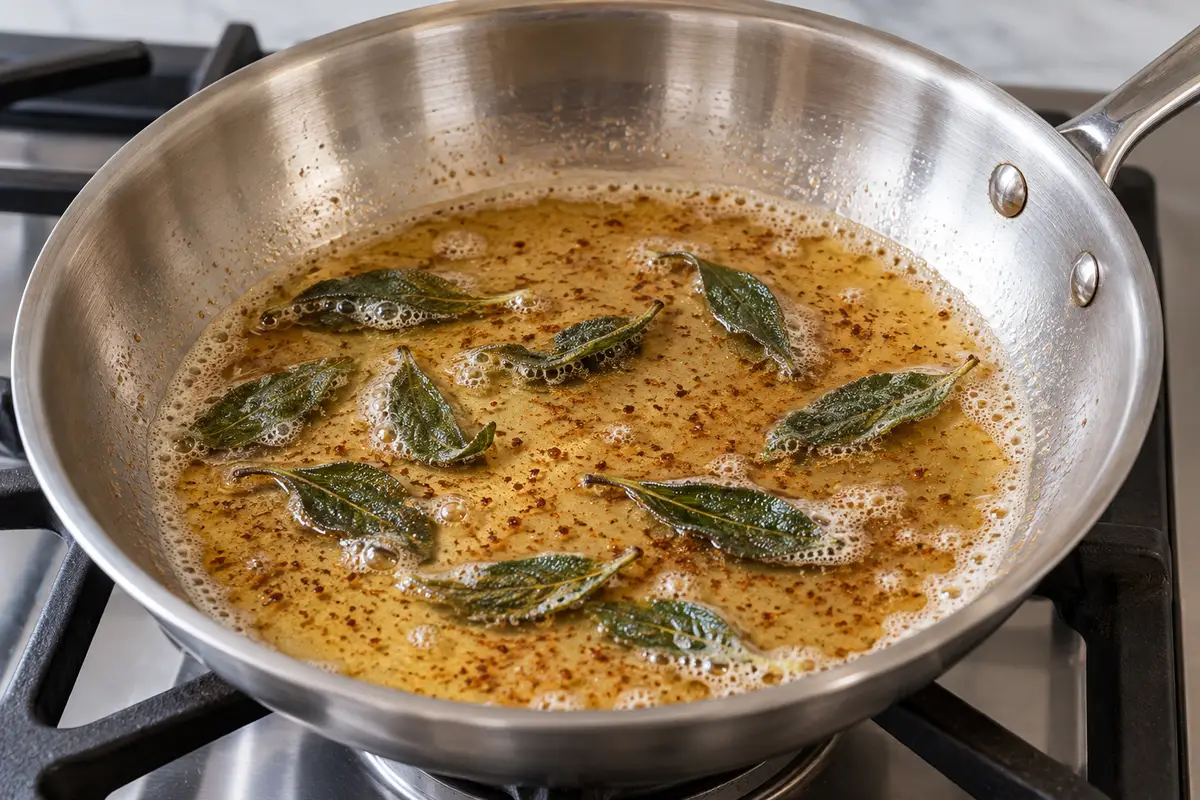
Melt 80 g butter in a clean, dry skillet over medium-low heat and add the thoroughly dried sage leaves. Heat for about 4–6 minutes, swirling the skillet: the butter will foam first, then the flecks on the bottom will turn light brown and a nutty aroma will develop, while the leaves will become slightly firmer. Immediately remove from the heat and pour the butter, sage and browned flecks into a heatproof bowl to stop the browning; do not wait until it is dark or smoking. Divide the prepared butter and leaves into four equal portions for finishing four batches of ravioli.
AI-generated Shake off loose flour and cook the ravioli in four batches of about eight, moving them gently with a slotted spoon after adding them so they do not stick to the bottom. Cook for 3–4 minutes from the time the water returns to a gentle boil; they should float, and the edges should be soft, with no hard or floury layer when you test one raviolo. Before removing the first batch, reserve 120 ml water from the pot for the sauce, then lift out the ravioli with a slotted spoon and let them drain briefly. Finish each batch immediately as directed in the next step, and bring the water back to a gentle boil before adding the next; discard the remaining water after the last batch.
Pour one-quarter of the prepared sage butter and 30 ml reserved water into the skillet, then add one cooked batch of ravioli. Heat over low heat for about 30 seconds, gently swirling the skillet and turning the ravioli with a spoon, until coated in a thin, glossy layer of sauce; do not fry them until crisp. Transfer to a plate and serve immediately. Repeat with the three remaining batches, using all the butter and sage and a total of 120 ml water.
Estimated nutrition

Rate this recipe
0 ratings
Comments