
AI-generated
Mulgipuder — potatoes with pearl barley, bacon and onion
Log in or create a free account to save recipes.
Source: https://recipheon.com/en/recipes/main-dishes/mulgipuder-potatoes-with-pearl-barley-bacon-and-onion
About this recipe
Mulgipuder is an Estonian dish of soft potatoes and pearl barley, served with browned bacon and onion. It comes from the Mulgimaa region and has a simple, hearty character. The potatoes and barley cook together, eventually forming a thick, soft mixture with distinct grains. Soaking the barley for two hours beforehand helps it cook evenly. The bacon renders in a separate skillet, and the onion softens in its fat. The dish develops its flavor without milk or extra butter. The ideal texture is moist and spoonable, with gently mashed potatoes and soft barley.
Ingredients
Potato and barley base
800 g raw floury potatoes, weighed after peeling
120 g dry pearl barley, whole hulled and polished grains; not broken barley or instant barley
1.5 l water as a supply — 500 ml for soaking, 800 ml to start cooking and up to 200 ml in reserve
5 g fine salt — 3 g for cooking and up to 2 g after tasting
Bacon and onion
200 g raw, unscalded smoked bacon, weighed without rind, bones or hard cartilage
200 g onion, weighed after peeling
Steps
Rinse the dry pearl barley in a sieve, transfer to a bowl and cover with 500 ml cold water. Leave for 2 hours, then drain. Discard the soaking water and keep all the grains. The two-hour soak is included in the recipe's total time.
Cut the potatoes into large pieces about 4 cm across and arrange them at the bottom of a heavy pot holding about 3 l. Scatter the drained barley over them, add 3 g salt and 800 ml water. Bring to a boil, reduce the heat to low and cover. Simmer gently for about 50–60 minutes, until the potatoes are very soft and the barley grains are soft in the center too. Do not stir vigorously during cooking. If the liquid disappears while the barley is still slightly firm, add a little hot water from the reserve and cook for another 10–15 minutes. Do not drain the liquid after cooking.
Toward the end of cooking the base, cut the bacon into cubes about 1 cm across and finely chop the onion. Put the bacon in a cold skillet, set over medium-low heat and cook for 10–12 minutes, stirring, until the fat renders and the pieces are well browned. Add the onion and fry for about another 10–12 minutes, until soft and golden. Do not let anything burn black. Do not add oil, and do not pour away the rendered fat; all of it will be served.
If a distinct layer of water remains at the bottom once the barley is soft, cook without covering for a few minutes, stirring carefully along the bottom, until the excess evaporates. Remove from the heat. Mash the potatoes with a potato masher and mix with a wooden spoon, leaving distinct soft barley grains. Do not use a blender. The mixture should be thick and moist and fall slowly from a spoon; if it is too stiff, loosen it with a small amount of hot water from the reserve.
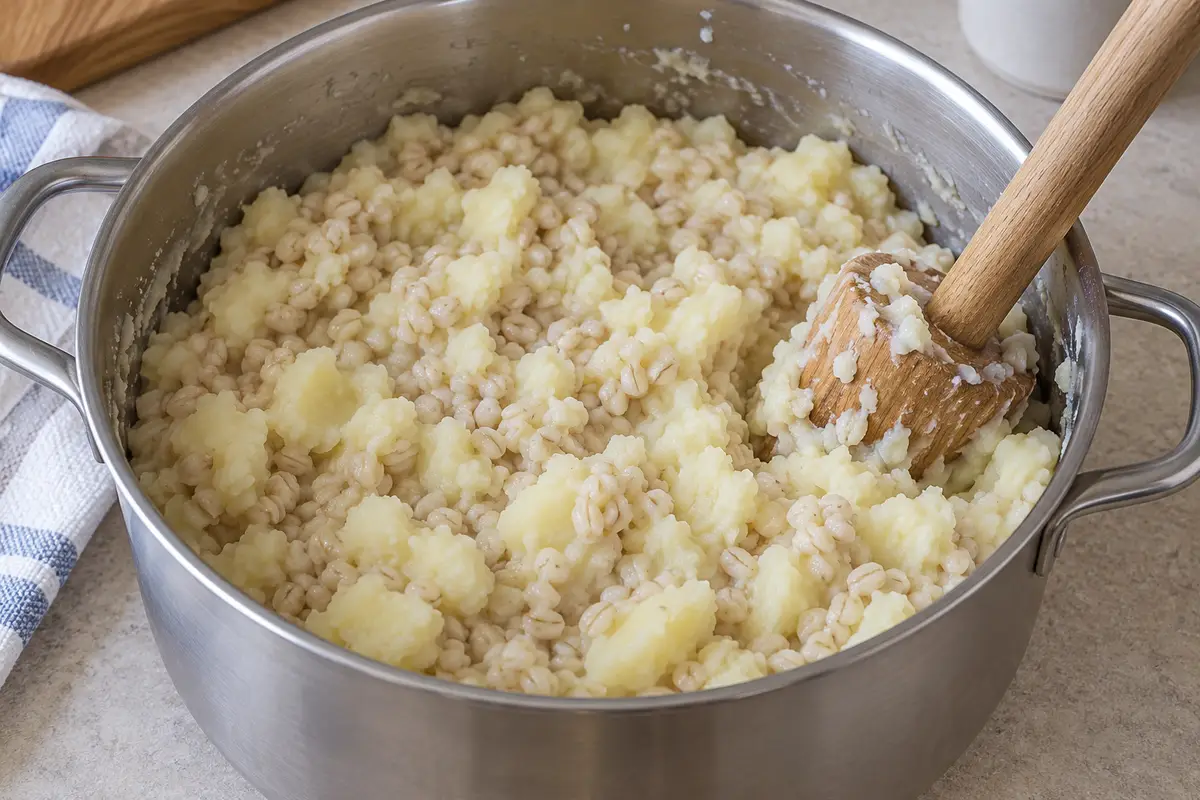
AI-generated Taste the base and add only as much of the remaining 2 g salt as needed, allowing for the saltiness of the bacon. Divide the hot potatoes and barley into four portions. Top each with a share of the bacon and onion, and spoon over a corresponding share of all the fat from the skillet. Serve immediately. The recipe includes the entire base and everything in the skillet, without sour cream, bread or an extra topping.
Estimated nutrition

Rate this recipe
0 ratings
Comments