
AI-generated
Piadina romagnola with dry-cured ham, creamy cheese and arugula
Log in or create a free account to save recipes.
Source: https://recipheon.com/en/recipes/main-dishes/piadina-romagnola-with-dry-cured-ham-creamy-cheese-and-arugula
About this recipe
Piadina romagnola is a wheat flatbread cooked on a hot griddle or in a dry skillet and served warm with a simple filling. This homemade version uses a supple dough of soft cake flour, water and olive oil, without yeast or baking soda. After resting, roll out four thin rounds and cook them one at a time until small bubbles and golden-brown spots appear. Keeping them briefly under a clean cloth helps them stay soft enough to fold. Spread fresh, creamy crescenza cheese from the stracchino family on the still-warm flatbreads, then add ready-to-eat dry-cured prosciutto crudo and thoroughly dried arugula. Fill off the heat to serve the arugula fresh and the ham tender. Each serving is one folded half-moon with its entire weighed share of filling. All four flatbreads and all the filling are intended for serving, without extra olive oil, sauce or decoration.
Ingredients
All the dough for four flatbreads
250 g soft wheat cake flour, type 450, all for the dough, without extra flour for dusting
125 g water, weighed, lukewarm, for the dough
30 g extra virgin olive oil, weighed, all for the dough, without extra oil for the skillet or your hands
4 g fine salt
All filling for four piadinas
160 g ready-to-eat dry-cured prosciutto crudo in thin slices, without skin or bones, with its edible fat, net weight, not fresh raw pork
200 g plain crescenza cheese from the stracchino family, fresh, soft and creamy, without rind, not mozzarella, ricotta or processed cheese
60 g fresh raw arugula, net weight after washing and thoroughly drying, without wilted leaves
Steps
Prepare a bowl, rolling pin, parchment paper and a dry, flat-bottomed skillet about 24 cm in diameter. Weigh 250 g flour and all 30 g olive oil. In a separate container, mix 125 g lukewarm water with 4 g salt. The water should be only slightly warm. All the flour goes into the dough; do not set aside extra for rolling and do not prepare any fat for the skillet.
Pour all the salted water and weighed olive oil into the flour. First mix with a fork, gathering dry ingredients from the bottom, then knead by hand for about 6–8 minutes. The dough should be cohesive, smooth and soft, without dry flour. Gather all crumbs from the bowl. Do not add yeast, baking powder or baking soda, and do not add unweighed water or olive oil.
Divide all the dough into four equal pieces, about 102 g each. Shape smooth balls, put in a bowl and cover so the surface does not dry out. Leave at room temperature for about 30 minutes. Resting makes thin rolling easier, although the dough contains no yeast and is not meant to rise. Meanwhile, prepare the weighed filling; do not add oil to the dough balls.
Wash the arugula, remove wilted leaves, dry thoroughly and only then weigh 60 g. Divide into four 15 g portions. Prepare 40 g ready-to-eat dry-cured ham and 50 g creamy cheese for each flatbread. Do not trim off the ham's edible fat and do not drain the creamy part of the cheese. Keep all the filling ingredients covered in the refrigerator, separate from the raw dough, until filling.
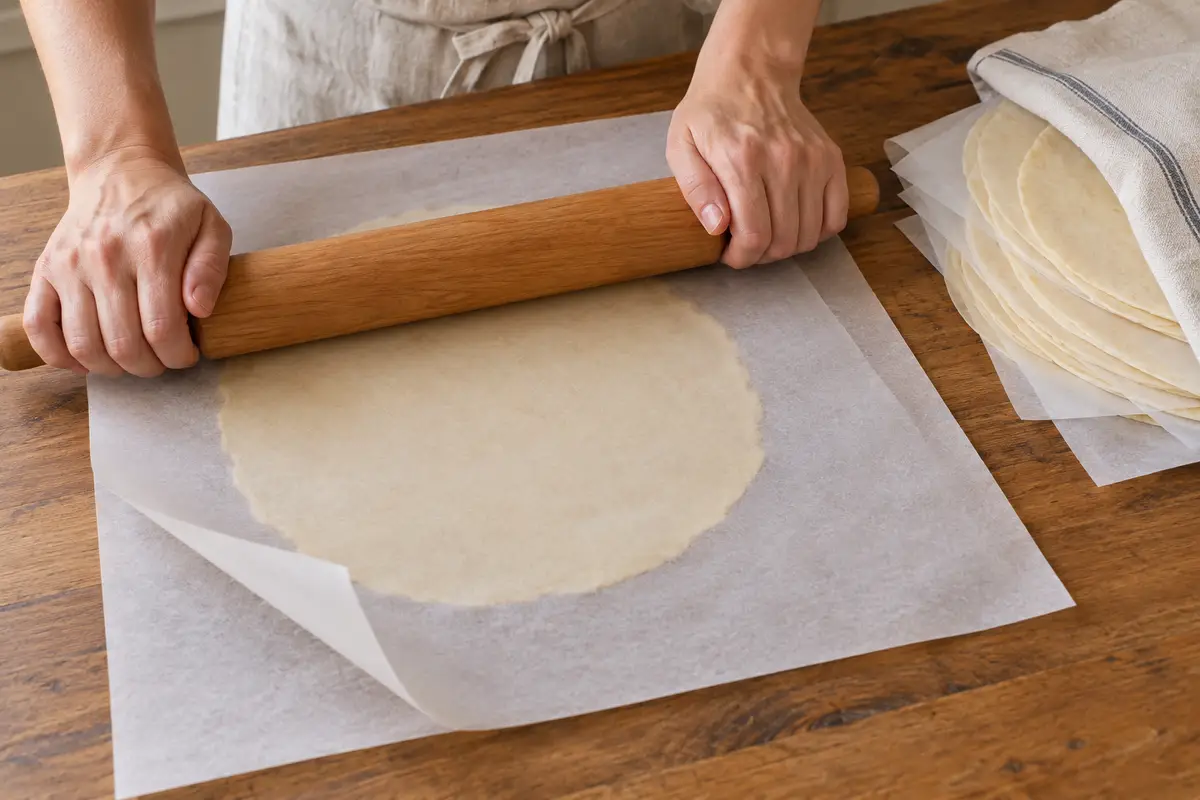
Roll each ball between sheets of parchment paper into a round about 21–22 cm in diameter and about 2 mm thick. Rotate the paper while rolling to make an even flatbread. Gently peel it away and set the finished rounds aside, separated by paper and covered. Do not cut out perfect circles and do not discard the edges. Use all four portions of dough, without dusting with flour or brushing with olive oil.
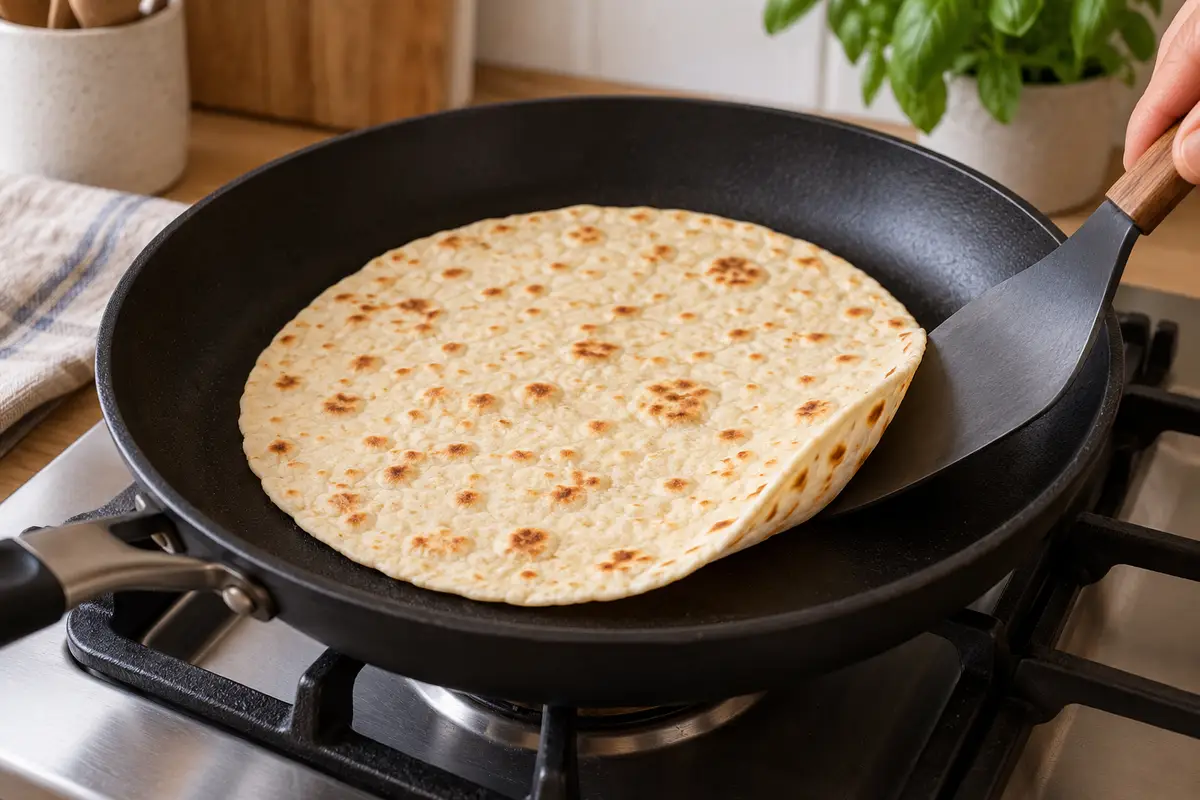
AI-generated Preheat the empty skillet over medium heat for about 2–3 minutes, without letting it smoke. Remove both sheets of paper from the first round and place only the dough on the dry skillet. Cook for about 1.5–2 minutes, until small bubbles appear on top and golden-brown spots develop underneath. Turn with a wide spatula and cook the second side for about another 1–2 minutes.
AI-generated Transfer the cooked flatbread to a plate and cover with a clean cloth. Cook the remaining three the same way, still without fat, stacking the cooked ones under the cloth. Lower the heat if spots blacken quickly before the dough cooks through. The flatbreads should stay flexible, without a wet raw layer inside; do not dry them until hard like crackers. Cooking all of them takes about 15–20 minutes.
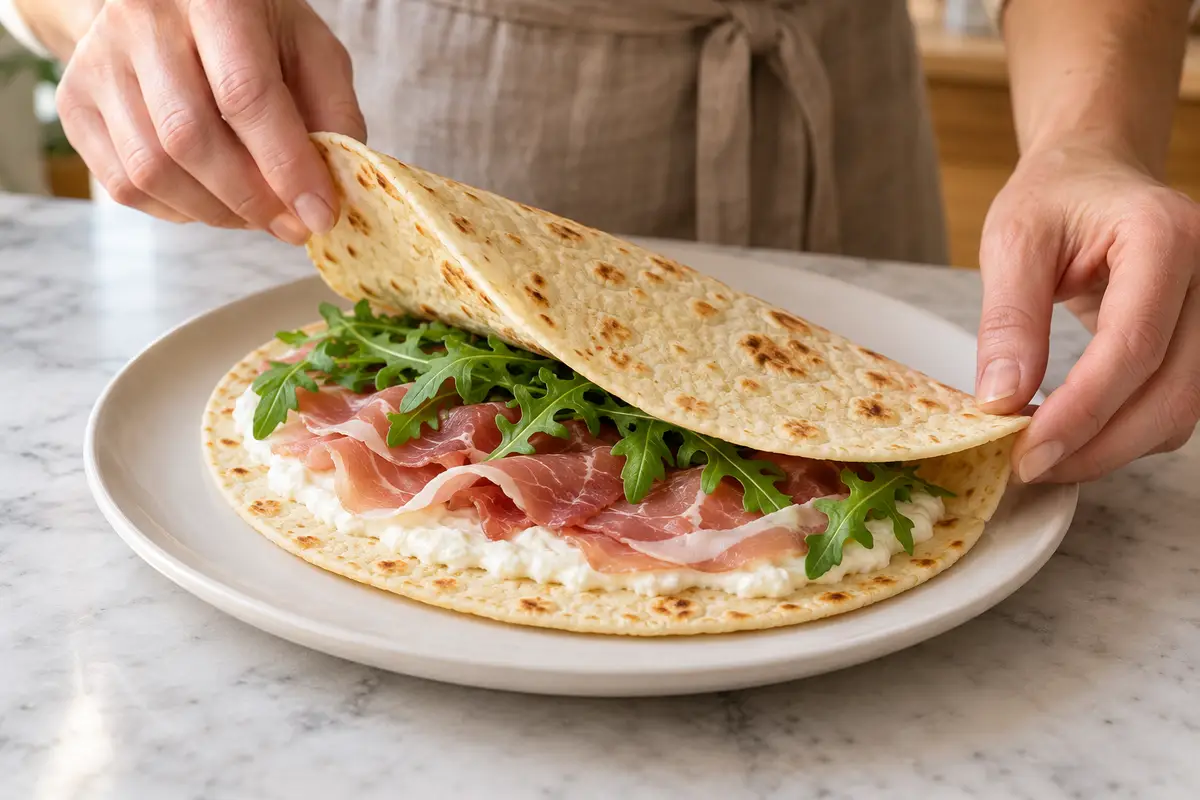
Take the skillet off the heat. Put the flatbreads on plates one at a time while still warm and easy to fold. Spread the weighed 50 g crescenza over half of each, scraping out the entire portion of cheese. Use all 200 g in total. Do not heat the filling in the skillet and do not add butter, mayonnaise or extra olive oil; the fresh cheese should remain creamy.
Arrange 40 g ready-to-eat prosciutto crudo and 15 g thoroughly dried fresh arugula over the cheese on each flatbread. Gently fold each in half into a half-moon, covering the filling with the empty half. Divide all 160 g ham and 60 g arugula among the four flatbreads, without extra decorations. Serve immediately, one filled piadina per person; the half-moon can be cut into two pieces for easier eating.
AI-generated If making ahead, keep the cooled flatbreads and cold filling ingredients separately in the refrigerator and assemble just before eating. Eat the plain flatbreads within 2 days and warm briefly in a dry skillet before filling. Use the cheese and ham according to whichever after-opening package limit is shorter. Refrigerate filled piadinas within 2 hours at the latest and eat by the following day.
Estimated nutrition

Rate this recipe
0 ratings
Comments