
AI-generated
Polvo à lagareiro — roasted octopus with potatoes, garlic and olive oil
Log in or create a free account to save recipes.
Source: https://recipheon.com/en/recipes/main-dishes/polvo-a-lagareiro-roasted-octopus-with-potatoes-garlic-and-olive-oil
About this recipe
Polvo à lagareiro is Portuguese octopus roasted with lightly smashed potatoes, garlic and olive oil. First, cook the octopus until tender, then briefly brown it in the oven. The a murro potatoes keep their skins, crack under gentle pressure and soak up the fragrant oil. Serve the whole arms and pieces of edible mantle with their skin, finished with finely chopped parsley. This home version serves four and starts with raw octopus bought already fully thawed and chilled; allow about 2 hours and 35 minutes from that point.
Ingredients
Cooking the octopus
1500 g raw cleaned octopus, bought already fully thawed and chilled, without innards, beak or eyes; weight after draining, including arms, edible mantle and skin
120 g peeled onion, discarded after cooking
2 bay leaves, discarded after cooking
2000 ml water for cooking the octopus, discarded after cooking
up to 1000 ml additional hot water, only if needed to cover the octopus during cooking; also discarded
A murro potatoes
1000 g raw small potatoes, about 4–5 cm in diameter, thoroughly washed, with skins on
1500 ml water for cooking the potatoes, discarded after cooking
salt, used in stages: 8 g for the drained potatoes and up to 2 g for final seasoning to taste
Roasting and serving
100 g extra-virgin olive oil; all the roasting oil is served with the dish
24 g peeled garlic
0.5 g ground black pepper
6 g fresh parsley, weighed after removing thick stems
Steps
This recipe starts with raw cleaned octopus bought already fully thawed and chilled. Briefly rinse it under cold water and drain; keep the arms, edible mantle and skin. Cut the onion into quarters. Prepare a pot of about 6 liters for the octopus, a second pot for the potatoes and a baking dish about 35 × 25 cm.
In the large pot, bring 2000 ml water to a boil with the onion and bay leaves, without salt. Add the octopus and, if needed, some of the additional hot water to cover it. Wait for a gentle simmer to return. Cook over low heat with the lid slightly ajar for about 60–90 minutes, until a knife slides easily into the thickest base of an arm. If the octopus still offers noticeable resistance, cook it longer; it must already be tender before roasting, not just cooked on the outside.
When the octopus has been cooking for about 30 minutes, put the potatoes in the second pot and add 1500 ml water, without salt. Bring to a boil, then simmer gently for about 20–25 minutes from boiling, until tender but still holding their shape. Drain away all the water and leave the potatoes to steam-dry for about 5 minutes. Preheat the oven to 200°C, conventional top and bottom heat.
Lift out the tender octopus and let it drain for a few minutes, until comfortable to handle. Discard the cooking water, onion and bay leaves; do not add them to the roasting dish. Separate the whole arms and cut the edible mantle into four larger pieces, keeping the skin. Gently press each potato with a broad spoon, just enough to crack the skin and slightly flatten it, without mashing it into a puree.
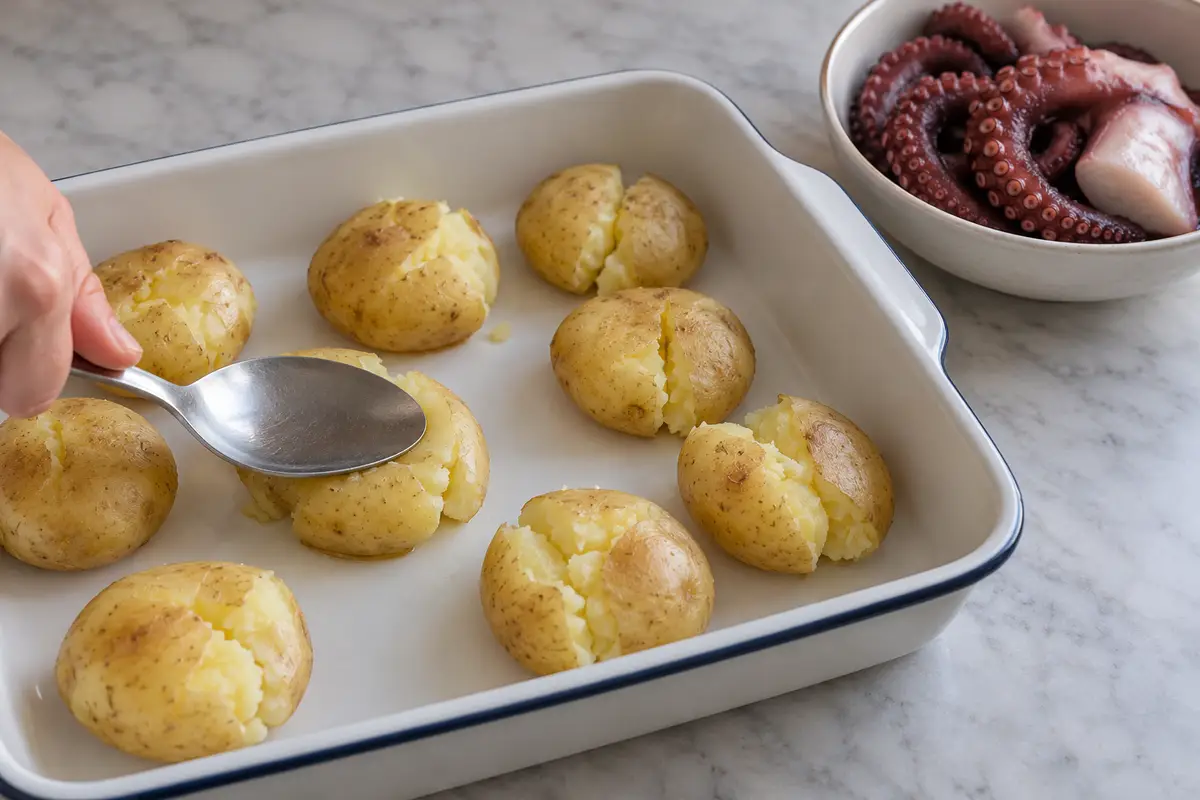
AI-generated Lightly crush the garlic cloves with the flat of a knife, leaving them in large pieces. Put the potatoes in the baking dish, season with 8 g salt and the pepper, add the garlic and pour over all the oil. Toss gently, then arrange the arms and mantle pieces on the potatoes and spoon oil from the dish over them. Tuck the garlic between the potatoes and under the octopus so it does not burn on top.
Roast on the middle rack for about 25–30 minutes, until the potatoes are lightly browned and the octopus is hot with lightly roasted edges. Halfway through, spoon oil from the dish over the ingredients; the octopus should stay tender, so do not extend roasting to form a hard crust. Taste, use some of the remaining salt if needed and sprinkle with finely chopped parsley. Divide all the arms, mantle pieces, potatoes, garlic and all the oil and juices from the dish among four servings; serve hot.
Estimated nutrition

Rate this recipe
0 ratings
Comments