
AI-generated
Potato Dumplings with Plums
Log in or create a free account to save recipes.
Source: https://recipheon.com/en/recipes/main-dishes/potato-dumplings-with-plums
About this recipe
These potato dumplings enclose whole plums in soft dough and are served with breadcrumbs browned in butter. This version uses cooked potatoes with their excess moisture steamed off, flour, and an egg. Small plums are slit on just one side so the pits can be removed without separating the fruit into halves; a little cinnamon sugar goes inside. The key is to cool the potatoes completely before making the dough and knead briefly, without adding large amounts of flour. This allows the dough to seal tightly around the fruit and stay tender after gentle simmering. The ingredients make 20 dumplings, five for each of four servings.
Ingredients
Dough and cooking
900 g raw starchy potatoes, weighed after peeling
220 g dry all-purpose flour, divided: 200 g for the dough and up to 20 g for dusting; discard any unused dusting flour
30 g dry potato starch
1 egg, size M
22 g fine salt, divided: 5 g for the potato cooking water, 2 g for the dough, and 15 g for the dumpling cooking water; the cooking water will be drained
4500 ml cooking water, divided: 1500 ml for the potatoes and 3000 ml for the dumplings; both batches of cooking water will be drained
Filling and serving
20 small, ripe, firm plums, about 600 g before pitting, about 30 g each and 3–4 cm long; discard the pits
40 g sugar
2 g ground cinnamon
60 g butter
50 g dry wheat breadcrumbs
Steps
Weigh out 900 g peeled potatoes and cut them into pieces about 3 cm across. Put them in a pot with a capacity of about 3 l, add 1500 ml water and 5 g salt; the water should cover the potatoes. Bring to a boil, reduce the heat, and cook with the lid slightly ajar for 20–25 minutes, until a fork slides easily through the center of a piece. Drain and discard all the water, leaving the potatoes in the pot.
Place the uncovered pot over low heat for 2–3 minutes and gently shake it to steam off moisture without scorching the potatoes. While still hot, pass them through a potato ricer or mash thoroughly with a potato masher until smooth and without lumps; do not use a blender. Spread them thinly on a large plate and leave for about 40–50 minutes, until completely cool, including the middle of the layer. Prepare the plums in the next step during this cooling time; add the egg and flour only once the potatoes are cold.
Wash and thoroughly dry 20 small plums. Slit each lengthwise on one side and remove the pit, keeping the two halves attached on the opposite side; discard the pits. Mix all 40 g sugar with 2 g cinnamon and divide the mixture into 20 equal portions. Put one portion inside each plum, where the pit was, and gently close the fruit.
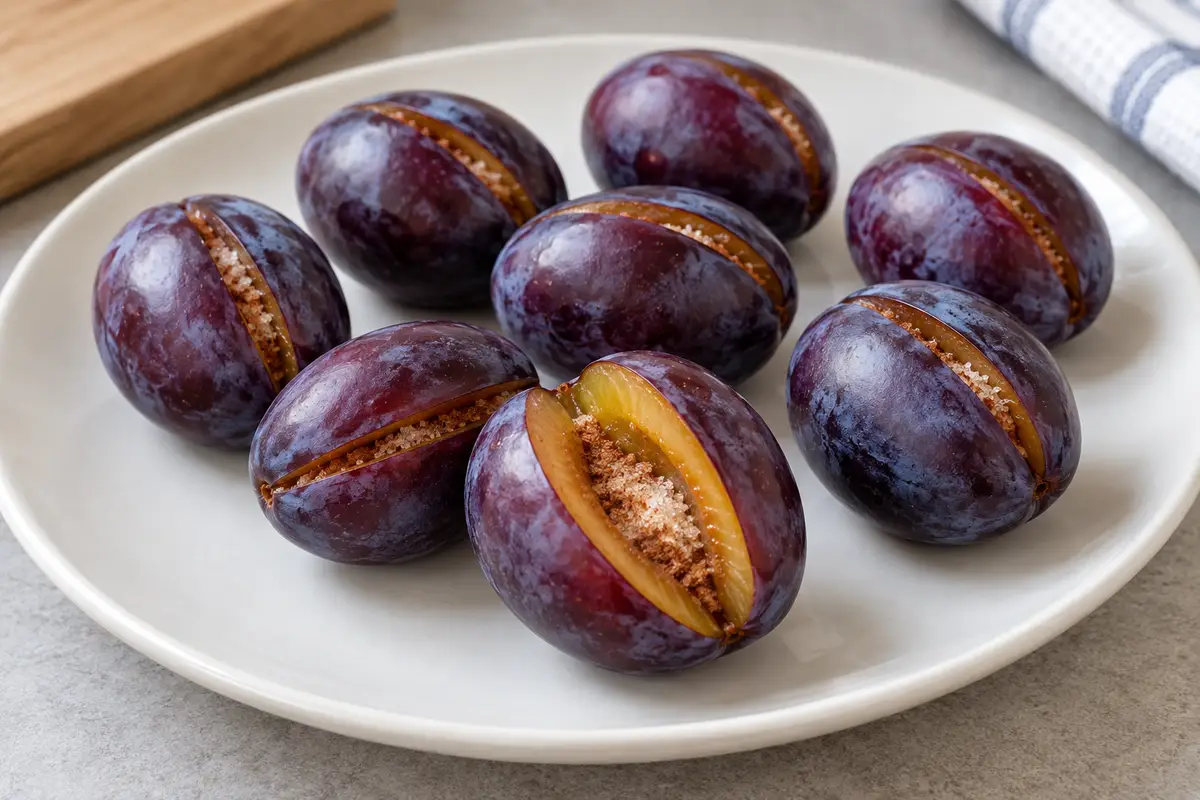
AI-generated Add 200 g all-purpose flour, 30 g potato starch, the egg, and 2 g salt to the completely cooled potatoes. Mix by hand and knead briefly, just until you have a uniform, soft dough that retains its shape; do not knead for long, as it may become sticky. Reserve the remaining 20 g flour solely for lightly dusting the work surface and your hands during shaping. Do not add all of it to the dough, and do not add flour beyond the listed amount.
Divide the dough into 20 equal portions. Lightly dust the work surface and your hands with the reserved 20 g flour, flatten each portion into a disk, place one filled plum in the center, and seal the dough above the fruit without gaps. Gently round it in your hands; the dumplings should be about 5–6 cm in diameter, with an even covering and no thick knot at the seam. Set them apart on the lightly floured work surface and cook immediately after shaping; discard any unused dusting flour.
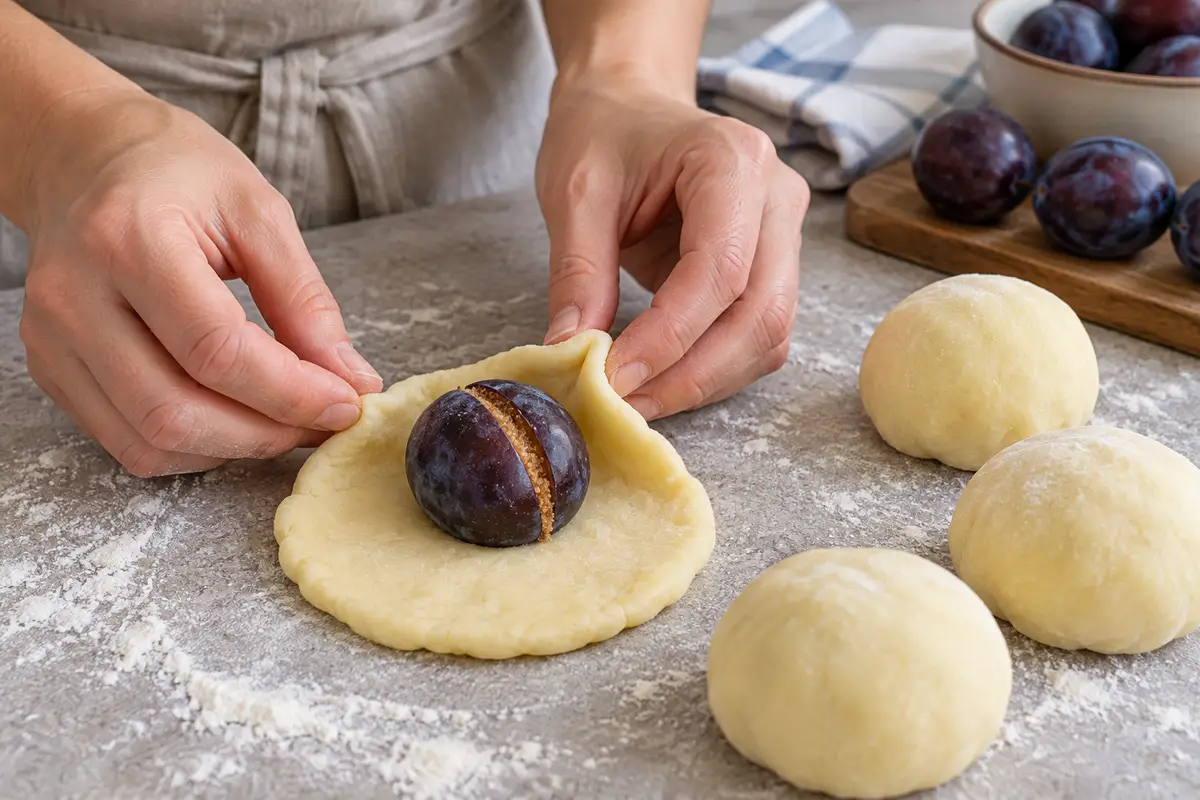
AI-generated In a wide pot with a capacity of at least 6 l, bring 3000 ml water and the remaining 15 g salt to a boil; start heating it toward the end of shaping. Cook the 20 dumplings in four successive batches of 5, leaving space between them: after adding them, gently loosen them from the bottom with a spoon and reduce the heat so the water simmers gently, without vigorous bubbling. Once all the dumplings in a batch float to the surface, cook for another 6 minutes, usually about 9–11 minutes total per batch. Cut the first dumpling in half: the dough around the fruit should be uniform and cooked, with no sticky, raw band of dough; if such a band remains, return the cut test halves to the water as well and cook them with the rest of that batch for another 2–3 minutes, until the dough is cooked through; extend the cooking time for subsequent batches in the same way.
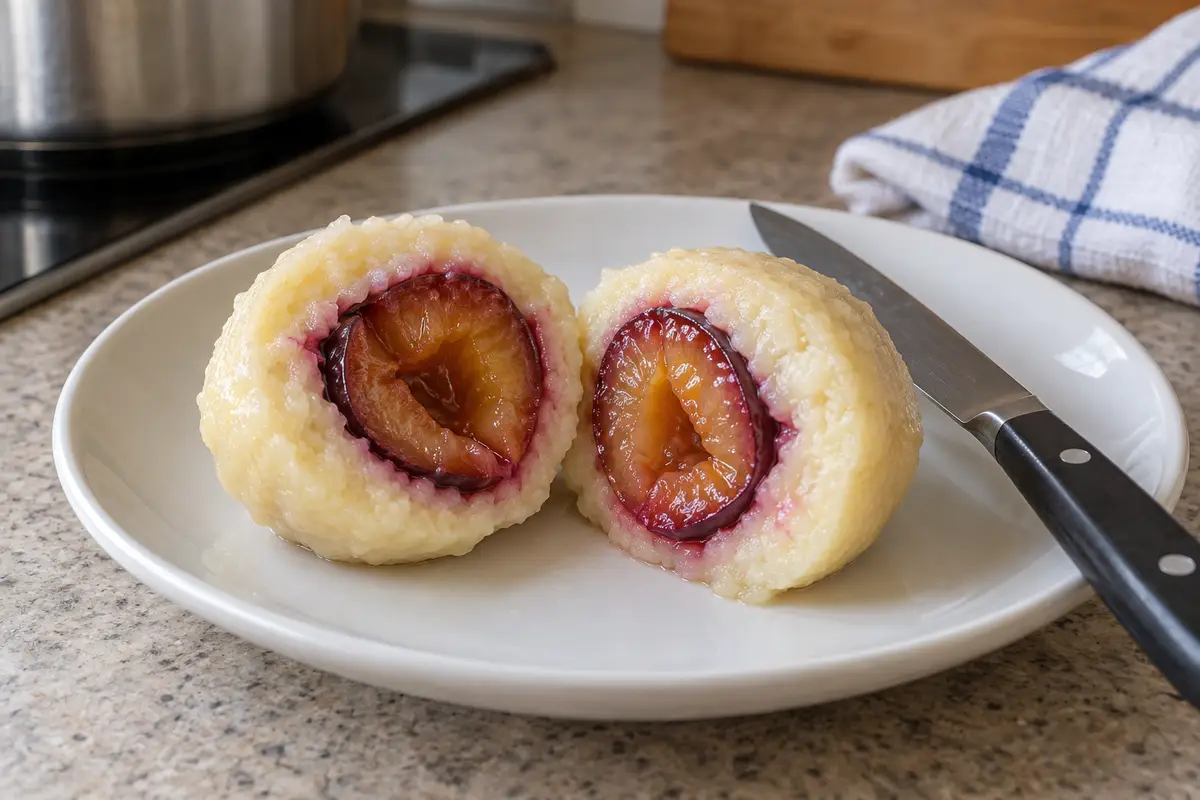
AI-generated Lift out the cooked dumplings with a slotted spoon, draining them well over the pot, and arrange in a single layer on a large platter; cover loosely so the earlier batches do not cool too quickly. Use the same water for all four batches, then drain and discard it after the last batch. While the last batch cooks, melt 60 g butter in a skillet about 24 cm in diameter, add 50 g breadcrumbs, and cook over medium-low heat for 4–5 minutes, stirring constantly, until the topping is golden and fragrant. Take the skillet off the heat before the breadcrumbs start to darken.
Divide the dumplings among four plates, 5 per serving. Divide the warm breadcrumb and butter topping among the servings. Serve immediately when the last batch is ready.
Estimated nutrition

Rate this recipe
0 ratings
Comments