
AI-generated
Roast Duck with Apples and Marjoram
Log in or create a free account to save recipes.
Source: https://recipheon.com/en/recipes/main-dishes/roast-duck-with-apples-and-marjoram
About this recipe
Roast duck with apples and marjoram has browned, crisp skin and tender meat. Gentle roasting renders excess fat and tenderizes the thighs, while a brief finish at a higher temperature browns the dried skin. Skin-on apples bake in a separate dish with a small, measured amount of duck fat; they should soften while retaining their quartered shape. The cavity stays empty and open. Brown pan juices are separated from the fat and served with the meat. Judge when roasting is complete by the tenderness of the thighs and temperature readings taken in several places. After resting, divide the breast and leg meat into four servings with the apples and pan juices.
Ingredients
Duck and Seasonings
1 whole duck, 2–2.3 kg, uncooked and fully thawed, skin-on and bone-in, without neck, giblets or loose internal fat; prepared carcass weight
12 g fine salt: 10 g for the duck and 2 g for the apples
2 g ground black pepper for the duck
4 g dried marjoram: 3 g for the duck cavity and 1 g for the apples
Apples and Pan Juices
800 g firm tart apples, skin-on; edible weight after coring
600 ml water: 200 ml at the start of roasting, 100 ml after the first fat draining, up to 200 ml reserved for topping up in 50 ml additions and 100 ml to loosen the pan residue for the pan juices; unused reserve water is not served
Steps
Preheat a conventional oven (no fan) to 170°C, with racks set just below and just above the center. Have ready a metal roasting pan about 40 × 30 cm and about 6 cm deep, with a rack to keep the duck above the liquid, and a metal baking dish about 30 × 20 cm for the apples. You will also need a second baking sheet to hold the duck briefly, a meat thermometer, a heatproof jug or fat separator, a spoon, a small saucepan with a capacity of about 1 l and a lid, and aluminum foil. Measure out the water and divide it into 200 ml for the start, 100 ml after the first fat draining, 200 ml reserve and 100 ml for loosening the final pan residue.
Thoroughly pat the prepared, fully thawed duck dry with paper towels, both outside and inside the cavity. Use the tip of a toothpick to make shallow punctures only in the skin covering a thick layer of fat at the thigh bases and on the back, to help the fat render. Do not prick the breasts, and do not push the toothpick into the meat; the breast skin must stay intact.
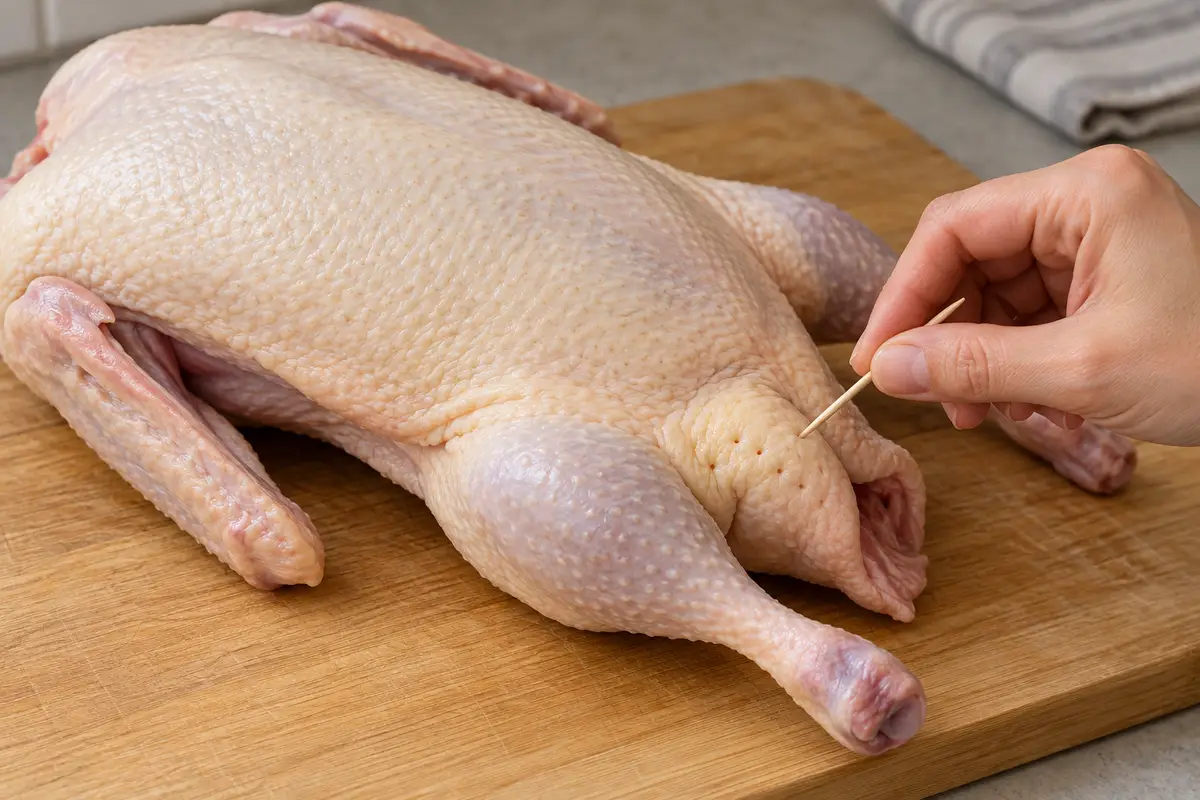
AI-generated Rub the skin with 8 g salt and 1 g pepper, and the inside of the cavity with the remaining 2 g salt for the duck, 1 g pepper and 3 g marjoram. Leave the cavity empty and open, without tying the legs, and tuck the wing tips under the back. Place the duck breast-side up on the rack in the roasting pan and pour the first 200 ml water into the bottom, below the rack, without wetting the skin; the duck must remain above the liquid.
Place the roasting pan on the rack below the center of the oven and roast uncovered for about 60 minutes at 170°C, without turning the duck and without basting the skin. Fat should gradually drip into the pan, and the skin should begin to brown lightly. Check the bottom about every 30 minutes: when the watery part of the liquid has almost disappeared and the pan residue starts to darken noticeably, carefully add 50 ml from the measured 200 ml reserve below the rack; the residue should be brown, without black, burned patches.
After about an hour, remove the roasting pan and briefly transfer the duck, still on its rack, to the second baking sheet. Pour the pan liquid into a heatproof jug or fat separator and wait about 3 minutes for the pale fat to rise above the darker, watery juices. Measure 30 ml fat from the top layer for the apples, set the remaining fat aside outside this recipe, and pour the brown juices into the small saucepan; without a separator, skim the fat from the surface with a spoon. Cover the saucepan of defatted juices and refrigerate it immediately so the juices wait in the cold until the final heating; do not let them cool on the counter. Pour the 100 ml water allocated to this stage into the bottom of the roasting pan, replace the rack with the duck and return it to the oven immediately.
Continue roasting the duck at 170°C for about 45 minutes in the same position, topping up the water below the rack with 50 ml at a time from the remaining reserve if needed. Meanwhile, wash and core the apples, then weigh out 800 g of edible flesh with the skin on. Cut them into thick quarters about 3–4 cm wide at their widest point; the skin and large pieces help them retain their shape while baking.
In the separate dish about 30 × 20 cm, toss the apple quarters with the reserved 30 ml duck fat, the remaining 2 g salt and 1 g marjoram. Arrange them in one layer, skin-side down, and place on the rack above the center of the oven, above the duck's roasting pan. The entire apple batch bakes outside the bird, whose cavity stays empty.
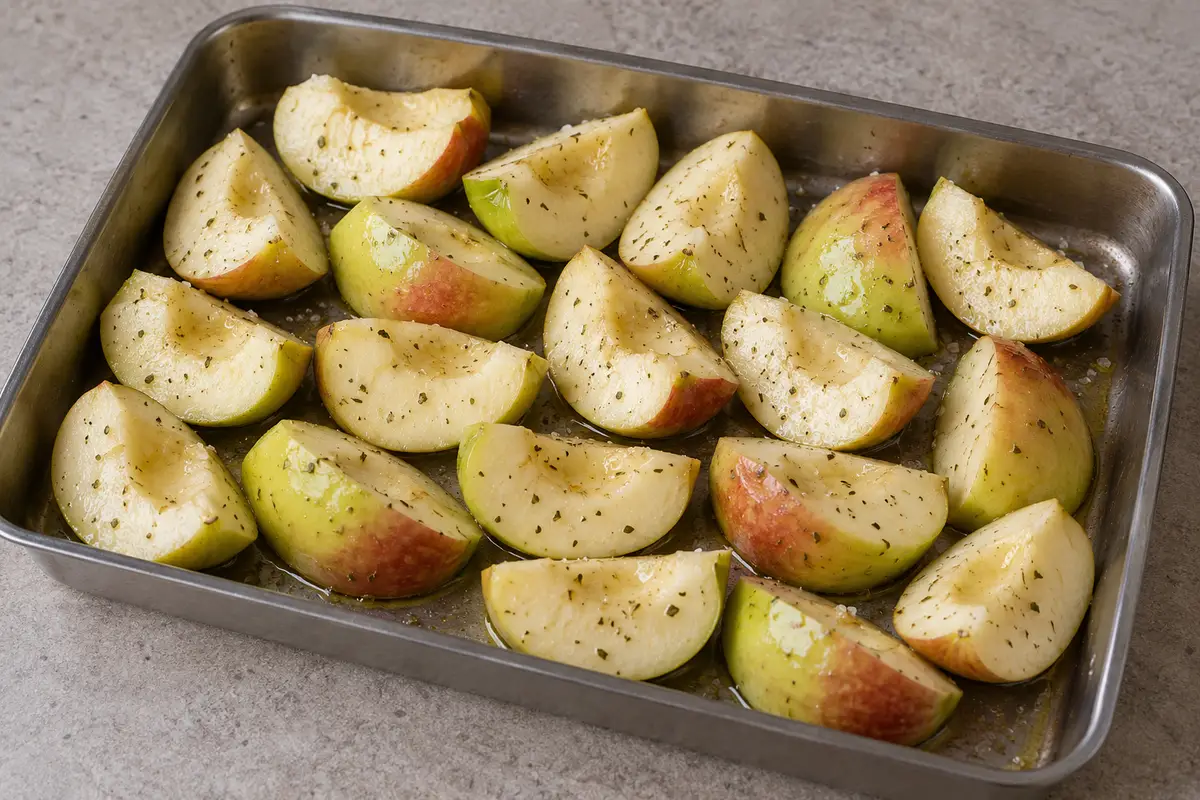
AI-generated Bake both dishes for about 35–45 minutes at 170°C; the apples should soften under pressure from a fork but retain their shape, with lightly browned edges. Remove the apples when ready and loosely cover their dish with foil. After a total duck roasting time of about 2 hours 20 minutes to 2.5 hours, use the thermometer to check the thickest part of both breasts, the innermost part of both thighs and around the wing joint without touching bone: every location must be at least 74°C, and a fork should pierce the thigh meat easily. If the temperature is lower or the thighs are still noticeably firm, continue roasting at 170°C and check about every 15 minutes, monitoring the brown pan residue and the remaining water reserve; keep the apples out of the oven during this extra roasting.
Once the duck has reached the required temperature and the thighs are tender, increase the oven temperature to 220°C, keeping the conventional setting. Once the oven reaches this temperature, roast uncovered for about 15–20 minutes more without basting, until the skin is deeply browned and crisp; check about every 5 minutes so the skin does not burn. Transfer the duck to the previously washed, clean second baking sheet and rest for 15 minutes without a cover to preserve the crisp skin. Use this resting time to prepare the pan juices.
While the duck rests, pour the final roasting pan liquid into a heatproof jug or fat separator and wait about 3 minutes to separate the fat; set the fat aside outside the recipe, keeping the watery brown juices. Pour the last 100 ml water into the warm roasting pan and scrape up the brown residue from the bottom with a spatula, leaving any black, burned patches behind. Take the saucepan containing the first-stage juices out of the refrigerator, add the water with the loosened residue and the defatted juices from the end of roasting, bring to a boil and cook over medium-low heat for about 3–5 minutes; the juices should stay fluid and have a distinct roasted-meat flavor. Add any juices released by the resting duck to the saucepan as well, and if the apples have cooled, warm their covered dish for about 5 minutes in the oven reset to 170°C, still within the duck's rest of 15 minutes.
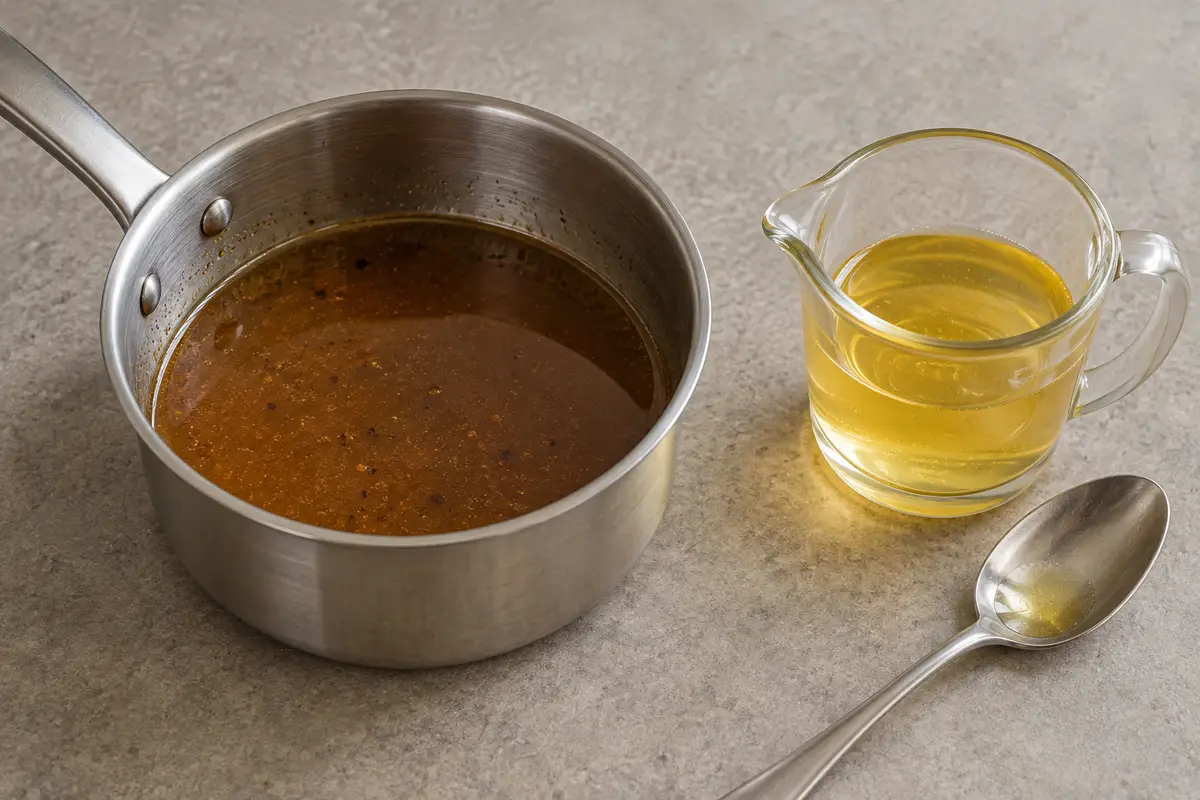
AI-generated After 15 minutes of resting, remove both legs and divide each at the joint into a thigh and a drumstick, making four pieces. Remove both breasts from the bone and cut each crosswise into four thick slices; give each of the four servings two breast slices and one skin-on thigh or drumstick. Remove the edible meat from the wing and back bones and divide it among the servings, leaving the bones out of the dish. Divide all the roasted apples, their dish liquid and the hot defatted pan juices from the saucepan evenly among the plates and serve immediately.
Estimated nutrition

Rate this recipe
0 ratings
Comments