
AI-generated
Roast Pork Loin with Prunes and Pan Gravy
Log in or create a free account to save recipes.
Source: https://recipheon.com/en/recipes/main-dishes/roast-pork-loin-with-prunes-and-pan-gravy
About this recipe
Roast pork loin with prunes has a dark, lightly sweet center and a browned crust, and is served sliced with pan gravy. Soft dried prunes fill a narrow channel through the whole loin, so the fruit center is clearly visible when sliced. The pork is seared first, with garlic and marjoram added only before roasting so they do not burn in the skillet. The covered first stage reduces drying at the surface; finishing without foil allows it to brown. Resting the meat before slicing leaves time to cook a gravy from its juices and the browned bits left in the pan. This version requires a thermometer to check the meat and prune filling separately.
Ingredients
Pork Loin and Prunes
1200 g raw boneless, skinless pork loin in one piece, with membranes and the thick fat layer removed; a thin fat layer up to 2 mm may remain
180 g soft dried prunes, pitted and not smoked; weight before roasting
10 g peeled garlic
3 g dried marjoram
8 g fine salt
2 g ground black pepper
30 ml refined canola (rapeseed) oil, divided: 20 ml for searing and 10 ml for the rub; all the oil remains with the meat and gravy
Gravy and Roasting
20 g dry all-purpose flour
500 ml water, divided: 300 ml for the roasting pan, 50 ml for deglazing, up to 100 ml reserve during roasting and 50 ml cold water for the flour; unused reserve is not added to the dish
Steps
Preheat a conventional oven (no fan) to 170°C and position the rack in the middle. Have ready a metal roasting pan about 30 × 22 × 6 cm, a heavy 28 cm skillet, a long narrow knife, cotton kitchen twine, aluminum foil and a food thermometer. Pat the 1200 g trimmed pork loin dry; choose an evenly shaped piece about 22–24 cm long and about 8 cm thick to accommodate the filling. Leave a thin fat layer up to 2 mm if one is present.
Insert a long narrow knife into the center of one end of the loin, keeping the blade parallel to its length and taking it a little beyond the halfway point. Repeat from the other end so the two cuts meet to form one channel; do not angle the blade toward the side of the meat. Make small cuts in a cross shape and gently ease the channel open to about 3–3.5 cm across, leaving at least 2 cm of intact meat around the sides. Do not cut out a core of meat, and do not remove one from the center.
Push all 180 g of soft prunes into the channel in small portions, alternating between the two ends and using your fingers or the blunt end of a wooden spoon to help. The prunes should fill the center without tearing the sides; if they meet strong resistance, gently widen the channel first while maintaining the thickness of the meat around it. Keep the fruit about 1 cm inside both openings so it does not stick out and does not burn during searing. Tie the loin with twine in 3–4 places, including near the ends, to keep an even shape, and proceed straight to searing and roasting.
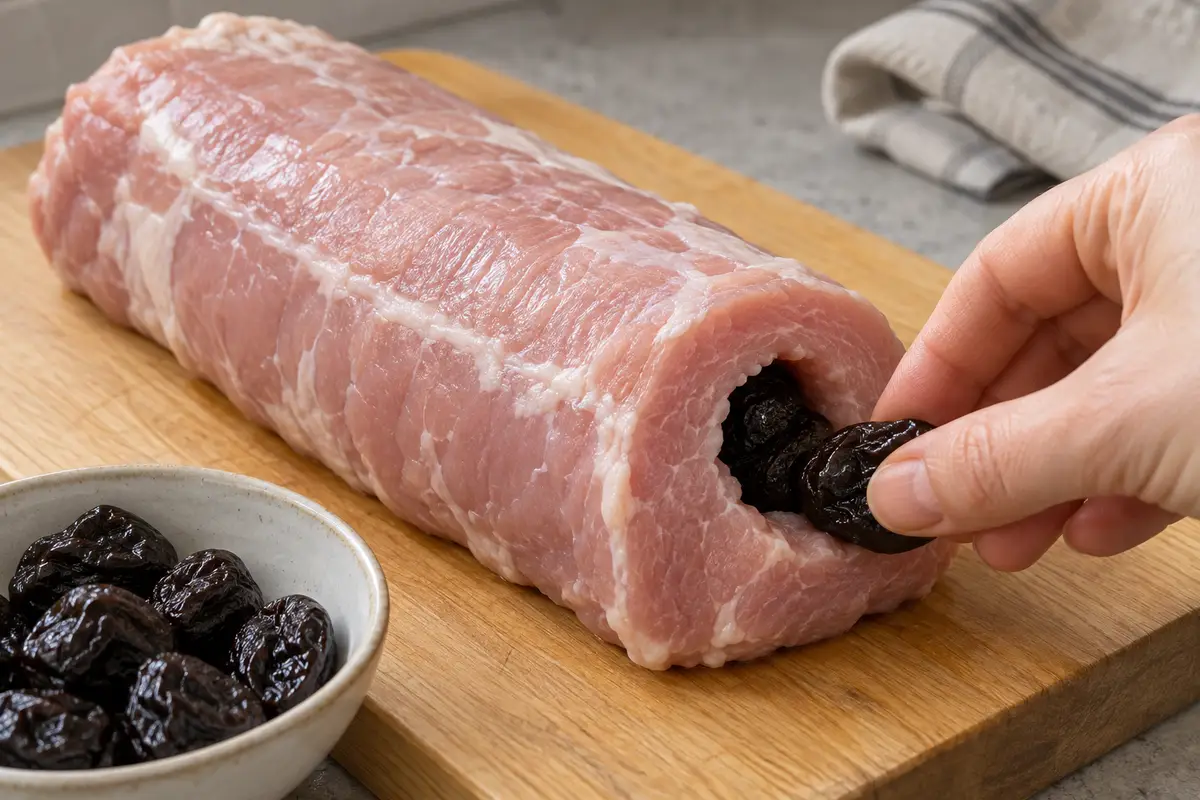
AI-generated Rub the whole loin with 8 g salt and 2 g pepper. Heat 20 ml oil in the heavy skillet for about 2 minutes over medium-high heat, then sear the meat for 10–12 minutes in total, turning it with tongs until the long sides and both ends are golden brown. Reduce the heat if the browned bits darken too quickly; they should be brown, not black. Transfer the loin to the roasting pan and turn off the heat under the skillet, leaving the oil and browned bits to collect in the next stage.
Crush the 10 g garlic and mix it with 3 g marjoram and the remaining 10 ml oil, then rub the mixture over the seared loin. Position it with the thin fat layer facing up, if one is present, and pour 300 ml water into the bottom of the roasting pan without pouring it over the top of the meat. Cover the pan tightly with aluminum foil and place it straight into the preheated oven. Roast for 55–65 minutes at 170°C; meanwhile, collect the browned bits from the skillet as described in the next step.
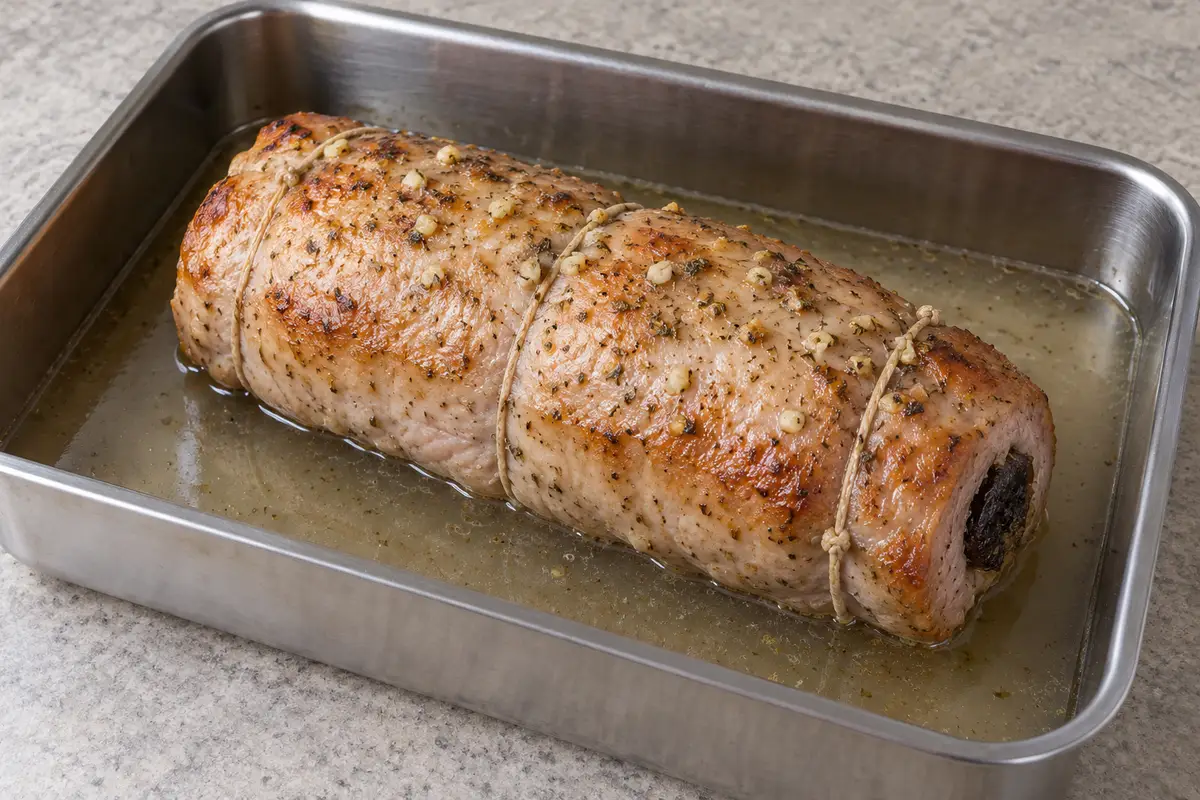
AI-generated Once the loin is in the oven, pour 50 ml water into the skillet and heat over medium heat for 2–3 minutes, scraping the brown residue from the bottom with a spatula. Pour all the liquid and oil into the roasting pan beside the meat, briefly lifting a corner of the foil, then cover the pan tightly again. Set aside 100 ml water as a reserve for topping up during roasting. Do not pour away any oil or juices: they will form the base of the gravy.
After 55–65 minutes, remove the foil and roast the loin for about another 20–25 minutes at 170°C, until the top is browned; total oven time is usually 75–90 minutes. If the bottom of the pan is almost dry, pour 50 ml of the reserved water beside the meat, then another 50 ml if needed; leave any unused reserve out of the dish. Check the temperature in the thickest part of the meat beside the channel, avoiding the prunes: it must be at least 63°C; then insert the probe from the side halfway along the loin into the center of the prune filling, which must reach at least 74°C. Both temperatures must be reached in the oven; if either reading is lower, keep roasting and check about every 10 minutes, loosely covering the top with foil once it is deeply browned. The browned surface is a culinary cue; both temperature readings determine when roasting is complete.
Once both the meat and prune center reach the required temperatures, transfer the loin to a clean serving platter that has not been in contact with raw meat. Cover loosely with foil and let it rest for 15 minutes before slicing. Cook the gravy in the next step during this rest, also saving the juices that collect on the platter.
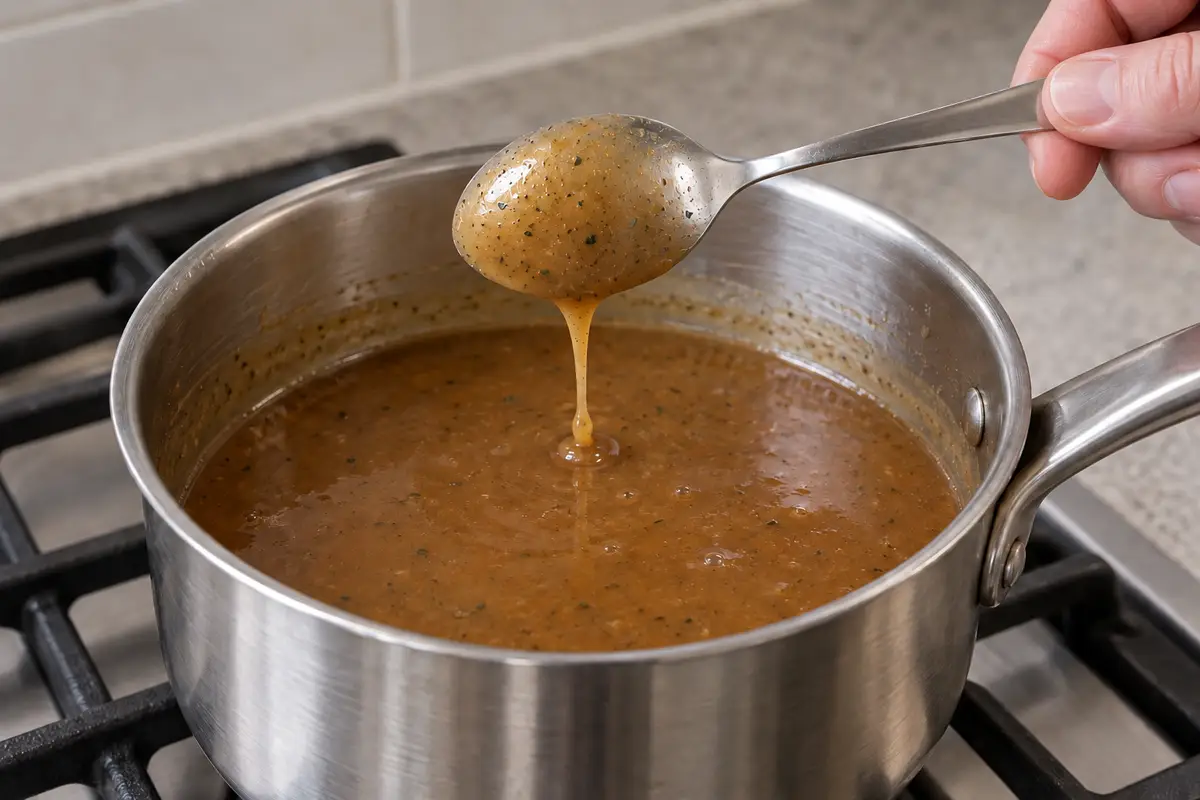
Pour all the liquid and rendered fat from the roasting pan into a saucepan with a capacity of about 1 l; use the same liquid to loosen the brown residue in the roasting pan and collect that as well. Mix 20 g flour with the final 50 ml cold water to make a smooth slurry, then pour it in a thin stream into the boiling liquid, whisking constantly. Maintain a visible, gentle simmer over low heat for 8–10 minutes, stirring frequently, until the flour is cooked and the gravy lightly coats the back of a spoon while still pouring freely. Add the juices that collect as the loin rests to the simmering gravy; do not skim off the fat, and do not add any other ingredients. Prepare the gravy during the meat's 15-minute rest and keep it hot for serving.
AI-generated After the 15-minute rest, remove all the twine and cut the loin crosswise into about 12 slices, 1.5–2 cm thick, each with a dark prune center. Divide them into 6 portions, with 2 slices per person, and divide the hot pan gravy between the portions. Serve immediately.
Estimated nutrition

Rate this recipe
0 ratings
Comments