
AI-generated
Roasted Pork Hocks with Crispy Skin
Log in or create a free account to save recipes.
Source: https://recipheon.com/en/recipes/main-dishes/roasted-pork-hocks-with-crispy-skin
About this recipe
Roasted pork hocks combine tender meat that pulls away from the bone with browned skin finished separately under the broiler. Use fresh hind pork hocks that are uncured and unsmoked. First, simmer them slowly with vegetables until tender but still intact enough to lift out whole. Dry the skin thoroughly: a damp surface releases steam for a long time instead of browning. Shallow scoring and roasting on a rack help render the fat, while a brief stage under the broiler crisps the skin. The broth and pan liquid are not served; remove the bones and divide the two hocks into four portions of meat with skin.
Ingredients
Pork hocks and salt
2 fresh hind pork hocks, skin-on and bone-in, about 1 kg each, 2 kg total raw weight including bones; uncured, unsalted and unsmoked
34 g fine salt: 30 g for the poaching water and 4 g for the skin before roasting; the broth is not served
Poaching aromatics
200 g onion, weighed after peeling, for the broth; not served after cooking
150 g carrot, weighed after peeling, for the broth; not served after cooking
100 g celeriac root, weighed after peeling, for the broth; not served after cooking
15 g garlic, weighed after peeling, for the broth; not served after cooking
2 dried bay leaves for the broth; not served
6 whole allspice berries for the broth; not served
2 g whole black peppercorns for the broth; not served
5 l water for poaching: 4 l to start and 1 l reserved to cover the meat and top up the level; broth and unused water are not served
Steps
Have ready a lidded pot of about 10 l with an internal diameter of about 28 cm, and a deep metal roasting pan at least 35 × 28 cm with a rack that fits inside and holds the meat above the bottom. Check that the hocks are fresh, unsalted, uncured and unsmoked; remove any bristles with tweezers. Halve the onion, cut the carrot and celeriac into pieces about 3–4 cm across, and lightly crush the peeled garlic. After handling raw meat, wash your hands, cutting board, knife and tongs; use clean tools later to lift out and score the cooked hocks.
Place the hocks side by side in the pot and add all the onion, carrot, celeriac and garlic, the 2 bay leaves, 6 allspice berries, 2 g peppercorns and 30 g salt. Pour in 4 l cold water; it should cover the meat by about 1 cm. If needed, add some of the measured 1 l reserve, leaving at least 3 cm of headroom below the pot rim. Heat over medium-high heat for about 25–35 minutes, until the liquid starts boiling, skimming off any foam that appears. Reduce the heat to low so the broth simmers gently, without vigorous bubbling.
Simmer very gently for about 2.5–3 hours, with the lid slightly ajar. Check the liquid level about every 30–45 minutes and, if needed, add about 100–200 ml at a time from the remaining reserve to keep the meat covered; do not add unused water to the dish. Start checking after 2.5 hours: a fork should slide into the thickest part of the meat without noticeable resistance, and the meat should begin pulling away from the bone while the hock still stays intact. If the meat is still tough, continue over low heat and check every 20–30 minutes; a vigorous boil can tear the tender skin.
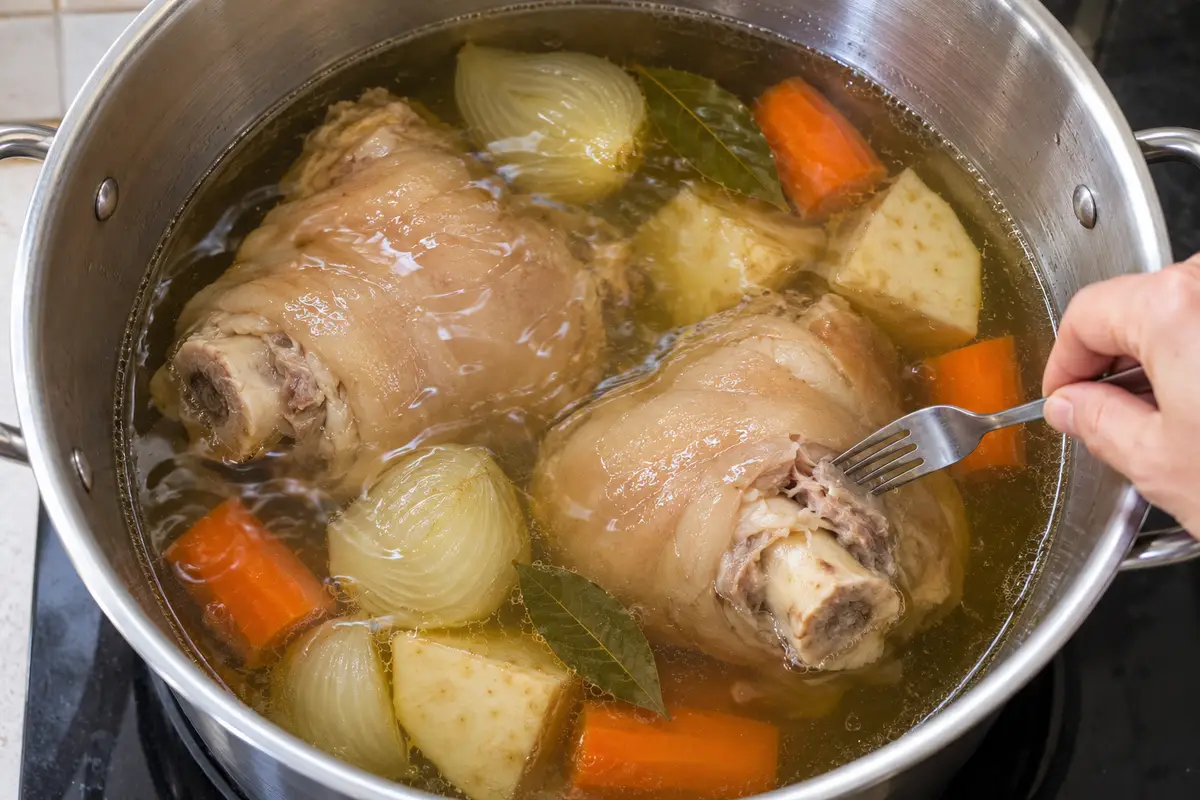
AI-generated Using clean tongs and a large slotted spoon, carefully lift both tender hocks onto the rack in the roasting pan, supporting them from underneath. Let the water drain off, gently pat the skin dry with paper towels and leave uncovered for about 30 minutes, until the surface is no longer wet or releasing much steam. Meanwhile, preheat a conventional oven (no fan) to 200°C; preheating overlaps with drying. Do not serve the broth or any of the vegetables and spices from the pot. Before roasting, empty any liquid that has drained from the hocks out of the pan and do not add any water.
When the surface is no longer hot to the touch, hold a hock with clean tongs and use a sharp, clean knife to score the skin in shallow diamond shapes with sides of about 2 cm. Cut only the top layer of skin, to a depth of about 1–2 mm, without reaching the meat, and keep the skin intact between the cuts. Blot away any moisture again with paper towels, rub 2 g salt into each hock's skin, and set them side by side on the rack, leaving a gap between them with the largest area of skin facing up. This uses all the remaining 4 g salt; do not pour broth or pan liquid over the skin.
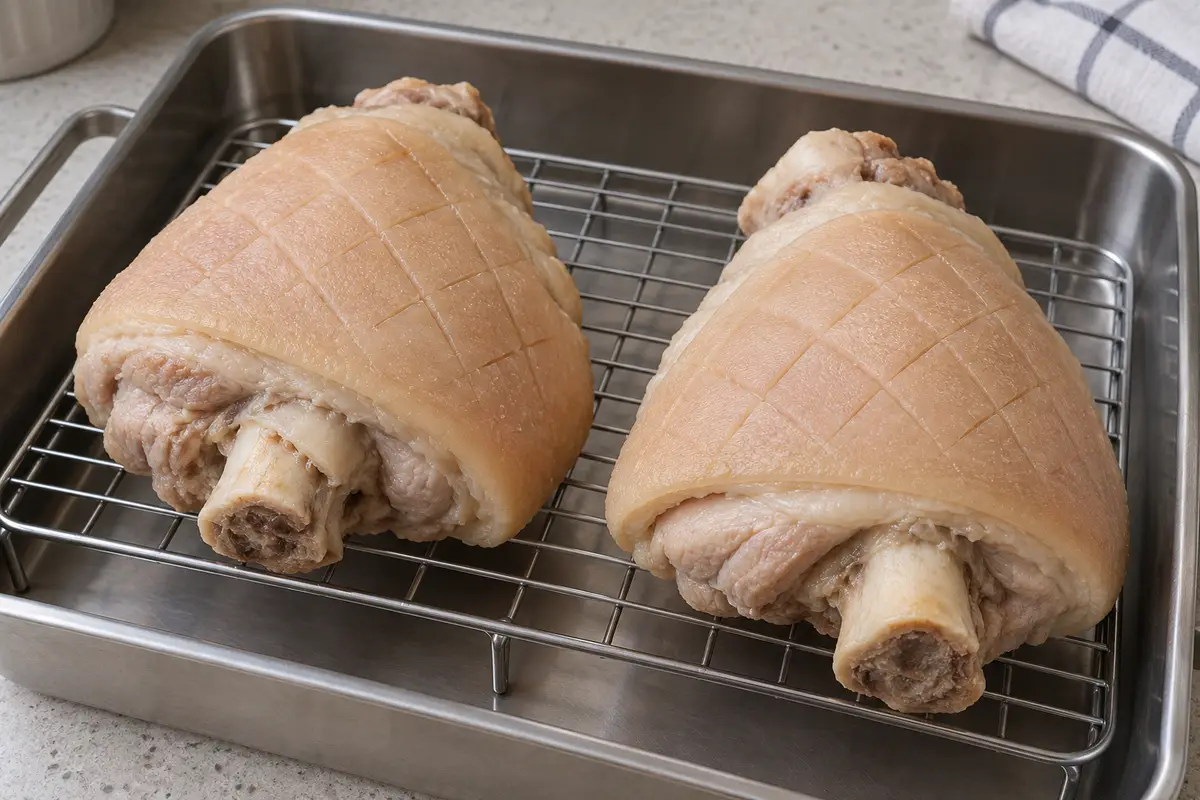
AI-generated Place the pan and rack on the middle shelf of the preheated oven and roast uncovered for about 40–50 minutes at 200°C on the conventional setting. After about 20–25 minutes, turn the whole pan half a turn to even out the browning; the hocks must remain above the liquid and fat dripping into the bottom. Near the end, the skin should be dry, taut and golden, but it does not need to be crisp across the whole surface yet. Do not baste the meat and do not pour liquid over the skin; the rendered fat and pan juices are not served.
Switch on the oven's broiler and set it to 230°C; do not use the fan. Position the pan so the highest part of the skin is about 15–20 cm from the upper heating element, with the meat still resting on the rack. Broil for about 10–15 minutes, checking the skin every 2–3 minutes, until it is well browned, blistered and clearly crisp. If one area browns faster, rotate the pan or carefully tilt a hock with tongs to turn the paler skin toward the element. If black spots or smoke appear, stop broiling and remove the pan immediately; do not burn the skin by waiting for the full time to pass.
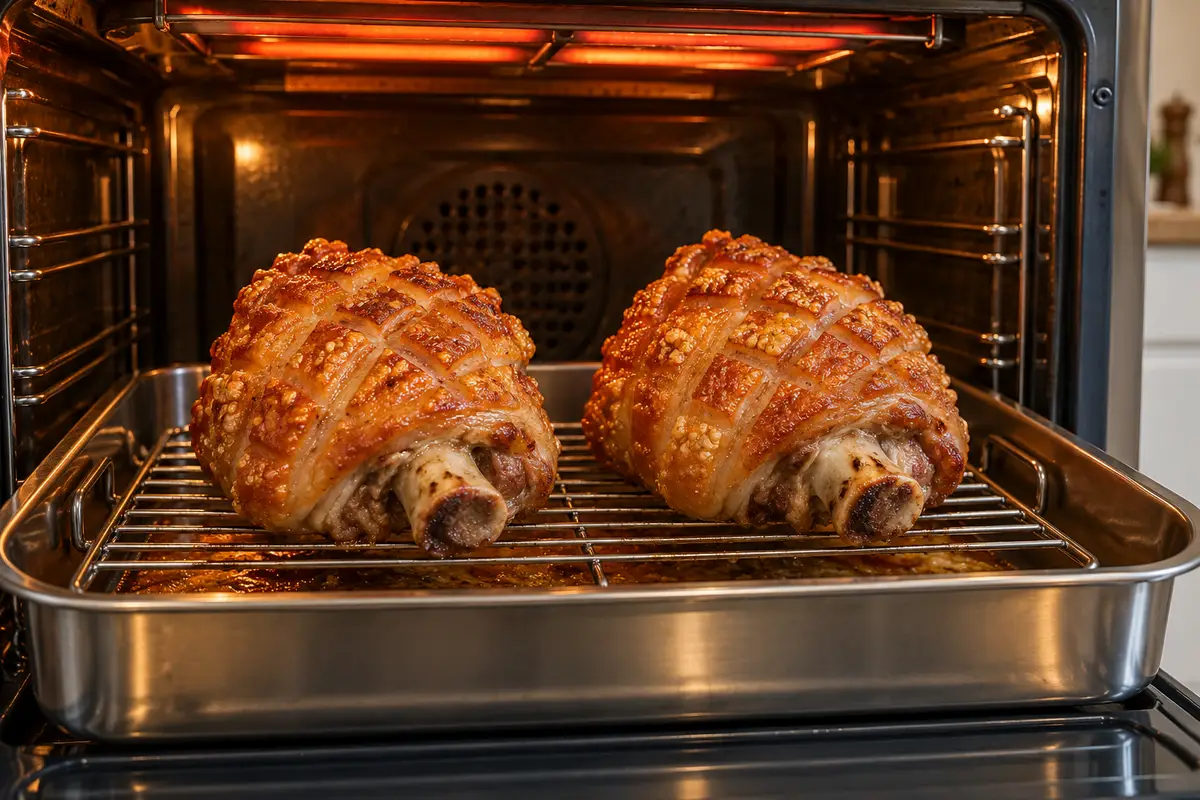
AI-generated Remove the pan from the oven and leave the hocks on the rack without a cover for about 15 minutes. Do not cover with foil or a lid so steam does not soften the skin; no fat or juices left in the pan should go onto the plates.
Transfer the hocks to a large platter or a clean cutting board. Separate the tender meat and crispy skin from all bones and hard cartilage, then divide the meat with skin into four roughly equal portions, two from each hock. Allow about 10 minutes to debone and portion both hocks. Serve immediately without the broth or pan liquid, keeping crispy skin on each portion.
Estimated nutrition

Rate this recipe
0 ratings
Comments