
AI-generated
Scaccia ragusana — layered tomato and cheese flatbread
Log in or create a free account to save recipes.
Source: https://recipheon.com/en/recipes/main-dishes/scaccia-ragusana-layered-tomato-and-cheese-flatbread
About this recipe
Scaccia ragusana hides successive layers of tomato and flavorful cheese inside thin dough. This home version of the Sicilian bake uses semola rimacinata, very finely remilled durum wheat flour. A little yeast, water and olive oil turn it into elastic dough that can be rolled almost transparent after resting. The filling starts with passata slowly thickened with garlic, olive oil and basil. Cool the sauce completely so it does not soften the delicate sheet while folding. Semi-mature Ragusano brings a salty, milky flavor and softens between the layers. Apply filling three times, each time on the newly exposed dough surface. Folds in two directions, then in half, turn the wide sheet into a rectangular parcel with many thin layers. Bake both flatbreads together and rest briefly before revealing the cut surface. All dough, edges and prepared filling make six servings, best served warm or lukewarm.
Ingredients
Dough for two folded flatbreads
300 g semola rimacinata, very finely remilled durum wheat flour, for the dough; not coarse semolina
165 g lukewarm water, weighed
6 g fresh baker's yeast
15 g extra virgin olive oil for the dough
6 g fine salt for the dough
All the tomato sauce and cheese
900 g tomato passata without herbs or added sugar, not tomato paste
15 g extra virgin olive oil for the sauce
6 g peeled garlic, net weight
4 g fresh basil leaves without thick stems
4 g fine salt for the sauce
240 g semi-mature Ragusano cheese, net weight without rind
Dusting and brushing the tops
20 g of the same fine semola rimacinata for dusting; use only a thin layer as needed, with the rest not served
6 g extra virgin olive oil for brushing both flatbreads
Steps
Finely chop the garlic. In a wide frying pan about 24 cm across, warm the 15 g olive oil for the sauce, add garlic and stir for a minute without browning. Pour in all 900 g passata and add 4 g salt. Simmer gently without a lid for about 35–45 minutes, stirring often toward the end. The sauce should be thick, without separate watery liquid; a spatula trail should briefly expose the base. Stir in all the finely torn basil.
Scrape all the sauce from the pan into a wide shallow bowl and leave until completely cool; do not put warm sauce on the dough. In a second bowl, dissolve 6 g fresh yeast in all 165 g lukewarm water. Add 300 g semola rimacinata, 15 g olive oil for the dough and 6 g salt. Knead for about 10 minutes until firm, smooth and elastic, without adding extra flour.
Divide all the dough into two equal parts, about 246 g each, and shape into balls. Cover tightly with a bowl or plastic wrap, without extra olive oil. Leave for about 90 minutes at room temperature until noticeably relaxed and slightly increased in volume. It does not have to double like dough for tall focaccia. The sauce should cool completely during this time; do not leave the dough surface uncovered.
Preheat the oven to 230°C, conventional heat. Line a baking sheet about 30 × 40 cm with parchment suitable for this temperature, without fat underneath. Coarsely grate the cheese and divide into two portions of 120 g. Divide each into three portions of 40 g. Split all the cold sauce equally between the flatbreads; each half will be used in three equal portions during successive folds.
Lightly dust a large clean worktop and rolling pin with part of the weighed 20 g working semola. Roll the first ball into a rectangle about 40 cm wide and 60 cm long, with the longer dimension running away from you. The dough should be about 1 mm thick and slightly translucent in places. If it springs back, cover for 5 minutes and roll again. Use the whole sheet without trimming; keep the second ball covered.
Spread one-third of the sauce allocated to the first flatbread thinly and evenly over the sheet, leaving about 1 cm clear at the edge. Sprinkle with one 40 g cheese portion. Do not put all the filling here: the remaining two-thirds of this sauce half and 80 g cheese are needed for the surfaces exposed after folding. Do not add separate olive oil between layers.
Fold the left long side inward as a flap about 10 cm wide, and the right the same way, so their edges meet along the sheet's center line. This makes a strip about 20 × 60 cm with filling enclosed in the first layers. Spread the second of this flatbread's three sauce portions on the newly exposed top and sprinkle with the next 40 g cheese, still leaving a narrow clear edge. Do not press the parcel with a rolling pin.
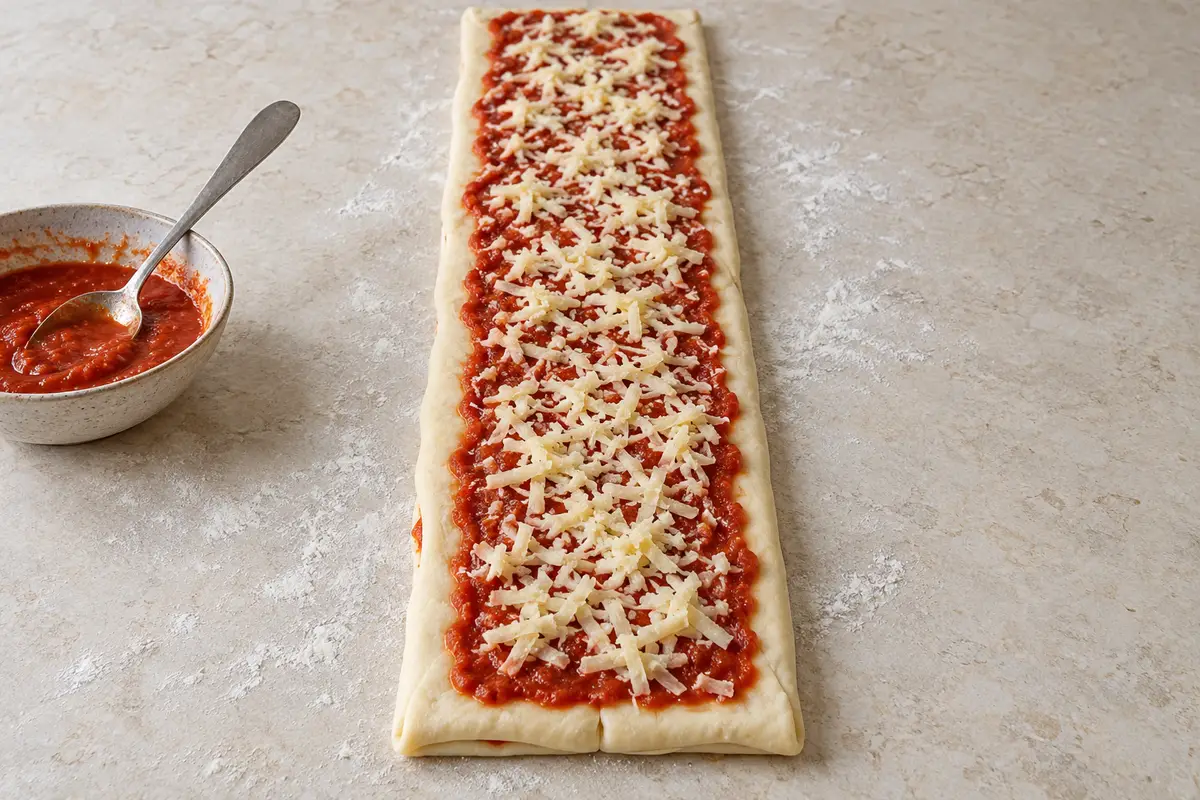
AI-generated Fold the top short end of the strip inward as a flap about 15 cm deep, and the bottom the same way, so both ends meet in the middle. This makes a rectangle about 20 × 30 cm. Spread the last third of the first flatbread's sauce over the exposed surface and add the last 40 g from its cheese allocation. Spread gently without pushing filling beyond the dough. This layer also goes inside after the next fold.
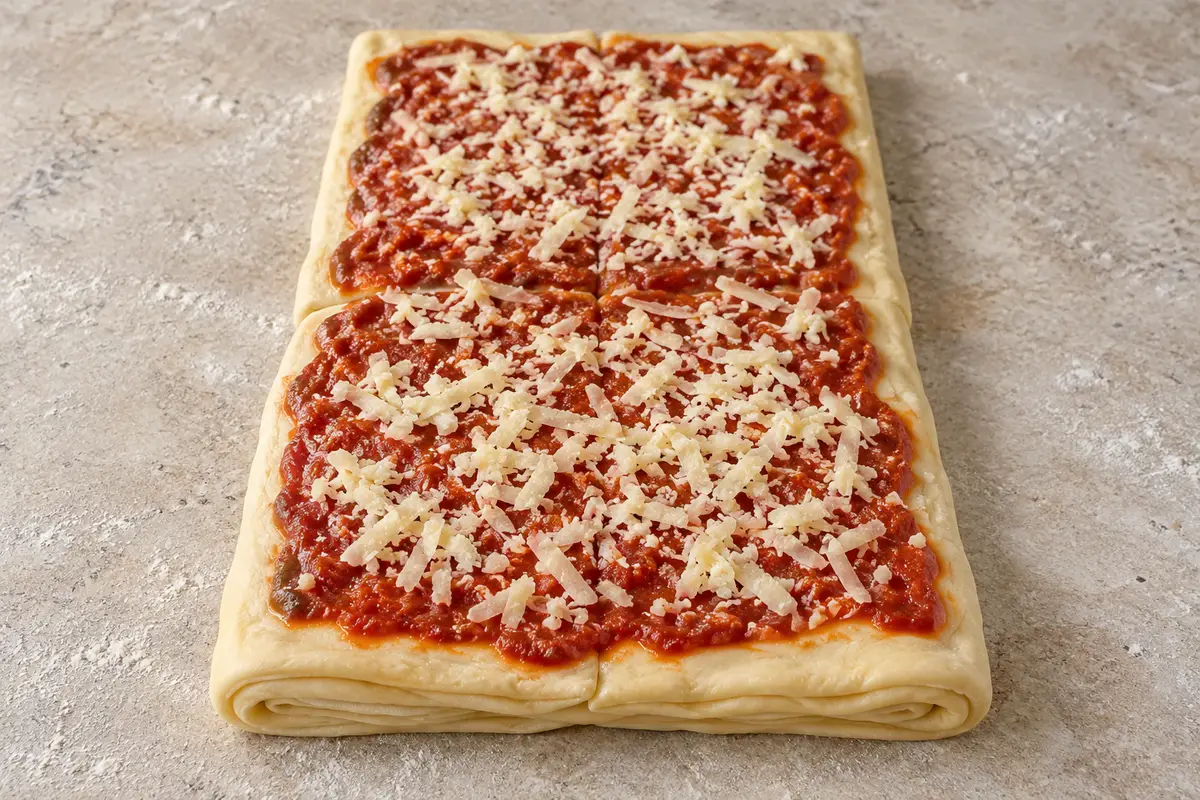
AI-generated Fold the rectangle crosswise in half, shortening the 30 cm side to about 15 cm. This makes a parcel about 20 × 15 cm; gently press the open edges without a thick braid. Transfer to the prepared sheet with wide spatulas. Roll and fold the second ball the same way, using all the second half of sauce and 120 g cheese in three portions. Space the flatbreads apart; unused semola on the worktop is not served.
Spread all 6 g olive oil over both tops, about 3 g per flatbread. Without further rising, put the sheet on a lower-middle oven rack and bake at 230°C for about 25–30 minutes. The tops should be browned with some darker blisters and the bases cooked and dry. If they brown too quickly, cover loosely with foil toward the end. Do not add water or sauce to the baking sheet.
After taking them out, rest for about 15 minutes so the filling stops steaming vigorously and the layers settle. Cut each crosswise into three servings, including ends and edges, making six servings in total. Include cheese or filling that leaked onto the parchment. The cut surface should show many thin soft dough layers alternating with tomato and cheese, surrounded by a browned crust.
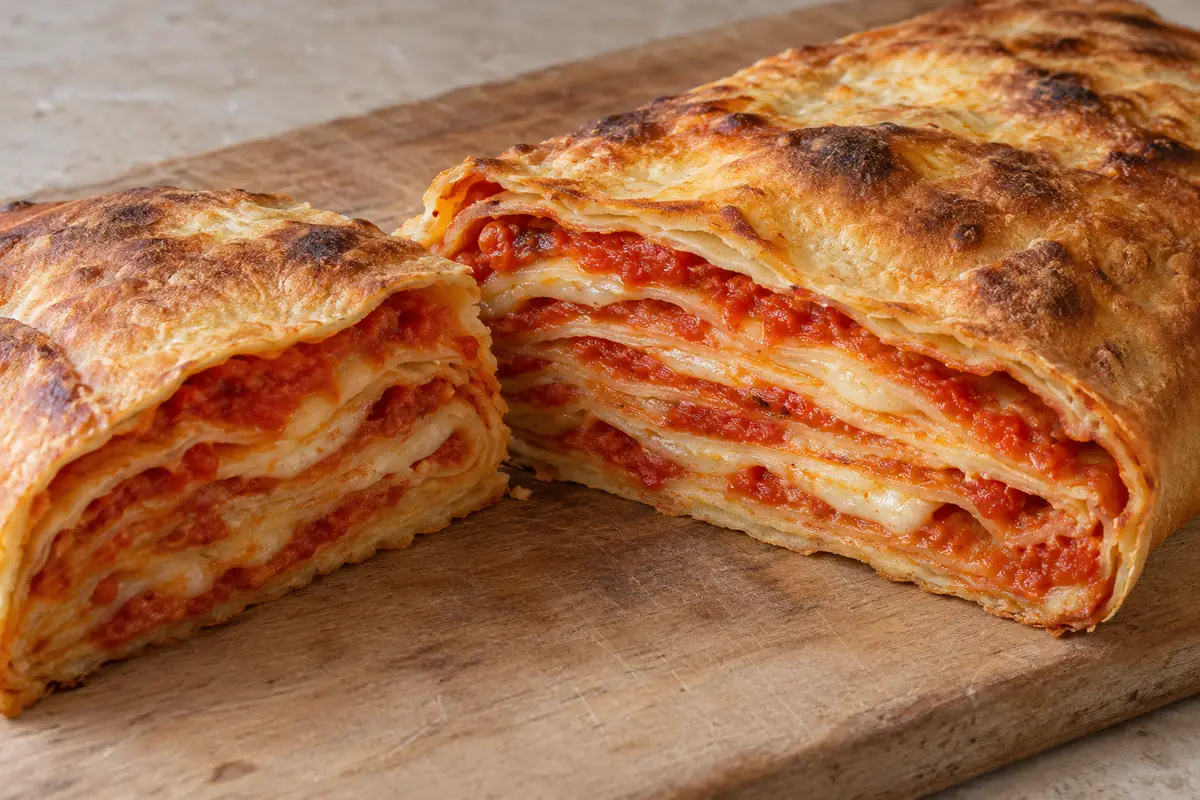
AI-generated Serve warm or lukewarm without extra sauce or garnish. Do not leave remaining servings on the worktop overnight: put in a shallow container and refrigerate within 2 hours of baking. Use within 2 days. Reheat at 180°C for about 10–15 minutes until all the filling is hot; the crust may be less crisp than after the first bake. Do not discard edges when dividing into servings.
Estimated nutrition

Rate this recipe
0 ratings
Comments