
AI-generated
Sicilian Sardine Pasta with Fennel, Raisins and Pine Nuts
Log in or create a free account to save recipes.
Source: https://recipheon.com/en/recipes/main-dishes/sicilian-sardine-pasta-with-fennel-raisins-and-pine-nuts
About this recipe
Sicilian sardine pasta combines fresh sardines, fennel, raisins and pine nuts. The salty flavor of the fish and anchovies meets sweet raisins, saffron and a golden breadcrumb topping. Traditionally, it uses aromatic wild fennel greens, known as finocchietto selvatico. This home version uses more readily available cultivated fennel bulb and its leafy tops; the flavor is milder, and it is not an identical substitute for the wild plant. The pasta cooks in the fennel water, and the delicate sardines go in near the end to preserve larger pieces. Four servings take about 1 hour 10 minutes, including cleaning the fish.
Ingredients
Pasta, sauce and topping
320 g dried durum wheat bucatini, without eggs
350 g fresh raw skin-on sardine fillets, without scales, heads, guts, backbones or tails; weight after cleaning, buy about 600–700 g whole fish
300 g cultivated fennel bulb, weight after removing the hard core
10 g tender green fennel leaves, without thick stalks
100 g onion, weight after peeling
20 g anchovy fillets preserved in olive oil, weight after draining; discard the oil from the packaging
30 g dry raisins; discard the soaking water
30 g pine nuts
40 g plain dry breadcrumbs, all for the topping
45 g extra virgin olive oil: 10 g for the breadcrumbs and 35 g for the sauce; use all of it
0.1 g saffron threads, about 1 small pinch
3150 ml water: 100 ml for the raisins, 50 ml for the saffron and 3000 ml for the fennel and pasta; retain 100 ml cooking water for the sauce and up to 100 ml for finishing, discard the rest
18 g salt for the fennel and pasta water; most remains in the discarded water
0.5 g ground black pepper
Steps
Cover the raisins with 100 ml warm water and leave for about 10 minutes, then drain and discard the water. Separately, cover the saffron with 50 ml hot water; retain the entire infusion. Begin heating the remaining 3000 ml water in a covered pot of at least 5 l capacity. Cut the trimmed fennel bulb into slices about 1 cm thick, rinse the leafy tops and set them aside separately.
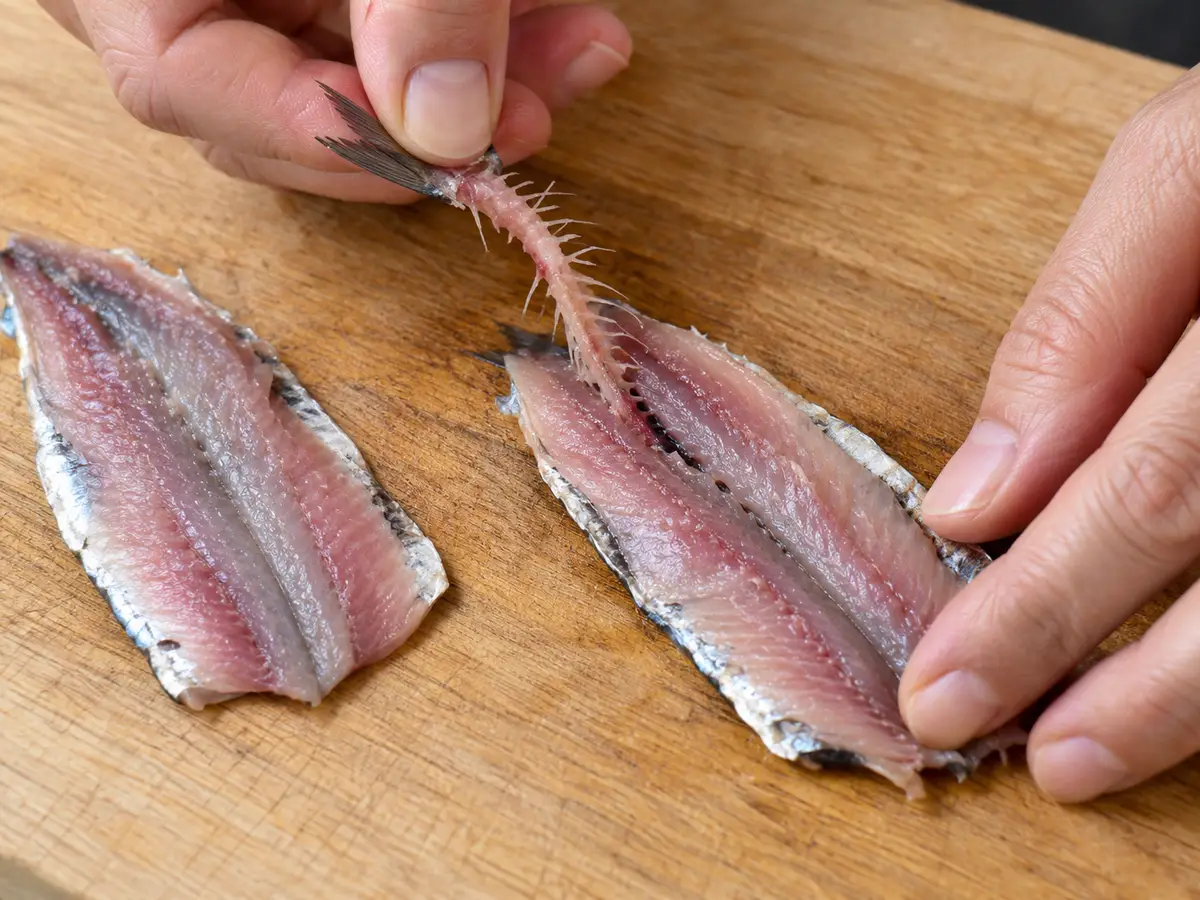
Gently remove the scales, heads and guts from the whole sardines. Open the fish from the belly, lift out the backbones with the tails and remove visible bones along the edges. Rinse briefly in cold water and dry thoroughly with paper towels. Weigh 350 g skin-on fillets, without the discarded parts, cut into pieces about 3–4 cm long and refrigerate until adding to the sauce; allow about 15–20 minutes to clean the whole fish.
AI-generated Toast all the pine nuts in a dry frying pan over medium heat for about 2–3 minutes, shaking the pan often, until pale gold. Transfer to a small bowl. Heat 10 g olive oil in the same pan, add all the breadcrumbs and stir for about 3–4 minutes, until golden and loose. Transfer separately; do not leave them in the hot pan so they do not burn.
Add all the salt to the boiling water in the pot, add the fennel slices and cook for about 8–10 minutes, until fork-tender. Add the leafy tops for about 1 minute at the end. Lift everything out with a slotted spoon, letting the water drain back into the pot, and chop finely. Keep the water for cooking the pasta; do not replace it with fresh water.
Heat the remaining 35 g olive oil in a wide frying pan about 28–30 cm across. Add the finely chopped onion and cook over medium-low heat for about 6–8 minutes, until softened, without heavy browning. Add the drained anchovies and stir for about 1 minute, until they start to break down. Add all the chopped fennel and leaves, drained raisins, all the pine nuts, pepper and the entire saffron infusion. Stir and heat gently for about 2 minutes.
Bring the fennel water back to a boil, add the bucatini and cook for 2 minutes less than the package instructions. When about 4 minutes remain in this shortened stage, add the sardines to the sauce pan and pour in 100 ml hot pasta cooking water. Heat the fish over low heat for about 3–4 minutes, until the flesh sets, gently moving the pan instead of stirring vigorously. Keep larger fish pieces; do not mash them into a paste.
Before draining, reserve another 100 ml water from the pot and discard the remaining water. Transfer the pasta to the pan and gently combine with all the sauce using tongs. Heat for about 2 minutes, until the bucatini are al dente, adding the reserved water in small amounts only if needed; discard unused water. The sauce should coat the pasta, without dry clumps and without a puddle of liquid. Divide everything among four plates and sprinkle with all the prepared breadcrumbs. Serve immediately to keep the topping crisp.
Estimated nutrition

Rate this recipe
0 ratings
Comments