
AI-generated
Spaghetti alle vongole — pasta with clams, garlic and parsley
Log in or create a free account to save recipes.
Source: https://recipheon.com/en/recipes/main-dishes/spaghetti-alle-vongole-pasta-with-clams-garlic-and-parsley
About this recipe
Spaghetti alle vongole is an Italian pasta dish in which strained clam juices form a light sauce with olive oil and garlic. This home version, bianca, does not require wine, tomatoes or cream. The essentials are fresh live clams from a reliable source, careful removal of sand and a brief final cooking of the pasta in the flavorful liquid. The clams are cooked under a lid first, then most are removed from their shells and all the clean juices are kept. The spaghetti goes into the skillet before the end of its package cooking time and finishes in the sauce, loosened as needed with small additions of pasta cooking water. The oil and starch help form a thin, glossy coating on the strands. Parsley goes in near the end with the clams. These quantities make four portions without extra bread, cheese or lemon; serve the dish immediately for the best result.
Ingredients
Clams and bianco sauce
1200 g fresh live vongole clams in their shells, from a reliable source, professionally purged of sand
60 g water for cooking the clams
40 g olive oil
12 g peeled garlic
15 g fresh parsley with tender stems, washed and dried
Pasta and cooking water
320 g dry durum wheat spaghetti, without eggs
2500 g water for cooking the pasta, most of which will be discarded
10 g salt for the pasta cooking water
Steps
Keep the clams refrigerated until ready to prepare them, in a ventilated container under a damp towel, without submerging them in water and without sealing the container tightly. Use them within the date on the package, preferably on the day of purchase. Discard any clams with cracked shells and any open ones that do not close after a gentle tap. Briefly rinse the rest under cold running water, rubbing the shells, then drain well. This recipe assumes clams that have already been professionally purged of sand, without additional hours of soaking at home. Thinly slice the garlic and finely chop all the parsley, including the tender stems. Have ready a wide pot or deep skillet about 30 cm across, with a lid, and a very fine sieve.
Put the clams in the wide pan and add all 60 g water. Cover and heat over medium-high heat. Once there is clear steaming under the lid, cook for about 6–8 minutes, gently rocking the pan once or twice. Do not remove individual clams as soon as their shells first crack open. By the end, most should be open and the meat cooked. Discard all clams that remain closed; do not try to force them open. Take the pan off the heat and use a slotted spoon to transfer the cooked clams to a clean bowl, keeping the liquid in the pan.
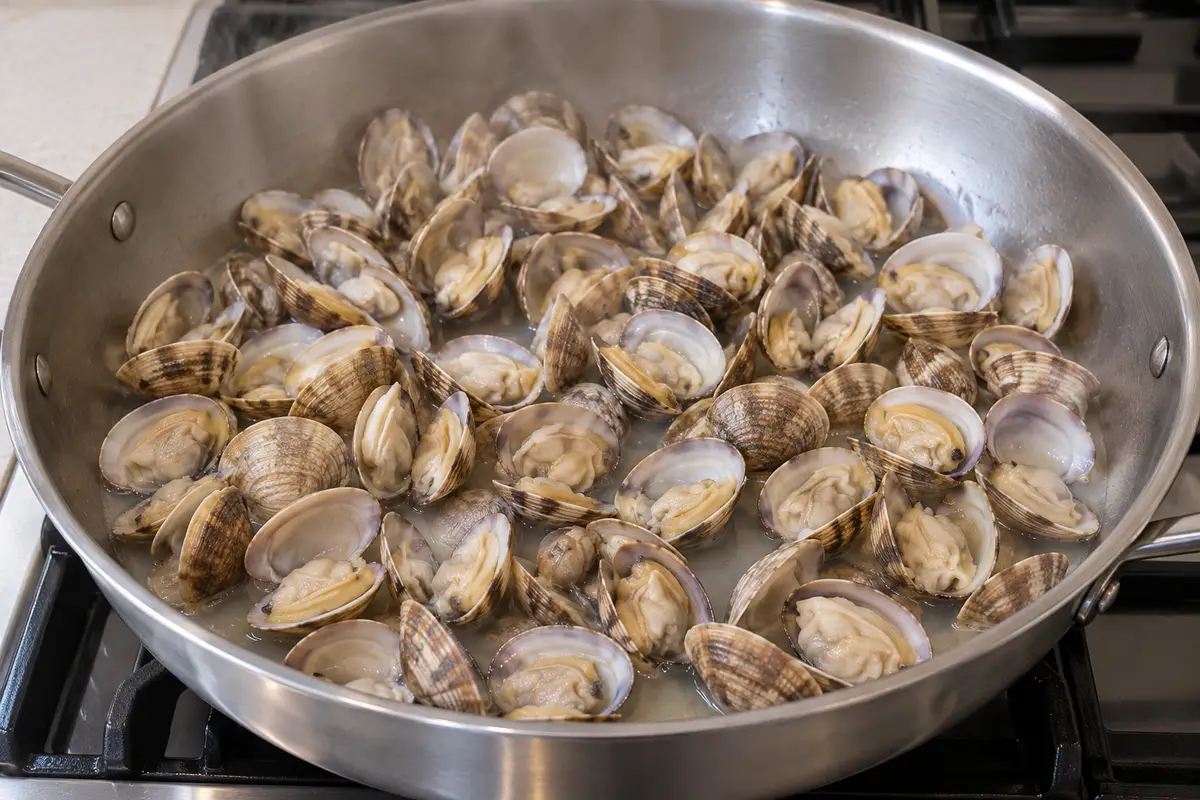
AI-generated Pour the clam cooking liquid through a very fine sieve lined with damp clean cheesecloth into another container. Keep all the clean juices and discard the sand and sediment; do not try to add the last cloudy liquid from the bottom. Remove the meat from most of the shells, keeping a few open clams in their shells for each portion. Discard the empty shells. Cover the meat and the remaining whole clams loosely while the pasta cooks. Wash the pan used for the clams or have another wide skillet ready to finish the sauce, so you do not transfer sand into it.
Bring all 2500 g water to a boil in a pot and dissolve all the salt in it. Add the spaghetti and stir at the start so the strands do not stick together. Cook for about 2 minutes less than the al dente time on the package; the final cooking takes place in the sauce. Just before transferring the pasta, reserve about 250 ml cooking water in a cup. Discard the remaining cooking water. Do not rinse the spaghetti and do not drizzle it with extra olive oil. Near the end of the pasta cooking time, start heating the garlic as described in the next step.
Pour all 40 g olive oil into a clean wide skillet and add all the garlic. Heat over medium-low heat for about 1–2 minutes, until fragrant but not browned. Carefully pour in all the strained clam juices and bring to a gentle simmer. If there is a lot of liquid, reduce it briefly before adding the pasta, leaving a shallow layer of sauce in the skillet. Do not add prepared stock or extra salt: the clam juices are already salty. The garlic stays in the sauce.
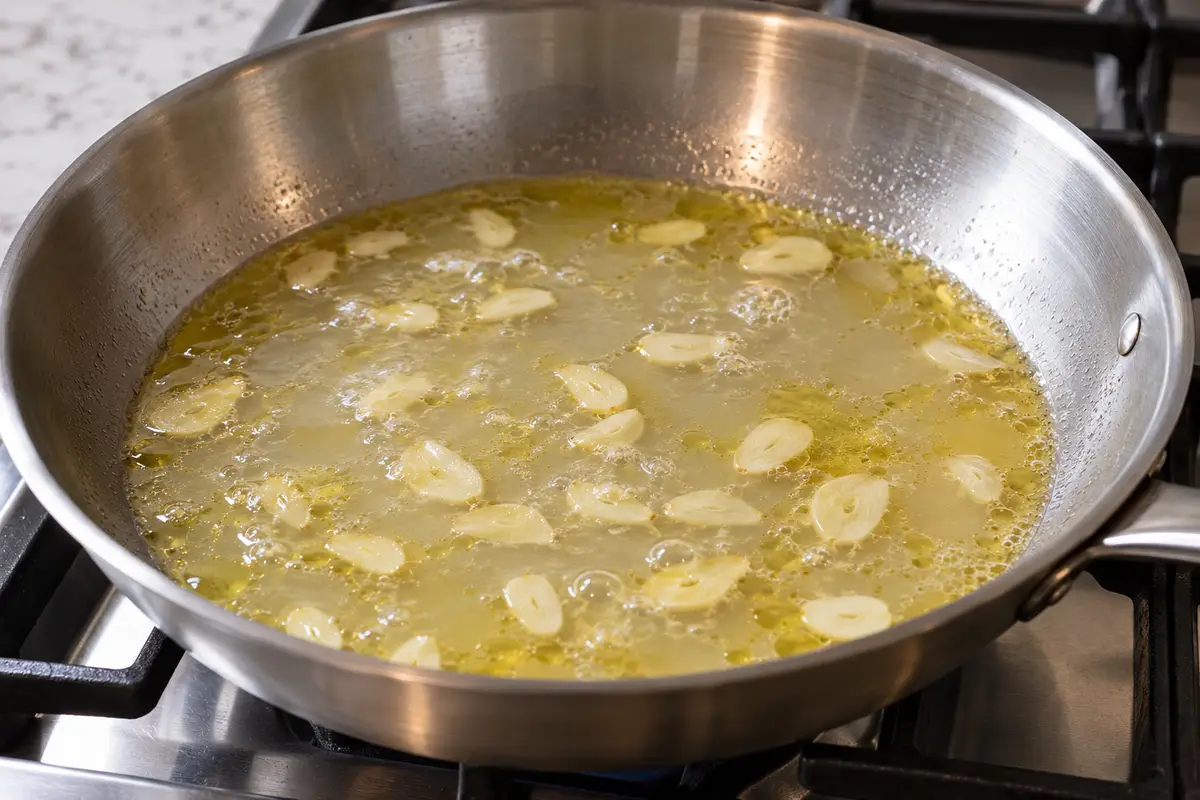
AI-generated Transfer the partially cooked spaghetti to the skillet and cook over medium heat for about 2 minutes, stirring briskly with tongs and moving the pan. If needed, add the reserved pasta water 1–2 tablespoons at a time, waiting for each addition to blend into the sauce. You do not need to use the whole cup; discard any unused water. The strands should be al dente and coated in a thin, glossy sauce, without a pool of liquid underneath. Add all the clam meat and the clams kept in their shells. Heat gently, stirring, for about a minute until hot again. Take the skillet off the heat and stir in all the parsley.
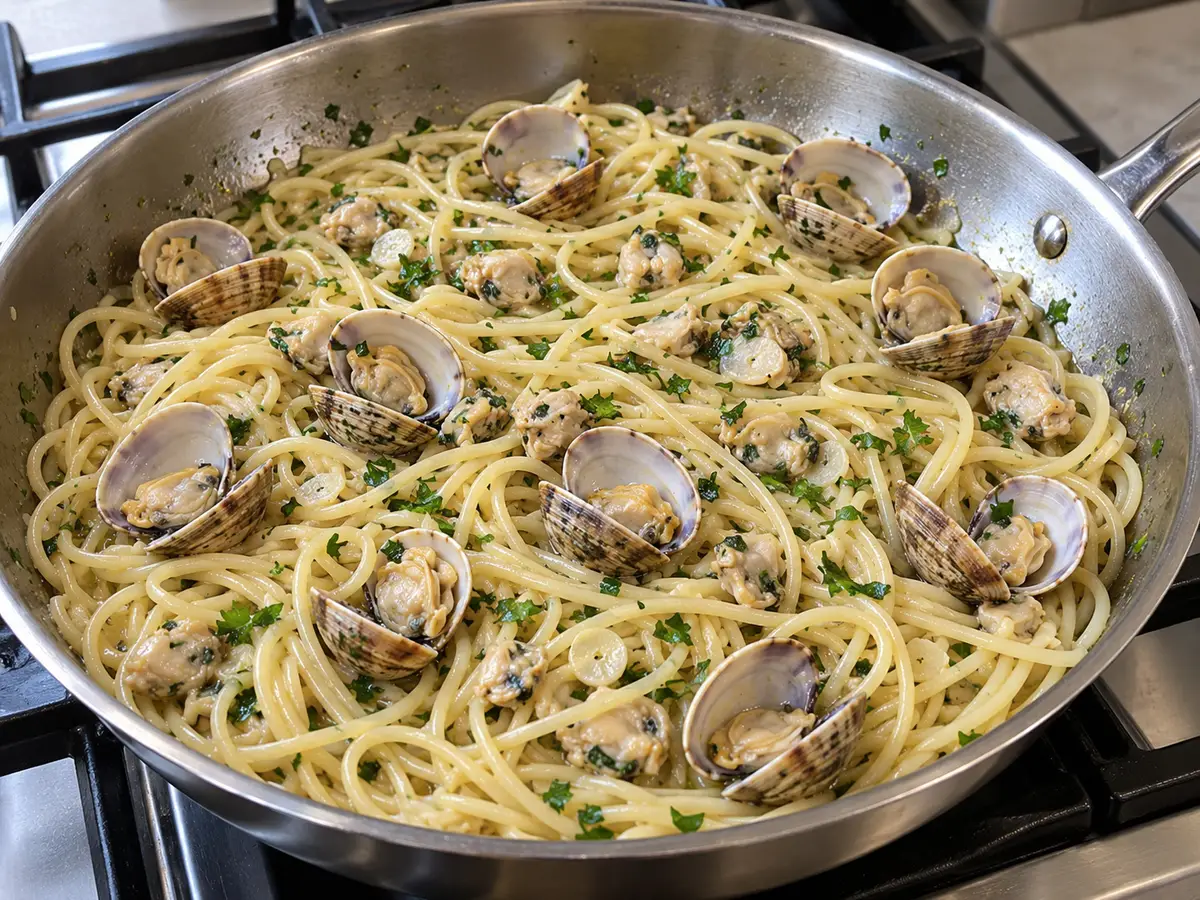
AI-generated Divide the spaghetti, clam meat, remaining open shells and all the sauce among four warm plates. Serve immediately, without extra cheese, lemon or bread. The shells are for presentation only and are not edible. If there are leftovers, cool them quickly, remove the remaining meat from the shells and transfer to a closed container. Refrigerate until the next day at the latest and reheat thoroughly until hot throughout, allowing for softer pasta and less delicate clams.
Estimated nutrition

Rate this recipe
0 ratings
Comments