
AI-generated
Pasta alla genovese — pasta with slow-braised beef and onions
Log in or create a free account to save recipes.
Source: https://recipheon.com/en/recipes/main-dishes/pasta-alla-genovese-pasta-with-slow-braised-beef-and-onions
About this recipe
Pasta alla genovese is a Neapolitan pasta dish with beef and plenty of onions, which turn into a thick, amber sauce. This home version takes time, but gentle braising in a heavy-bottomed pot does most of the work. Thinly sliced onions first release their juices and collapse around the meat, then become soft and almost creamy. Carrot, celery and a little white wine round out the flavor. A final simmer without a lid reduces excess liquid to make a sauce that coats the pasta. The tender beef is pulled apart with forks and served in full, with the onions and all the juices. Ziti is broken before cooking, then briefly tossed with the hot sauce. A measured amount of Parmigiano Reggiano finishes the dish. These quantities make four hearty portions, without extra bread or other sides; the sauce can be made ahead and the pasta cooked just before serving.
Ingredients
Beef and slowly braised sauce
600 g raw beef shoulder without bones, with thick membranes removed and natural fat marbling retained
1200 g yellow onions, weighed after peeling
80 g carrot, weighed after peeling
60 g celery, weighed after trimming
40 g olive oil
100 g dry white wine with an alcohol content of about 12%
100 g water to start braising, plus up to 150 g hot water to add as needed
6 g salt for the meat and sauce
0.5 g ground black pepper
1 small dried bay leaf, removed after braising
Pasta and finishing
320 g dry durum wheat ziti, without eggs
2500 g water for cooking the pasta, most of which will be discarded
10 g salt for the pasta cooking water
30 g finely grated Parmigiano Reggiano
Steps
Halve the onions and cut into thin half-moons so they soften evenly during braising. Finely chop the carrot and celery. Pat the beef dry with paper towels and cut into large pieces about 5–6 cm across. Sprinkle with half the salt intended for the sauce and all the pepper. Have ready a heavy, thick-bottomed pot with a lid and a capacity of about 5–6 l. Measure the wine and water and set the bay leaf aside.
Heat 20 g olive oil in the pot over medium-high heat. Brown the beef in two batches for about 4–5 minutes each, turning the pieces once the surface has browned. Do not crowd the meat, so it does not immediately start simmering in its own juices. Transfer the browned pieces to a bowl. Keep the fat and browned, unburned residue in the pot, along with all the juices collecting in the bowl of meat.
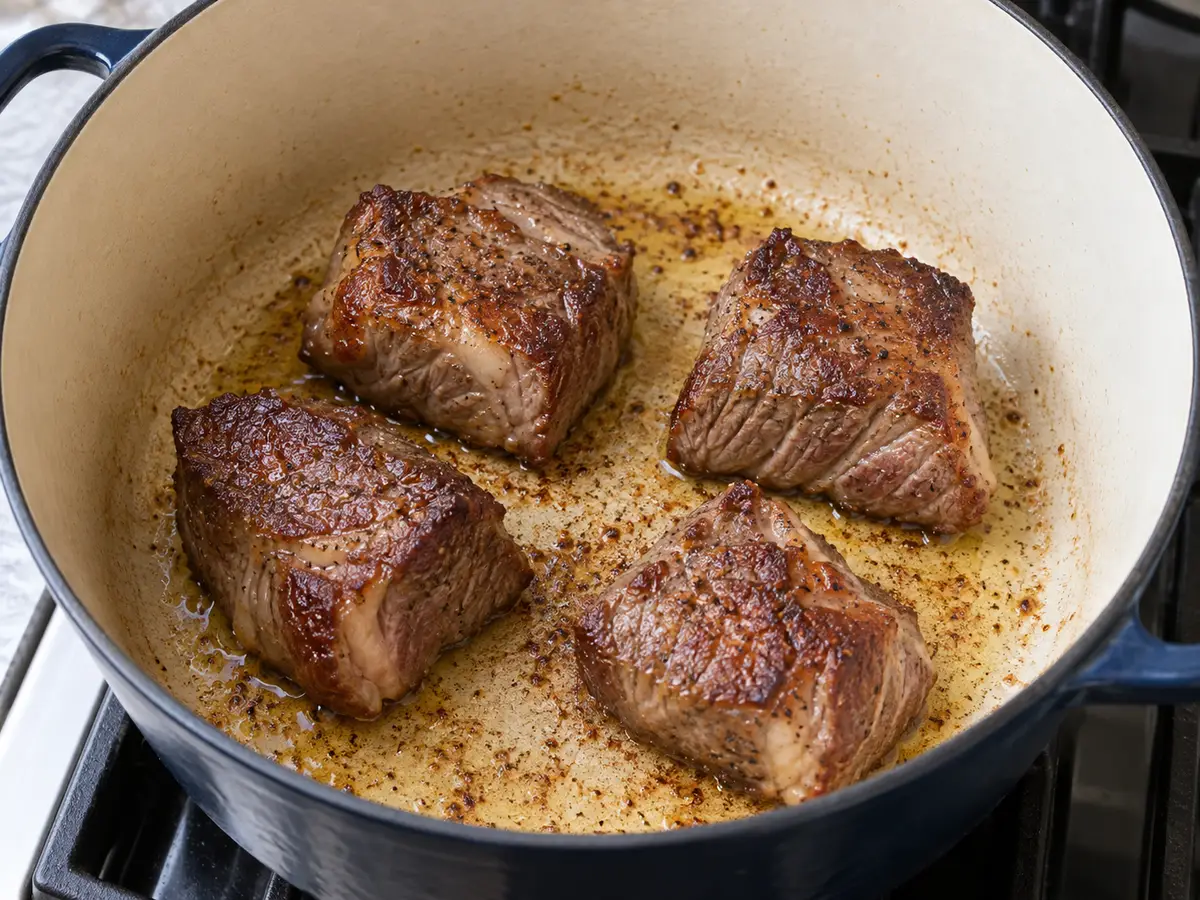
AI-generated Lower the heat to medium. Pour the remaining 20 g olive oil into the same pot and add all the carrot and celery. Stir for about 4–5 minutes, until the vegetables soften slightly. Return all the meat and pour in the juices from the bowl. Add all the wine, scrape the residue from the bottom and simmer uncovered for about 2–3 minutes so the liquid starts to reduce. Brief cooking does not mean all the alcohol has been removed.
Add roughly half the onions, the remaining sauce salt and the bay leaf. Pour in the initial 100 g water, cover and heat gently for about 5 minutes, until the onions collapse a little. Add the remaining onions, mix carefully and cover again. Heat for about another 5–10 minutes, until the onions have softened enough to stir the contents of the pot easily. Do not add a large amount of liquid: the onions will gradually release their own juices.
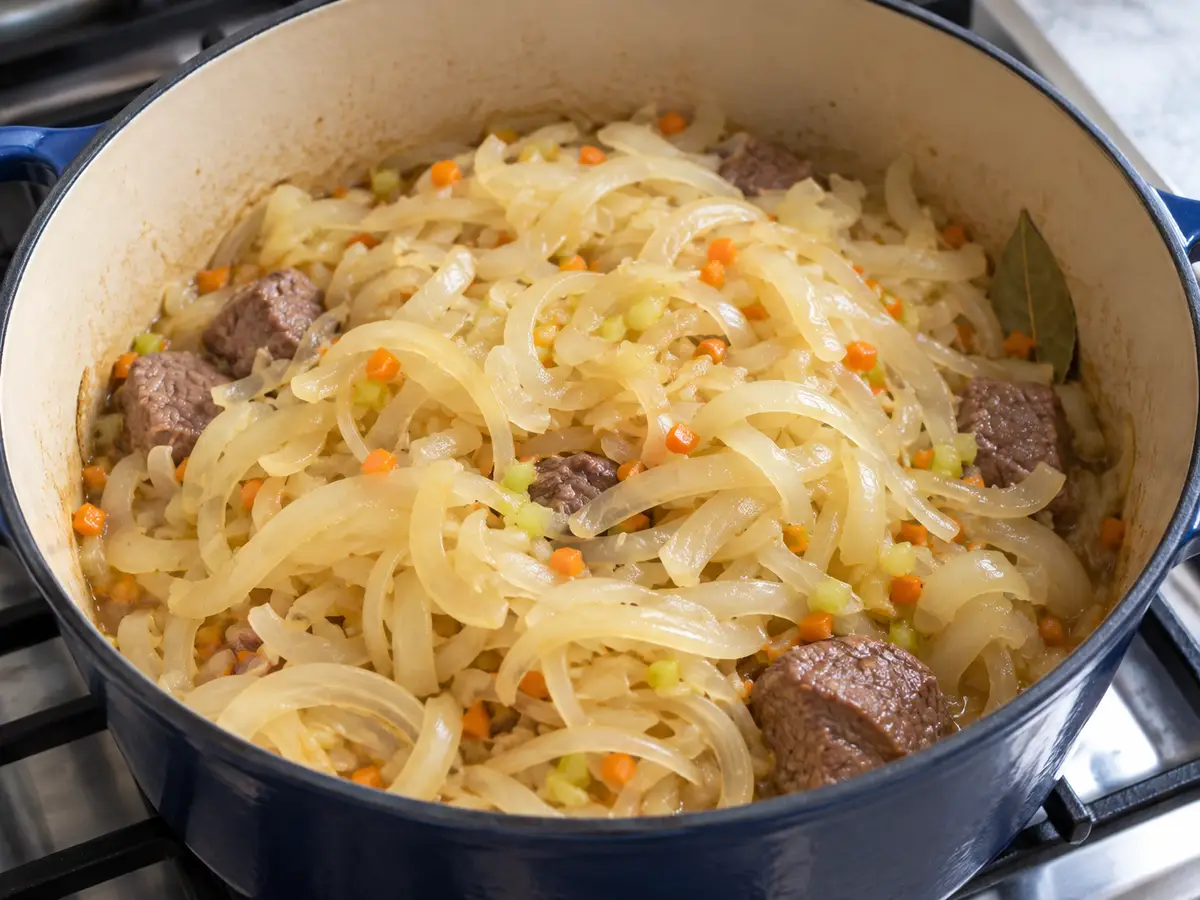
AI-generated Set the heat as low as possible while maintaining a very gentle simmer. Braise covered for about 2.5–3 hours, stirring gently from the bottom occasionally. If the sauce begins to stick, add hot water 2–3 tablespoons at a time, using up to the additional 150 g as needed; you do not need to use it all. The beef should become tender enough to pull apart with forks, and the onions should almost completely break down. If the meat is still firm, braise longer before beginning to reduce the sauce. Remove the lid and simmer for about another 20–30 minutes, stirring more often, until the onions are dark golden and the sauce thick and creamy, without a watery layer. Remove the bay leaf. Pull all the beef into smaller strands and pieces with two forks, leaving it in the sauce with all the fat and juices. Do not blend the sauce and do not strain it.
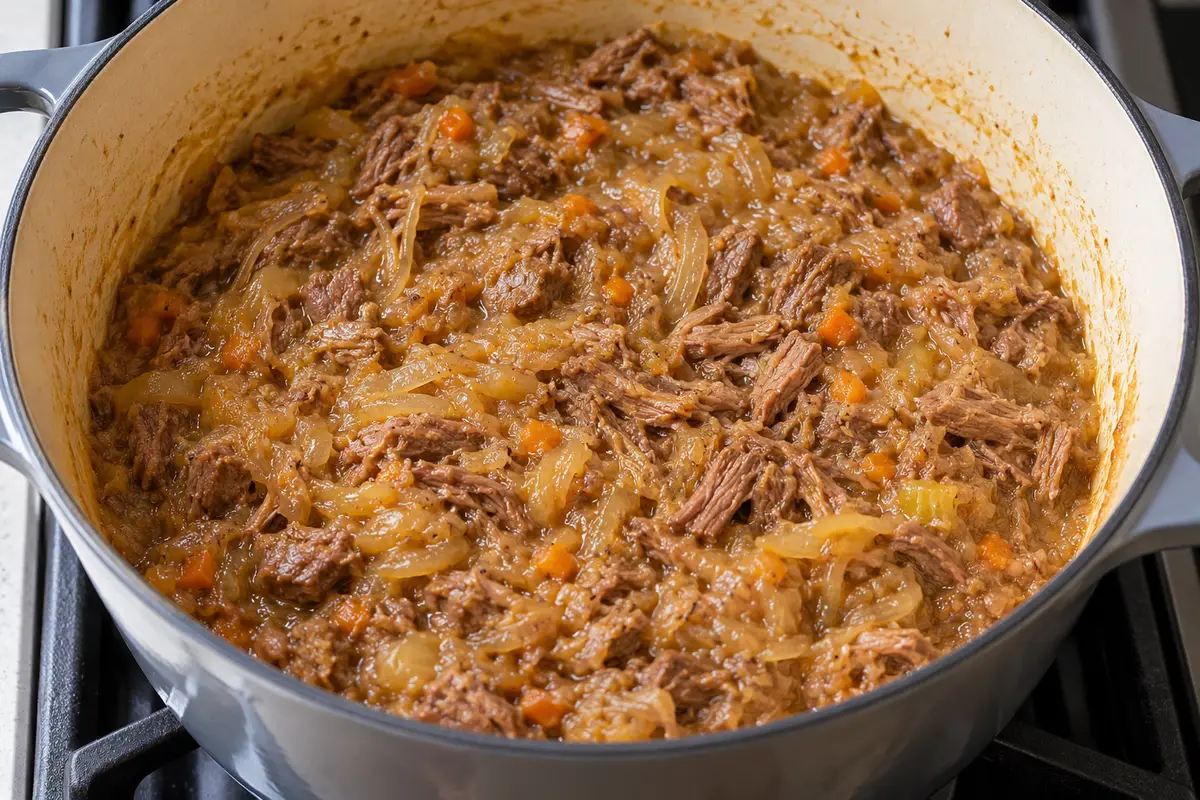
AI-generated When the sauce is almost ready, break the dry ziti into pieces about 5–6 cm long; use any smaller pieces created by breaking it too. Bring all 2500 g water to a boil and dissolve the pasta salt in it. Cook the ziti for about 2 minutes less than the al dente time on the package. Just before draining, reserve about 200 ml cooking water in a cup and discard the rest. Do not rinse the pasta and do not drizzle it with extra olive oil.
Add the partially cooked ziti to the pot with all the hot sauce and meat. Stir over low or medium heat for about 2 minutes, until the pasta is al dente and coated in sauce. If the sauce is too thick, add the reserved water 1–2 tablespoons at a time, stirring after each addition. You do not need to use the whole cup; discard the remaining water. Take the pot off the heat, add all 30 g Parmigiano Reggiano and mix gently. The sauce should cling to the tubes and fill their centers.
Divide the pasta, all the beef and all the sauce among four plates. Serve immediately, without extra bread or garnishes beyond the listed ingredients. If making the sauce ahead, cool it quickly and refrigerate in a closed container until the next day at the latest; reheat thoroughly until hot throughout before combining with freshly cooked pasta. Refrigerate finished pasta with any remaining sauce until the next day at the latest too, then reheat with a little water, allowing for a softer texture.
Estimated nutrition

Rate this recipe
0 ratings
Comments