
AI-generated
Coniglio alla ligure — rabbit with olives, wine and pine nuts
Log in or create a free account to save recipes.
Source: https://recipheon.com/en/recipes/main-dishes/coniglio-alla-ligure-rabbit-with-olives-wine-and-pine-nuts
About this recipe
Coniglio alla ligure is rabbit braised with olives, wine and pine nuts, scented with rosemary and garlic. In this home version, bone-in pieces are first browned, then gently braised in a small amount of liquid. Red wine gives the sauce a deeper color, the onion mellows during cooking, and small Taggiasche olives bring their distinctive salty flavor. The olives are added toward the end so they remain distinct, while lightly toasted pine nuts go into the nearly finished sauce. All the fat and browning juices stay in the pot. Only the bay leaf is removed before serving; the rabbit bones and any other inedible parts are set aside while eating. These quantities make four portions of rabbit with all the sauce, without extra potatoes, bread or other sides. Keep the liquid at a gentle simmer to tenderize the meat without rapidly boiling away the sauce.
Ingredients
Rabbit and wine sauce
1200 g raw bone-in rabbit, already without skin, head or offal, cut by the seller into about 8–10 pieces
150 g onion, weighed after peeling
10 g peeled garlic
35 g olive oil, with 20 g for browning and 15 g for the onion
150 g dry red wine with an alcohol content of about 12%
200 g water for braising, plus up to 100 g hot water to add as needed
3 g fresh rosemary needles, without woody stems
1 small dried bay leaf, removed after braising
8 g salt, with 4 g for the meat and 4 g for the onion and sauce
0.5 g ground black pepper
Olives and pine nuts
80 g mild Taggiasche olives in brine, weighed after draining and removing the pits
25 g shelled pine nuts, without added salt or oil
Steps
Pat the rabbit pieces thoroughly dry with paper towels. Remove any visible loose bone fragments left from cutting it into portions. Sprinkle the meat with 4 g salt and all the pepper. Finely chop the onion, thinly slice the garlic and chop all the rosemary needles very finely. Weigh the olives after draining and removing their pits; discard the brine. Have ready a wide, heavy pot or deep skillet about 28–30 cm in diameter with a well-fitting lid.
Heat 20 g olive oil in the pan over medium-high heat. Brown the rabbit in two batches for about 5–6 minutes each, turning the pieces until lightly golden on several sides. Do not crowd them and do not try to cook the meat through at this stage. Transfer the browned pieces to a bowl. Keep all the fat and golden-brown, unburned residue in the pan, along with all the juices collecting in the bowl.
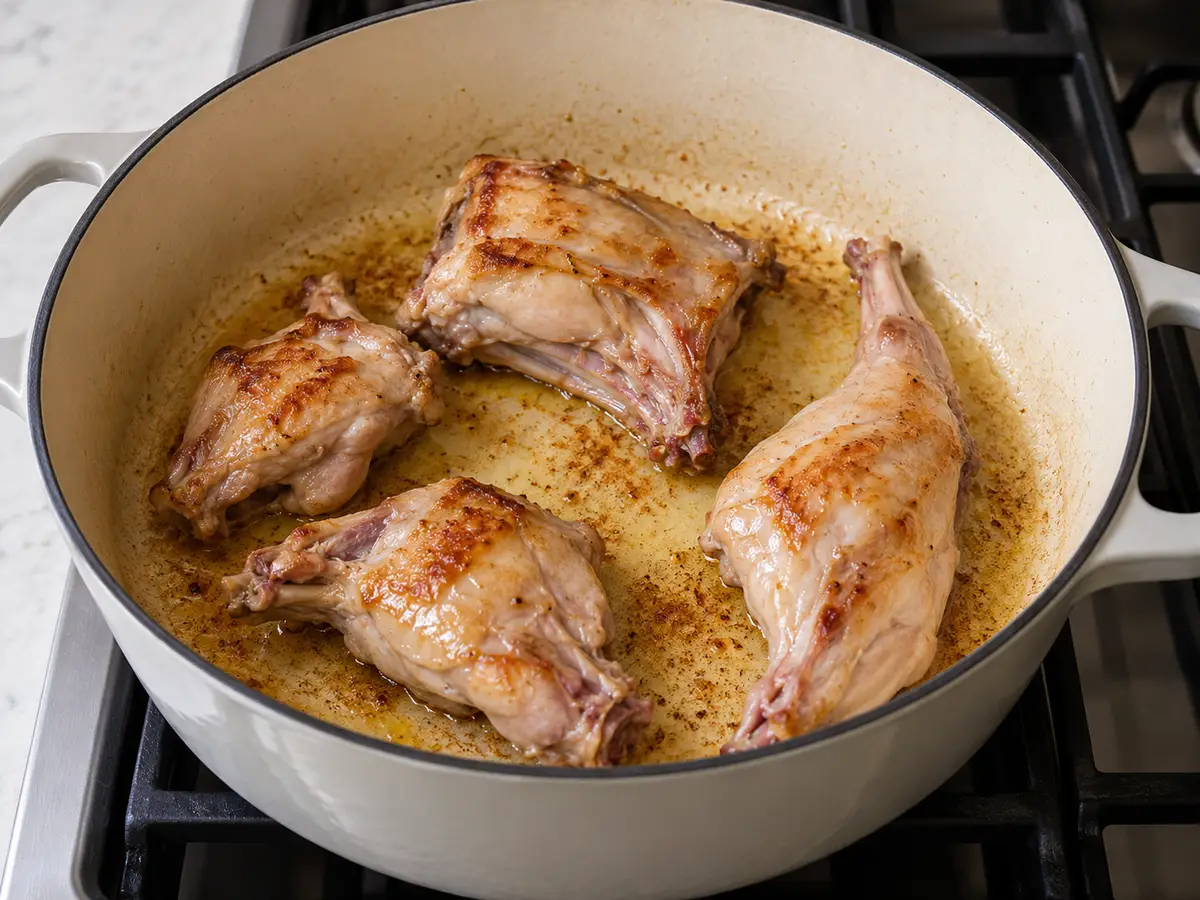
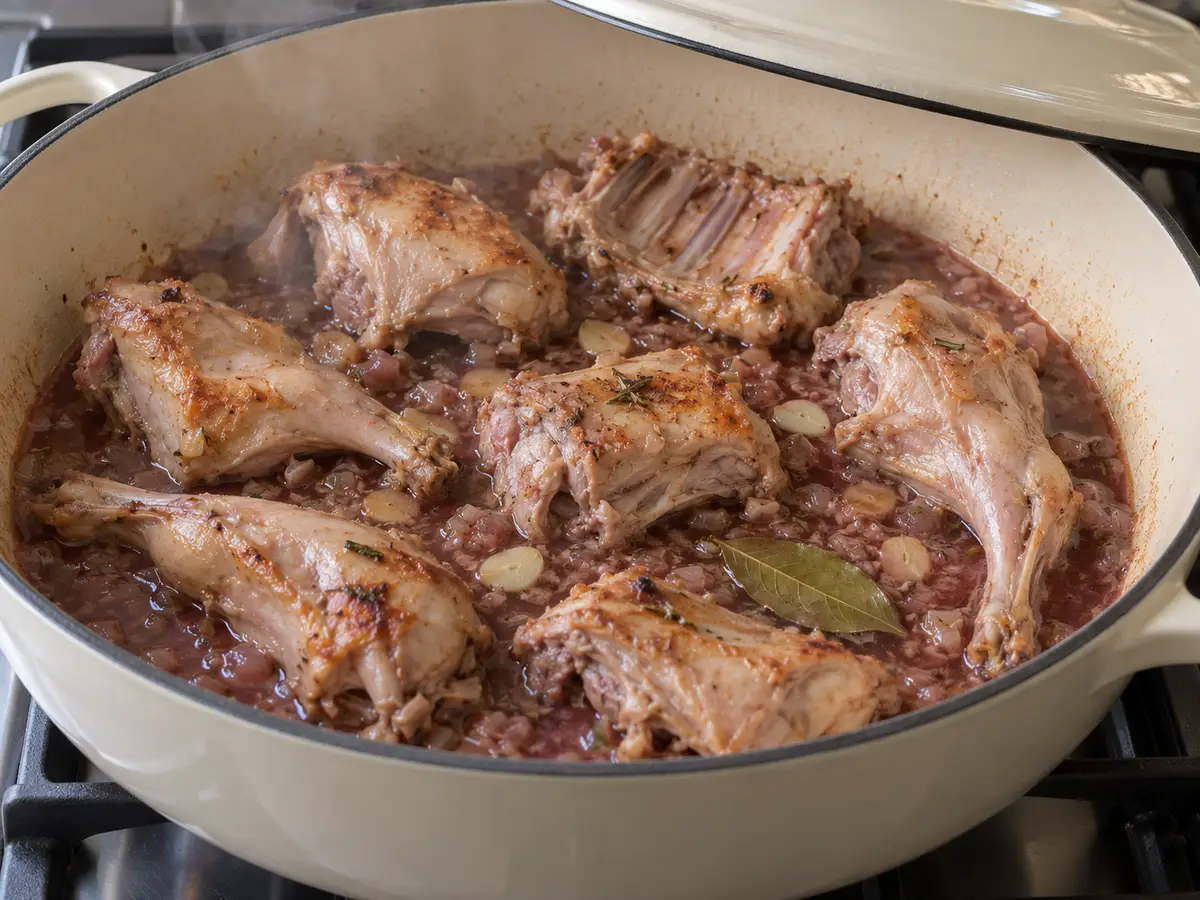
AI-generated Lower the heat to medium-low. Add the remaining 15 g olive oil, all the onion and the remaining 4 g salt. Stir for about 5 minutes, until the onion softens, then add all the garlic and rosemary for another minute. Return all the rabbit and pour in the juices from the bowl. Add all the red wine, scrape the residue from the bottom and simmer uncovered for about 3 minutes so the liquid starts to reduce. Do not assume such brief cooking removes all the alcohol.
Pour in the initial 200 g water and add the bay leaf. A layer of liquid should be visible on the bottom; do not completely submerge the meat. Bring to a gentle simmer, cover and braise over low heat for about 45–60 minutes, carefully turning the pieces halfway through. If the sauce evaporates too early and begins to stick, add hot water 2–3 tablespoons at a time, using up to the additional 100 g as needed; you do not need to use it all. By the end of this stage, the meat should be almost tender. Keep the cooking gentle, without vigorous bubbling.
AI-generated Toward the end of braising, put all the pine nuts in a small dry skillet. Heat over medium-low heat for about 1–2 minutes, moving the skillet often, just until lightly golden and nutty-smelling. Immediately transfer to a small bowl, as they darken quickly in the hot skillet. Do not add a separate portion of olive oil and do not toast them until dark brown.
Add all the olives to the rabbit and braise covered for about another 15–20 minutes, until the meat is tender through its full thickness and comes away from the bones easily. If larger pieces still resist, braise them a little longer, keeping a small amount of liquid in the pan. Remove the lid and, if needed, reduce the sauce for about 3–5 minutes so it thickens slightly but stays fluid. Add all the pine nuts for about the last 2 minutes and mix carefully. Remove the bay leaf. Do not pour off the fat and do not strain the sauce; the onion, garlic, rosemary, olives and all the juices are served. The olives are salty, so do not automatically add salt beyond the listed amount.
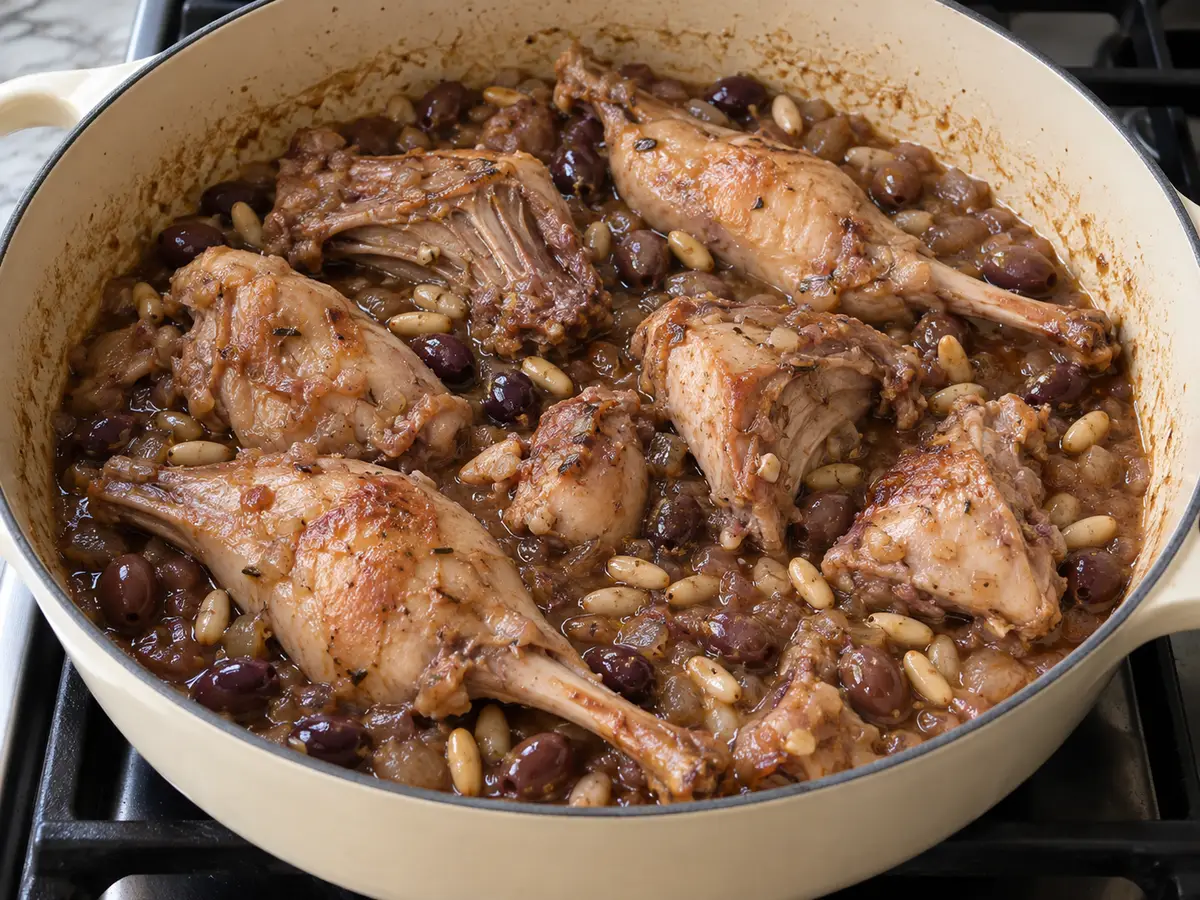
AI-generated Divide the rabbit among four plates so each portion has a similar amount of meat. Add all the olives and pine nuts and pour over all the sauce from the pan. Serve immediately, without unlisted sides. The bones are not edible and must be set aside while eating. Cool any leftovers quickly and refrigerate with the sauce in a closed container until the next day at the latest. Reheat gently under a lid with a little water until the meat is hot throughout.
Estimated nutrition

Rate this recipe
0 ratings
Comments