
AI-generated
Thin-Dough Pierogi (Dumplings) with Sauerkraut and Mushrooms
Log in or create a free account to save recipes.
Source: https://recipheon.com/en/recipes/main-dishes/thin-dough-pierogi-dumplings-with-sauerkraut-and-mushrooms
About this recipe
These pierogi have thin, soft dough and a flavorful filling of sauerkraut and dried porcini mushrooms. The strained mushroom broth goes into the sauerkraut, preserving the filling's woodland aroma. Cook off the excess moisture and let the filling cool before shaping: wet or hot filling makes thin dough difficult to seal. The simple dough with warm water and oil needs no eggs, and resting makes it easier to roll. The quantities make about 60 pierogi, or six servings of roughly ten dumplings, topped with browned onion. Start by soaking the mushrooms the evening before.
Ingredients
Dough, filling and onion topping
530 g all-purpose wheat flour, Polish type 450 or 500 — 500 g for the dough and up to 30 g for dusting
600 g white sauerkraut with no added ingredients, weighed after draining and gently squeezing, before cooking
50 g dried porcini mushrooms from a reliable source, weighed before soaking
250 g onion, weighed after peeling — 150 g for the filling and 100 g for serving
75 ml canola oil — 25 ml for the dough, 30 ml for the filling and 20 ml for the onion topping
25 g salt — 5 g for the dough, 2 g for the filling and 18 g for the cooking water, which will be discarded
1.5 g ground black pepper
4.3 l water — 500 ml for soaking and cooking the mushrooms, 300 ml for the sauerkraut, 280 ml for the dough, up to 200 ml reserved for simmering, up to 20 ml for the edges and 3 l for boiling the pierogi, to be discarded
Steps
Briefly rinse the porcini in a sieve, transfer to a bowl and cover with 500 ml previously boiled, cooled water. Cover and refrigerate for 8 hours. Lift out the softened mushrooms with a spoon, then strain the liquid through a fine-mesh sieve lined with cheesecloth, leaving the sediment at the bottom of the bowl.
Put the mushrooms and strained liquid in a small saucepan, bring to a boil, then simmer over low heat with the lid slightly ajar for 30–40 minutes, until the mushrooms are tender. At the same time, put the sauerkraut in another pot, add 300 ml water and simmer, covered, for 45–60 minutes, stirring occasionally, until the strands soften. Lift out the cooked mushrooms and set aside to cool slightly, then pour all the remaining broth into the sauerkraut for the rest of its cooking time. If either pot starts to dry out on the bottom, add a little of the reserved water; you do not need to use all 200 ml.
Toward the end of the sauerkraut's cooking time, mix 500 g flour with 5 g salt in a bowl. Pour in 280 ml very warm water and 25 ml oil and mix with a spoon; once cool enough to handle, knead by hand for 8–10 minutes. The dough should be soft, smooth and elastic, with no dry flour remaining. Cover tightly with a bowl or bag and let rest for at least 30 minutes; it can rest while you prepare and cool the filling.
Finely dice both portions of onion and keep them separate; finely chop the sauerkraut and cooked porcini, reserving the sauerkraut liquid. Heat 30 ml oil in a wide skillet and cook 150 g onion over medium-low heat for 8–10 minutes, until soft and lightly browned. Add the sauerkraut with its remaining liquid, the mushrooms, 2 g salt and the pepper, then cook uncovered over medium heat for about 15–20 minutes, stirring frequently. The filling should stay moist but hold together: when you push it aside with a spatula, no water should pool on the bottom; cook a little longer if needed.
Spread the filling in a thin layer on a large plate or shallow dish and leave for about 30 minutes, until it is no longer warm. Do not put hot or watery filling on the dough. Keep the dough covered meanwhile so its surface does not dry out.
Divide the dough into four portions and roll out one at a time, keeping the others covered. Lightly dust the work surface with a little of the reserved 30 g flour, roll the dough to about 2 mm thick and cut out circles about 9 cm in diameter. Keep the scraps covered and briefly knead them together again; after a few minutes' rest, roll them out with the next portion of dough. Do not work excess flour into the edges, as this makes them harder to seal.
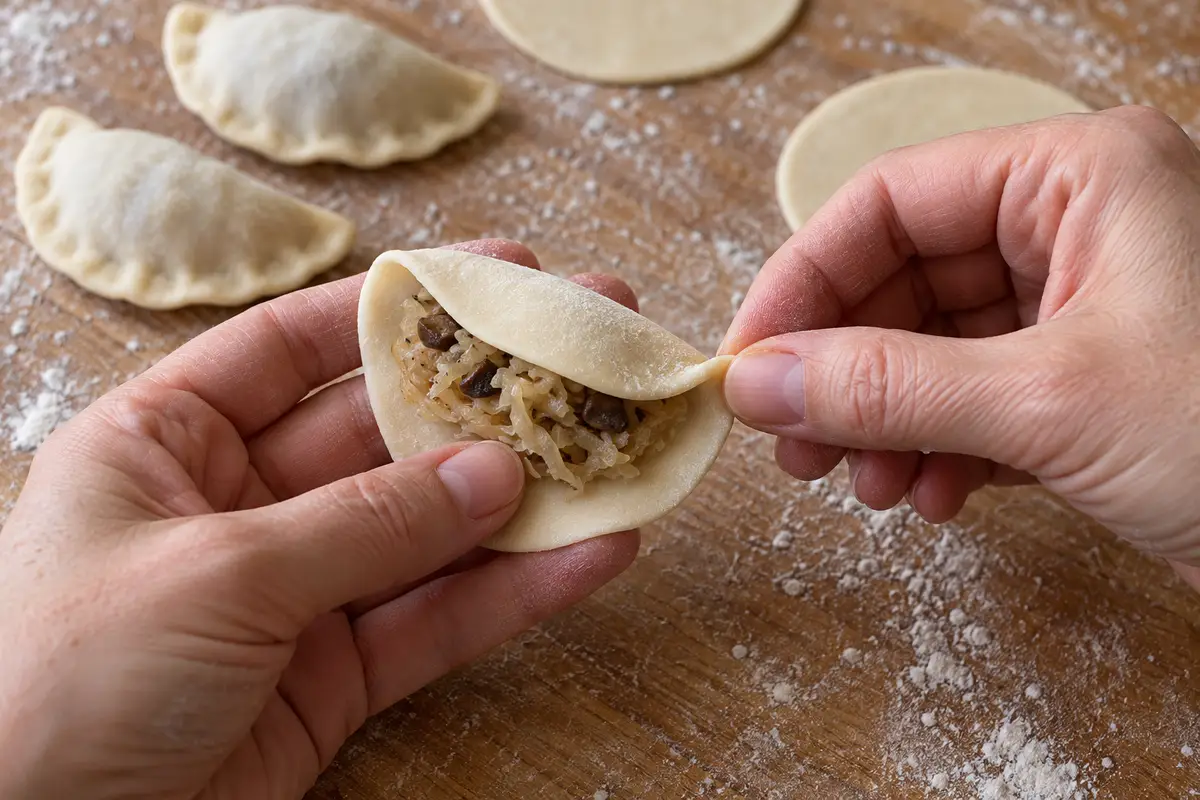
Place a heaping teaspoon of cooled filling in the center of each circle, leaving a clean border. Fold the dough in half, press out the air above the filling and pinch the edges firmly together; if they have dried out, moisten them with a little of the reserved 20 ml water. Do not pack filling into the seam, and do not stretch the dough until it tears. Set the pierogi apart on a lightly floured surface and cover with a kitchen towel; you should get about 60, depending on how thinly you roll the dough.
AI-generated Start bringing 3 l water with 18 g salt to a boil in a large pot, and heat the remaining 20 ml oil in a small skillet. Add the reserved 100 g onion and cook over medium-low heat for about 10 minutes, stirring, until soft and golden. Remove from the heat when the onion is browned but not yet dark brown.
Add about 10 pierogi at a time to the boiling salted water, gently move the pot or run a spoon along the bottom, then reduce the heat to a gentle boil once the water returns to a boil. When the pierogi float, cook for another 3 minutes, until the dough is tender, then lift out with a slotted spoon and briefly drain. Immediately toss each batch with some of the onion and oil so the pierogi do not stick together, and serve as they are ready; keep any waiting pierogi in a warm dish, loosely covered. Allow about 30 minutes in total for six batches; do not serve the cooking water.
Serve about ten hot pierogi per portion, with the onion and oil added after draining, without pan-frying them afterward. The thin dough should enclose a cohesive, tender filling, with the edges still firmly sealed.
Estimated nutrition

Rate this recipe
0 ratings
Comments