
AI-generated
Timballo di Anelletti with Ragù, Peas and a Golden Cheese Crust
Log in or create a free account to save recipes.
Source: https://recipheon.com/en/recipes/main-dishes/timballo-di-anelletti-with-ragu-peas-and-a-golden-cheese-crust
About this recipe
Timballo di anelletti is a Sicilian bake of small pasta rings, meat ragù, peas and cheese. Mix the anelletti with a thick beef-and-pork sauce, primosale and caciocavallo, then bake in a pan coated with breadcrumbs. Inside are tender pieces of meat, green peas and pale cheese cubes, with a golden crust on top. For a good cross-section, reduce the ragù well, leave the pasta noticeably undercooked before baking and let the timbale rest after it comes out of the oven. This helps it hold its shape when sliced. It is a hearty meal to share at the family table. A 24 cm springform pan makes 6 servings. Allow about 2 hours and 45 minutes, including simmering the sauce, baking and 20 minutes of resting; prepare the pan and cheeses, parboil the pasta and preheat the oven while the ragù simmers.
Ingredients
Ragù with peas
200 g raw ground beef
200 g raw ground pork
80 g raw red onion, weight after peeling
150 g double-concentrated tomato paste
125 ml dry red wine
200 g frozen green peas; use without thawing
40 g extra virgin olive oil for the ragù
400 ml water for the ragù
up to 150 ml additional water for the ragù, only if needed while simmering
3 g salt for the ragù
0.5 g ground black pepper
Pasta and cheeses
350 g dry anelletti pasta, the small Sicilian rings
100 g fresh rennet-set primosale cheese, weight after draining; discard any packing liquid
80 g aged, unsmoked caciocavallo cheese, weight without the inedible rind
3000 ml water for cooking the pasta; drain all of it after cooking
25 g salt for the pasta water
For the pan and topping
10 g extra virgin olive oil: 5 g for the pan and 5 g for the topping
35 g plain dry breadcrumbs: 20 g for the pan and 15 g for the topping
Steps
Finely chop the onion. Heat 40 g olive oil in a wide pot with a capacity of about 4 l. Add the onion and cook over medium-low heat for about 5 minutes, until softened. Add both ground meats and cook over medium heat for about 10 minutes, breaking up the clumps with a spoon, until the meat browns and the excess released liquid evaporates. Pour in the wine and cook for 3–5 minutes to let some of the liquid evaporate. Add the tomato paste and stir for about 1 minute.
Pour in 400 ml water, add 3 g salt and the pepper, and mix thoroughly. Simmer over low heat with the lid ajar for about 40 minutes, stirring across the bottom occasionally. Add the frozen peas and simmer for another 15–20 minutes, until tender. If the sauce sticks or dries out too quickly, add small amounts from the measured reserve of up to 150 ml water; use only as much as needed. Before combining with the pasta, the ragù must be thick: a spoon drawn across the bottom should leave a trail visible for a moment, and there should not be a thin puddle of sauce around the meat. If needed, reduce for a few minutes without the lid. Use all the finished sauce, including the peas, juices and fat, in the bake.
While the sauce simmers, prepare a springform pan 24 cm across, at least 7 cm tall and with a capacity of about 3 l. Grease the base and sides with 5 g olive oil from the finishing allowance, then coat evenly with 20 g breadcrumbs; leave all of them in the pan. Drain the primosale, weigh out 100 g and cut into cubes about 1 cm wide. Grate the caciocavallo: use 60 g in the pasta and set 20 g aside for the top. Toward the end of simmering, preheat the oven to 180°C on the conventional (no-fan) setting.
While the sauce is still simmering, bring 3000 ml water to a boil in a separate pot with a capacity of at least 5 l and add 25 g salt. When the ragù is nearly ready, add the anelletti and cook for 3 minutes less than the package directs. Taste toward the end: the rings should hold their shape and still be noticeably firm in the center, since they will finish cooking in the oven. Drain thoroughly, discarding all the water. Do not rinse the pasta. Immediately move on to mixing it with the hot ragù.
Add the drained anelletti, 60 g grated caciocavallo and all the primosale cubes to the pot of finished thick ragù. Mix thoroughly so the sauce, peas and cheeses are evenly distributed among the rings. Transfer everything to the prepared pan and level with a broad spoon, pressing lightly without crushing the pasta. Leave at least 1 cm of space below the top rim of the pan. Sprinkle with the remaining 20 g caciocavallo and 15 g breadcrumbs, then drizzle with the remaining 5 g olive oil.
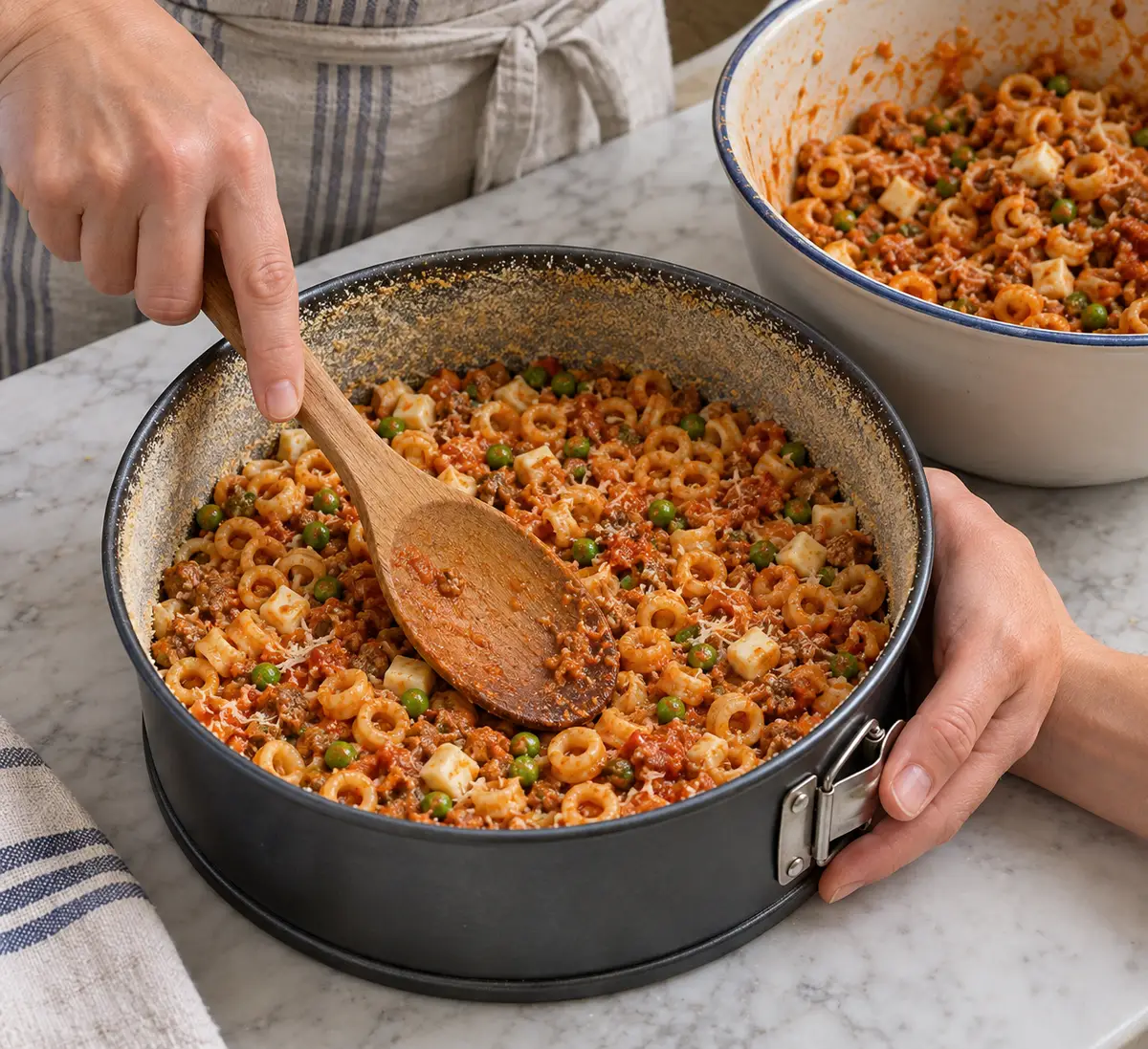
AI-generated Set the springform pan on a flat baking sheet and place on the middle rack of the preheated oven. Bake at 180°C for about 35–40 minutes, until the top is golden and crisp, the cheese has melted and the sauce starts bubbling gently at the edges. If the breadcrumbs brown too quickly, loosely cover the top with aluminum foil toward the end of baking. If the timbale needs more time, bake for a few more minutes, keeping an eye on the crust.
Remove the pan from the oven and set on a wire rack for about 20 minutes. This rest helps the bake firm up. Carefully loosen the edges from the sides with a thin knife and remove the ring; leave the hot springform base beneath the timbale. Cut into 6 servings, lift with a broad spatula and serve immediately while the center is still hot.
Estimated nutrition

Rate this recipe
0 ratings
Comments