
AI-generated
Zillertaler Krapfen – rye dumplings with potatoes and cheese
Log in or create a free account to save recipes.
Source: https://recipheon.com/en/recipes/main-dishes/zillertaler-krapfen-rye-dumplings-with-potatoes-and-cheese
About this recipe
Zillertaler Krapfen are fried Tyrolean dumplings with potatoes, curd cheese and distinctive Graukäse. Dough made with equal amounts of rye and wheat flour is easier to roll thin, and its edges turn delicately crisp when fried. The filling should be firm and well cooled so it does not leak during frying. Fold the dumplings into half-moons and seal them carefully, pressing the air out from inside. In this home version, fry them in sunflower oil and serve without an extra sauce, using all the potato and cheese filling. Allow about 2 hours 30 minutes for 6 servings, including boiling the potatoes, resting the dough, shaping and frying in batches.
Ingredients
Dough and shared reserve
250 g type 720 rye flour
250 g type 500 wheat flour for the dough
1 size M egg, about 50 g without the shell
300 ml lukewarm water set aside: 250 ml for the dough and up to 50 ml in one shared reserve for the dough, filling and moistening the edges
10 g salt set aside: 6 g for the dough and up to 4 g for seasoning the filling
Filling
500 g raw type C potatoes, weighed after peeling
250 g dry semi-fat Polish curd cheese (twaróg), with any whey drained off; weight after draining
150 g Tyrolean Graukäse, crumbly variety with a texture like Polish curd cheese (twaróg), edible weight
15 g fresh chives, cleaned
Boiling, dusting and frying
1.5 l water for boiling the potatoes, to be drained off
30 g type 500 wheat flour set aside for dusting; use only as much as needed
1 l sunflower oil for frying; oil left in the pan and fat drained onto paper towels are not part of the serving
Steps
Cut the peeled potatoes into similar pieces about 4 cm across. Put them in a pot, add the allocated 1.5 l water without salt and bring to a boil. Simmer, partially covered, for 20–25 minutes from that point, until tender. Drain off all the water and steam-dry the potatoes in the hot pot for about 5 minutes. Mash with a potato masher and leave to cool for 15–20 minutes, until no warmer than lukewarm. Prepare the dough while the potatoes cook.
Combine both measured flours for the dough with 6 g salt. Add the egg and the initial 250 ml lukewarm water. Knead for 8–10 minutes, until firm and smooth. If the dough is very dry and cracks, add a little water at a time from the one shared reserve of up to 50 ml; the same reserve is also for the filling and moistening the edges later. Do not add the entire reserve at once. Cover the dough and leave for 30 minutes at room temperature.
Finely chop the chives. Add all the curd cheese, crumbled Graukäse and all the chives to all the cooled potatoes. Mix thoroughly with a fork. The filling should be firm, spoonable and not runny. Only if it is too dry, add a small amount of water from what remains of the same reserve of up to 50 ml. Taste and, if needed, season with some of the 4 g salt allocated to the filling; Graukäse is already salty.
Divide all the rested dough into about 32 similar pieces, and divide the filling into the same number of portions. Keep the remaining dough under a cloth so it does not dry out. Roll each piece into a thin circle about 12 cm across and about 2 mm thick. Dust the work surface and rolling pin sparingly with flour from the measured 30 g reserve. Do not mix the dusting flour into the dough; use it only to prevent sticking.
Put a portion of filling on one half of each circle, leaving about 1 cm of clean edge. Do not overfill the dumplings. If the edge is dry, moisten it lightly with water from what remains of the same reserve of up to 50 ml. Fold in half, gently push the air out from the filling toward the edges, and seal firmly. You may press the edge with a fork. Use all the dough and all the filling; do not trim off and do not discard the sealed edges.
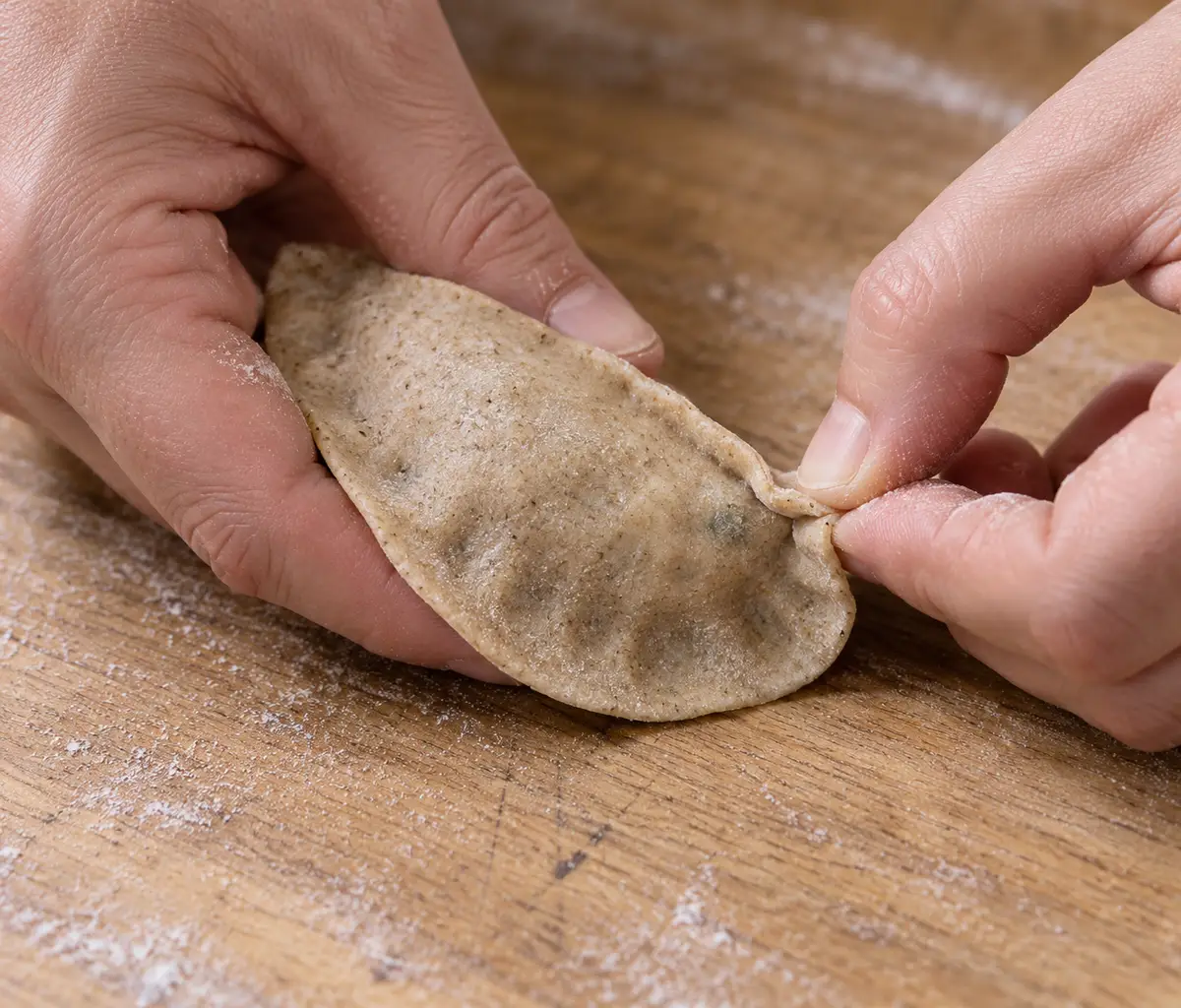
AI-generated Pour all the oil into a wide, high-sided frying pan about 26 cm across and heat to about 170–175°C. Fry a few dumplings at a time with space between them for 1–2 minutes on each side, until the dough is golden with small bubbles and crisp edges. Turn carefully with a spatula. If they brown too quickly, lower the heat; the dough needs time to cook and the filling to heat through. Let the oil return to temperature between batches.
Lift the fried dumplings out with a slotted spoon, drain briefly on paper towels, then transfer to a plate. Serve each batch as it is cooked, dividing the whole amount among 6 servings. Do not cover the hot dumplings, so steam does not soften the edges. The remaining oil, used paper towels and unused reserves of flour, salt and water are not served.
Estimated nutrition

Rate this recipe
0 ratings
Comments