
AI-generated
Beurre blanc — velvety butter sauce with shallot and white wine
Log in or create a free account to save recipes.
Source: https://recipheon.com/en/recipes/snacks/beurre-blanc-velvety-butter-sauce-with-shallot-and-white-wine
About this recipe
Beurre blanc is a French sauce in which cold butter forms a creamy emulsion with a small amount of acidic reduction. Dry white wine, wine vinegar and finely chopped shallot give it a bright, fresh flavor, while gradually added butter provides a delicate texture. This home version keeps all the soft shallot pieces in the sauce, so chop them very finely. First gently reduce the liquid, keeping the base moist, then take the saucepan off the heat and patiently whisk in cold butter cubes. Brief returns to the lowest heat help when the butter stops combining, but do not bring the finished emulsion to a boil. The sauce should be pale, glossy and smooth, with small soft pieces of shallot. Make six servings of sauce alone and serve immediately after combining the ingredients. Reducing wine does not mean all the alcohol has been removed; this version is not alcohol-free.
Ingredients
All the sauce for six servings
200 g very cold unsalted butter with 82% fat, divided into 40 g to start and 160 g to add afterward
30 g raw shallot, weighed after peeling
150 g dry white wine with about 12% alcohol, weighed in grams
25 g white wine vinegar with about 6% acidity, not sweet balsamic vinegar
1.5 g fine salt
0.2 g ground black pepper
Steps
Weigh 200 g cold butter and cut into cubes about 2 cm across. Separate 40 g from the remaining 160 g and refrigerate both portions while reducing the wine. Weigh 30 g peeled shallot and chop very finely into pieces about 1–2 mm. All the shallot will stay in the sauce, so do not leave large hard pieces.
Put all the shallot in a small heavy-bottomed saucepan about 14 cm across. Pour in the weighed 150 g dry white wine and 25 g wine vinegar. Do not fry the shallot in extra fat. Start heating over medium heat until the liquid comes to a gentle boil; have a whisk and a place ready to set the saucepan off the burner.
Simmer uncovered over medium-low heat for about 12–15 minutes, stirring occasionally. The shallot should soften and roughly 2 tablespoons of liquid remain, visible beside the pieces when tilting the saucepan. Stop according to this appearance, not the clock alone. Do not boil the pan dry and do not brown the shallot. Do not strain anything and do not press through a sieve.
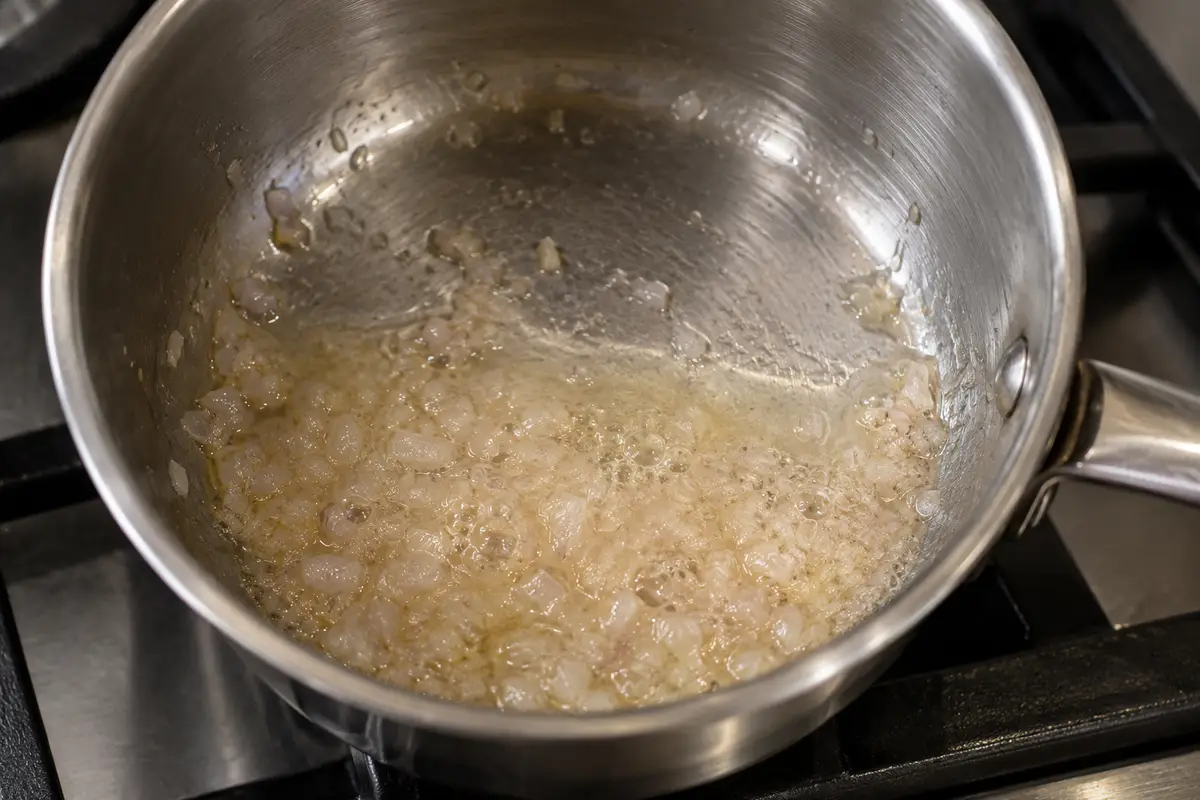
AI-generated Remove the saucepan from the heat for about 30–60 seconds until boiling stops. Take the initial 40 g butter out of the refrigerator, keeping the larger portion cold. The base should be hot but not bubbling vigorously when you start emulsifying. Do not add water or wine and do not add cream; the retained liquid and the water in butter form the emulsion base.
Add the first 40 g butter, 1–2 cubes at a time, whisking vigorously throughout. Add more pieces when the previous ones have almost combined with the liquid. Build a pale creamy base over about 2–3 minutes rather than melting the entire portion at once. If the cubes stop softening, briefly place the saucepan over the lowest heat, still whisking, then take it off again.
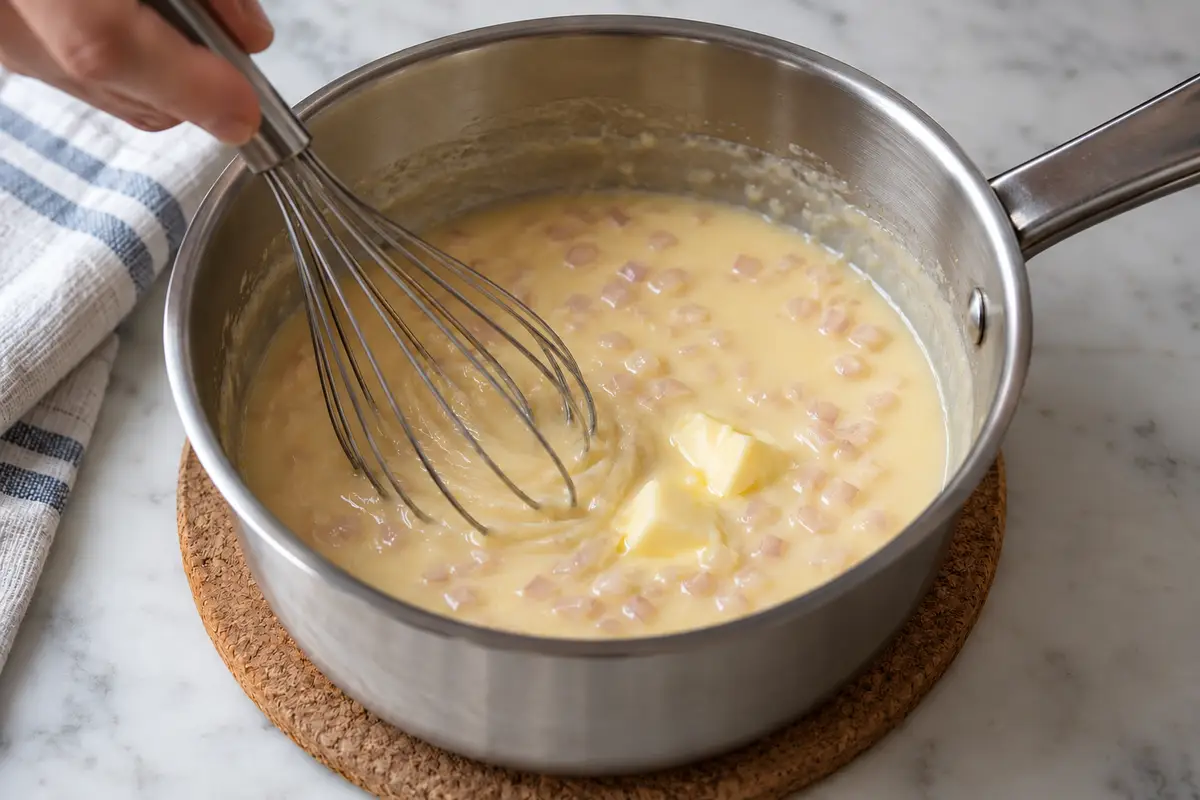
AI-generated Add all the remaining 160 g cold butter the same way, 1–2 cubes at a time over about 5–7 minutes. Work mainly off the burner; when needed, warm the saucepan for a few seconds over the lowest heat. The sauce must not boil. If a greasy rim appears, stop adding butter, take the saucepan off briefly and whisk vigorously before adding another cold cube from the weighed supply.
Once all 200 g butter has been used, stir in all the weighed salt and pepper. The sauce should be glossy and creamy, flowing from a spoon in a wide ribbon without a separate pool of fat. Small soft shallot pieces are part of this version. Do not strain the sauce and do not add a final unmeasured portion of butter, cream or liquid. Stop heating.
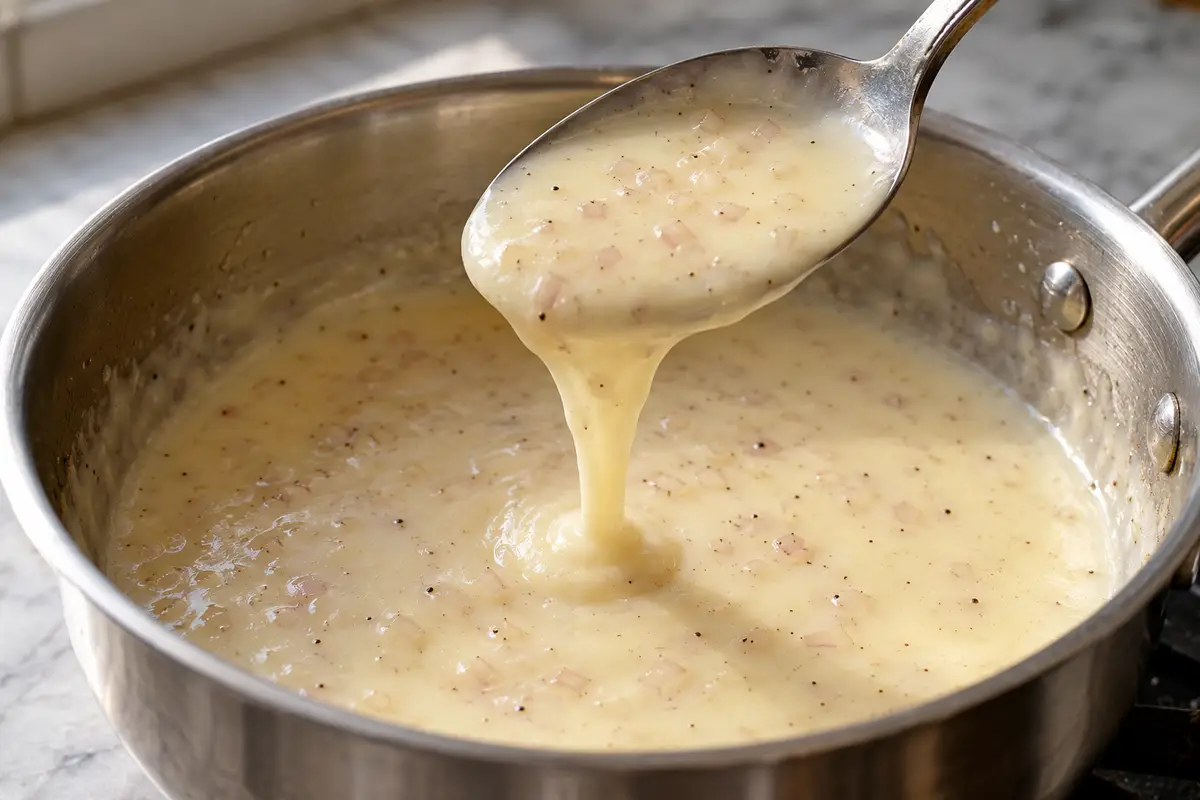
AI-generated Scrape all the sauce from the saucepan into a sauce boat and divide into 6 servings to accompany a dish. Serve immediately after making; do not leave on a hot burner and do not try to keep it boiling for a long time. This recipe covers the sauce alone; choose other meal components separately. The wine was reduced, but the amount of alcohol remaining is unknown: this sauce is not an alcohol-free version.
The finished emulsion is best served immediately. If any remains, transfer to a small shallow container and refrigerate within 2 hours; use the next day. The butter will set after chilling. Reheat very gently, stirring and taking the vessel off the heat before boiling starts. The sauce may not regain its original texture. Do not add new unmeasured butter or cream to leftovers.
Estimated nutrition

Rate this recipe
0 ratings
Comments