
AI-generated
Borlenghi — thin crisp pancakes with garlic, rosemary and lardo
Log in or create a free account to save recipes.
Source: https://recipheon.com/en/recipes/snacks/borlenghi-thin-crisp-pancakes-with-garlic-rosemary-and-lardo
About this recipe
Borlenghi are very thin, crisp pancakes from around Modena, spread with lardo, garlic and rosemary. A runny flour-and-water batter is spread over the whole skillet base, then cooked until light and brittle. The hot pancakes get a thin layer of aromatic spread and finely grated Parmigiano Reggiano before being folded into quarters. This home version uses a large nonstick skillet and cured lardo that is ready to eat. These quantities make about twelve pancakes, or four snack servings. Cooking them one at a time takes patience: allow about 2 hours and 30 minutes, including a one-hour batter rest. Borlenghi are best served straight from the skillet while their edges stay crisp.
Ingredients
Very runny batter
200 g Italian 00 wheat flour
800 ml cold water
4 g fine salt
Spread and finish
80 g cured salted pork fatback (lardo), ready to eat, weighed after removing the skin and excess surface salt
6 g raw garlic, weighed after peeling
1 g fresh rosemary leaves, without woody stems
60 g Parmigiano Reggiano, finely grated
For the skillet
10 g plain rendered pork lard, without cracklings, for lightly greasing the skillet
Steps
Put the flour and salt in a large bowl. Gradually pour in all 800 ml of cold water, whisking vigorously until the lumps disappear. The batter should be very liquid, much thinner than regular crepe batter. Cover the bowl and let it rest for 60 minutes at room temperature. Stir again before every pancake because the flour settles at the bottom.
While the batter rests, chop the lardo, garlic and rosemary leaves very finely, then mash together into a smooth spreadable paste. The rosemary should be finely cut and the lardo free of larger lumps. Warm the paste briefly in a small saucepan over the lowest heat for about 1–2 minutes, just until softened and slightly loosened. Do not brown the garlic. Set beside the skillet; all the paste will be spread on the cooked pancakes.
Use a nonstick skillet about 30 cm in diameter with a flat cooking base about 26–28 cm across. Heat it for 3–4 minutes over medium heat. Brush a little of the measured lard over the base to form a very thin film. Keep the remaining lard for the next pancakes; it is for greasing, not frying in a layer of fat.
Stir the batter and pour about 75–80 ml into the center. Immediately lift the skillet and tilt quickly from side to side so the liquid covers the whole flat base in a thin even layer. Return to the burner and set medium or slightly lower heat. If the batter sets before you can spread it, lower the heat before the next pancake; the finished pancake should be much thinner than a regular crepe.
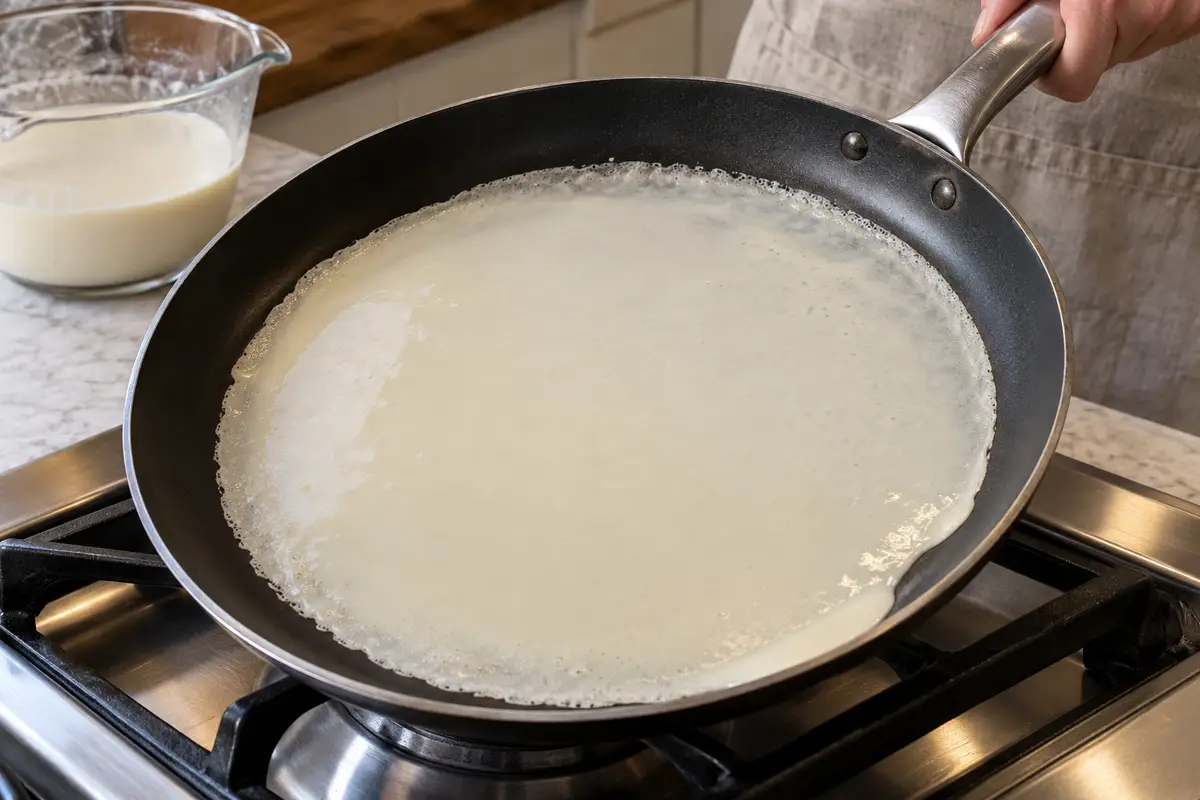
AI-generated Cook the first side for about 3–4 minutes, until the surface dries, tiny golden spots appear and the edges become brittle and start lifting from the skillet. Carefully lift with a wide spatula, turn and dry the second side for 30–60 seconds. The pancake should be very thin, with crisp edges and slight blistering. Lower the heat if it darkens too quickly so it has time to dry.
Transfer the hot pancake to a plate. Thinly spread about one twelfth of the paste over it and sprinkle with about 5 g of Parmigiano Reggiano. Only now fold in half and in half again to make four thin layers. Serve immediately.
Repeat the cooking, lightly greasing the skillet with further portions of lard, until all the batter, paste and cheese are used. You will get about 12 pancakes; the last may vary in size. Allow about three pancakes for each of four servings. Do not cover the cooked pancakes and do not pile them in a tall stack, as steam will soften them. Leave the small amount of fat remaining in the skillet after cooking; do not pour it over the serving. Allow about 70 minutes to heat the skillet, cook and finish the entire batch.
Estimated nutrition

Rate this recipe
0 ratings
Comments