
AI-generated
Scotch Eggs with Crisp Breadcrumbs and Soft Yolks
Log in or create a free account to save recipes.
Source: https://recipheon.com/en/recipes/snacks/scotch-eggs-with-crisp-breadcrumbs-and-soft-yolks
About this recipe
Scotch eggs have a golden, crisp coating, a thin layer of seasoned pork and a soft yolk at the center. The meat mixture is made from ground pork, mustard, sage and a little nutmeg, so the flavor does not depend on premade sausage. Briefly boiling the eggs and cooling them quickly in ice water helps keep the center tender while the white is set. The key is an even layer of meat, without a thick ridge at the seam: it needs to cook through before the coating gets too dark. After chilling, the shaped eggs are fried in small batches, then cut open before serving to check the inside, including the meat right next to the white. Serve this British snack warm, while the coating is still crisp and the yolk creamy and soft.
Ingredients
Eggs and chilling
6 size L eggs, 63–73 g each in the shell and approximately 60 g without the shell: 4 straight from the refrigerator for boiling, 2 for breading; any beaten egg left after breading will be discarded
3 l water: 2 l for boiling the eggs and 1 l cold water for chilling; all the water will be discarded
500 g ice cubes for chilling the eggs, to be discarded with the water
Pork layer
300 g raw, finely ground pork with 15–20% fat
15 g smooth Dijon mustard
3 g fresh sage leaves, without stems
4 g fine salt
1 g ground black pepper
0.5 g ground nutmeg
Breading and frying
50 g all-purpose flour: 10 g for coating the boiled eggs and 40 g for breading; any loose excess will be discarded
100 g fine dry breadcrumbs for breading; any unused crumbs that have been in contact with raw meat and egg will be discarded
1.5 l refined sunflower oil for deep-frying, which is not served with the dish
Steps
Bring 2 l water to a boil in a pot approximately 18–20 cm in diameter with a capacity of at least 3 l. Set a large bowl alongside it with 1 l cold water and all 500 g ice. Take 4 size L eggs from the refrigerator and carefully lower them into the boiling water with a spoon, without bringing them to room temperature first. Time 6 minutes from when the last egg is submerged, maintaining a gentle, steady boil; do not wait for the water to return to a boil before starting the timer. Immediately transfer the eggs to the prepared ice bath when the time is up, and discard the cooking water.
Leave the eggs in the ice water for approximately 10 minutes, until cold; meanwhile, prepare the meat mixture as described in the next step. Gently crack the shells and peel the eggs in the same cold water, starting at the wider end so you do not damage the tender white. Pat dry with paper towels. Discard the chilling water, any remaining ice and the shells.
Finely chop the sage leaves. Combine all the pork with the mustard, sage, salt, pepper and nutmeg, then knead for approximately 1–2 minutes, until uniform and slightly sticky. Divide into 4 equal portions, approximately 81 g each, and keep in the refrigerator until you are ready to wrap the eggs. Prepare 2 sheets of plastic wrap for flattening the meat so you do not need to add grease to your hands or dust the counter with flour.
Put 10 g flour on a small plate and lightly coat the dried eggs, shaking off any loose excess. Flatten each portion of meat between the sheets of plastic wrap into a disk approximately 12 cm in diameter. Remove the top sheet, place an egg in the center and use the bottom sheet to help wrap the meat around it; remove the plastic wrap and gently seal all the joins. Spread the mixture evenly to a thickness of approximately 7–8 mm, without exposed egg white, gaps or a thick ridge along the seam. Shape all 4 eggs this way, without squeezing them firmly; discard the unused flour from the plate.
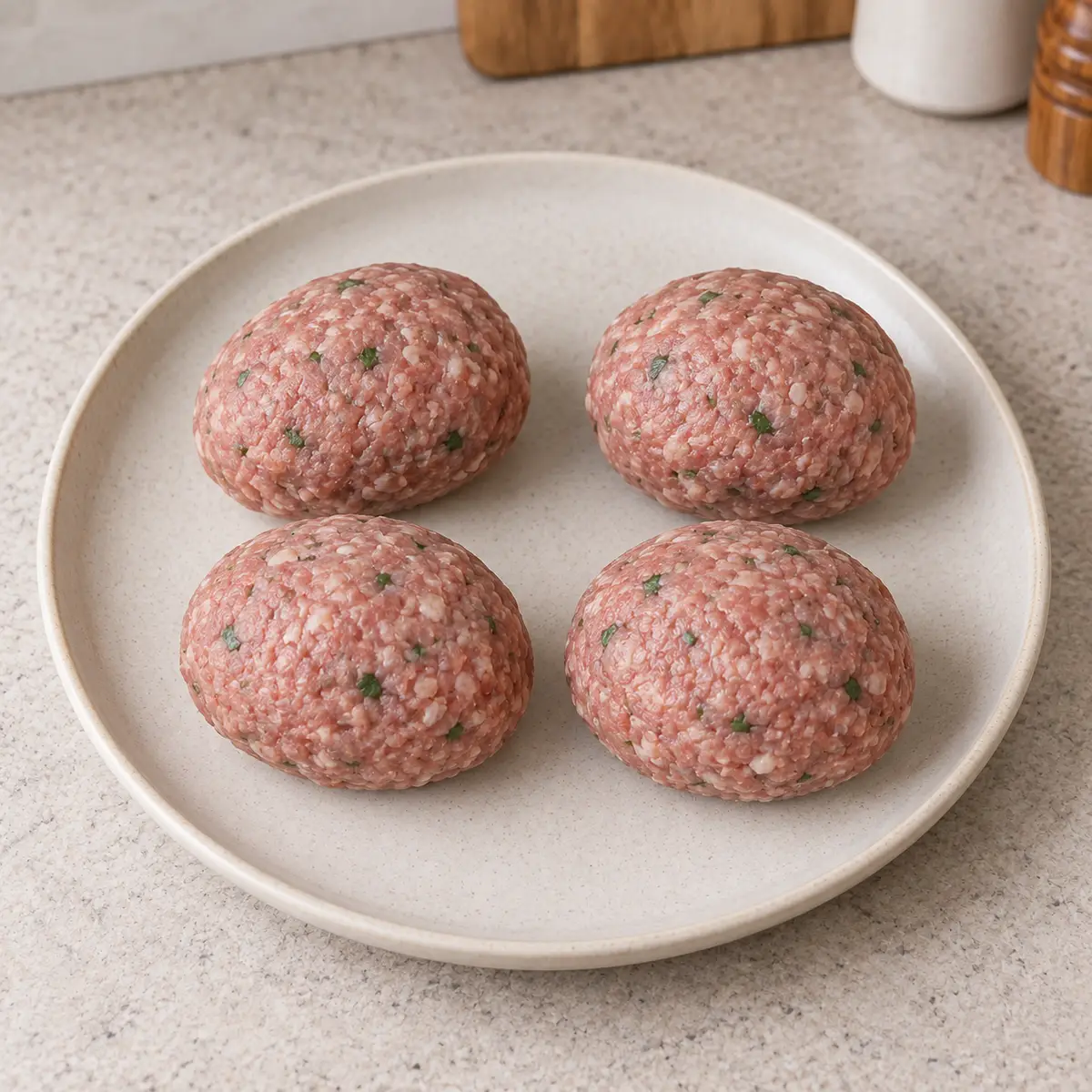
AI-generated Prepare 3 shallow dishes: one with the remaining 40 g flour, one with 2 beaten eggs and one with all the breadcrumbs. Roll each meat-wrapped egg in flour, shake off the excess, dip in the beaten egg and let any excess drip off. Then coat thoroughly in breadcrumbs, pressing them on gently to make a continuous, even coating; do not dip again. Set on a plate and discard the flour, egg and breadcrumbs left after contact with the raw meat.
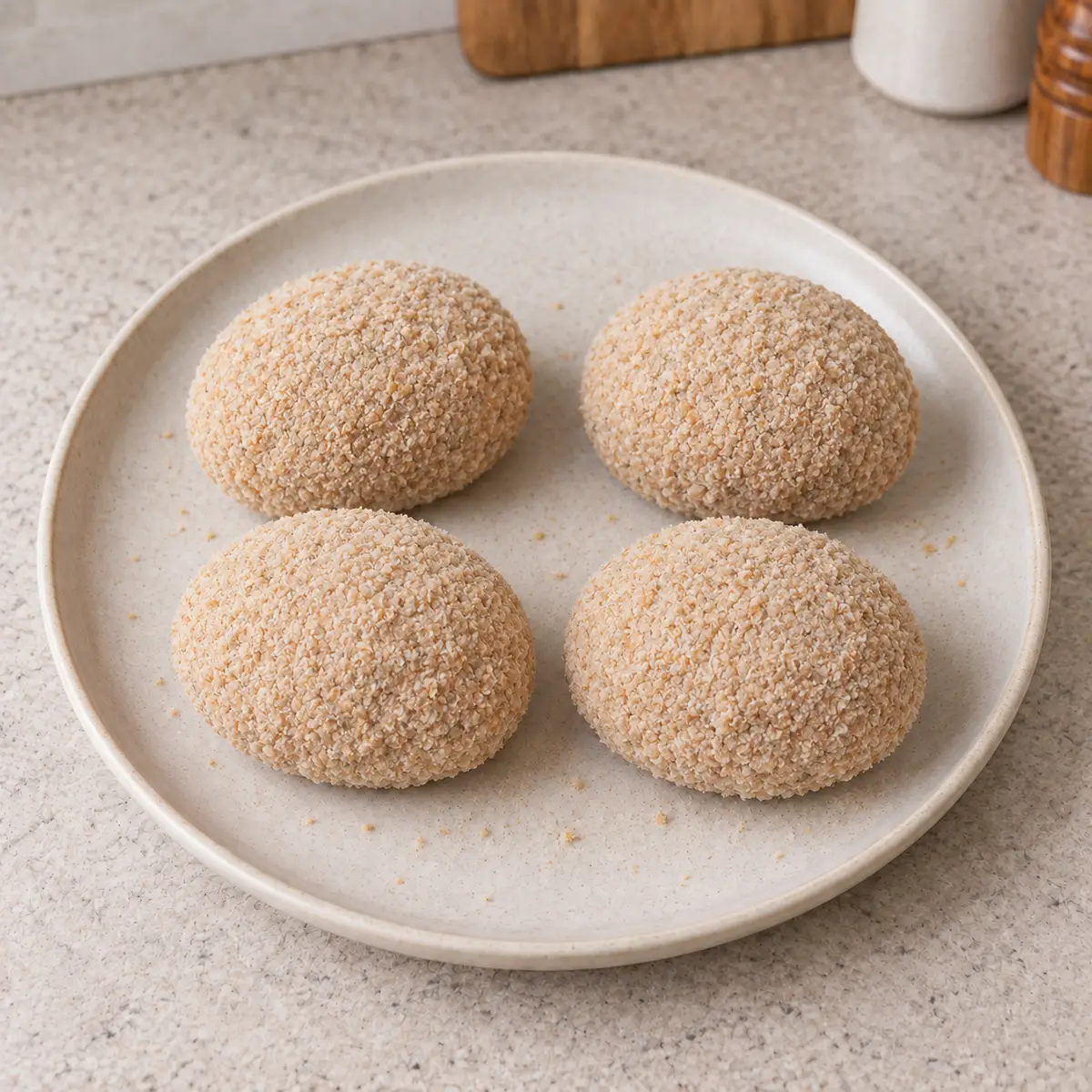
AI-generated Loosely cover the breaded eggs and refrigerate for approximately 30 minutes to help the meat layer hold its shape. Prepare a dry, heavy-bottomed pot approximately 18 cm in diameter with a capacity of at least 4 l, a slotted spoon and a wire rack over a baking sheet. During approximately the last 10 minutes of chilling, pour all the oil into the pot; it will be approximately 6 cm deep. Heat over medium heat to approximately 160°C, without letting it smoke.
Carefully lower 2 chilled eggs into the oil, leaving the others in the refrigerator. The coating should immediately begin to sizzle evenly, without darkening rapidly. Fry for approximately 8–10 minutes at approximately 160°C, turning gently every 1–2 minutes, until the entire surface is golden brown and crisp. If the coating darkens too quickly, reduce the heat instead of shortening the cooking time. Lift out with a slotted spoon, briefly drain over the pot and transfer to the wire rack over the baking sheet, without covering.
Let the oil return to approximately 160°C, then fry the remaining 2 eggs for approximately 8–10 minutes, turning them regularly in the same way. Lift out and drain on the rack. Allow approximately 20–25 minutes to fry both batches, including bringing the oil back to temperature; do not add all the eggs at once. Let the frying oil cool afterward and do not add it to the finished dish.
Wait approximately 3 minutes after the last batch, then cut the eggs open with a sharp knife. The pork layer must be hot, firm and cooked through across its full thickness, including right next to the white, without any raw, sticky or translucent layer; do not judge the meat by the color of the coating alone. The white should be fully set and the yolk soft and creamy. If the meat needs further cooking, place the undercooked halves cut side up on the wire rack over the baking sheet and finish cooking in an oven preheated to 180°C on the conventional (no-fan) setting for approximately 5–10 minutes, until the entire meat layer is cooked through. This extra cooking may set the yolk more firmly.
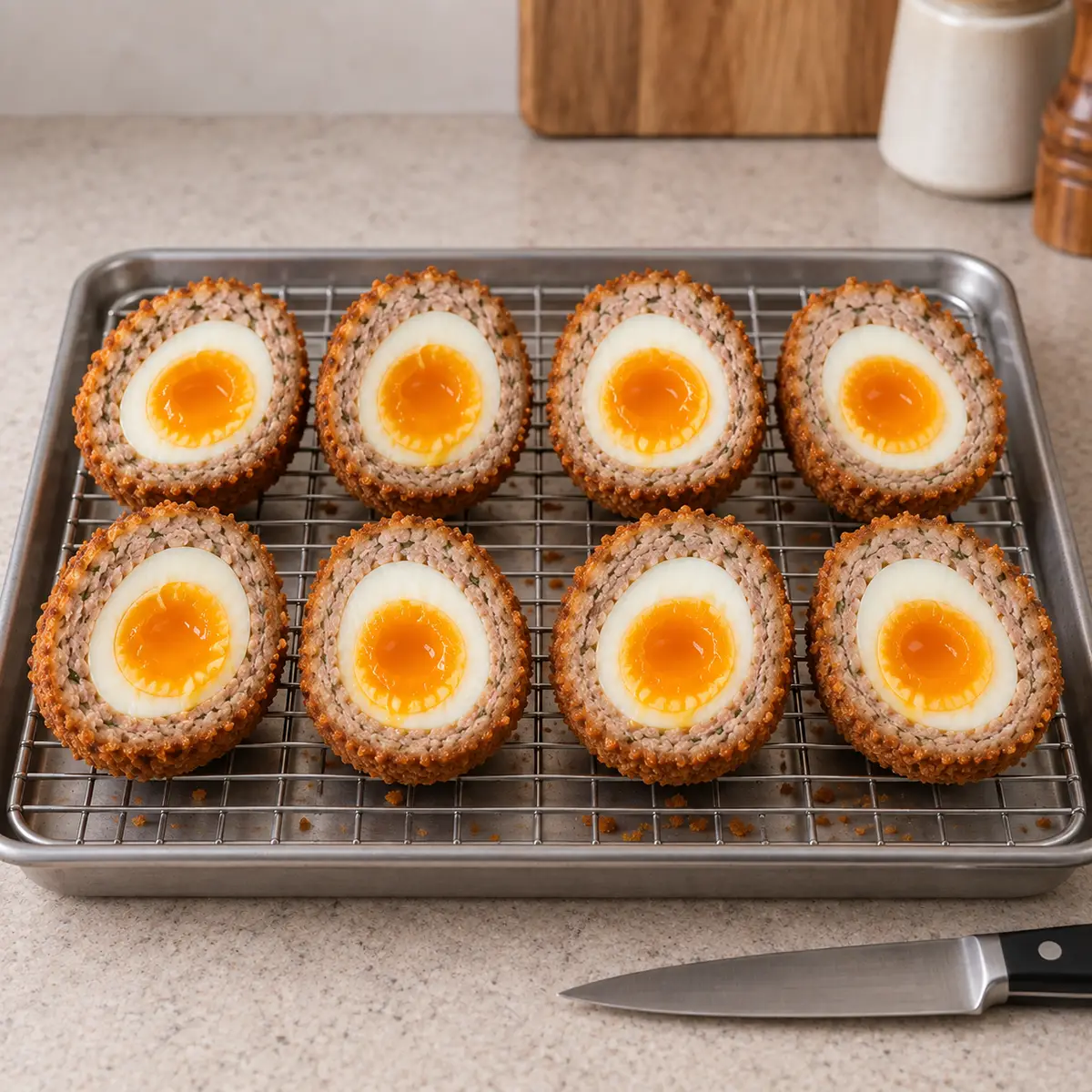
AI-generated Serve 4 portions, each with 1 egg cut into 2 halves. Serve immediately after checking that the meat is cooked through, while the coating is still crisp and the inside warm.
Estimated nutrition

Rate this recipe
0 ratings
Comments