
AI-generated
Farinata — Italian Baked Flatbread with Chickpea Flour
Log in or create a free account to save recipes.
Source: https://recipheon.com/en/recipes/snacks/farinata-italian-baked-flatbread-with-chickpea-flour
About this recipe
Farinata is a thin Italian flatbread made with chickpea flour, with golden edges and a delicate, soft center. It starts with a fluid batter of flour, water, olive oil and salt, without yeast or eggs. Resting for several hours allows the flour to hydrate thoroughly; before baking, skim off the foam and stir the sediment back into the liquid. For this version, use a metal pan with a flat base 30 cm in diameter so the batter spreads into a thin layer. A well-preheated oven and olive oil on the bottom help create a golden surface while keeping the center soft. Farinata tastes best served warm, cut into small pieces and seasoned with black pepper. One flatbread makes four snack portions.
Ingredients
Batter and pan
120 g dry chickpea flour, not blended with other flours
360 ml room-temperature water for the batter
45 ml extra virgin olive oil, 20 ml for the batter and 25 ml for the pan
4 g fine salt
0.5 g ground black pepper for serving
Steps
Put the chickpea flour in a bowl. Gradually pour in the water while whisking: first whisk the thicker batter until no lumps remain, then thin it with the remaining water. The finished batter should be uniform and very fluid, noticeably thinner than regular crepe batter.
Cover the bowl and refrigerate for about 4 hours. The flour will hydrate during this time and may settle on the bottom; do not pour off any water that separates. During the last approximately 30 minutes of resting, preheat a conventional oven (no fan) to 250°C so it has time to heat thoroughly. Have ready a shallow, rigid metal pan with a flat base measuring 30 cm across on the inside, suitable for this temperature.
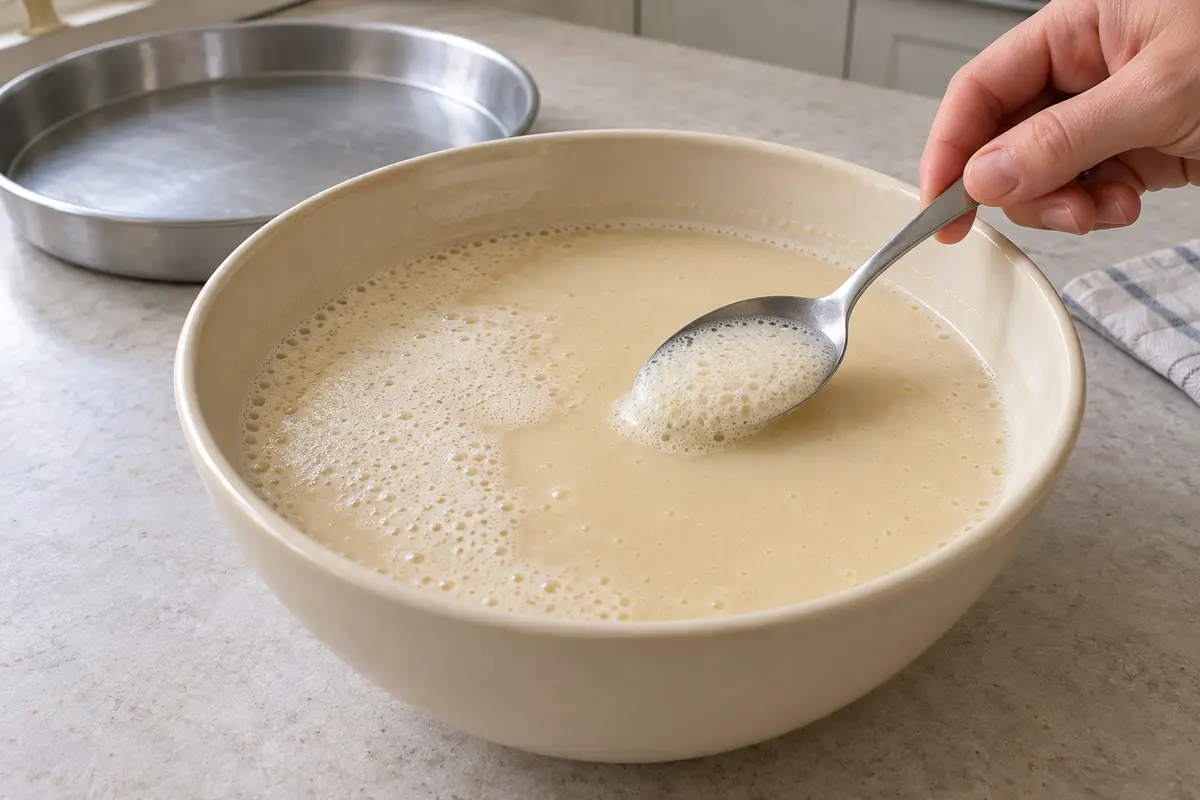
Take the batter out of the refrigerator. If foam has formed on the surface, skim off only the foam with a spoon, without pouring off the liquid. Thoroughly stir in the sediment from the bottom, add all the salt and 20 ml olive oil, then whisk again to combine. The batter should remain fluid, without lumps or a compact layer of flour on the bottom.
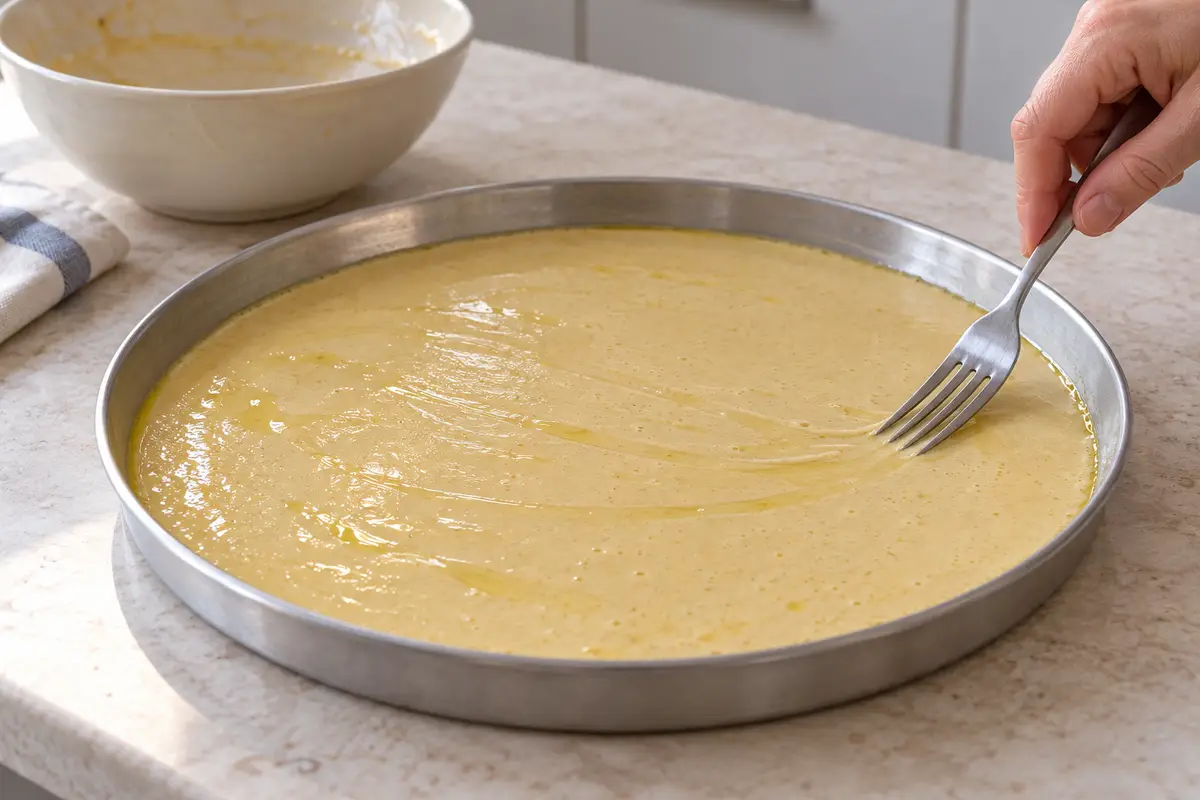
AI-generated Spread the remaining 25 ml olive oil over the entire base and around the lower edges of the pan, using a brush or tilting the pan. Pour in the batter from a low height and gently combine the oil with the batter using a few strokes of a fork, so no large oily patches remain. A base 30 cm in diameter should give an even layer about 6–8 mm thick. Move the pan carefully and keep it level so the batter does not collect on one side.
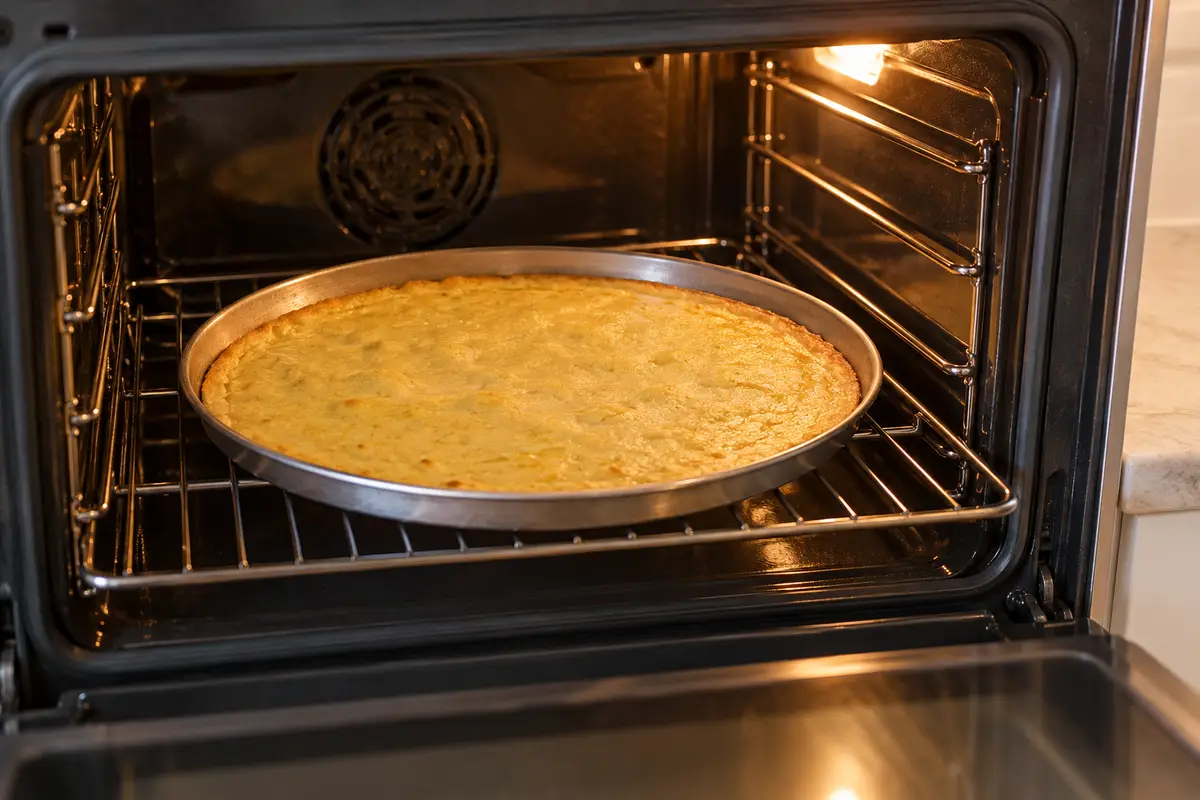
AI-generated Place the pan on the lowest rack of the well-preheated oven and bake for about 10 minutes at 250°C, without the fan. Once the batter begins to set, move the pan to a rack above the middle and bake for another approximately 10–15 minutes. The surface should be golden, more deeply browned in places, with thin, lightly crisp edges and a set but tender center. If you can still see liquid batter in the center, bake for a few more minutes; a golden rim alone does not mean the whole flatbread is ready.
AI-generated Take the pan out of the oven and wait about 2 minutes so the flatbread releases more easily from the base. Sprinkle with all the pepper, cut into eight pieces and lift them with a thin spatula. Serve immediately, with two pieces per snack portion, while the edges are still lightly crisp and the center is soft.
Estimated nutrition

Rate this recipe
0 ratings
Comments