
AI-generated
Lepinja — Soft Bosnian Flatbreads for Ćevapi
Log in or create a free account to save recipes.
Source: https://recipheon.com/en/recipes/snacks/lepinja-soft-bosnian-flatbreads-for-cevapi
About this recipe
Lepinja is soft, fluffy Bosnian bread with a thin crust and a characteristic crosshatch on top. The moist yeast dough is gently flattened with fingertips to preserve its air bubbles. A short bake in a thoroughly preheated home oven produces light breads that are easy to slice for filling after resting under a kitchen towel. The dough stays sticky; too much flour for dusting would make the bread dense. This recipe makes 6 breads in two batches of 3, without rolling them out and without a special baking stone. Serve them with ćevapi or use them for homemade sandwiches. Allow about 2 hours 45 minutes, including rising and a short rest after baking; rising will take longer in a cool kitchen.
Ingredients
Dough and shaping
500 g type 550 wheat flour for the dough
25 g type 550 wheat flour for dusting; use only as much as needed and discard any unused flour
375 ml water, lukewarm and pleasant to the touch, not hot
7 g instant dry yeast
5 g granulated white sugar
10 g salt
15 g refined sunflower oil: 5 g for the bowl and your hands, and 10 g for greasing two baking sheets
Steps
In a large bowl, mix 500 g flour with the yeast, sugar and salt. Pour in all 375 ml lukewarm water. Stir with a sturdy spoon until no dry flour remains, then knead in the bowl for about 8–10 minutes, stretching the dough up from the edge and folding it into the center. Use some of the measured 5 g oil to grease your hand so the dough releases more easily. It should be very soft, sticky and increasingly elastic; do not add the flour reserved for dusting to the dough.
Gather the dough in the center and grease the exposed sides of the bowl with the remaining oil from the 5 g portion. Cover the bowl and leave at room temperature for about 60–90 minutes, until the dough has roughly doubled in volume and is visibly airy. Allow longer in a cool kitchen. Toward the end of the rise, start preheating a conventional oven (no fan) to 250°C; give it about 25–30 minutes to heat thoroughly.
Lightly grease two metal baking sheets measuring about 42 × 32 cm with the remaining 10 g oil, using 5 g for each. Dust the work surface and your hands with a little of the measured flour for dusting. Gently turn out the dough, divide it into 6 similar pieces and tuck the edges of each underneath to form a loose ball. Do not knead all the dough again and do not forcefully press the air out of it. Arrange 3 balls on each sheet, well spaced, and cover with kitchen towels for about 10 minutes. Use the flour sparingly, only to prevent sticking; discard any remaining flour.
On the first sheet, gently flatten each ball with your fingertips to about 15–16 cm across and about 1–1.5 cm thick. Press from the center toward the edges, preserving the bubbles. Then use the sides of your fingers to press shallow parallel grooves in two directions to make a crosshatch; do not press through the dough to the sheet. Do not use a rolling pin. Cover loosely and leave for about 15–20 minutes, until the rounds are slightly puffy and soft to the touch. Meanwhile, keep the other three covered as balls on the second sheet.
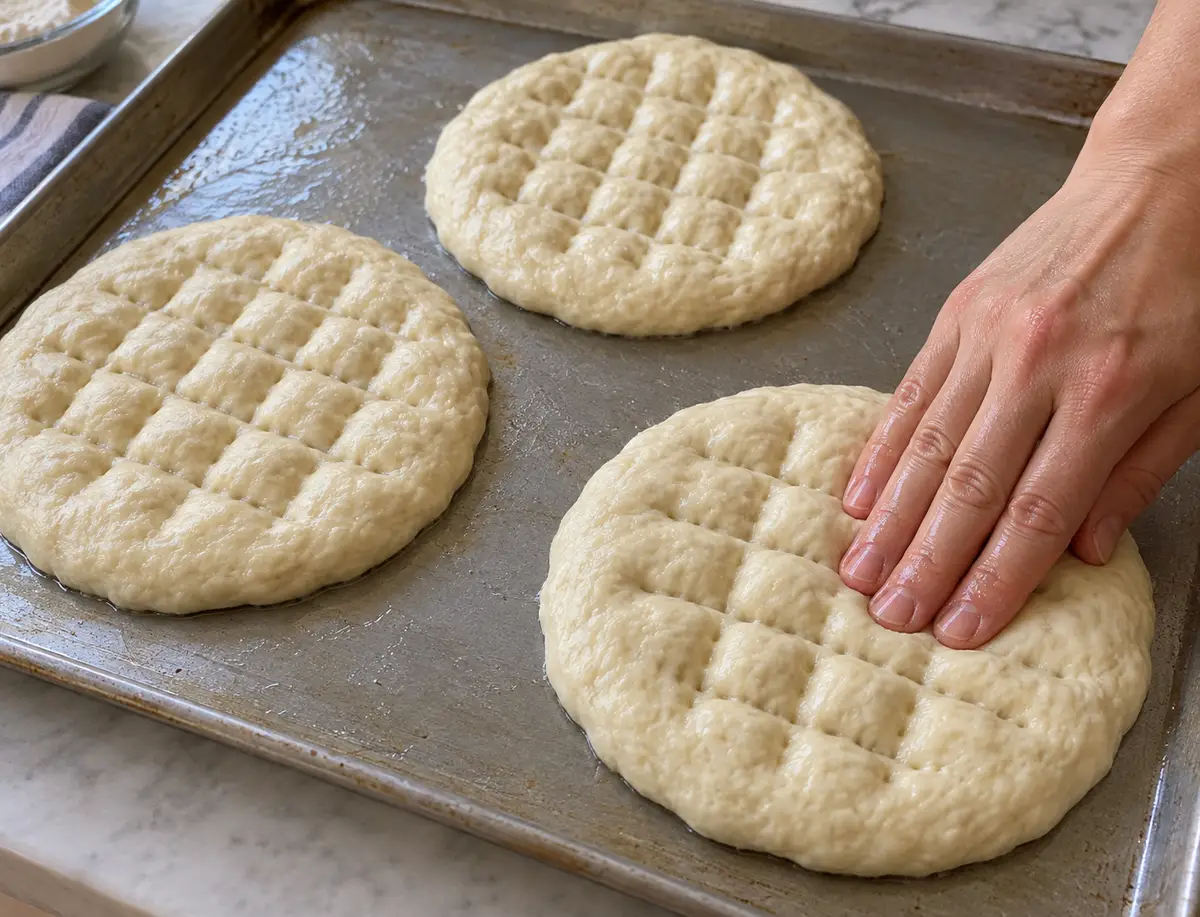
AI-generated Place the first sheet on a rack just below the center of the thoroughly preheated oven. Bake at 250°C for about 12–15 minutes, until the breads rise well and their tops and bottoms are lightly browned. Once the first batch starts baking, shape the other three in the same way, including the crosshatch, and leave loosely covered for about 15–20 minutes, until slightly puffy. After removing the first batch, give the oven about 3–5 minutes to heat back up, then bake the second on the same rack. Put it in only once the dough is slightly puffy as described; wait longer if needed. Bake only one sheet at a time; the other stays outside the oven.
Transfer each baked batch to a wire rack and cover with a dry kitchen towel for about 10 minutes to soften the thin crust. The first batch rests while the second bakes. The breads should have a soft, springy crumb with irregular air pockets. Serve slightly warm; slice horizontally only after this short rest so you do not squash the hot crumb. This recipe makes 6 breads, 1 per serving.
Estimated nutrition

Rate this recipe
0 ratings
Comments