
AI-generated
Homemade coppia ferrarese — bread with four horns
Log in or create a free account to save recipes.
Source: https://recipheon.com/en/recipes/snacks/homemade-coppia-ferrarese-bread-with-four-horns
About this recipe
Coppia ferrarese is a distinctive bread from Ferrara: two rolled strips of dough join in the middle to form four slender horns. Their golden crust is crisp, while the central join holds a little compact, soft crumb. This home version uses fresh yeast, lard and olive oil, which give it a delicate crispness. The recipe makes four loaves, or eight half-loaf servings; unhurried rolling and firmly sealing the center help them keep their shape.
Ingredients
For four loaves and eight servings
500 g type 550 plain wheat flour
230 g lukewarm water
30 g pure pork lard, softened
20 g extra-virgin olive oil
10 g fresh baker's yeast
10 g salt
Steps
Measure all the ingredients. Pour all the lukewarm water into a large bowl and stir in the crumbled fresh yeast until dispersed. Add all the flour, mix and start bringing the ingredients together by hand. The dough will be noticeably stiffer than dough for soft bread rolls.
Add the salt, softened lard and all the measured olive oil. Knead by hand on a clean work surface for about 10–15 minutes, until the dough is even, smooth and springy. Press with the heel of your hand, fold and turn the dough. Do not dust with flour and do not add water; work the fat thoroughly into the dough.
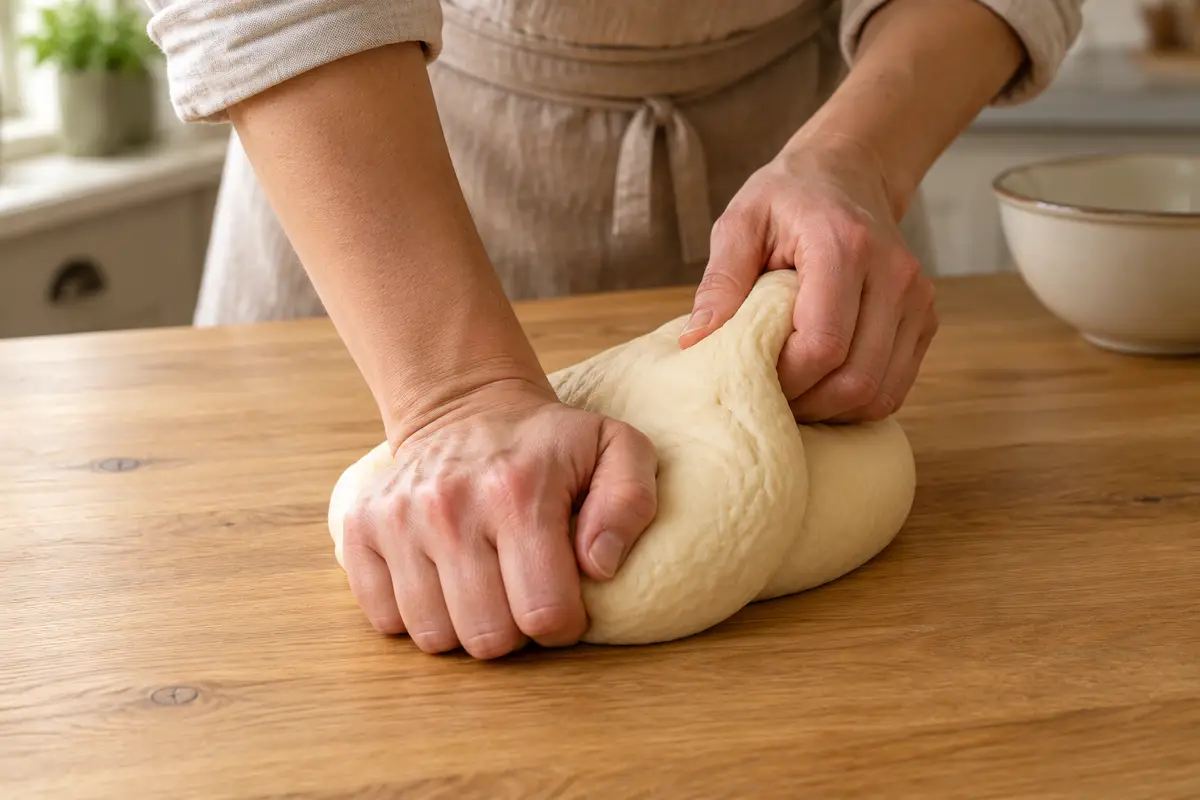
AI-generated Shape into a ball, put it in the bowl and cover tightly. Leave at room temperature for about 30 minutes so the dough can rest and become easier to roll out. It does not need to double in volume at this stage. Do not grease the bowl with extra fat.
Divide the dough into eight similar pieces, about 100 g each. Roll out each piece several times, fold in half and turn to make the surface smooth. Then roll into a long, narrow strip about 35–40 cm long, 8 cm wide and 3 mm thick. Work without dusting with flour and keep the remaining pieces covered. If the dough springs back strongly, let it rest for a few minutes.
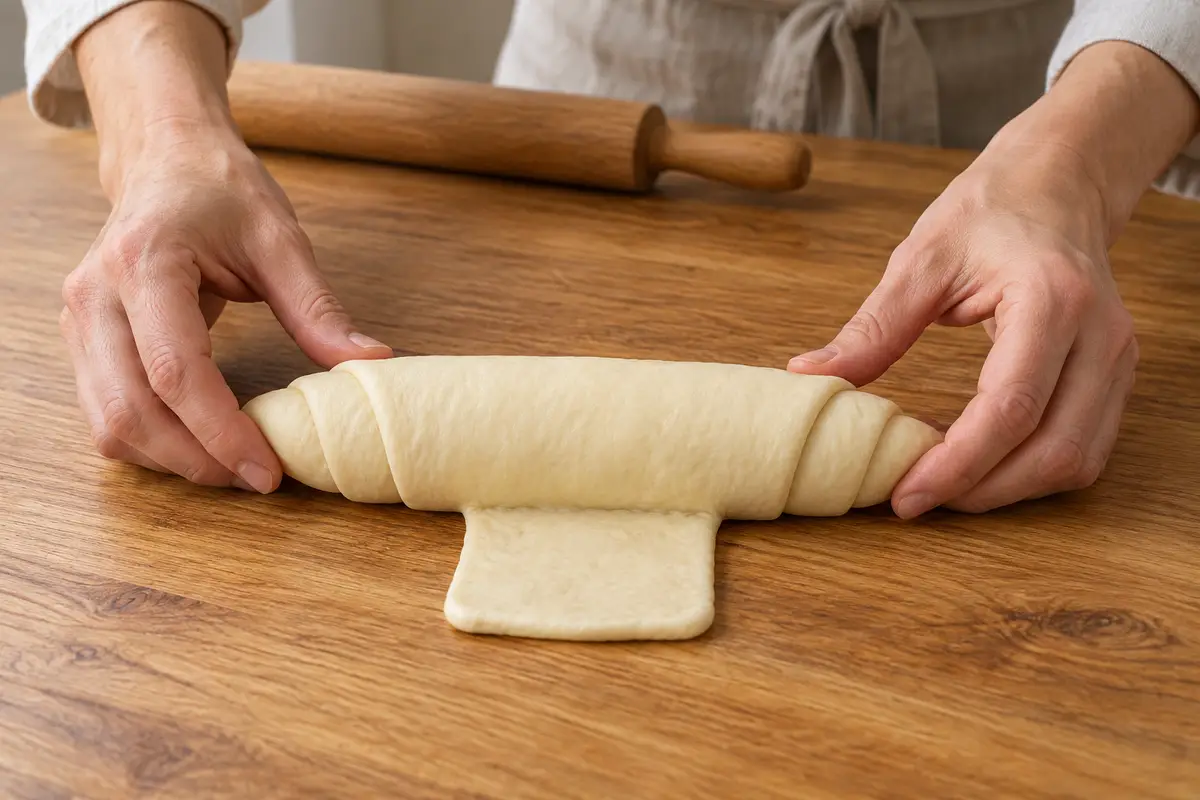
Start rolling a strip from one short end, pressing each turn with your fingers. As you roll, gently move your hands sideways, lengthening the log and tapering its ends. Stop when the last approximately 3 cm of the strip remain flat, like a tab beside the middle of the log. You will have one rolled log about 18–20 cm long, with two tapered ends and a flat tab. Prepare all eight pieces in the same way.
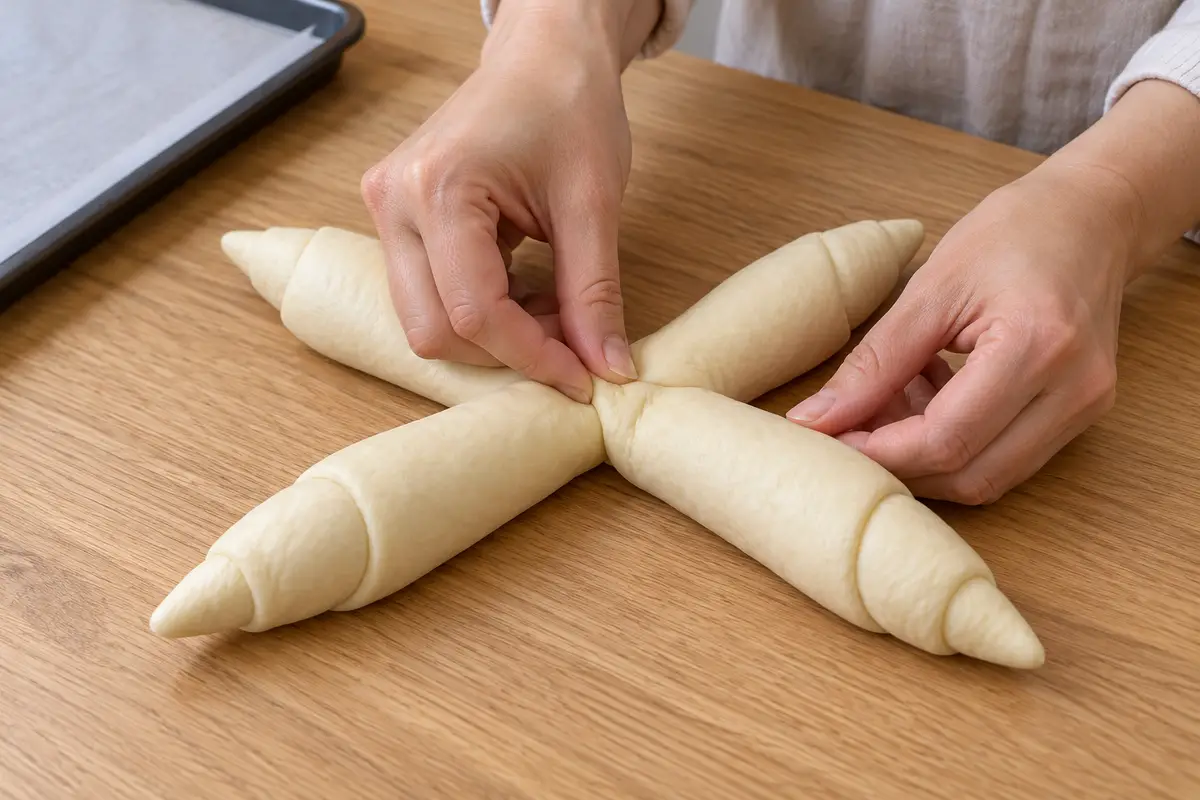
AI-generated Place two logs side by side with the flat tabs facing the center. Overlap the tabs and firmly pinch them together. Gently angle the logs apart so the four tapered ends fan outward like the arms of an X. Join all eight logs into four loaves this way. Transfer two to each of two parchment-lined baking sheets, leaving space between them.
AI-generated Cover the baking sheets with clean kitchen towels and leave for about 60–90 minutes, until the loaves are noticeably puffy. They will keep a firm shape and do not need to double in volume. Toward the end of the rise, preheat the oven to 200°C, using conventional top and bottom heat. Keep the second sheet covered in a cooler place away from the warm oven while the first batch bakes.
Bake the sheets one after the other on the middle rack of the oven, each for about 20–25 minutes. The slender arms should be golden and dry on the surface, with the bases lightly browned. If the bread is still too pale and soft, bake for a few more minutes, watching the thin tips. If they darken too quickly, cover them loosely with foil.
Transfer the loaves to a wire rack and leave to cool for about 30 minutes. Divide each loaf through its central join into two servings with two horns each. They are best eaten fresh, when the ends are crisp and the center slightly soft. Keep any completely cooled leftovers in a paper bag and eat them the next day.
Estimated nutrition

Rate this recipe
0 ratings
Comments