
AI-generated
Pissaladière with Onions, Anchovies and Olives
Log in or create a free account to save recipes.
Source: https://recipheon.com/en/recipes/snacks/pissaladiere-with-onions-anchovies-and-olives
About this recipe
Pissaladière is a yeast-raised flatbread topped with soft onions, anchovies, and black olives. Bread flour gives the base a springy texture: it stays soft beneath the topping and browns around the edges. The onions are the key: slow cooking mellows their sharpness, but you need to cook off any pooled liquid and cool them to lukewarm before adding them. Their sweetness balances the salty fish and olives. One large baking sheet yields eight rectangular portions to serve warm.
Ingredients
Dough and topping
350 g white bread flour, approximately 12–13% protein
210 ml lukewarm water for the dough
5 g instant dry yeast
80 ml extra virgin olive oil, divided between the dough, bowl, onions, and baking sheet
8 g fine salt, divided between the dough and onions
1200 g raw onions, weighed after peeling
80 g ready-to-eat anchovy fillets packed in oil, drained weight, without the packing oil
60 g black olives packed in brine, without pits, drained weight, without the brine
1 g dried thyme
1 whole bay leaf, to be removed after cooking the onions
0.5 g ground black pepper
Steps
Mix the bread flour with the yeast and 6 g salt, then add the lukewarm, but not hot, water and 20 ml olive oil. Bring the ingredients together, then knead on an unfloured counter for 8–10 minutes, until the dough is smooth, elastic, and only slightly tacky. Oil a bowl with 5 ml olive oil, add the dough, and cover. Let rise in a warm place for 60–75 minutes, until doubled in volume; prepare the onions during this time, and allow extra rising time in a cool kitchen if needed.
Slice the peeled onions into half-moons about 3 mm thick. Heat 50 ml olive oil over low heat in a wide, heavy-bottomed pot with a lid, large enough to hold all the onions. Add the onions, the remaining 2 g salt, the thyme, and the whole bay leaf, stir, and cover. Cook gently for about 45 minutes, stirring regularly; the onions should soften without browning, so lower the heat if they start to stick or brown.
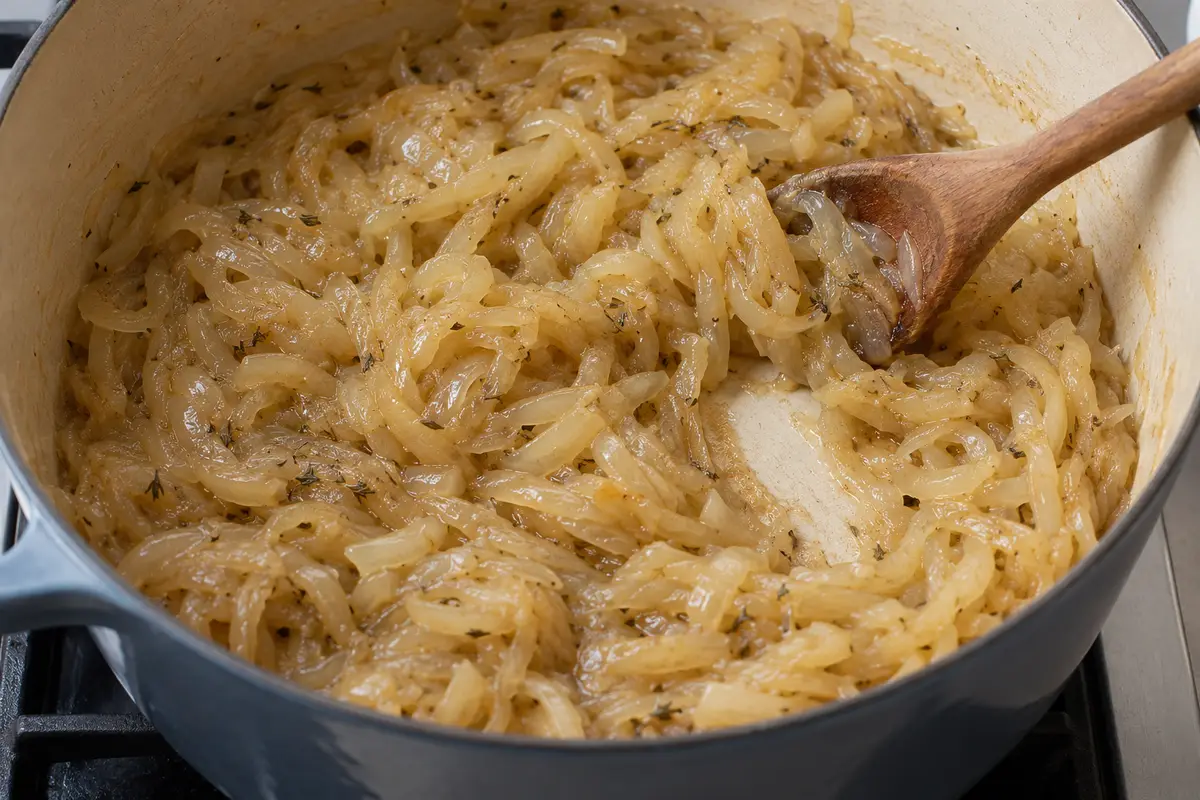
Remove the lid and cook the onions over low heat for another 10–15 minutes, stirring more often, until very soft and glossy, with no pooled liquid in the bottom. A track left by a spoon should not immediately fill with water; if the onions are still watery, keep cooking off the liquid rather than browning them deeply. Remove the bay leaf, stir in the pepper, and transfer the onions to a wide plate. Spread them out and let cool for about 15–20 minutes, until lukewarm, while you shape the base.
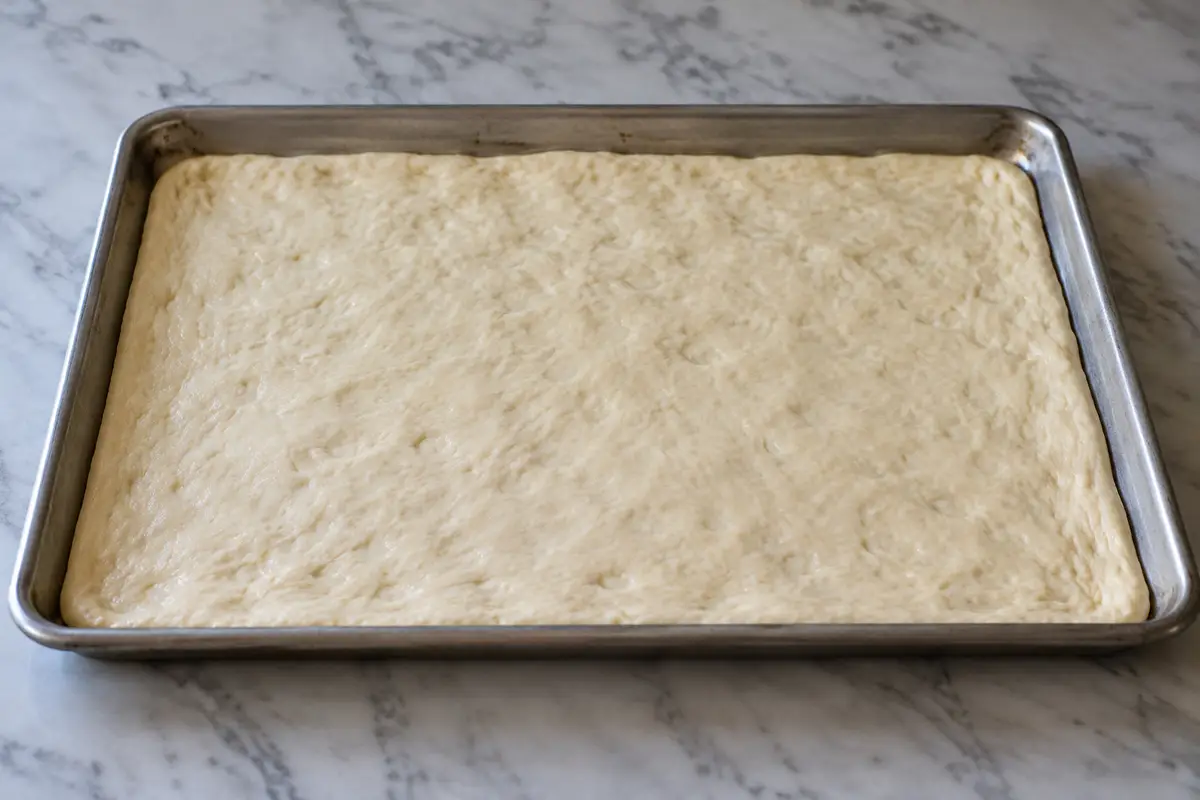
AI-generated While the onions cool, preheat a conventional oven (no fan) to 220°C and grease a baking sheet with internal dimensions of 30 × 40 cm with the remaining 5 ml olive oil. Gently deflate the risen dough and use your fingers to stretch it on the baking sheet into an even rectangle about 5 mm thick. If it springs back as you stretch it, cover it for 5 minutes and try again. Cover loosely and let rest for 15–20 minutes, until slightly puffy; the oven preheats and the onions cool during this rest.
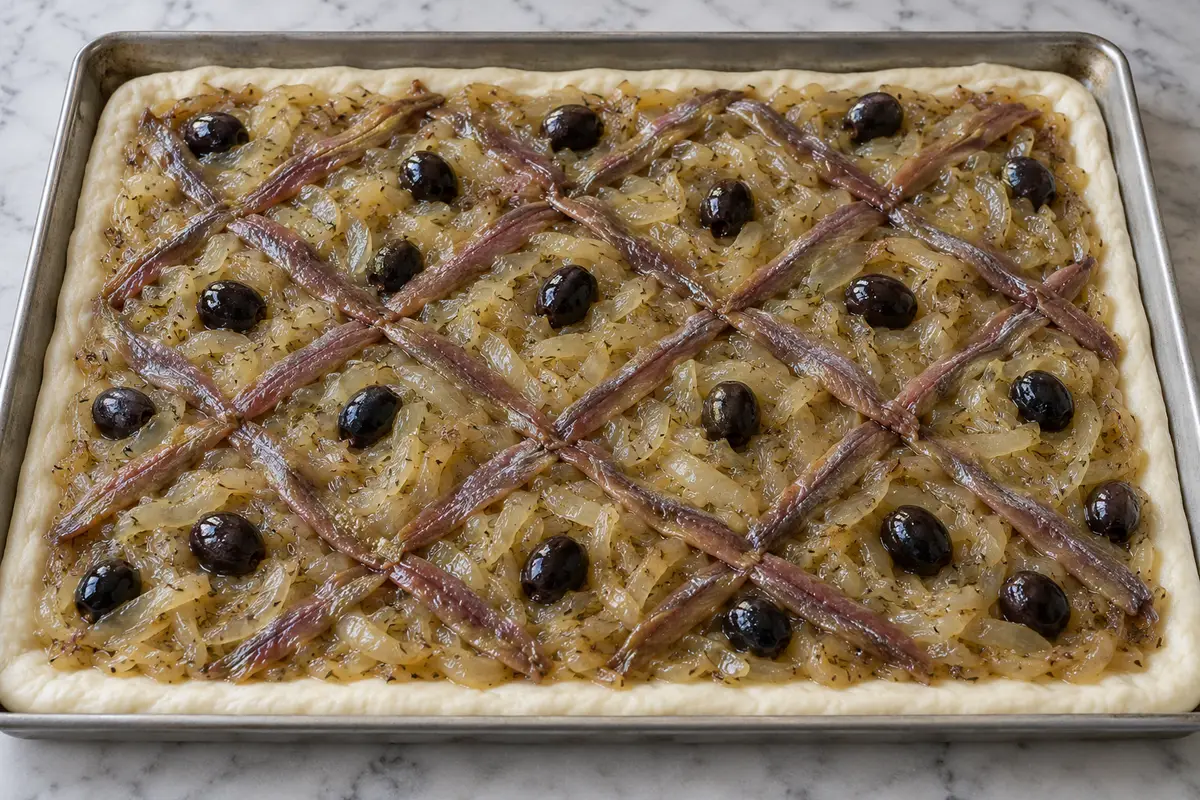
AI-generated Drain the anchovy fillets and olives. Spread an even layer of lukewarm, not hot, onions over the slightly puffy dough, leaving a border of about 1 cm. Split the anchovy fillets lengthwise into narrower strips and lay them end to end in a diagonal lattice over the onions. Place the olives in the spaces between the lines and put the baking sheet in the oven right away.
AI-generated Bake for 25–30 minutes in the lower third of the oven at 220°C on the conventional (no-fan) setting. The edges should brown and the dough beneath the topping should be baked through. Carefully lift an edge with a wide spatula: the underside should be golden and dry, not pale and damp. If it is still pale, bake for about 5 minutes more.
Set the baking sheet on a wire rack and let the flatbread rest for about 15 minutes so the base firms up before cutting. Cut into 8 rectangular portions and serve warm.
Estimated nutrition

Rate this recipe
0 ratings
Comments