
AI-generated
Yeasted buckwheat blini with salmon and sour cream
Log in or create a free account to save recipes.
Source: https://recipheon.com/en/recipes/snacks/yeasted-buckwheat-blini-with-salmon-and-sour-cream
About this recipe
These small buckwheat blini have a gently nutty flavor, soft centers and lightly browned edges. Whole-grain flour from unroasted buckwheat is combined with all-purpose flour to help keep the texture fluffy. Fresh yeast raises the batter, with softly whipped egg white gently folded in toward the end. This keeps the pancakes light despite the substantial buckwheat content. The milk should be only slightly warm and the butter melted and cooled; do not stir the risen batter for long before frying. Make sixteen blini in an ordinary skillet, four per batch, spreading the weighed oil sparingly. Top the slightly cooled pancakes with sour cream and ready-to-eat cold-smoked salmon. Each of the four servings contains four blini and weighed toppings, without extra roe, lemon or decorations. This homemade yeasted version relies on unhurried rising, gentle folding and frying until the centers are fully set.
Ingredients
All the batter for sixteen blini
100 g dry whole-grain buckwheat flour from unroasted buckwheat, not groats or a prepared mix
100 g all-purpose wheat flour, type 550
250 g milk, 3.2% fat, weighed, for the batter
8 g fresh baker's yeast, not dried
5 g white sugar
3 g salt
50 g raw whole egg without shell, about 1 medium egg, yolk and white separated, both used in full
20 g unsalted butter, 82% fat, whole and not clarified, melted and cooled, for the batter
Frying and all the serving toppings
20 g refined high-oleic sunflower oil for greasing the skillet, weighed, 5 g for each of four batches, partly unused
160 g ready-to-eat sliced cold-smoked salmon, without skin or bones, edible net weight
120 g thick sour cream, 18% fat, for serving, not regular cream
Steps
Mix 100 g dry whole-grain buckwheat flour and 100 g all-purpose wheat flour, type 550, in a large bowl. Weigh 250 g milk and gently heat until only slightly warm; it should not be hot or scalding. Separately melt all 20 g butter without browning and leave until lukewarm. Do not replace buckwheat flour with cooked groats, and do not measure the milk as the same number of milliliters.
Separate the yolk and white of one medium egg, about 50 g total without shell. Put the yolk in a small bowl and all the white in a clean dry container without traces of fat, then refrigerate the white during the first rise. Both parts go into the batter. Do not add another egg or extra white; shells are not included in the stated weight.
Dissolve all 8 g fresh yeast and 5 g sugar in the lukewarm milk. Pour into the flours, add the yolk, 3 g salt and all the lukewarm butter. Whisk just to combine, scraping dry ingredients from the base. The batter will be thick but flow from a spoon. Do not add water or milk, do not add flour and do not add baking powder; the white remains separate at this stage.
Cover the bowl and leave in a quiet warm place without a hot radiator nearby for about 55–70 minutes. The batter should clearly increase in volume, with fine bubbles on top and a light spongelike texture underneath. It may need a little longer in a cool kitchen. Do not heat it in a very hot oven and do not stir while it rises.
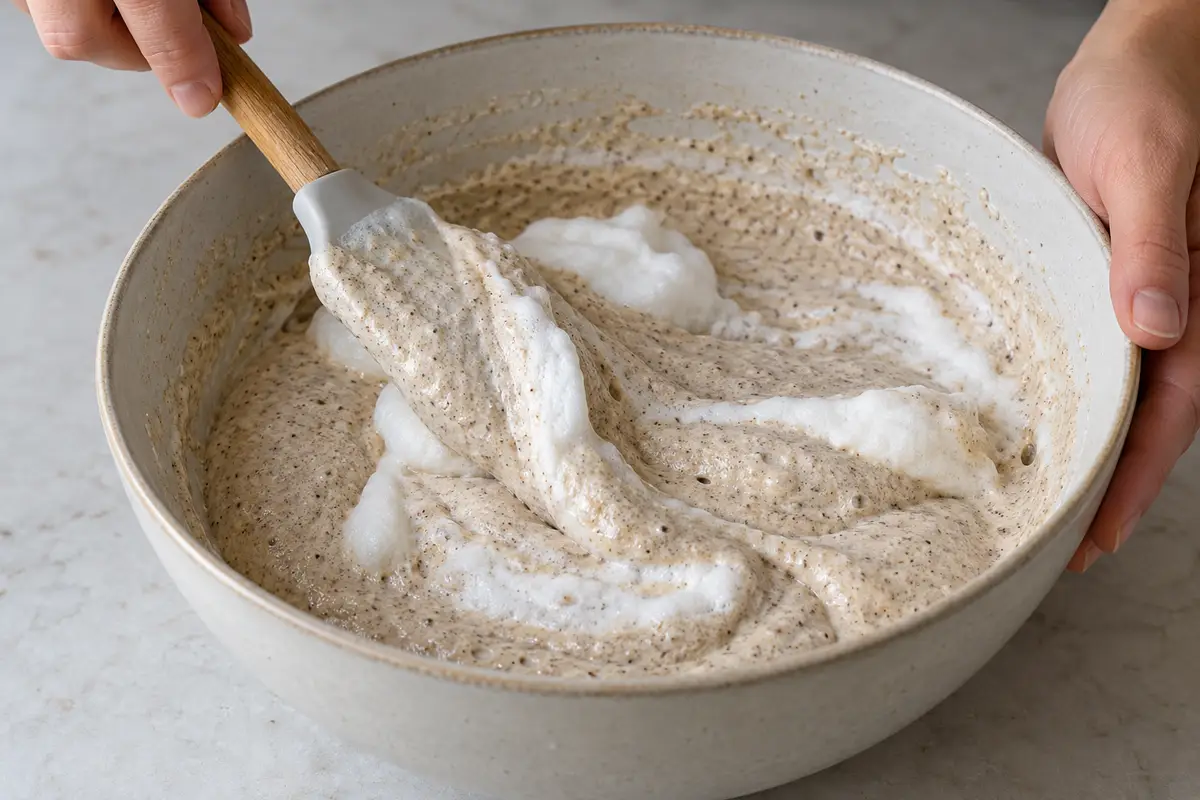
Take out the reserved white and beat with a clean whisk or mixer to soft peaks that bend slightly. Fold into the risen batter in two portions, lifting with a spatula from the base upward. Scrape in all the white; do not beat the finished mixture again. Cover and rest about 10 minutes. After resting, scoop gently without vigorous stirring.
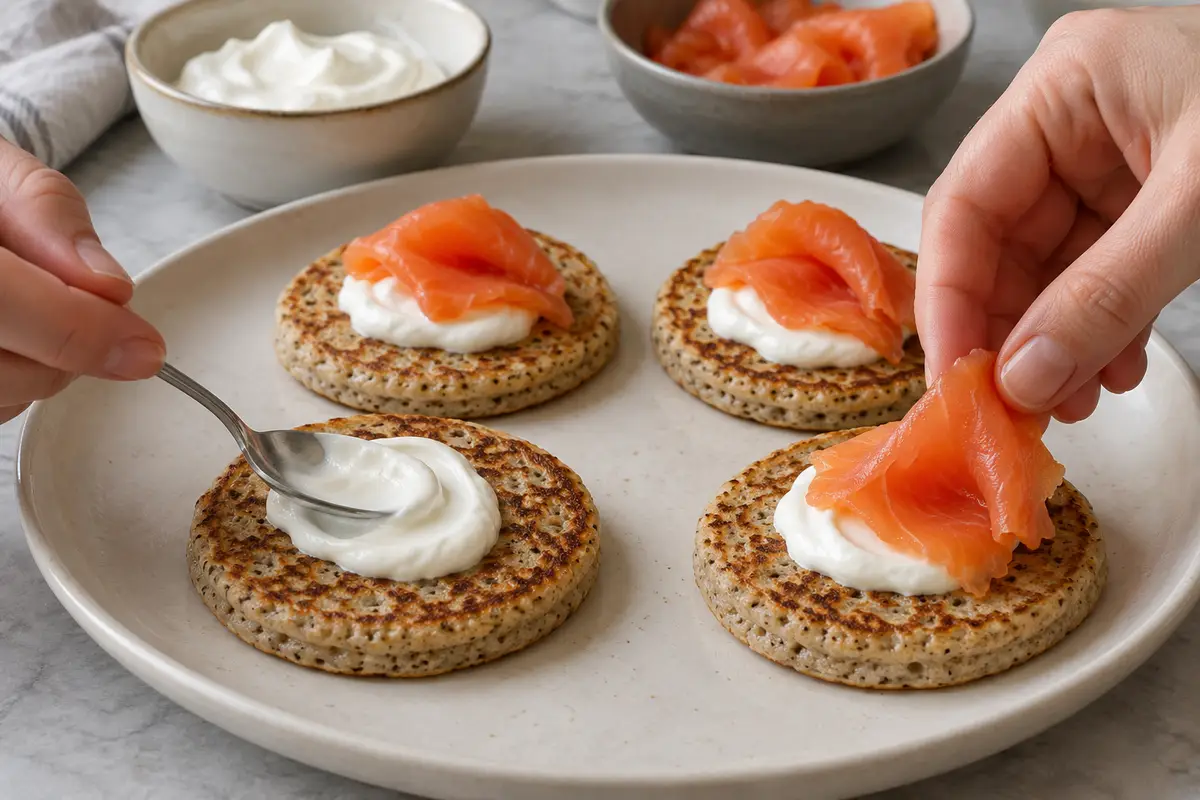
AI-generated Prepare all 160 g ready-to-eat cold-smoked salmon without skin or bones and 120 g sour cream. Divide the fish into sixteen small portions, about 10 g each. The cream gives sixteen portions of about 7.5 g; alternatively, weigh 30 g for each plate of four blini. Keep both toppings refrigerated until serving. Do not add lemon juice, dill or roe.
Prepare a nonstick skillet about 24 cm across and four weighed portions of oil, 5 g each. Heat over medium and spread the first 5 g in a thin layer. Gently spoon batter into four spots, about two small spoonfuls per blin. Aim for pancakes about 7–8 cm across, leaving room to turn. Do not spread them like thin crepes.
Fry over medium-low heat about 2–3 minutes until golden underneath, bubbles burst on top and edges begin to set. Turn with a wide spatula and fry the other side about another 1–2 minutes. The centers should set without wet raw batter. If blini darken quickly, reduce the heat; do not flatten with the spatula and do not stop after just one side has browned.
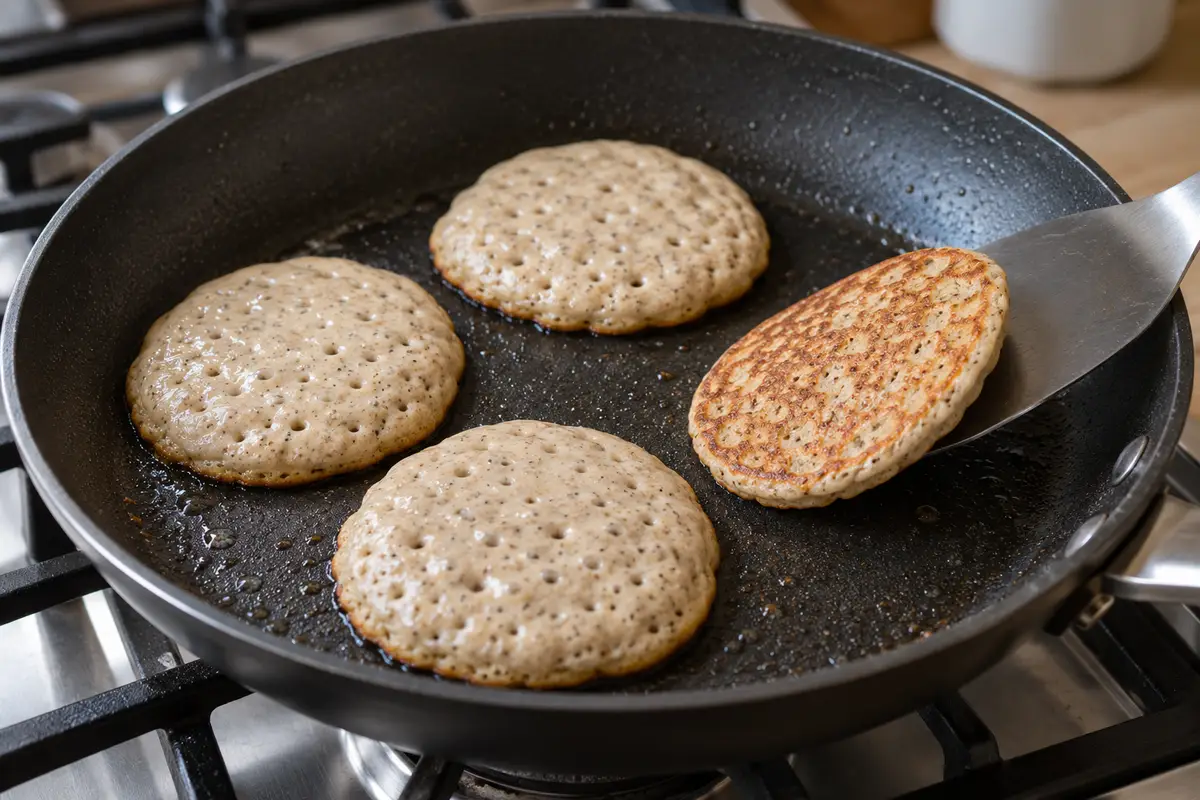
AI-generated Transfer cooked blini to a rack or warm plate in a single layer, without tightly covering. Before each of the next three batches, spread the next weighed 5 g oil and fry four the same way. Scrape all batter from the bowl, dividing the last bit among the final pancakes. This makes sixteen blini; all frying takes about 20–25 minutes. Oil left on the skillet and brush stays outside the servings.
Let blini cool slightly for a few minutes so they do not steam heavily and do not immediately melt the cream. Spread each with a portion of sour cream and add about 10 g salmon. Use all 120 g cream and all 160 g fish. Divide sixteen finished blini into four servings of four. Do not pour leftover oil or extra butter over them and do not add unweighed decorations.
AI-generated Serve immediately while blini are still slightly warm and toppings freshly taken from the refrigerator. If preparing ahead, store cooked blini and chilled toppings separately and assemble just before eating. Refrigerate leftovers within 2 hours at the latest; eat blini without toppings within 2 days, and follow the shorter opened-package storage instructions for the salmon and cream.
Estimated nutrition

Rate this recipe
0 ratings
Comments