
AI-generated
Bouillabaisse — Marseille Fish Soup with Saffron and Rouille
Log in or create a free account to save recipes.
Source: https://recipheon.com/en/recipes/soups/bouillabaisse-marseille-fish-soup-with-saffron-and-rouille
About this recipe
Bouillabaisse combines several kinds of fish, saffron broth, and garlicky rouille served on crisp toasts. The base is a homemade stock made from fish heads and backbones, carefully strained before the potatoes and pieces of fish are added. Monkfish and scorpionfish need slightly longer to cook than the more delicate gurnard and John Dory fillets, so they go into the pot in stages. Fennel and tomatoes give the broth sweetness and a fresh aroma, while saffron connects its flavor with the spicy sauce. Make the rouille from scratch: soft bread, garlic, and pasteurized egg yolk form the base, into which olive oil is slowly worked. You can serve the fish on a warmed platter and the broth separately, so everyone can combine them in a deep bowl.
Ingredients
Fish and homemade stock
300 g raw monkfish without skin, bones and cartilage, edible weight
300 g raw gurnard fillets without skin and bones, edible weight
200 g raw John Dory fillets without skin and bones, edible weight
200 g raw scorpionfish fillets without skin and bones, edible weight
700 g cleaned heads, backbones, and trimmings from lean white sea fish for stock, without gills and innards; the solids will be discarded after cooking
About 1600 ml water for the stock, topped up as needed to the specified volume after straining
150 g peeled onion, divided
100 g cleaned white and light green parts of leek for the stock; the leek will be discarded after straining
30 g peeled garlic cloves, divided
150 ml olive oil, divided
1 bay leaf for the stock, removed after cooking
2 small sprigs of fresh thyme for the stock, removed after cooking
Soup and seasonings
200 g trimmed fennel bulb without the tough core
400 g ripe fresh tomatoes without stems
400 g peeled raw type B potatoes that hold their shape after cooking
20 g tomato paste
100 ml dry white wine
0.2 g saffron threads, divided
10 g fine salt, divided
1/4 teaspoon ground black pepper
Rouille and toasts
240 g wheat bread: 40 g soft bread interior for the rouille and 200 g baguette for the toasts
20 g pasteurized chicken egg yolk, about 1 yolk
1/8 teaspoon ground cayenne pepper
Steps
Ask the fishmonger to prepare the fillets and clean the heads and backbones for the stock; gills and innards must not go into the pot. Check the fillets for any remaining bones, cut into pieces about 4 cm across, and refrigerate, keeping the kinds of fish separate. Divide the onion into two equal portions and chop; rinse the leek thoroughly and slice, cut the fennel into thin strips, and dice the tomatoes. Cut the potatoes into slices about 1 cm thick; divide the garlic into 5 g for the stock, 10 g for the soup, 10 g for the rouille, and 5 g for the toasts.
Heat 20 ml olive oil in a large pot over medium heat. Add half the onion, all the leek, and 5 g lightly crushed garlic; cook, stirring, for about 5 minutes, until the vegetables soften without browning much. Add the cleaned fish heads, backbones, and trimmings and cook for about 2 minutes more, turning them carefully.
Pour in the water, add the bay leaf and thyme, bring to a boil, then skim the foam from the surface. Simmer uncovered over low heat for about 25 minutes, keeping the liquid at a gentle simmer. Strain into another pot through a fine-mesh metal sieve lined with clean cheesecloth, letting the liquid drain freely; do not force the bones through the sieve and do not blend them. Discard the solids and measure out 1200 ml stock: make up a small shortfall with water, or briefly reduce any excess.
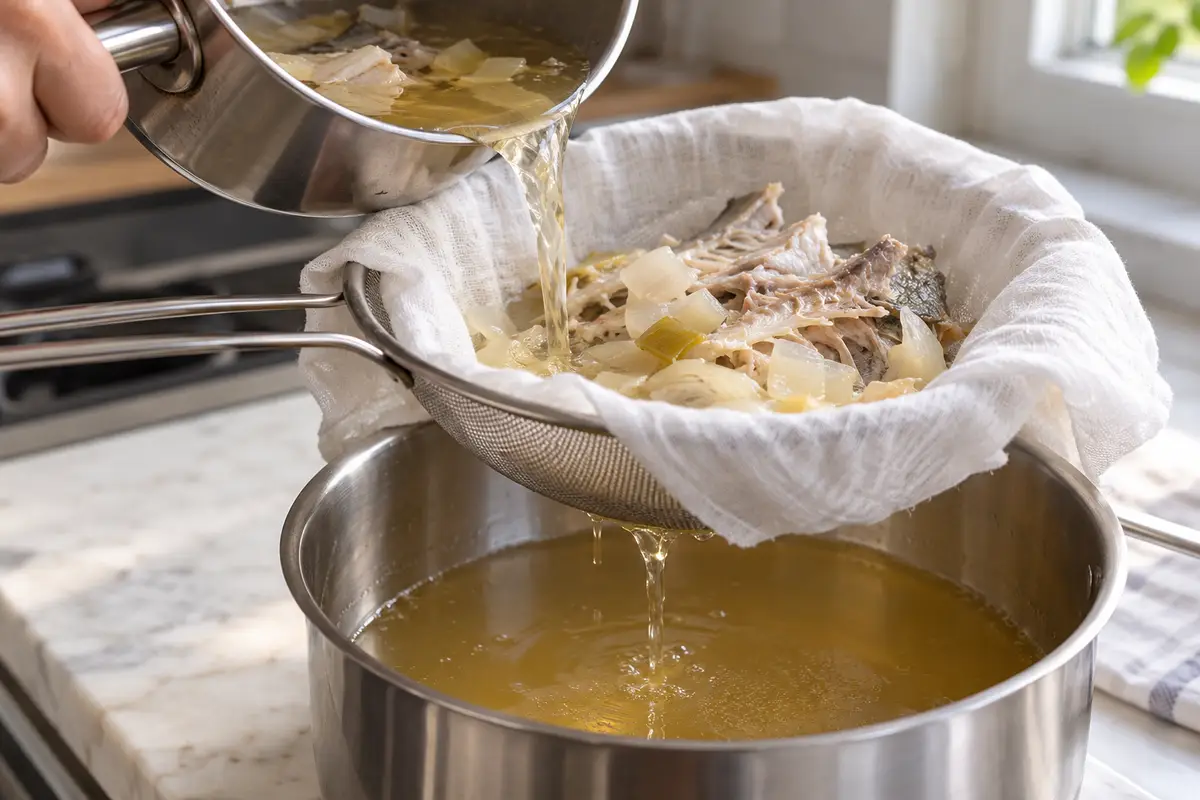
AI-generated Set aside 50 ml hot strained stock, add the lightly crushed saffron threads, and let steep for about 10 minutes. Reserve 1 tablespoon, about 15 ml, of the infusion for the rouille; keep the rest for the soup. Separately set aside 30 ml stock for soaking the soft bread and let it cool. Start making the vegetable base for the soup while the saffron steeps.
Heat another 20 ml olive oil in a wide pot with a capacity of about 5 liters over medium heat. Add the remaining onion and the fennel and cook, stirring, for about 8 minutes, until softened; then add 10 g chopped garlic and the tomato paste and stir for 1–2 minutes. Pour in the wine and cook uncovered for about 3 minutes, until the liquid has noticeably reduced. Add the tomatoes and cook for about 3 minutes more, until they release their juices. Remove the pot from the heat while you make the rouille and toasts.
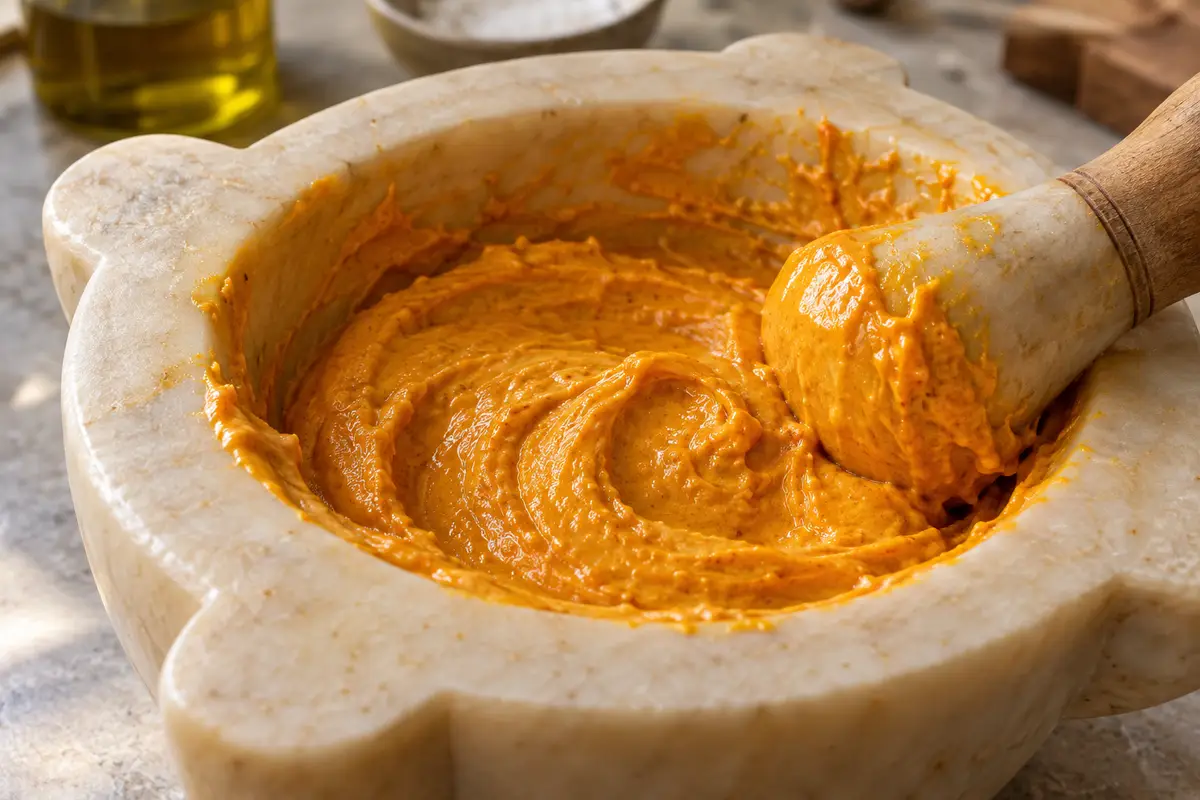
Preheat a conventional oven (no fan) to 200°C. Pour the reserved 30 ml cooled stock over 40 g soft bread interior and leave for about 5 minutes for the bread to absorb it. In a mortar, pound 10 g garlic with the remaining 2 g salt to a smooth paste. Add the soaked bread with its absorbed liquid, the cayenne, the reserved tablespoon of saffron infusion, and the pasteurized egg yolk, and pound until the base is uniform; it must not be hot when you add the yolk.
Measure out 100 ml olive oil and add it to the base a few drops at a time at first, pounding vigorously with the pestle without stopping. Once the sauce starts to thicken and the first additions of oil have been incorporated, pour in the oil in a very thin stream, continuing to pound. This will take about 5–8 minutes; the finished rouille should be thick, uniform, and spreadable, with no separate layer of oil. Transfer the sauce to a small bowl and refrigerate until serving.
AI-generated Cut 200 g baguette into 8 diagonal slices, brush with the remaining 10 ml olive oil, and arrange in a single layer on a baking sheet. Place in the preheated oven and bake for about 8–10 minutes, turning halfway through, until dry and lightly golden. While still warm, rub with the remaining 5 g halved garlic, then finely chop the leftover garlic and stir it into the rouille; return the sauce to the refrigerator. Set the toasts on a wire rack until serving.
Once the rouille and toasts are ready, pour the reserved saffron infusion and the remaining stock into the pot with the vegetable base. Add the potatoes, 8 g salt, and the black pepper and bring to a boil. Cook over medium-low heat for about 15 minutes, until the potatoes are almost tender but still hold their shape. Proceed directly to cooking the fish; the potatoes will finish softening during this last stage.
When the potatoes are almost tender, bring the soup to a gentle simmer and add the monkfish and scorpionfish pieces. Cook over medium-low heat for about 4 minutes, then add the gurnard and John Dory and cook for about 5–6 minutes more. The fish should be cooked through and separate into moist flakes when pressed lightly with a fork; larger pieces may need a little longer. Gently move the pot instead of stirring with a spoon, so the delicate fillets do not break apart.
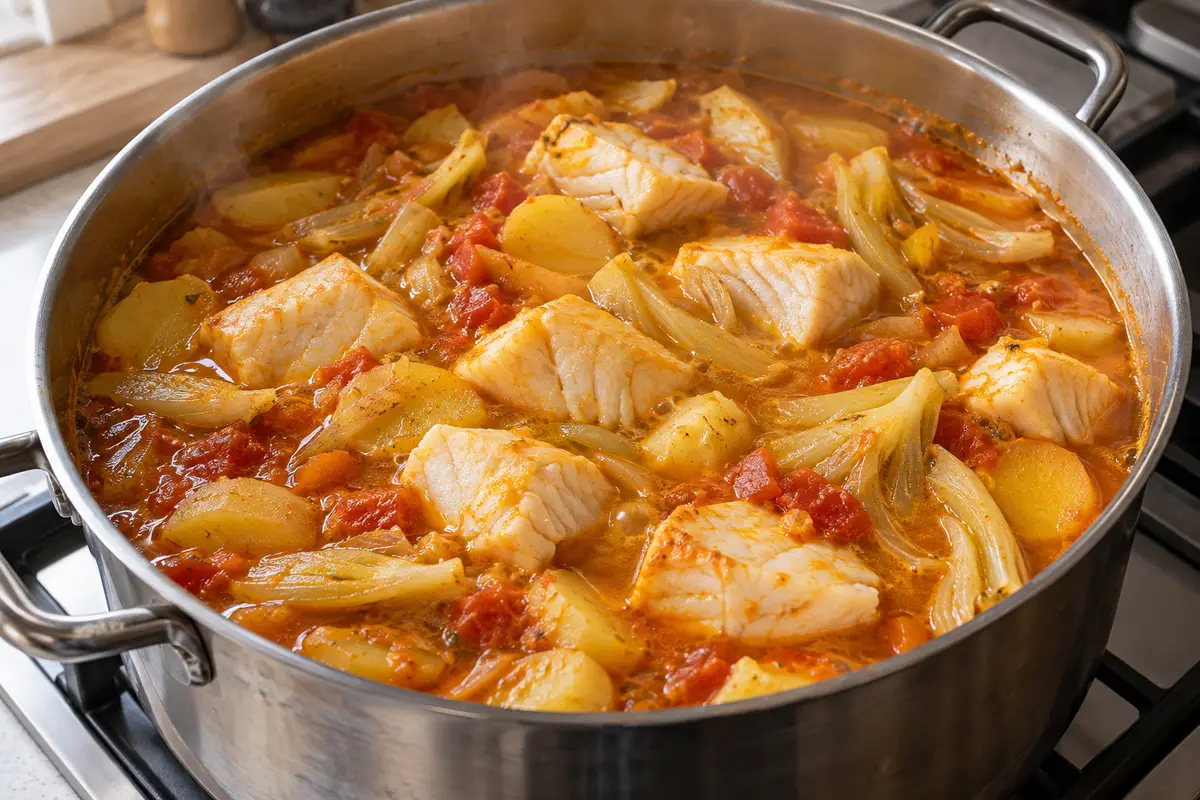
AI-generated Use a wide spoon to transfer the fish and potatoes to a warmed platter, and serve the hot stock with its vegetables in a tureen or pot. Each of the 4 servings gets a quarter of the fish and potatoes and 2 toasts. Set the rouille alongside for spreading on the toasts, and combine the fish and stock in deep bowls; serve the soup immediately, without cooking the fish any further.
Estimated nutrition

Rate this recipe
1 rating
Comments