
AI-generated
Aberdeen butteries – Scottish buttery rolls
Log in or create a free account to save recipes.
Source: https://recipheon.com/en/recipes/breakfast/aberdeen-butteries-scottish-buttery-rolls
About this recipe
Aberdeen butteries, also called rowies, are flat Scottish yeast rolls with a buttery flavor and a lightly salty finish. A mixture of butter and lard is spread over the dough in three stages, with folding creating delicate layers. Once baked, the edges are golden and slightly crisp, while the center stays soft. Have a rolling pin and two rimmed baking sheets lined with parchment paper ready. Chilling between folds makes the high-fat dough easier to handle, so do not shorten these rests. Shape the rolls gently, without kneading the layers together again. They taste best slightly warm, served without accompaniments; the stated time includes rising, chilling, and baking the two sheets one after the other.
Ingredients
For 12 rolls
520 g type 550 wheat flour: 500 g for the dough and 20 g for rolling
325 g lukewarm water
200 g unsalted butter
125 g ready-rendered pure pork lard without cracklings
15 g fresh compressed yeast
10 g white sugar
10 g salt
Steps
Mix the yeast and sugar into all 325 g lukewarm water until the yeast disperses. Put 500 g flour and the salt in a large bowl and mix. Pour in the yeast water, combine with a spoon, then knead in the bowl or on a clean work surface for 8–10 minutes, until the dough is smooth and elastic. Set aside the remaining 20 g flour for rolling later; do not add any more water or fat to the bowl.
Shape the dough into a ball, put it in the bowl, and cover with a plate or plastic wrap. Leave in a warm place for about an hour, until noticeably increased in volume. Meanwhile, cut up the butter and let it soften in a cool kitchen. Beat it with the lard until smooth and spreadable, without melting it. Divide the entire mixture into three equal portions.
Gently knock back the dough and roll it into a rectangle about 30 × 40 cm, with a short edge facing you. Gradually use the reserved 20 g flour for dusting. Spread the first portion of butter and lard over the lower two thirds of the rectangle, leaving a narrow border around the edges. Fold the bare upper third over the middle third, then fold the lower third on top, like a letter. Gently even out the package without squeezing the fat out at the sides.
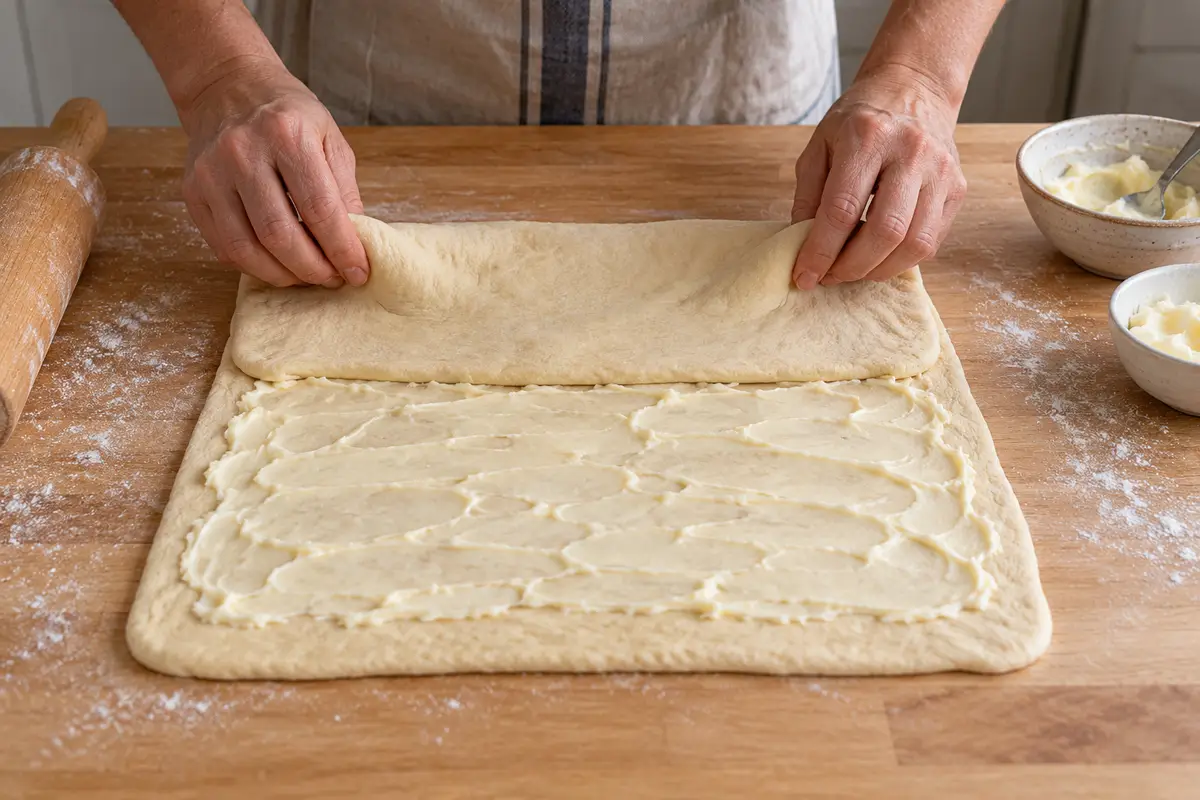
AI-generated Cover the dough and refrigerate for 30 minutes. Turn the package a quarter turn and gently roll it out again into a rectangle about 30 × 40 cm. Spread the second portion of the fat mixture over the lower two thirds, then fold into thirds in the same way. Use only the flour measured earlier for dusting.
Cover the package again and chill for 30 minutes. Turn it a quarter turn, roll it out, and spread the final portion of butter and lard over the lower two thirds. Fold into thirds. Scrape all the fat mixture from its bowl into the dough. If the fat starts smearing and leaking out as you roll, stop and briefly chill the dough before continuing.
Roll the dough into a rectangle about 40 × 30 cm. Cut it into four columns and three rows to make 12 pieces without cutting out circles. Gently round each piece and flatten it with your fingers to about 8–9 cm wide, keeping its irregular shape and layers. As you shape, work any small trimmings and the rest of the measured dusting flour into the dough. Place six rolls, spaced apart, on each of two rimmed baking sheets lined with parchment paper.
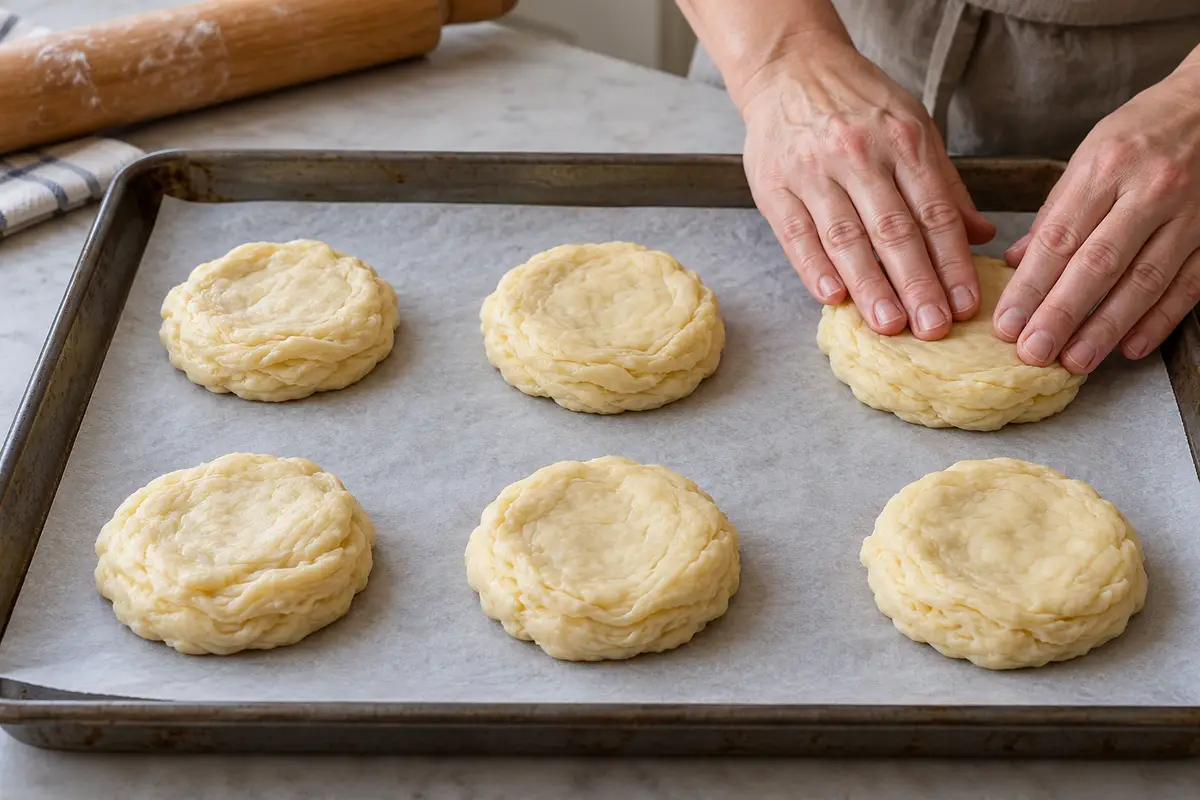
AI-generated Cover the sheets loosely with plastic wrap or a clean kitchen towel and leave for about 30 minutes. The rolls should puff up slightly while staying flat. Meanwhile, preheat the oven to 200°C using conventional top and bottom heat. After rising, refrigerate the second sheet, covered, while the first one bakes, so the dough does not overproof and does not become too soft.
Uncover the first sheet and bake on the middle rack for about 18–22 minutes, until the rolls are golden, with more deeply browned edges and a baked-through base. Repeat with the second sheet taken from the refrigerator. A little fat may leak onto the paper; leave it on the sheet. The butteries should be flat with delicate layers, not tall like ordinary bread rolls.
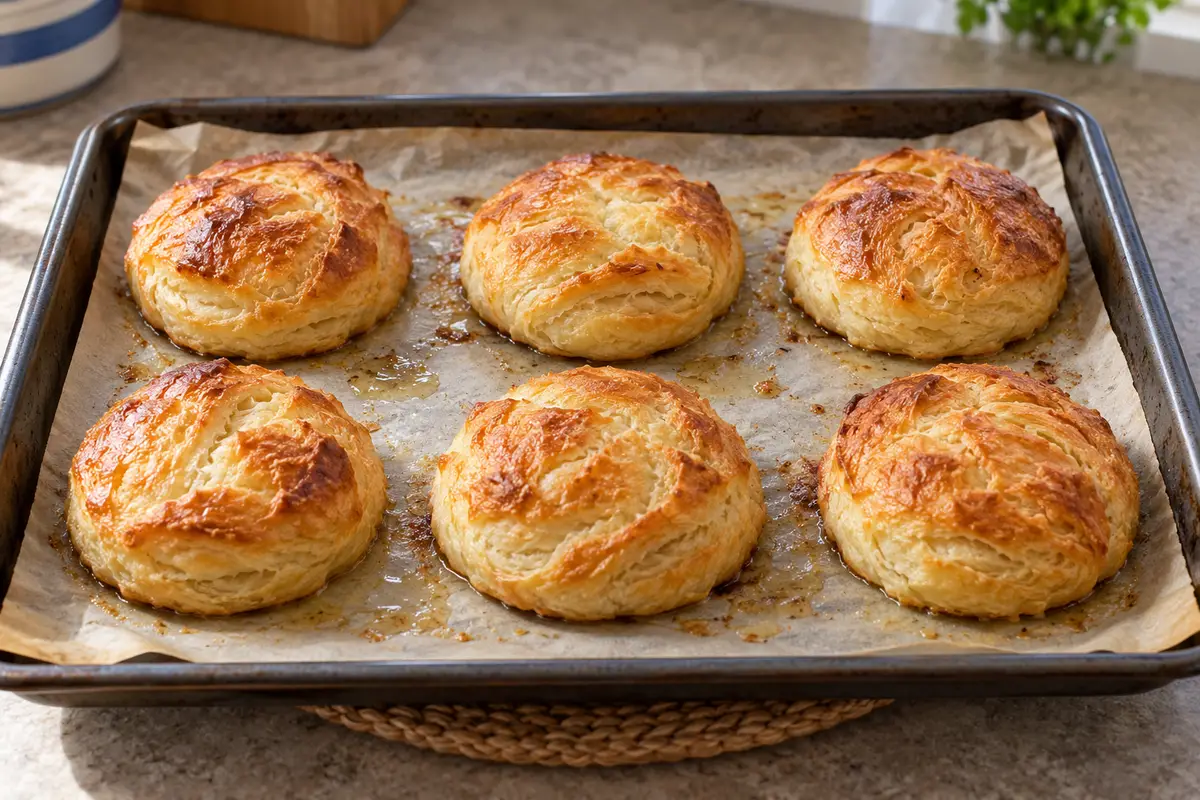
AI-generated Transfer the rolls to a wire rack set over a baking sheet or plate, so they do not sit in the melted fat. Leave for about 15 minutes and serve slightly warm, without accompaniments. They are best on the day they are baked. Once completely cool, store tightly sealed in a cool place for up to 2 days; you can briefly reheat them in the oven before serving.
Estimated nutrition
We couldn't estimate the nutrition for this recipe yet.

Rate this recipe
0 ratings
Comments