
AI-generated
Homemade Kaiser rolls with a five-pointed star
Log in or create a free account to save recipes.
Source: https://recipheon.com/en/recipes/breakfast/homemade-kaiser-rolls-with-a-five-pointed-star
About this recipe
Homemade Kaiser rolls have a thin, crisp crust, a pale crumb and a distinctive five-pointed star. These wheat rolls are inspired by Austrian Kaisersemmeln, also familiar across Central Europe. This practical version is made in a single day, without an overnight starter, special mold or stamp. A little butter helps create a tender interior, while a small amount of sugar encourages the crust to brown. Hand shaping takes the most care: fold a rested dough disk around your thumb, keeping a pocket open for the final flap. Five overlapping folds open during baking to create an irregular, clearly defined pattern. The rolls rise star-side down and are carefully turned over before going into the oven. Brief steam at the start of baking and cooling on a rack help them stay crisp. The recipe makes ten rolls, best eaten on the day they are baked. Your first folds may be uneven; this is traditional-style home baking, without claiming to meet the standards for Viennese Handsemmel.
Ingredients
Dough for ten Kaiser rolls
500 g type 550 wheat flour
300 g lukewarm water, about 300 ml; it should feel pleasantly warm, not hot
15 g fresh baker's yeast
10 g white sugar
10 g fine salt
10 g softened butter with 82% fat and no added salt
Shaping and baking
20 g type 550 wheat flour for lightly dusting the counter, hands and paper; this is the amount set aside for shaping, and unused flour is excluded from the rolls
20 g water for lightly brushing all the rolls before baking
80 ml boiling water to create steam in a separate small metal pan; this water is not an ingredient in the dough
Steps
In a large bowl, dissolve the 15 g fresh yeast and 10 g sugar in the 300 g lukewarm water. Add the 500 g flour and 10 g salt and mix. Knead by hand for about 10–12 minutes, adding the 10 g softened butter after the first 3 minutes. The dough should be firm, smooth and springy, slightly sticky but releasing from your hands. Do not add flour from the shaping allocation while kneading and do not add olive oil to the bowl; work all the flour and butter from its sides into the dough.
Shape into a ball, leave in the same bowl and cover with a lid or clean kitchen towel. Leave in a quiet place at room temperature for about 60–75 minutes, until noticeably increased in volume, roughly doubled. In a cooler kitchen it may take a little longer. Do not put the bowl on a hot radiator or in a very hot oven. Meanwhile, separately weigh the 20 g flour for dusting later.
Turn the dough onto the counter, flatten lightly to release the largest bubbles and divide into ten equal portions of about 84–85 g before dusting. Gather each portion's edges underneath, then cup your hand over it and make a few short circles on an almost dry counter to tighten the smooth surface. Cover the balls with a kitchen towel and rest for 20 minutes. This rest makes flattening easier without the dough springing back; do not skip it. Use only a thin layer of the weighed flour wherever the dough sticks.
Work with one ball, keeping the rest covered. On a lightly floured counter, flatten it with your palm into a disk about 11–12 cm across. Lay your left thumb flat in the center, with its base pointing toward the left edge. Lift the disk's top edge and fold it over your thumb toward the center to make the first flap. Press the right side of this flap onto the dough beneath with the edge of your right hand. Do not remove your thumb: the space under the first flap must stay open as a pocket.
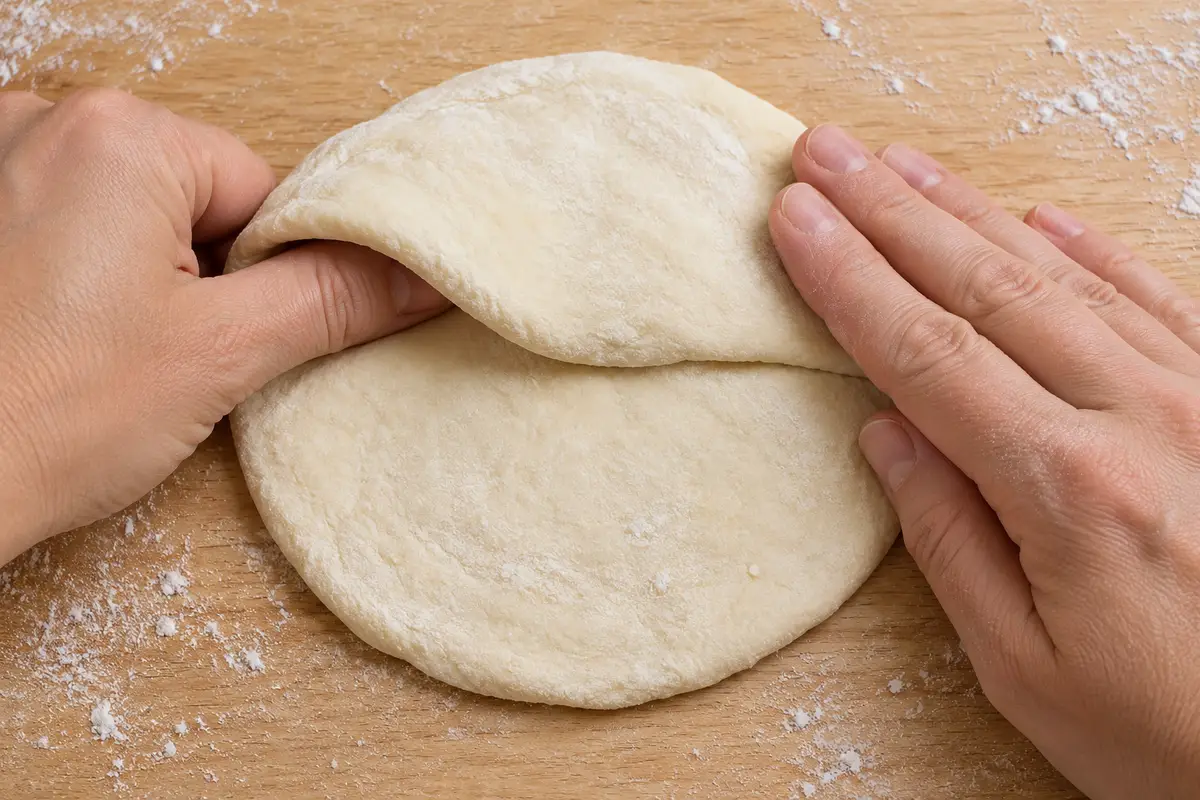
AI-generated Working around the disk in one direction, lift the next free section of edge and fold it toward the center beside your thumb so it partly overlaps the previous flap. Press the new fold's right edge onto the bottom of the disk with the edge of your hand, without cutting the dough. Repeat twice more: you now have four overlapping flaps and one free section to finish. Your left thumb keeps the pocket under the first flap open throughout; do not crush all the folds into one ball.
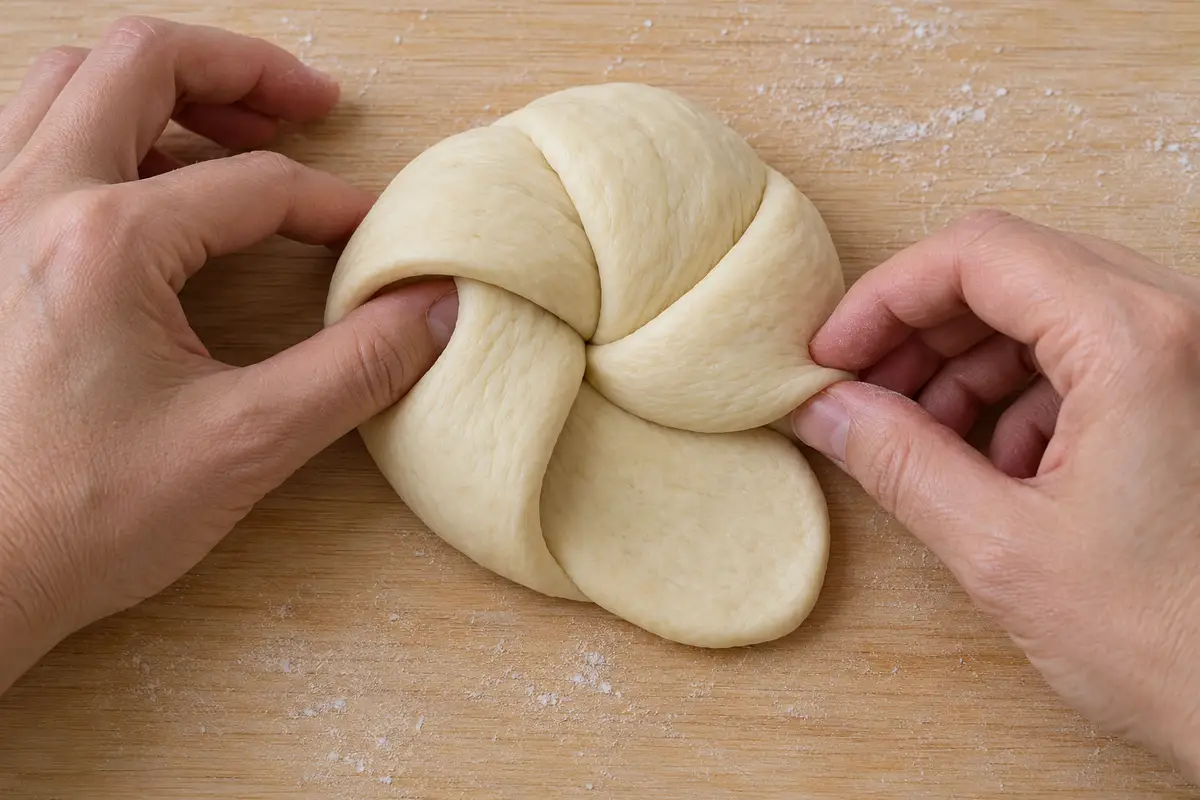
AI-generated Gently stretch the last free section into a small tongue. Slide your thumb out of the pocket under the first flap and immediately tuck the tongue's tip inside, closing the fifth fold. Pinch the first and last folds together at the roll's outer edge so they do not unwind as it rises. Leave the five-fold pattern visible on top. Shape the remaining portions the same way; do not slash with a knife and do not press in the pattern with a stamp.
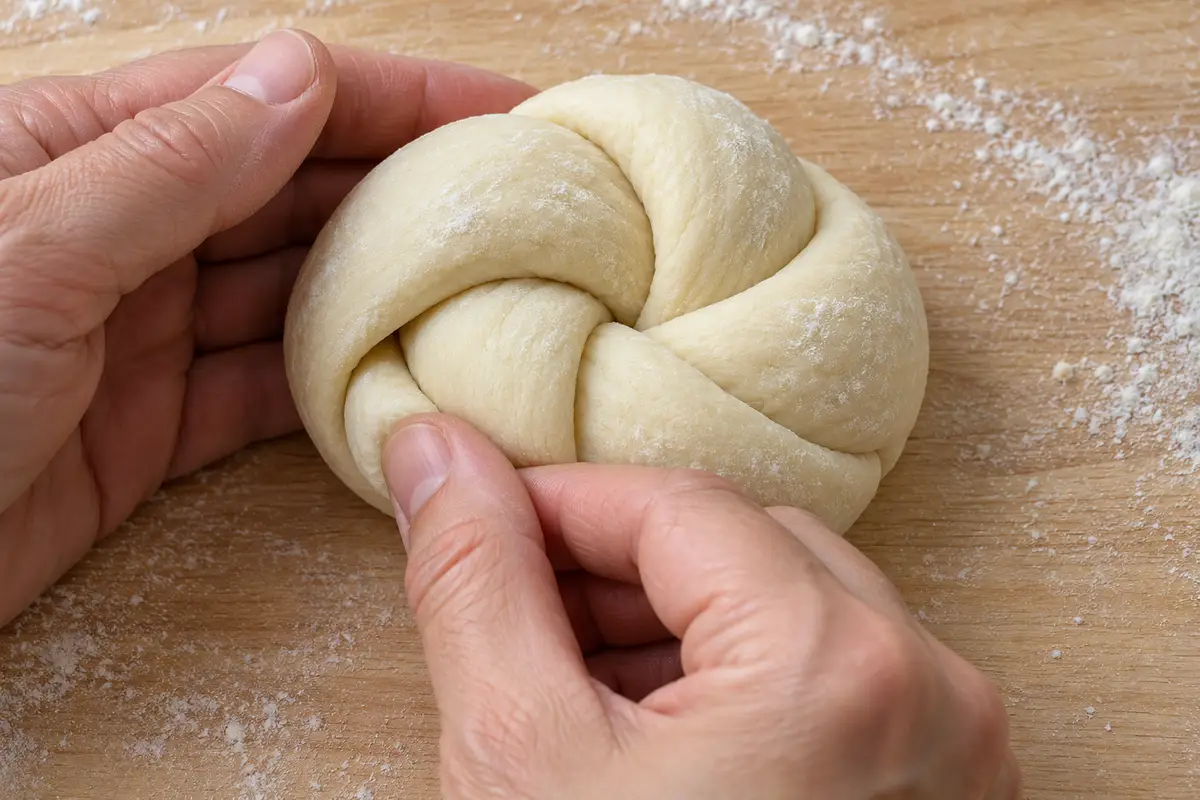
AI-generated Line a large baking sheet, about 40 × 30 cm, with parchment and very lightly dust with some of the weighed flour. Place the rolls star-side down, about 3 cm apart. Cover with a light kitchen towel and leave for about 35–45 minutes, until clearly puffy; a gentle finger dent in the side should return slowly. During the last 20 minutes of rising, preheat the oven to 230°C with conventional top and bottom heat. Exclude unused flour on the counter and in the dusting dish from the servings.
Carefully turn the rolls star-side up and brush lightly with all 20 g water, without flooding the folds. Pour the 80 ml boiling water into a small metal pan standing on the counter. Wearing oven mitts, place it on the oven's lowest rack and the sheet of rolls on the middle rack. Bake for 10 minutes at 230°C. Briefly open the door a little, standing to one side to release the steam, and lower the temperature to 210°C. Bake for about another 10–13 minutes, until deeply golden with dry bottoms. Remove the water pan only once it has cooled.
Immediately transfer the rolls from the sheet to a rack and cool for at least 25 minutes without covering. This lets steam escape from underneath and helps keep the crust crisp. Serve plain, without additional toppings, butter or other accompaniments. They are best the same day; once completely cooled, keep in a paper bag until the next day. You can also seal and freeze them for up to 2 months; refresh thawed rolls for about 5–7 minutes at 180°C.
Estimated nutrition

Rate this recipe
0 ratings
Comments