
AI-generated
Pain de mie — homemade milk sandwich bread
Log in or create a free account to save recipes.
Source: https://recipheon.com/en/recipes/breakfast/pain-de-mie-homemade-milk-sandwich-bread
About this recipe
Pain de mie is a tender French pan loaf with a fine, even crumb and a thin crust. In this home version, milk is the dough's only liquid, while butter and a little sugar give it a mild flavor and softness. There is no need for a special sliding-lid pan: an ordinary metal loaf pan with the stated dimensions is enough. The top will be slightly domed and the slices rounded at the top, without the promise of a perfect square. After thorough kneading, the dough rises in a bowl, then is flattened and rolled into an even log to limit large air pockets in the finished loaf. The second rise takes place in the pan. Bake without scoring and without an egg wash, then turn out onto a rack after a brief rest so the bottom does not become soggy from steam. Patience before slicing matters most: a completely cooled crumb gives even slices. The recipe makes one loaf for sixteen slices, including the heels; eat them fresh or toast them after the bread has cooled completely.
Ingredients
Dough for one loaf
500 g type 550 wheat flour
340 g milk with 3.2% fat, weighed before gently warming
15 g fresh baker's yeast
25 g white sugar
10 g fine salt
40 g softened butter with 82% fat and no added salt, for the dough
Pan and shaping
5 g softened butter with 82% fat and no added salt for thinly greasing a metal loaf pan about 25 × 11 × 9 cm inside, holding about 2.4 l, without a lid; residue on utensils or in the pan is excluded from the slices
15 g type 550 wheat flour set aside for lightly dusting the counter while shaping; unused flour is excluded from the bread
Steps
Warm the measured 340 g milk only gently, until pleasantly lukewarm to the touch, not hot. In a large bowl, dissolve the 15 g fresh yeast and 25 g sugar in it. Thinly grease a metal loaf pan with internal dimensions of about 25 × 11 × 9 cm and capacity of about 2.4 l with the weighed 5 g butter, including the corners. Set aside the 40 g softened butter for the dough and the separate 15 g flour for dusting later. Do not use a lid or extra fat for the bowl.
Add the 500 g flour and 10 g salt to the milk and yeast. Mix, then knead by hand for about 5 minutes, until the ingredients form a uniform dough. Add all 40 g softened butter a piece at a time and knead for about another 8–10 minutes. The dough will be slippery at first, then become smooth, elastic and slightly sticky. Gather it with a scraper or your hand and collect any residue from the bowl. Do not add the flour set aside for shaping; if your hands need a short break, no extra ingredients are needed.
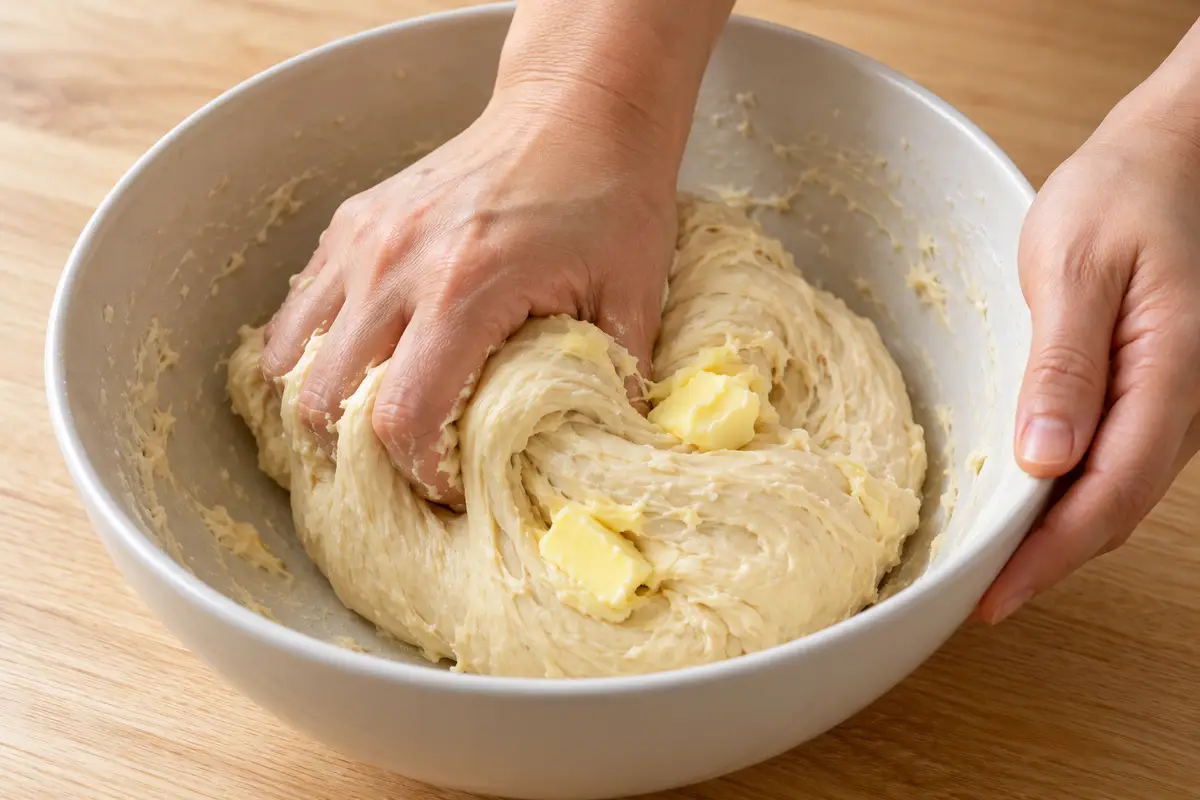
AI-generated Shape into a ball, leave in the same bowl and cover. Leave in a quiet place at room temperature for about 60–75 minutes, until roughly doubled in volume and clearly aerated. In a cooler kitchen this may take longer; judge by volume too. Do not speed up the rise on a hot radiator. Turn the dough onto the counter, flatten lightly to release large bubbles and leave under a kitchen towel for 10 minutes before shaping.
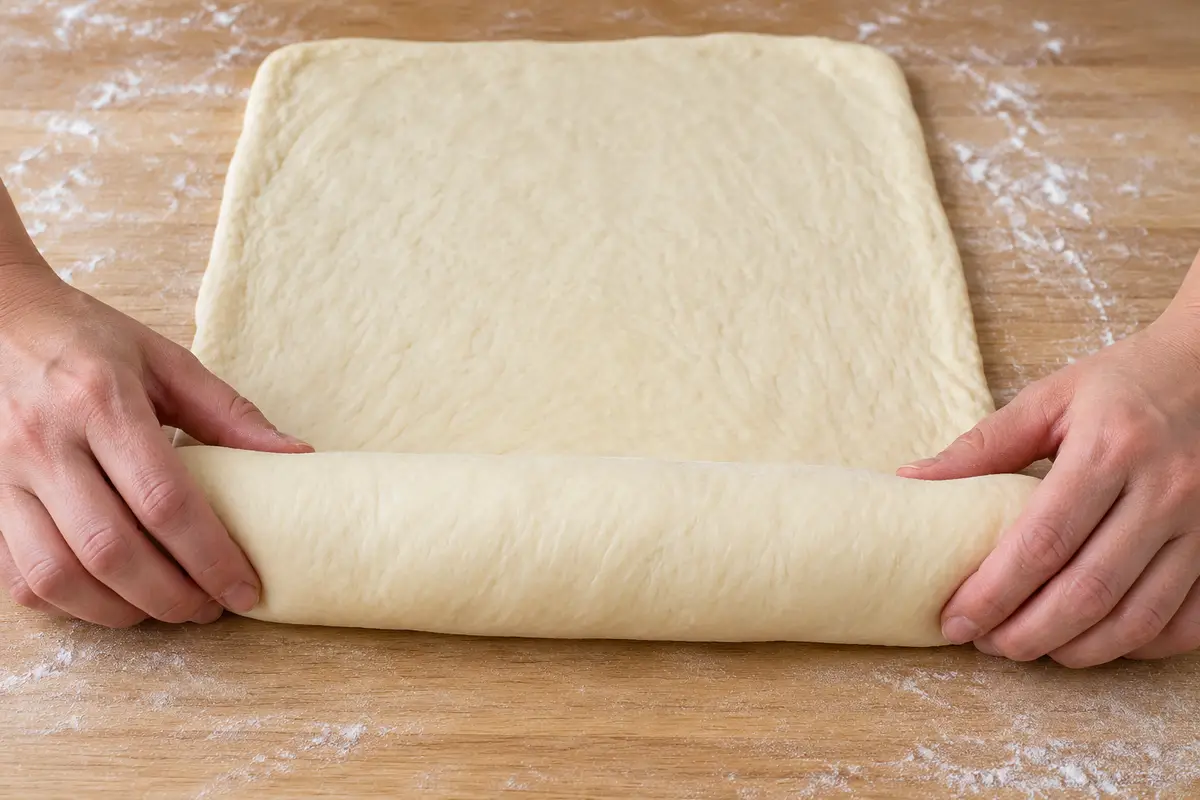
Lightly dust the counter with some of the weighed flour. Flatten all the dough with your hands into a rectangle about 20 × 30 cm, with the shorter edge closest to you, releasing the largest bubbles. Roll from this shorter edge into an even, fairly tight log, without leaving large air pockets. Pinch the final seam shut and gently lengthen the log to about 23 cm. Place lengthwise in the pan seam-side down, leaving a similar gap at both short ends. All the dough goes into the pan, without trimming off the ends.
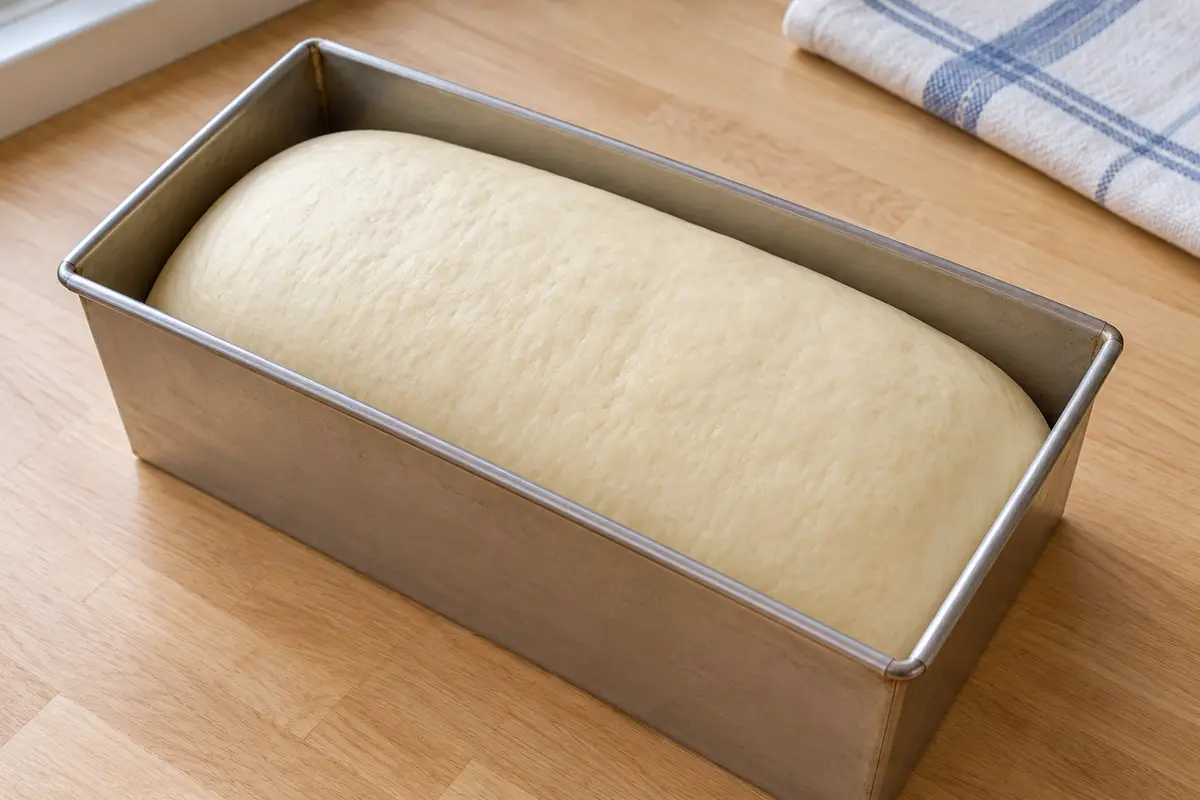
AI-generated Loosely cover the pan with a clean kitchen towel and leave for about 45–75 minutes. The dough should fill the sides, become clearly puffy and reach roughly 1 cm below the rim at its highest point. A gentle finger dent at the side should return slowly; do not wait for the surface to collapse. During the last 20 minutes, preheat the oven to 180°C with conventional top and bottom heat. Exclude unused flour on the counter from the servings. Do not cover the bread with a lid and do not brush it with egg or milk.
AI-generated Place the uncovered pan on a rack slightly below the middle of the preheated oven. Bake at 180°C for about 35–40 minutes, until the top is evenly golden brown and slightly domed. If it browns too quickly after about 20–25 minutes, loosely cover just the top with aluminum foil and finish baking. Do not score the loaf, do not press down the top and do not add steam. The baked bread should be clearly set, not wobble like raw dough when the pan is moved carefully.
After baking, leave the bread in the pan for 10 minutes. Wearing oven mitts, carefully tilt the pan and turn out the loaf; loosen the edges with a thin spatula if needed. The sides and bottom should be dry and lightly browned. If still clearly pale and damp, return the loaf on its own to the oven rack for another 5 minutes at 180°C. Then cool on a rack without covering for at least 2 hours, until the center is no longer warm. Do not slice it hot and do not seal it in a bag.
Cut the completely cold loaf with a serrated knife into sixteen slices about 1.5 cm thick, including both heels. Do not trim off the crusts and do not add a separate glaze or serving butter as part of this recipe. Keep the bread tightly sealed at room temperature for up to 2 days. You can also freeze slices separated by paper for up to 2 months and toast without thawing. Pack only once completely cooled so steam does not dampen the crumb and crust.
Estimated nutrition

Rate this recipe
0 ratings
Comments